Zoonotic Diseases Group, ICAR-National Institute of High Security Animal Diseases, Bhopal 462022, India.
Laboratory for Structural Bioinformatics, Center for Biosystems Dynamics Research, RIKEN, 1-7-22 Suehiro, Yokohama, Kanagawa 230-0045, Japan.
Viruses. 2021 Sep 16;13(9):1847. doi: 10.3390/v13091847.
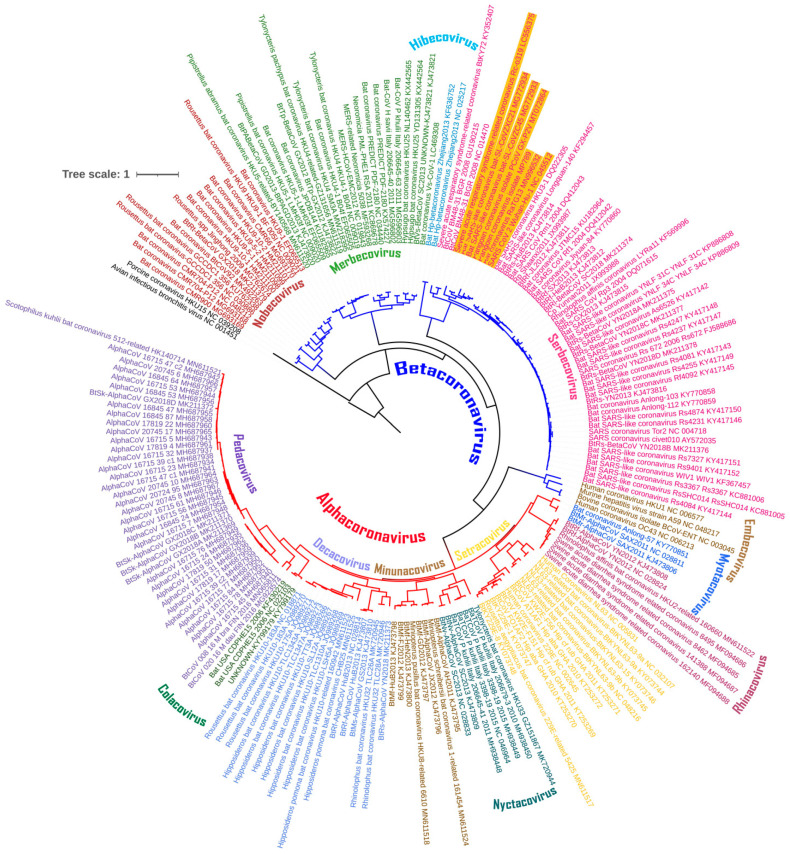
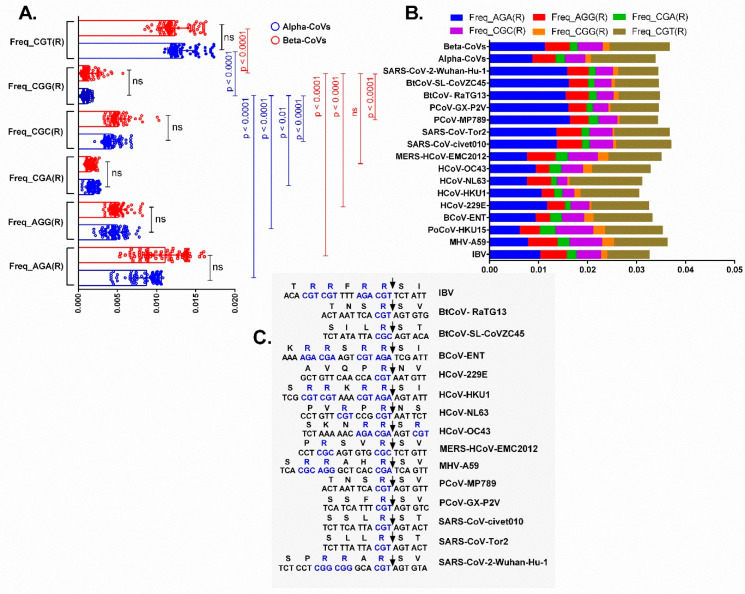
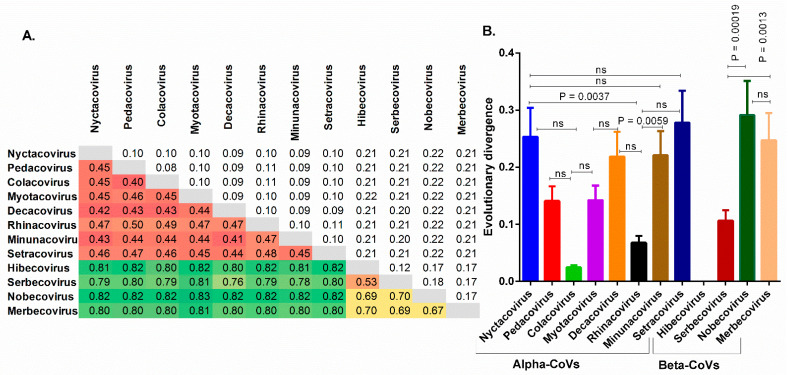
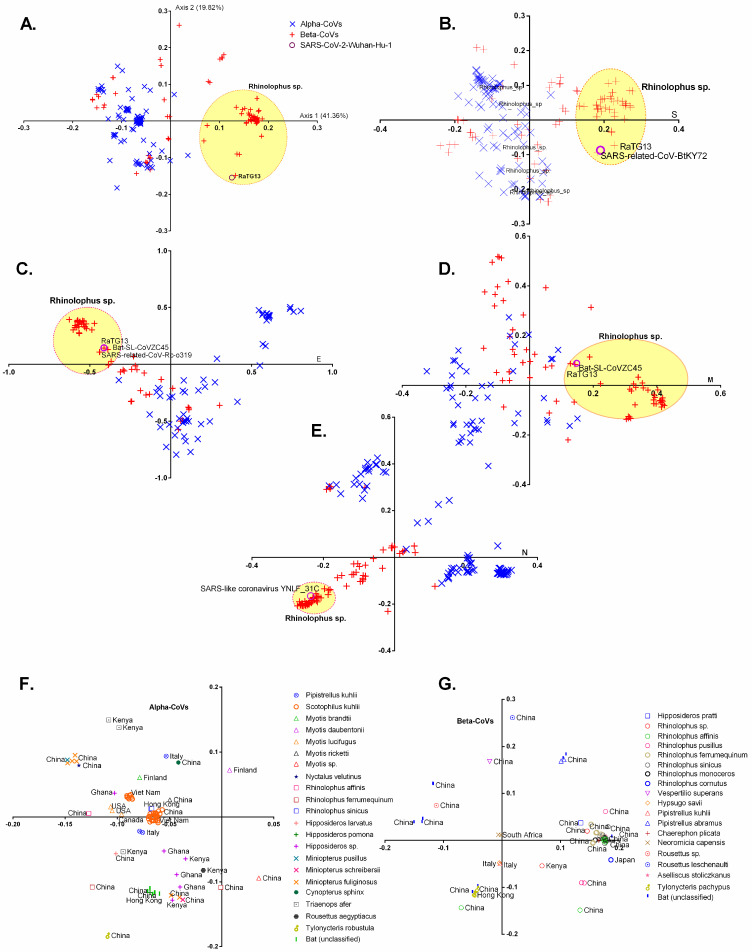
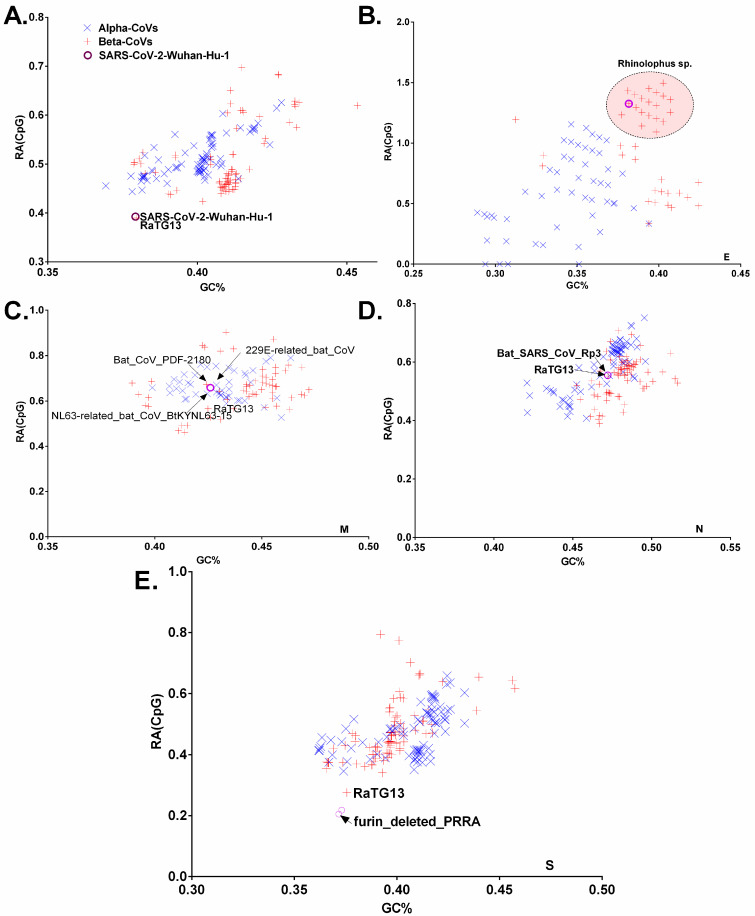
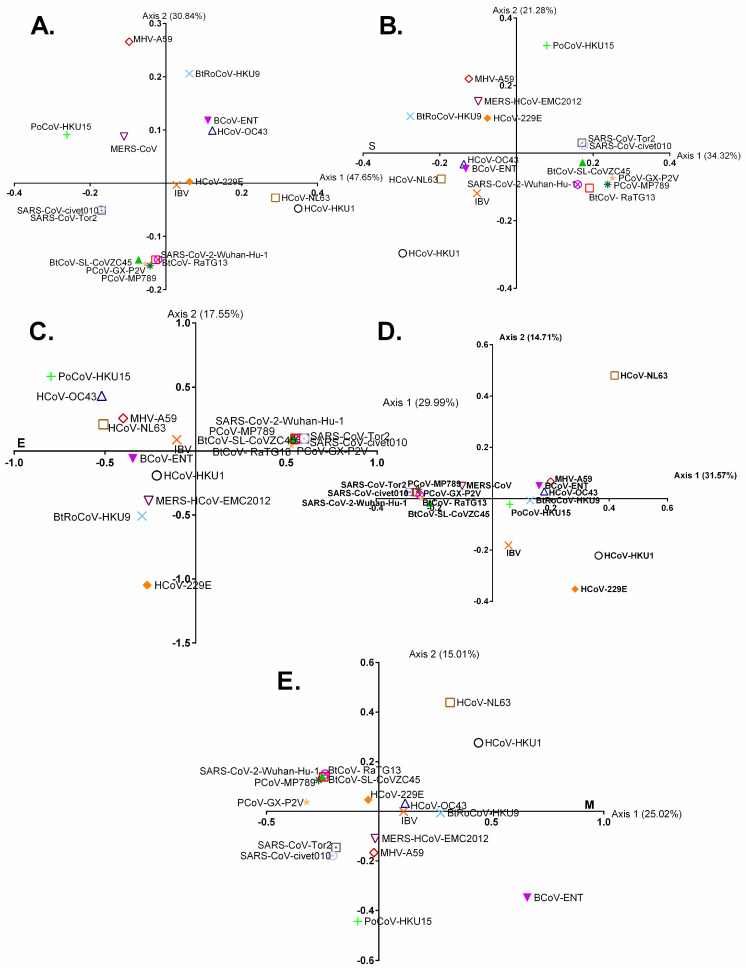
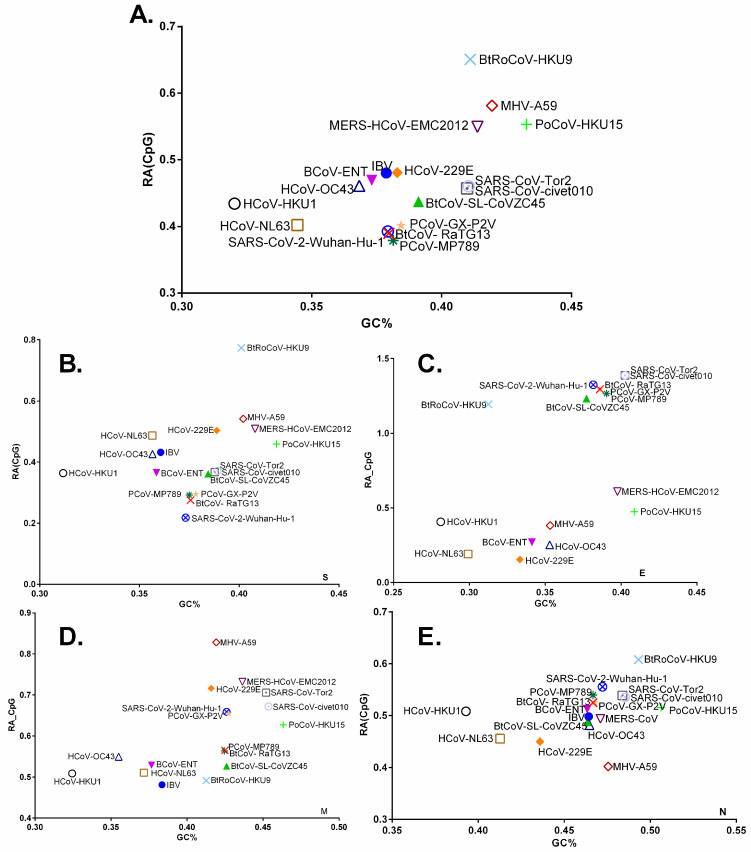
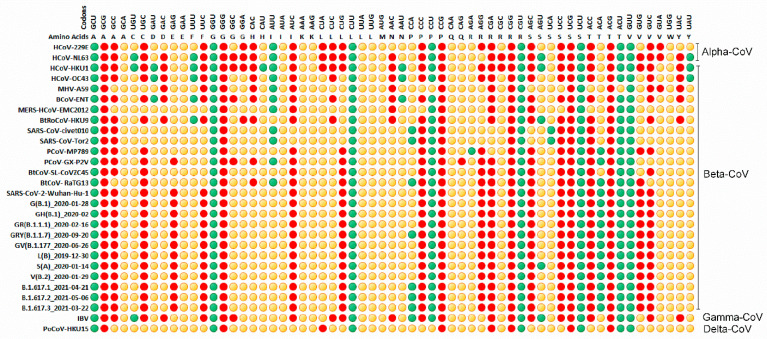
Many viruses that cause serious diseases in humans and animals, including the betacoronaviruses (beta-CoVs), such as SARS-CoV, MERS-CoV, and the recently identified SARS-CoV-2, have natural reservoirs in bats. Because these viruses rely entirely on the host cellular machinery for survival, their evolution is likely to be guided by the link between the codon usage of the virus and that of its host. As a result, specific cellular microenvironments of the diverse hosts and/or host tissues imprint peculiar molecular signatures in virus genomes. Our study is aimed at deciphering some of these signatures. Using a variety of genetic methods we demonstrated that trends in codon usage across chiroptera-hosted CoVs are collaboratively driven by geographically different host-species and temporal-spatial distribution. We not only found that chiroptera-hosted CoVs are the ancestors of SARS-CoV-2, but we also revealed that SARS-CoV-2 has the codon usage characteristics similar to those seen in CoVs infecting the sp. Surprisingly, the envelope gene of beta-CoVs infecting sp., including SARS-CoV-2, had extremely high CpG levels, which appears to be an evolutionarily conserved trait. The dissection of the furin cleavage site of various CoVs infecting hosts revealed host-specific preferences for arginine codons; however, arginine is encoded by a wider variety of synonymous codons in the murine CoV (MHV-A59) furin cleavage site. Our findings also highlight the latent diversity of CoVs in mammals that has yet to be fully explored.
许多导致人类和动物严重疾病的病毒,包括β冠状病毒(β-CoVs),如严重急性呼吸综合征冠状病毒(SARS-CoV)、中东呼吸综合征冠状病毒(MERS-CoV)和最近鉴定的 SARS-CoV-2,在蝙蝠中都有其自然宿主。由于这些病毒完全依赖宿主细胞机制生存,因此它们的进化可能受到病毒密码子使用与宿主密码子使用之间联系的指导。因此,不同宿主和/或宿主组织的特定细胞微环境会在病毒基因组中留下独特的分子特征。我们的研究旨在破译其中的一些特征。我们使用各种遗传方法证明,蝙蝠宿主 CoV 中的密码子使用趋势是由地理上不同的宿主物种和时空分布共同驱动的。我们不仅发现蝙蝠宿主 CoV 是 SARS-CoV-2 的祖先,还揭示了 SARS-CoV-2 具有与感染 sp.的 CoV 相似的密码子使用特征。令人惊讶的是,感染 sp.的β-CoV (包括 SARS-CoV-2)的包膜基因具有极高的 CpG 水平,这似乎是一种进化上保守的特征。对感染宿主的各种 CoV 的弗林裂解位点的剖析揭示了宿主对精氨酸密码子的特异性偏好;然而,在鼠 CoV(MHV-A59)弗林裂解位点中,精氨酸是由更广泛的同义密码子编码的。我们的研究结果还强调了哺乳动物中 CoV 的潜在多样性,这方面仍有待充分探索。