Yu Rui, Wu Yanyou, Xing Deke
Key Laboratory of Modern Agricultural Equipment and Technology, Ministry of Education, Institute of Agricultural Engineering, Jiangsu University, Zhenjiang 212013, China.
Research Center for Environmental Bio-Science and Technology, State Key Laboratory of Environmental Geochemistry, Institute of Geochemistry, Chinese Academy of Sciences, Guiyang 550081, China.
Plants (Basel). 2021 Aug 25;10(9):1772. doi: 10.3390/plants10091772.
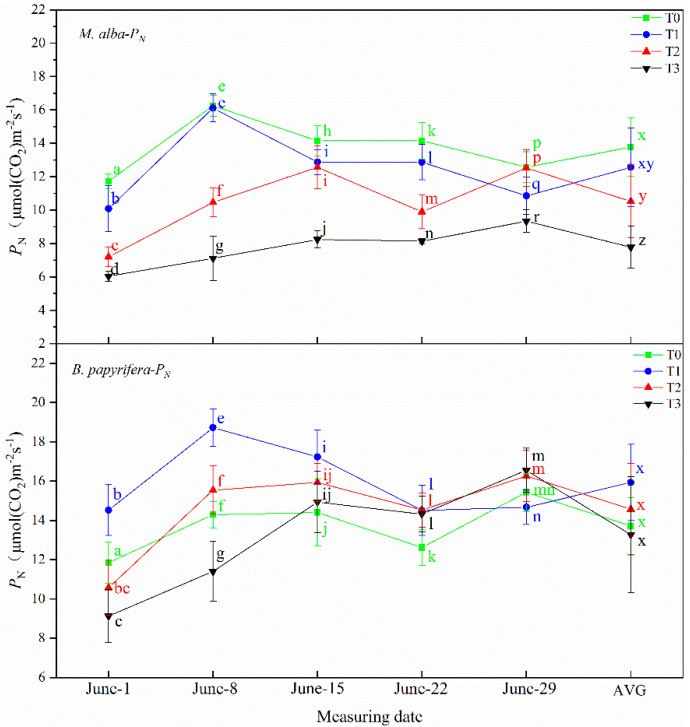
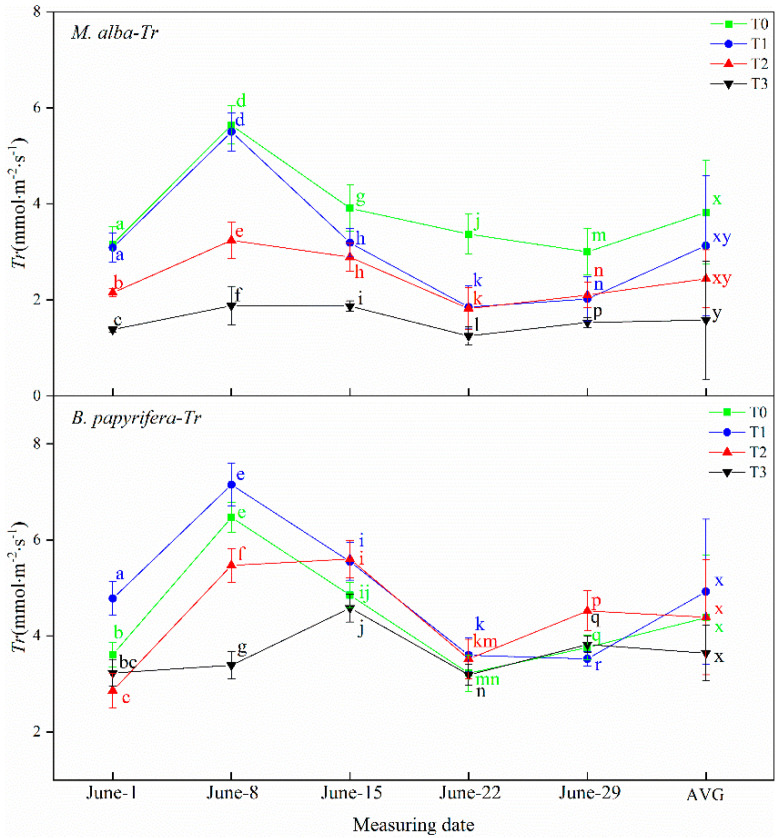
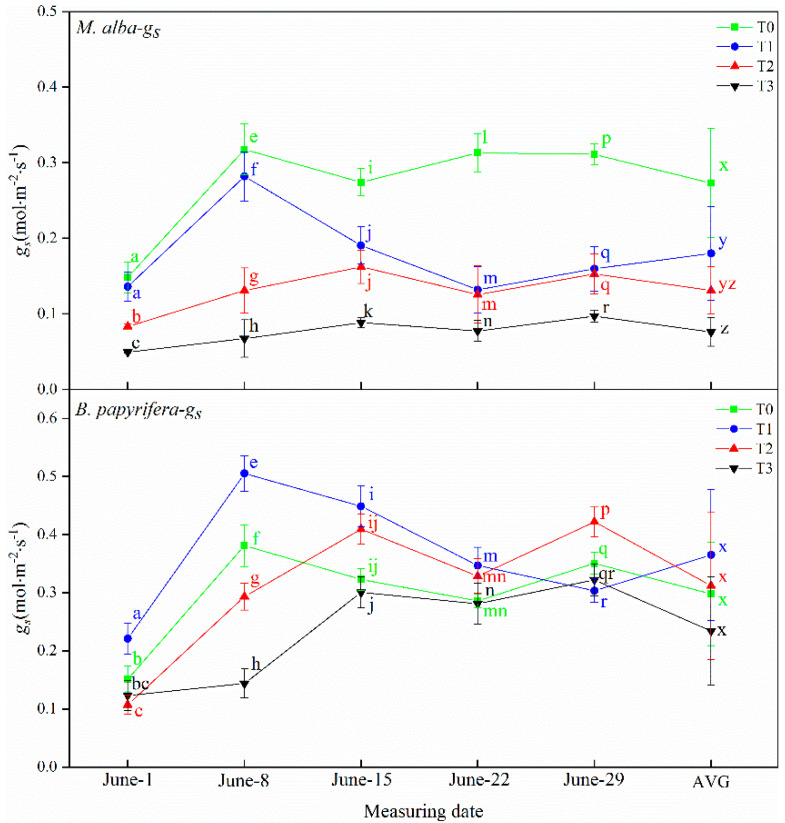
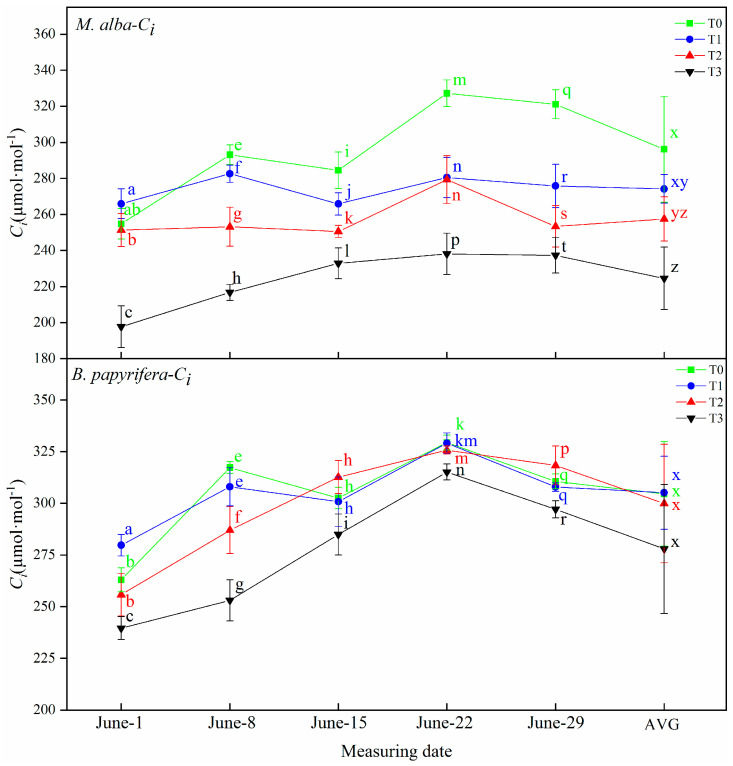
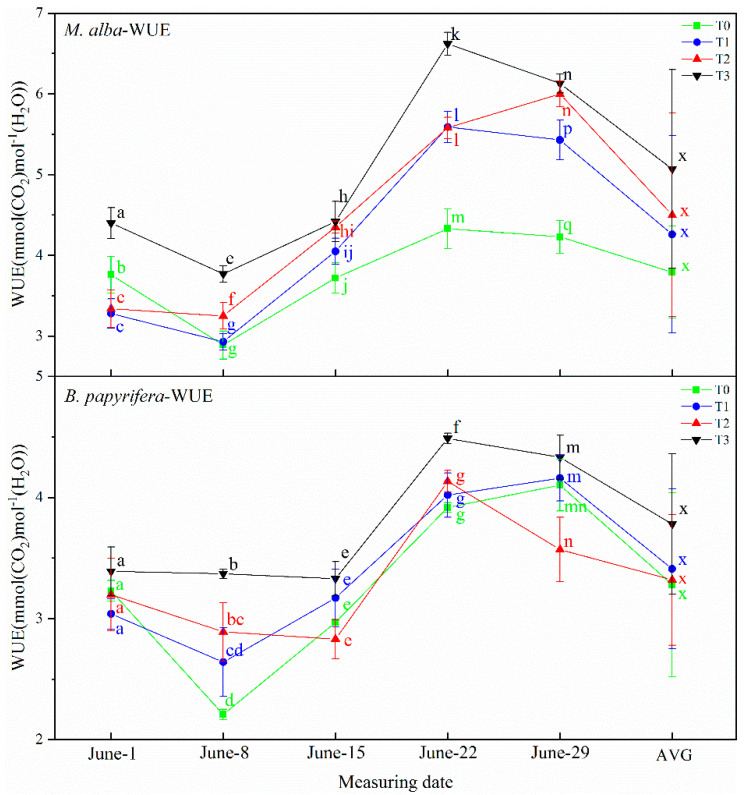
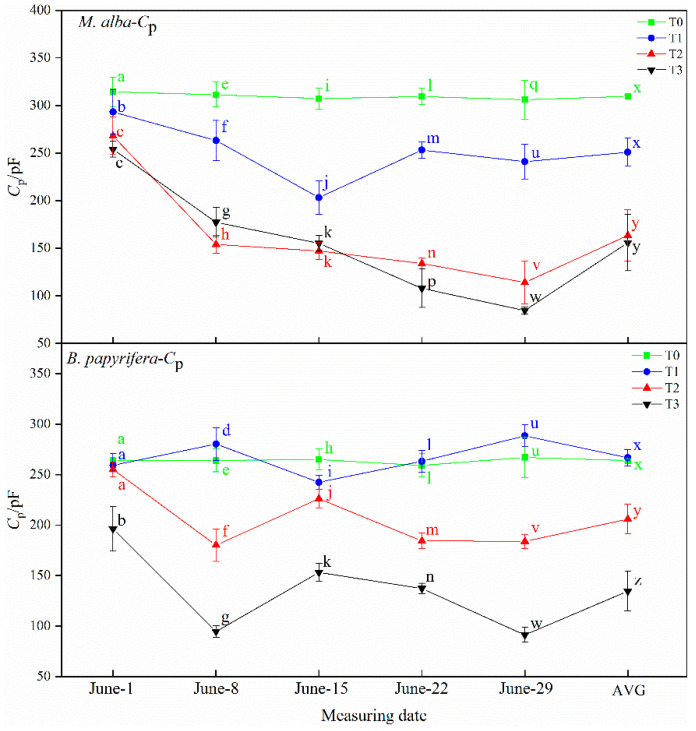
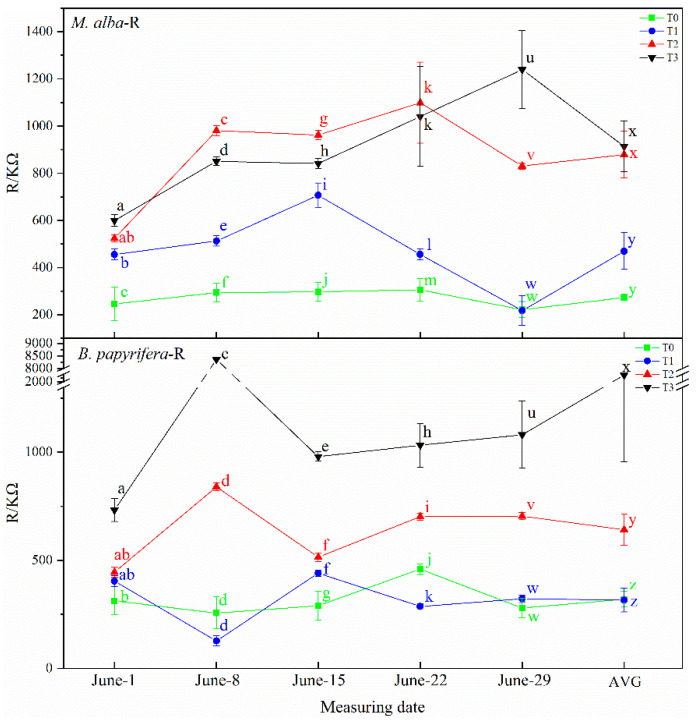
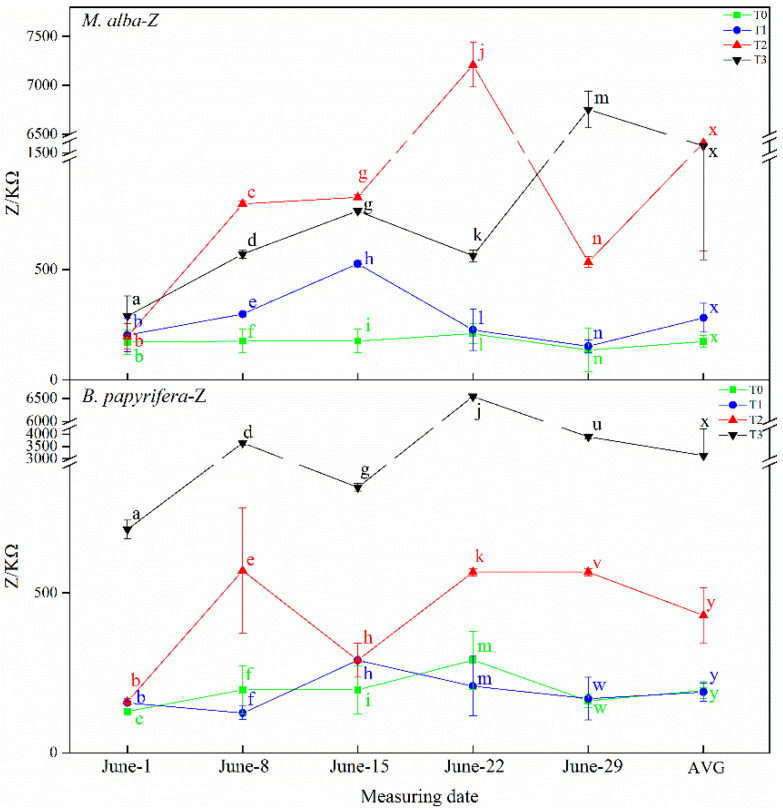
Drought is a key factor restricting plant survival, growth and development. The physiological parameters of plants are commonly used to determine the water status, in order to irrigate appropriately and save water. In this study, mulberry ( L.) and paper mulberry ( (L.) Vent.) seedlings were used as experimental materials, and four soil moisture treatments were set up for both plant species: 70-75% (CK: the control group, referred to as T0), 55-60% (T1: mild drought), 40-45% (T2: moderate drought), and 25-30% (T3: severe drought). The growth parameter of the plants was measured every two days from the onset of the treatment, the photosynthetic and electrophysiological parameters of the plants were measured every other week for a total of five times. The physiological responses and electrophysiological traits of leaves under different treatment levels were analyzed. The results showed that the photosynthetic and electrophysiological parameters could characterize the response of mulberry growth and development to soil water, and the growth and electrophysiological parameters could characterize the response of paper mulberry growth and development to soil water. Mild drought had no significant effects on the growth and development of mulberry and paper mulberry.
干旱是限制植物生存、生长和发育的关键因素。植物的生理参数通常用于确定水分状况,以便进行合理灌溉并节约用水。本研究以桑树(桑科)和构树(桑科构属)幼苗为实验材料,对两种植物均设置了四种土壤水分处理:70 - 75%(CK:对照组,简称T0)、55 - 60%(T1:轻度干旱)、40 - 45%(T2:中度干旱)和25 - 30%(T3:重度干旱)。从处理开始每隔两天测量一次植物的生长参数,每隔一周测量一次植物的光合和电生理参数,共测量五次。分析了不同处理水平下叶片的生理响应和电生理特性。结果表明,光合和电生理参数能够表征桑树生长发育对土壤水分的响应,生长和电生理参数能够表征构树生长发育对土壤水分的响应。轻度干旱对桑树和构树的生长发育没有显著影响。