Department of Radiation OncologyNanfang Hospital, Southern Medical UniversityGuangzhouGuangdong ProvinceChina.
Department of PathologyNanfang Hospital, Southern Medical UniversityGuangzhouGuangdong ProvinceChina.
Hepatology. 2022 Jun;75(6):1386-1401. doi: 10.1002/hep.32177. Epub 2021 Dec 6.
Poor response to ionizing radiation (IR) due to resistance remains a clinical challenge. Altered metabolism represents a defining characteristic of nearly all types of cancers. However, how radioresistance is linked to metabolic reprogramming remains elusive in hepatocellular carcinoma (HCC).
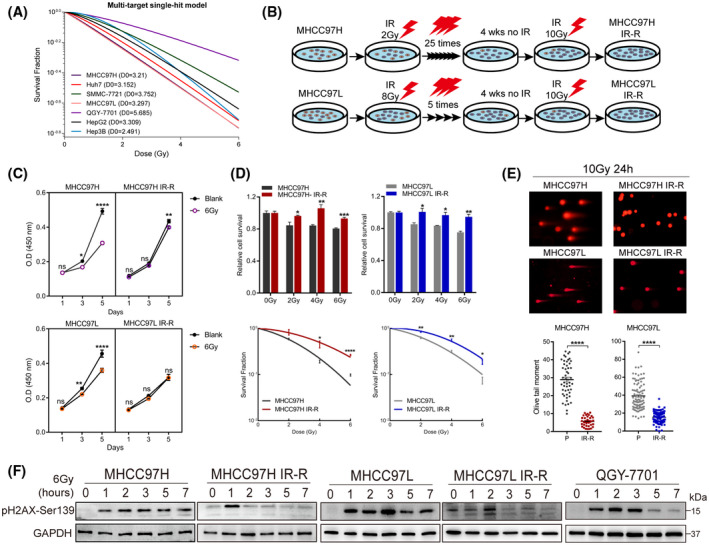
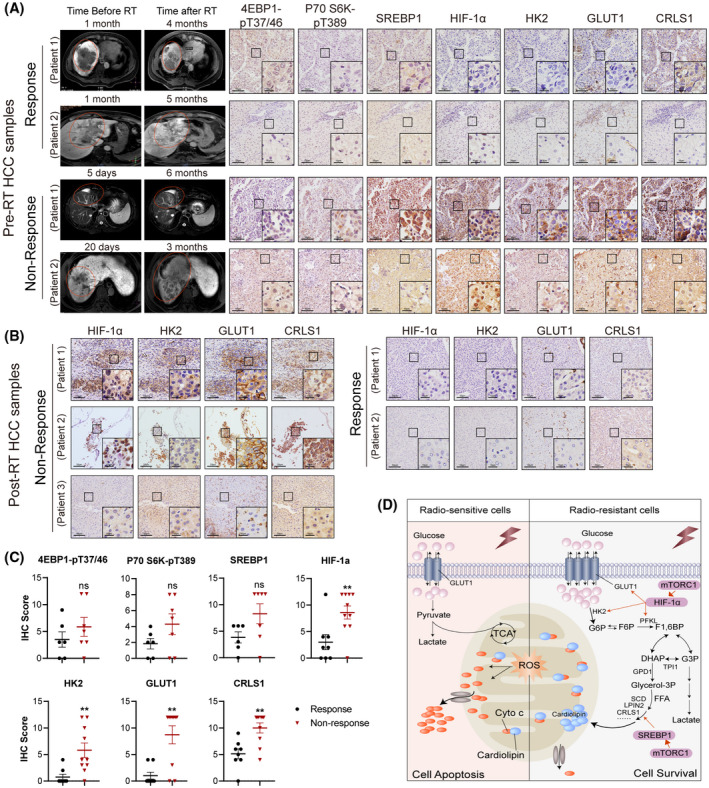
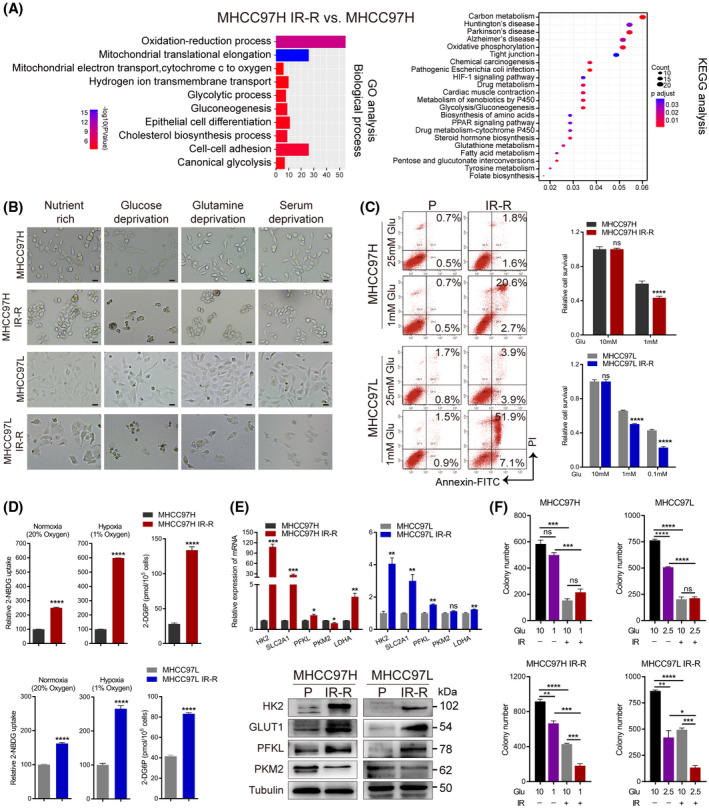
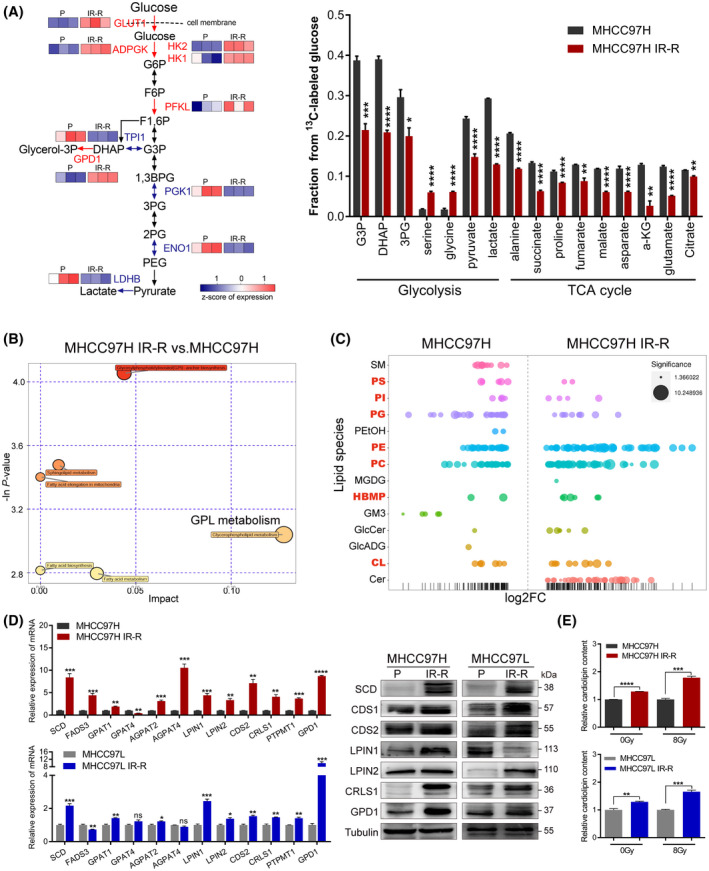
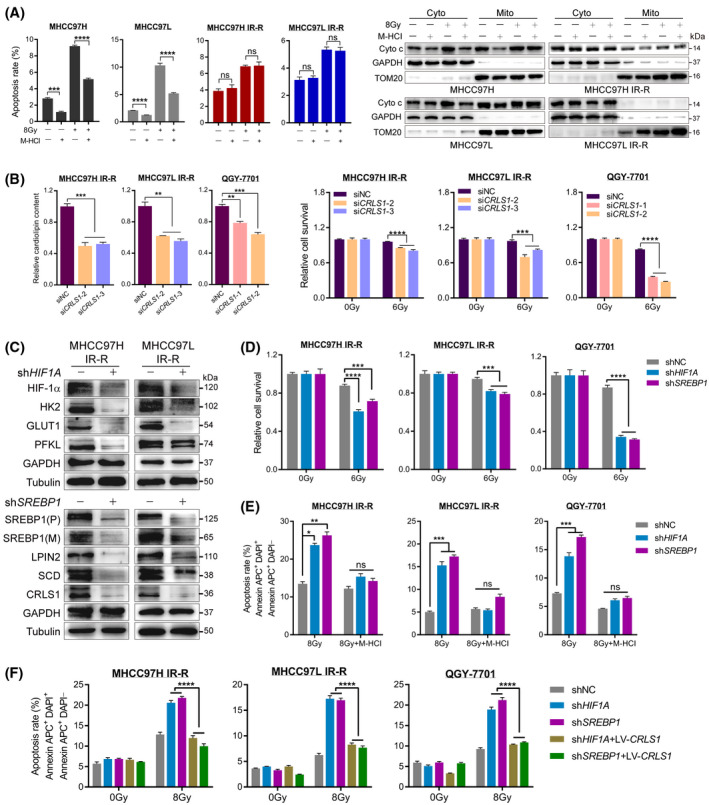
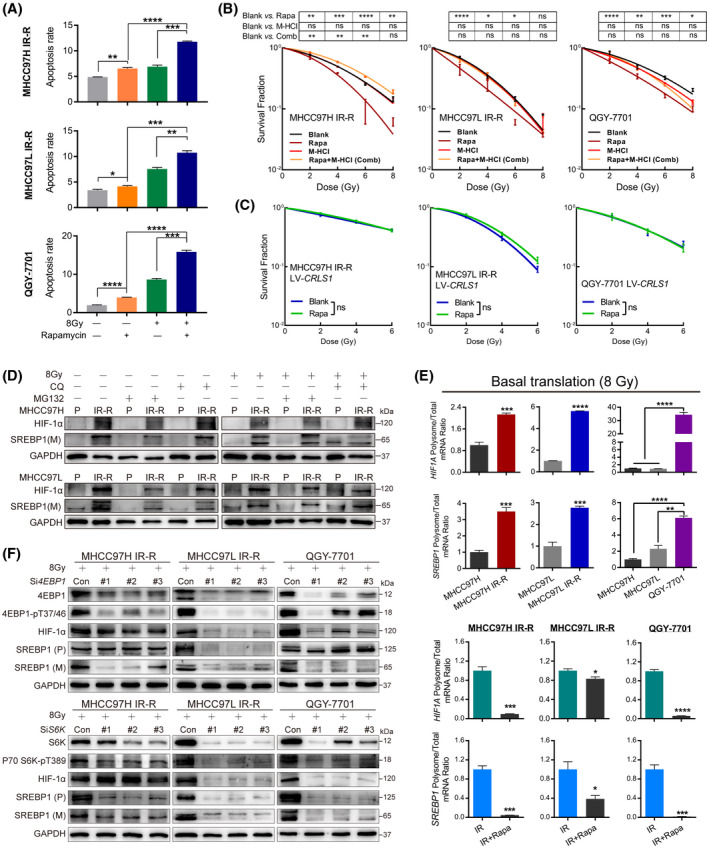
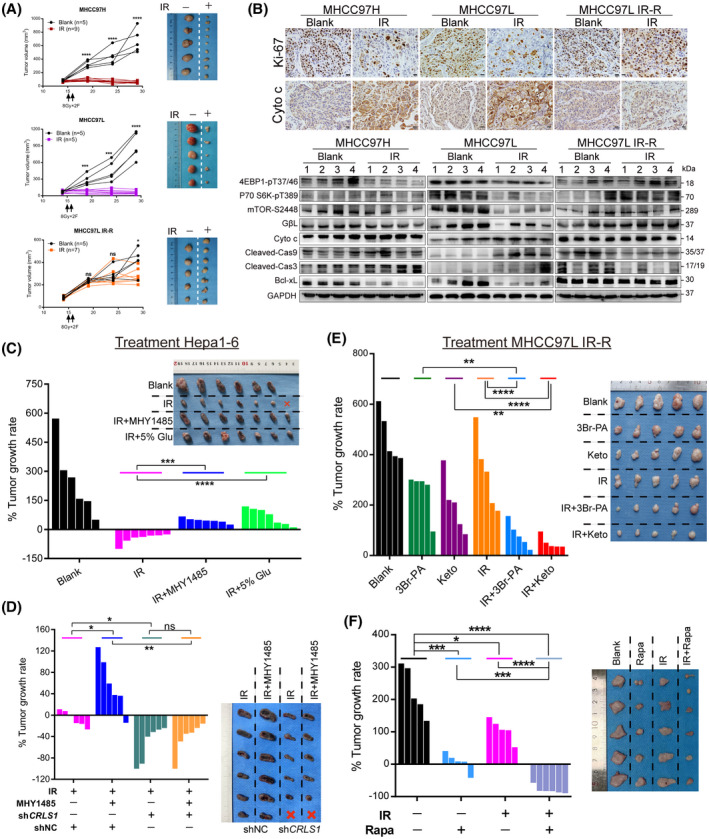
Baseline radiation responsiveness of different HCC cells were identified and cells with acquired radio-resistance were generated. By performing proteomics, metabolomics, metabolic flux, and other functional studies, we depicted a metabolic phenotype that mediates radiation resistance in HCC, whereby increased glucose flux leads to glucose addiction in radioresistant HCC cells and a corresponding increase in glycerophospholipids biosynthesis to enhance the levels of cardiolipin. Accumulation of cardiolipin dampens the effectiveness of IR by inhibiting cytochrome c release to initiate apoptosis. Mechanistically, mammalian target of rapamycin complex 1 (mTORC1) signaling-mediated translational control of hypoxia inducible factor-1α (HIF-1α) and sterol regulatory element-binding protein-1 (SREBP1) remodels such metabolic cascade. Targeting mTORC1 or glucose to cardiolipin synthesis, in combination with IR, strongly diminishes tumor burden. Finally, activation of glucose metabolism predicts poor response to radiotherapy in cancer patients.
We demonstrate a link between radiation resistance and metabolic integration and suggest that metabolically dismantling the radioresistant features of tumors may provide potential combination approaches for radiotherapy in HCC.
由于耐药性导致对电离辐射(IR)的反应不佳仍然是临床挑战。代谢改变是几乎所有类型癌症的一个明确特征。然而,放射抗性与代谢重编程之间的联系在肝细胞癌(HCC)中仍然难以捉摸。
鉴定了不同 HCC 细胞的基线辐射反应性,并生成了获得放射抗性的细胞。通过进行蛋白质组学、代谢组学、代谢通量和其他功能研究,我们描绘了一种代谢表型,介导 HCC 中的放射抗性,其中增加的葡萄糖通量导致放射抗性 HCC 细胞中的葡萄糖成瘾,以及甘油磷脂生物合成相应增加,以增强心磷脂水平。心磷脂的积累通过抑制细胞色素 c 释放来启动细胞凋亡,从而降低 IR 的有效性。从机制上讲,雷帕霉素复合物 1(mTORC1)信号转导介导的低氧诱导因子-1α(HIF-1α)和固醇调节元件结合蛋白-1(SREBP1)的翻译控制重塑了这种代谢级联反应。靶向 mTORC1 或葡萄糖向心磷脂合成,与 IR 联合使用,可显著降低肿瘤负担。最后,葡萄糖代谢的激活预测癌症患者对放疗的反应不佳。
我们证明了放射抗性与代谢整合之间的联系,并表明代谢上破坏肿瘤的放射抗性特征可能为 HCC 的放疗提供潜在的联合治疗方法。