Department of Radiation Oncology, Jinling Hospital, Nanjing Medical School University, Nanjing, Jiangsu, China.
Department of Medical Oncology, Jinling Hospital, School of Medicine, Nanjing University, Nanjing, Jiangsu, China.
BMC Cancer. 2019 Nov 8;19(1):1075. doi: 10.1186/s12885-019-6312-y.
Radiotherapy failure is a significant clinical challenge due to the development of resistance in the course of treatment. Therefore, it is necessary to further study the radiation resistance mechanism of HCC. In our early study, we have showed that the expression of Aurora-A mRNA was upregulated in HCC tissue samples or cells, and Aurora-A promoted the malignant phenotype of HCC cells. However, the effect of Aurora-A on the development of HCC radioresistance is not well known.
In this study, colony formation assay, MTT assays, flow cytometry assays, RT-PCR assays, Western blot, and tumor xenografts experiments were used to identify Aurora-A promotes the radioresistance of HCC cells by decreasing IR-induced apoptosis in vitro and in vivo. Dual-luciferase reporter assay, MTT assays, flow cytometry assays, and Western blot assay were performed to show the interactions of Aurora-A and NF-κB.
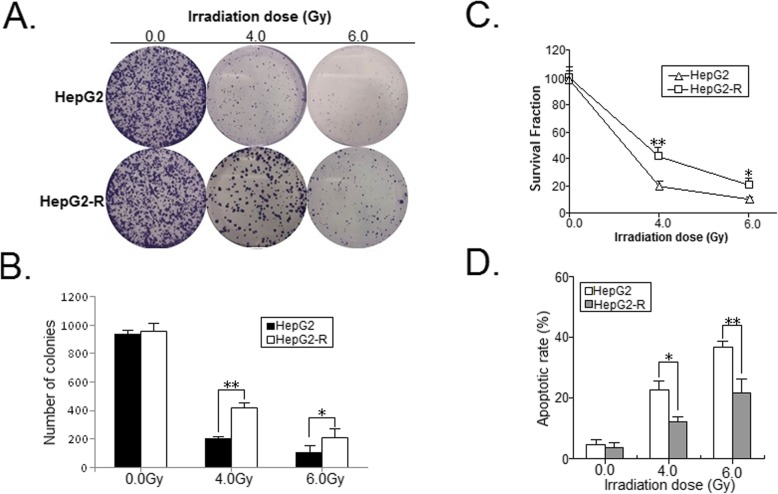
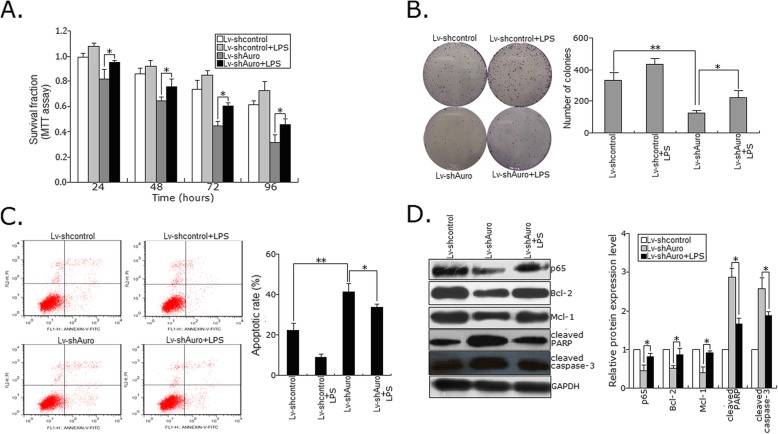
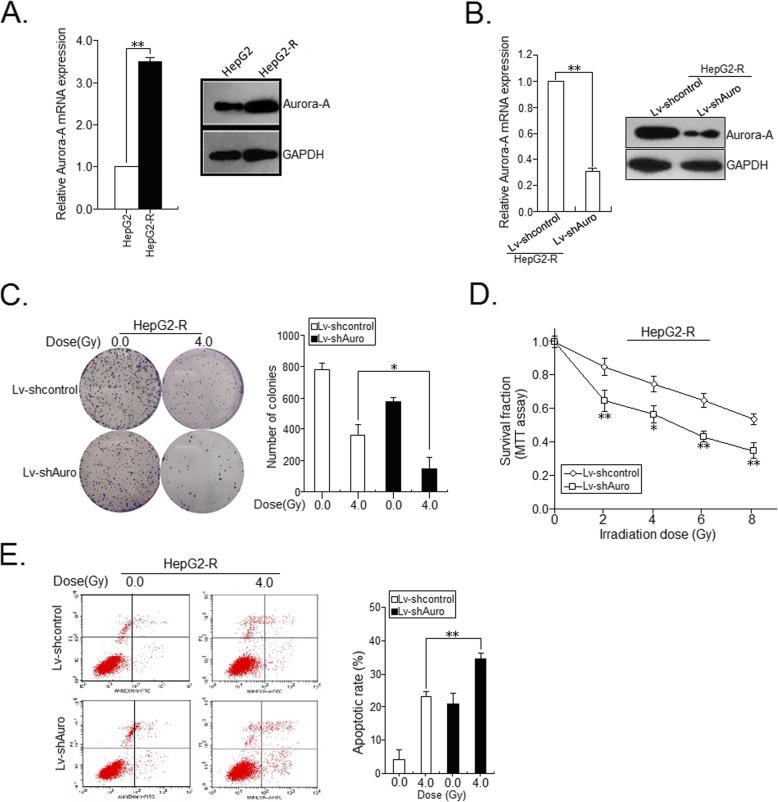
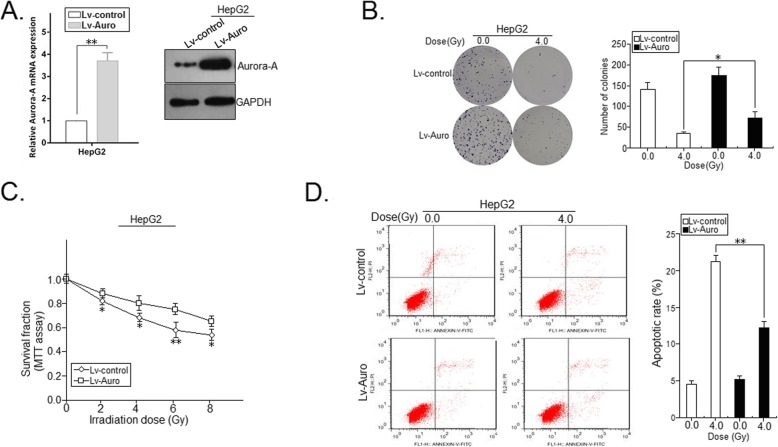
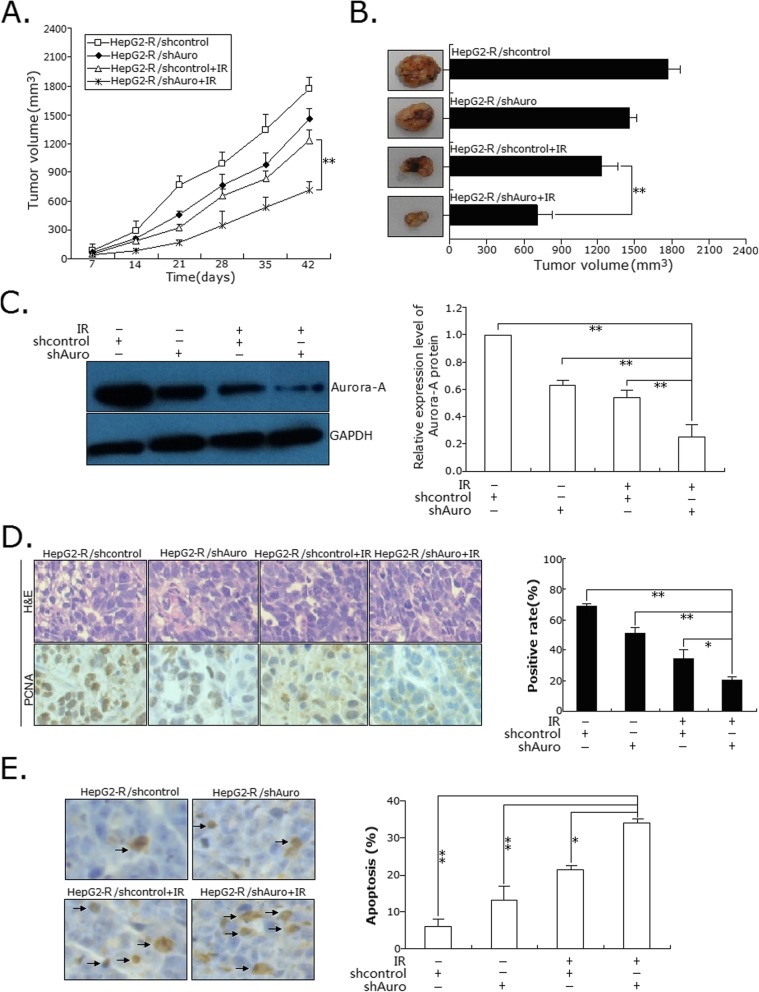
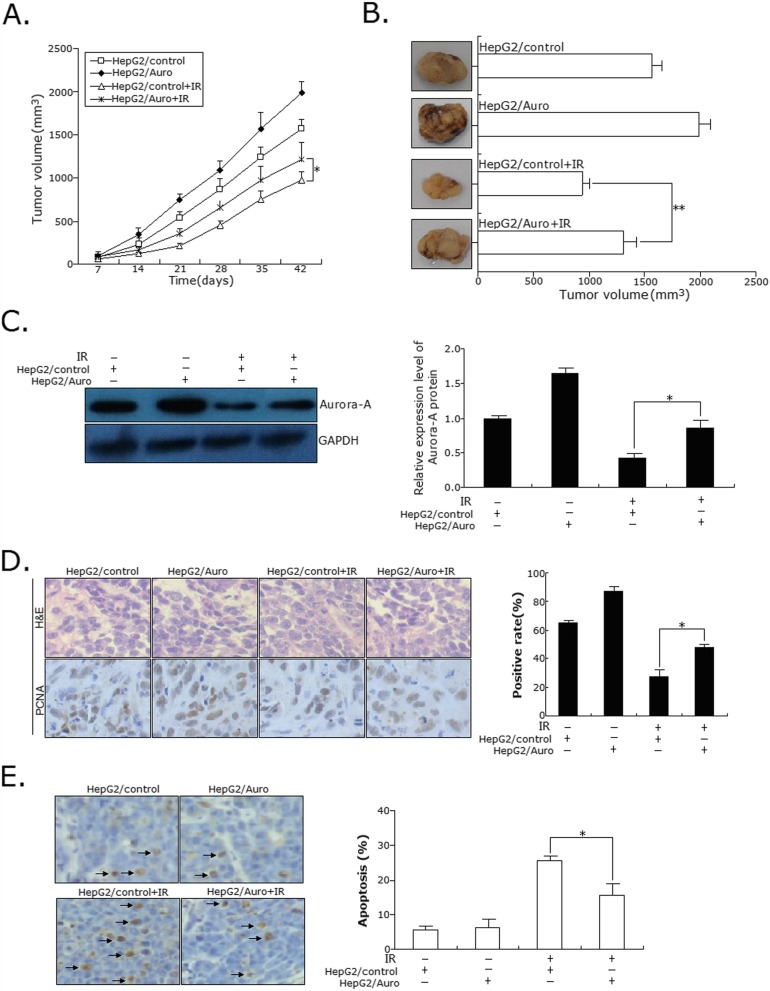
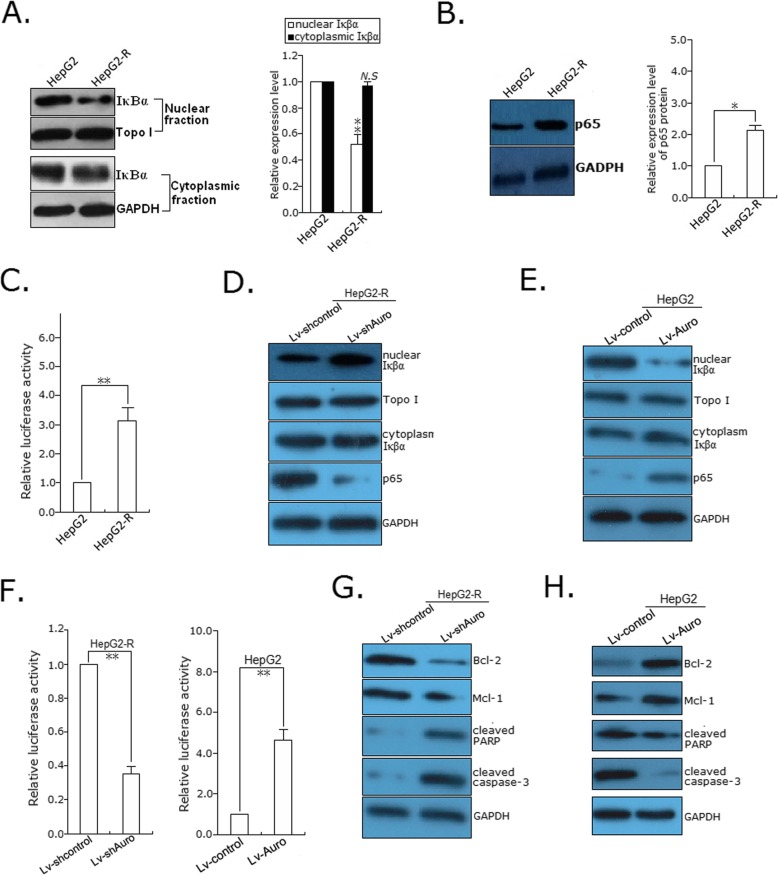
We established radioresistance HCC cell lines (HepG2-R) and found that Aurora-A was significantly upregulated in those radioresistant HCC cells in comparison with their parental HCC cells. Knockdown of Aurora-A increased radiosensitivity of radioresistant HCC cells both in vivo and in vitro by enhancing irradiation-induced apoptosis, while upregulation of Aurora-A decreased radiosensitivity by reducing irradiation-induced apoptosis of parental cells. In addition, we have showed that Aurora-A could promote the expression of nuclear IkappaB-alpha (IκBα) protein while enhancing the activity of NF-kappaB (κB), thereby promoted expression of NF-κB pathway downstream effectors, including proteins (Mcl-1, Bcl-2, PARP, and caspase-3), all of which are associated with apoptosis.
Aurora-A reduces radiotherapy-induced apoptosis by activating NF-κB signaling, thereby contributing to HCC radioresistance. Our results provided the first evidence that Aurora-A was essential for radioresistance in HCC and targeting this molecular would be a potential strategy for radiosensitization in HCC.
放疗失败是一个重大的临床挑战,因为在治疗过程中会产生耐药性。因此,有必要进一步研究 HCC 的放射抵抗机制。在我们的早期研究中,我们已经表明 Aurora-A mRNA 的表达在 HCC 组织样本或细胞中上调,并且 Aurora-A 促进了 HCC 细胞的恶性表型。然而,Aurora-A 对 HCC 放射抵抗发展的影响尚不清楚。
在这项研究中,我们使用集落形成实验、MTT assays、流式细胞术 assays、RT-PCR assays、Western blot 和肿瘤异种移植实验来鉴定 Aurora-A 通过减少体外和体内的 IR 诱导的细胞凋亡来促进 HCC 细胞的放射抵抗。双荧光素酶报告基因 assay、MTT assays、流式细胞术 assays 和 Western blot assay 用于显示 Aurora-A 和 NF-κB 的相互作用。
我们建立了放射抵抗 HCC 细胞系(HepG2-R),并发现与亲本 HCC 细胞相比,这些放射抵抗 HCC 细胞中 Aurora-A 显著上调。在体内和体外,敲低 Aurora-A 通过增强照射诱导的细胞凋亡增加了放射抵抗 HCC 细胞的放射敏感性,而上调 Aurora-A 通过减少照射诱导的亲本细胞凋亡降低了放射敏感性。此外,我们已经表明,Aurora-A 可以促进核 IkappaB-alpha(IκBα)蛋白的表达,同时增强 NF-kappaB(κB)的活性,从而促进 NF-κB 通路下游效应物的表达,包括与凋亡相关的蛋白(Mcl-1、Bcl-2、PARP 和 caspase-3)。
Aurora-A 通过激活 NF-κB 信号通路减少放疗诱导的细胞凋亡,从而导致 HCC 放射抵抗。我们的研究结果首次证明 Aurora-A 对 HCC 的放射抵抗至关重要,靶向该分子可能是 HCC 放射增敏的潜在策略。