Key Laboratory of Animal Models and Human Disease Mechanisms of the Chinese Academy of Sciences & Yunnan Province, and KIZ/CUHK Joint Laboratory of Bioresources and Molecular Research in Common Diseases, Kunming Institute of Zoology, Chinese Academy of Sciences, Kunming, Yunnan 650204, China.
Kunming College of Life Science, University of Chinese Academy of Sciences, Kunming, Yunnan 650204, China.
Zool Res. 2021 Nov 18;42(6):692-709. doi: 10.24272/j.issn.2095-8137.2021.272.
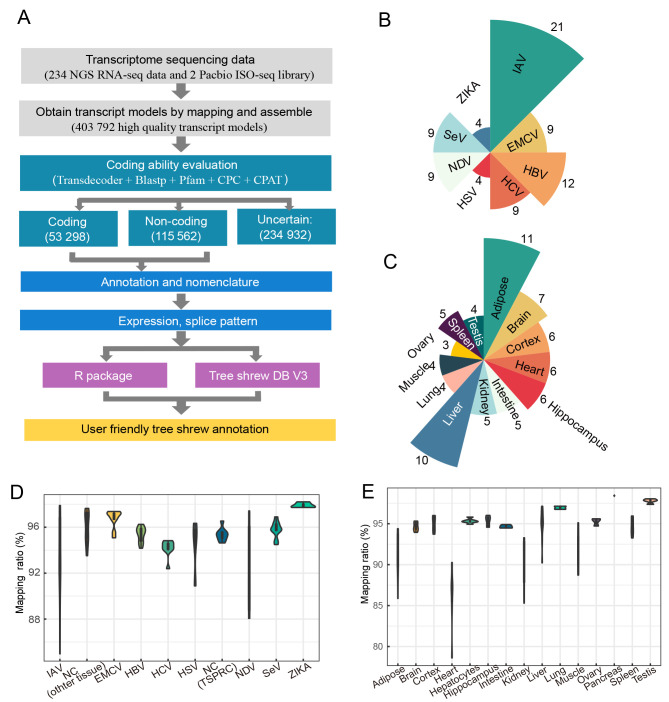
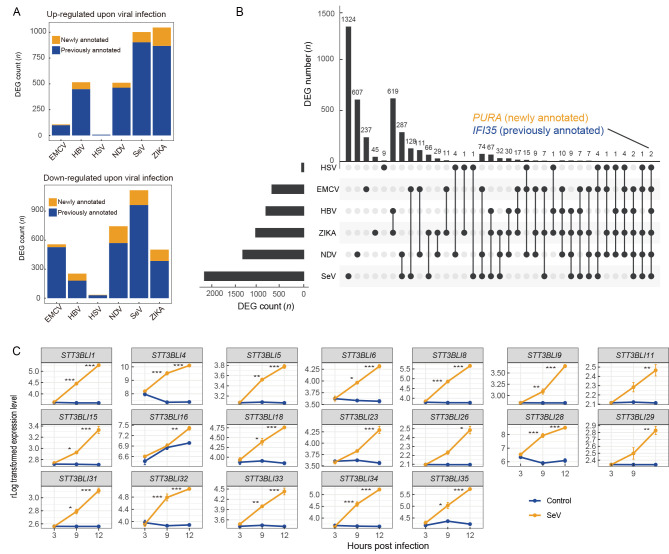
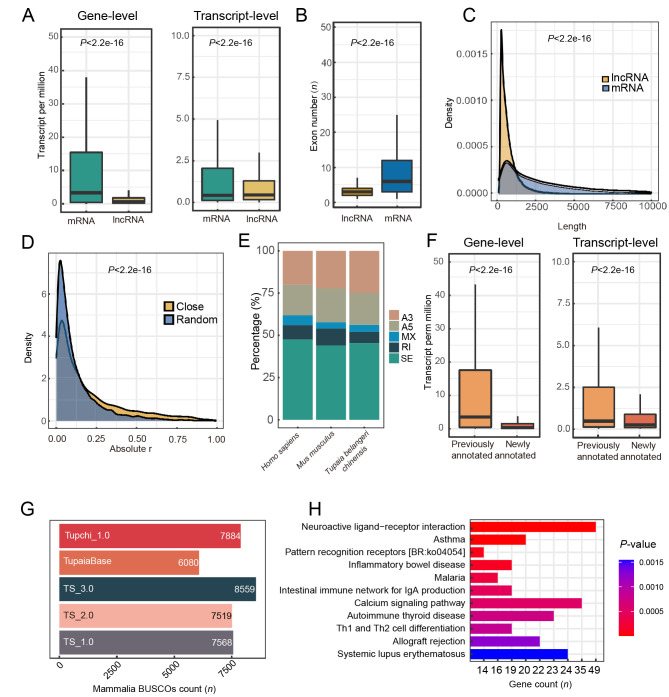
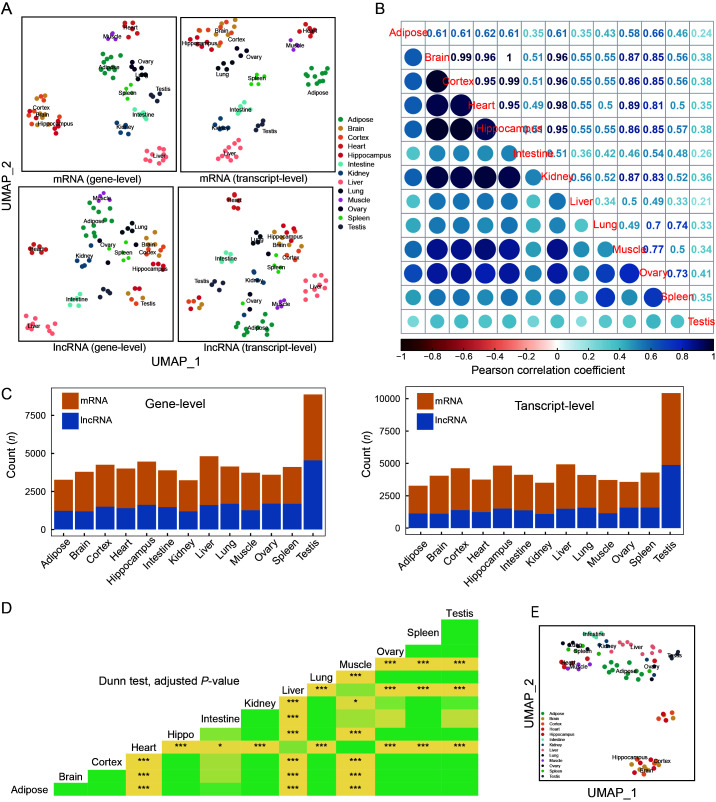
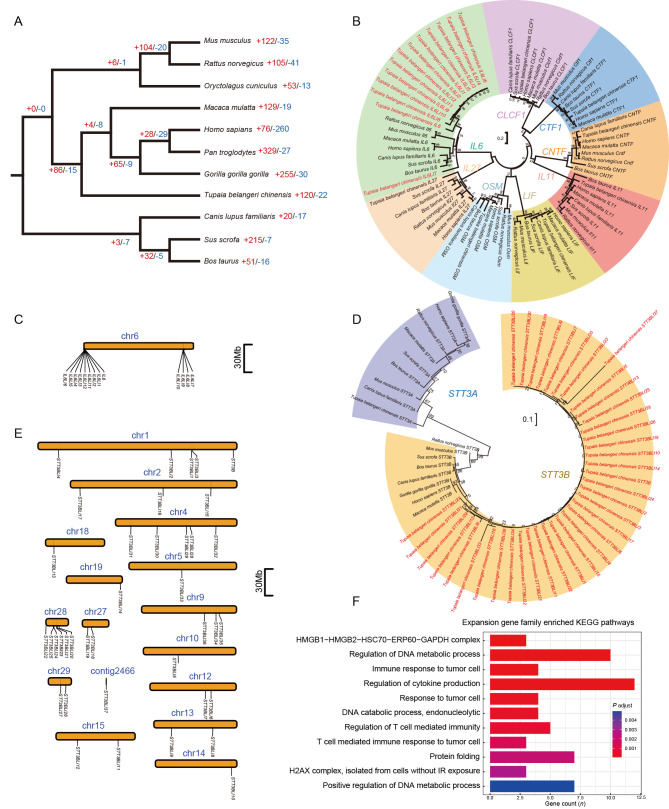
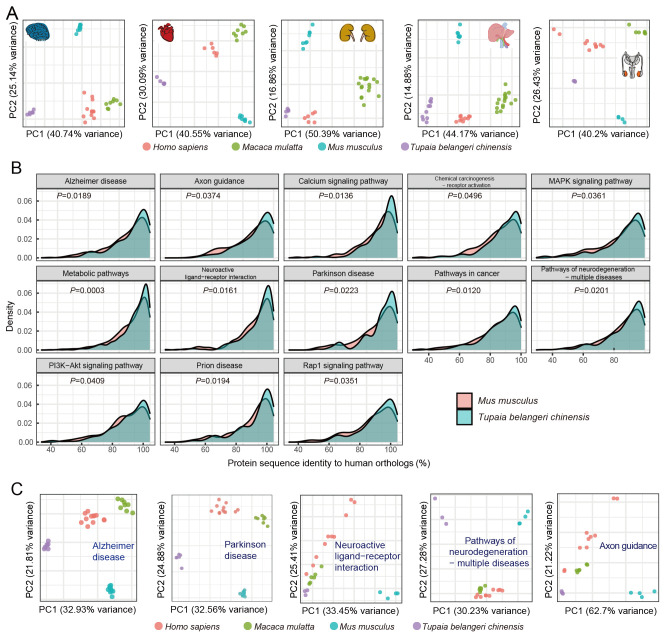
The Chinese tree shrew ( ) is emerging as an important experimental animal in multiple fields of biomedical research. Comprehensive reference genome annotation for both mRNA and long non-coding RNA (lncRNA) is crucial for developing animal models using this species. In the current study, we collected a total of 234 high-quality RNA sequencing (RNA-seq) datasets and two long-read isoform sequencing (ISO-seq) datasets and improved the annotation of our previously assembled high-quality chromosome-level tree shrew genome. We obtained a total of 3 514 newly annotated coding genes and 50 576 lncRNA genes. We also characterized the tissue-specific expression patterns and alternative splicing patterns of mRNAs and lncRNAs and mapped the orthologous relationships among 11 mammalian species using the current annotated genome. We identified 144 tree shrew-specific gene families, including interleukin 6 () and STT3 oligosaccharyltransferase complex catalytic subunit B (), which underwent significant changes in size. Comparison of the overall expression patterns in tissues and pathways across four species (human, rhesus monkey, tree shrew, and mouse) indicated that tree shrews are more similar to primates than to mice at the tissue-transcriptome level. Notably, the newly annotated purine rich element binding protein A () gene and the gene family showed dysregulation upon viral infection. The updated version of the tree shrew genome annotation (KIZ version 3: TS_3.0) is available at http://www.treeshrewdb.org and provides an essential reference for basic and biomedical studies using tree shrew animal models.
中国树鼩( )正逐渐成为生物医学研究多个领域的重要实验动物。综合注释 mRNA 和长非编码 RNA(lncRNA)的参考基因组对于利用该物种开发动物模型至关重要。在本研究中,我们共收集了 234 个高质量的 RNA 测序(RNA-seq)数据集和 2 个长读长异构体测序(ISO-seq)数据集,并改进了我们之前组装的高质量染色体水平树鼩基因组的注释。我们共获得了 3514 个新注释的编码基因和 50576 个 lncRNA 基因。我们还对 mRNA 和 lncRNA 的组织特异性表达模式和可变剪接模式进行了特征分析,并利用当前注释的基因组对 11 种哺乳动物进行了同源基因关系的映射。我们鉴定了 144 个树鼩特有的基因家族,包括白细胞介素 6()和 STT3 寡糖基转移酶复合物催化亚基 B(),它们的大小发生了显著变化。比较四个物种(人、恒河猴、树鼩和小鼠)的组织和通路的整体表达模式表明,在组织转录组水平上,树鼩与灵长类动物比与小鼠更为相似。值得注意的是,新注释的嘌呤丰富元件结合蛋白 A()基因和基因家族在病毒感染时表现出失调。更新的树鼩基因组注释版本(KIZ 版本 3:TS_3.0)可在 http://www.treeshrewdb.org 上获取,为使用树鼩动物模型进行基础和生物医学研究提供了重要参考。