He Siyang, Stratigaki Maria, Centeno Silvia P, Dreuw Andreas, Göstl Robert
DWI - Leibniz Institute for Interactive Materials, Forckenbeckstr. 50, 52056, Aachen, Germany.
Institute of Technical and Macromolecular Chemistry, RWTH Aachen University, Worringerweg 1, 52074, Aachen, Germany.
Chemistry. 2021 Nov 17;27(64):15889-15897. doi: 10.1002/chem.202102938. Epub 2021 Oct 13.
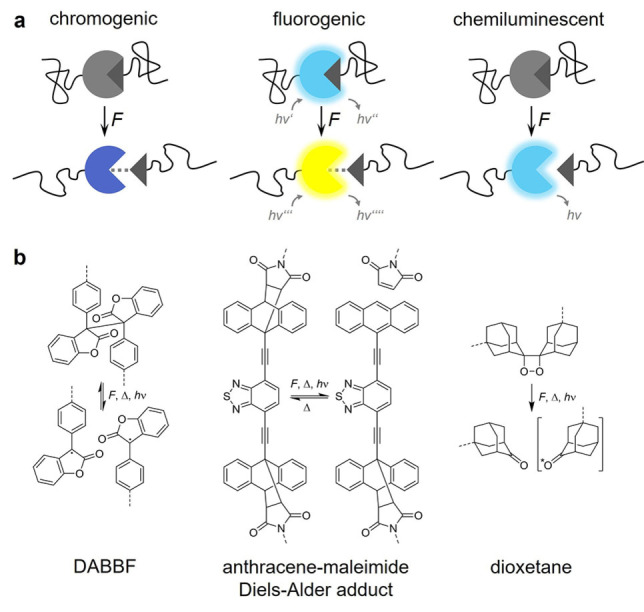
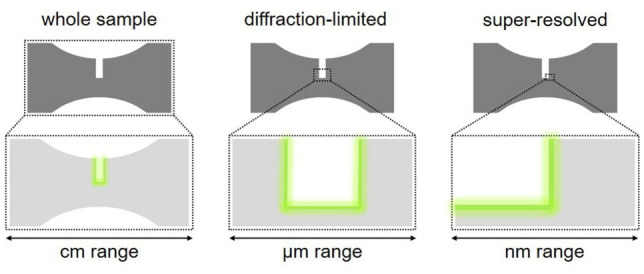
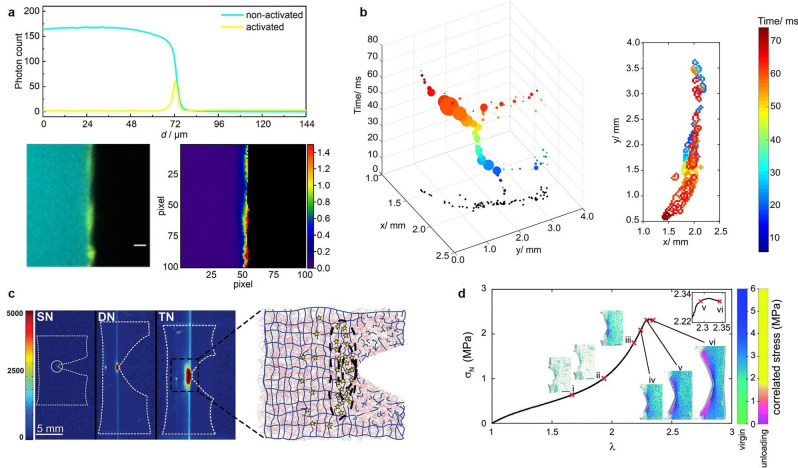
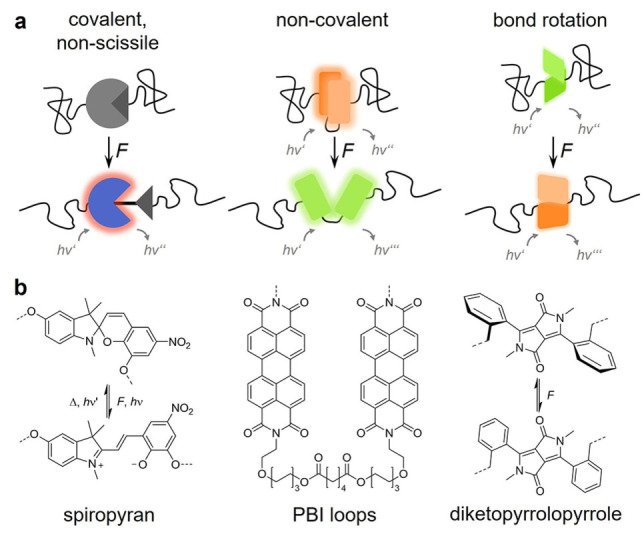
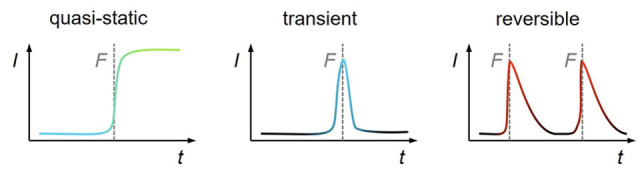
The correlation of mechanical properties of polymer materials with those of their molecular constituents is the foundation for their holistic comprehension and eventually for improved material designs and syntheses. Over the last decade, optical force probes (OFPs) were developed, shedding light on various unique mechanical behaviors of materials. The properties of polymers are diverse, ranging from soft hydrogels to ultra-tough composites, from purely elastic rubbers to viscous colloidal solutions, and from transparent glasses to super black dyed coatings. Only very recently, researchers started to develop tailored OFP solutions that account for such material requirements in energy (both light and force), in time, and in their spatially detectable resolution. We here highlight notable recent examples and identify future challenges in this emergent field.
聚合物材料的力学性能与其分子成分的力学性能之间的相关性是全面理解这些材料的基础,最终也是改进材料设计与合成的基础。在过去十年中,光学力探针(OFP)得以开发,为揭示材料的各种独特力学行为带来了曙光。聚合物的性质多种多样,从柔软的水凝胶到超坚韧的复合材料,从纯弹性橡胶到粘性胶体溶液,从透明玻璃到超黑色染色涂层。直到最近,研究人员才开始开发定制的光学力探针解决方案,以满足这些材料在能量(光和力)、时间以及空间可检测分辨率方面的需求。我们在此重点介绍该新兴领域近期的显著实例,并明确未来的挑战。