Department of Cardiovascular, First Affiliated Hospital of Soochow University, Suzhou, China.
Department of Infection, First Affiliated Hospital of Soochow University, Suzhou, China.
Ann Noninvasive Electrocardiol. 2021 Nov;26(6):e12891. doi: 10.1111/anec.12891. Epub 2021 Sep 28.
To investigate the main causes, risk factors, and prognosis of patients hospitalized with syncope.
The patients admitted due to syncope were included. We analyzed the etiology, risk factors, and prognosis of patients with an average follow-up of 15.3 months.
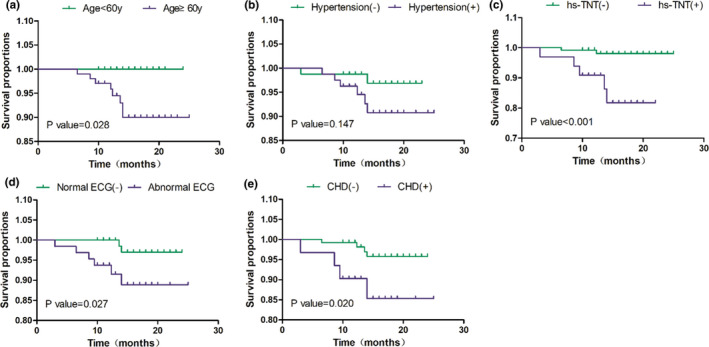
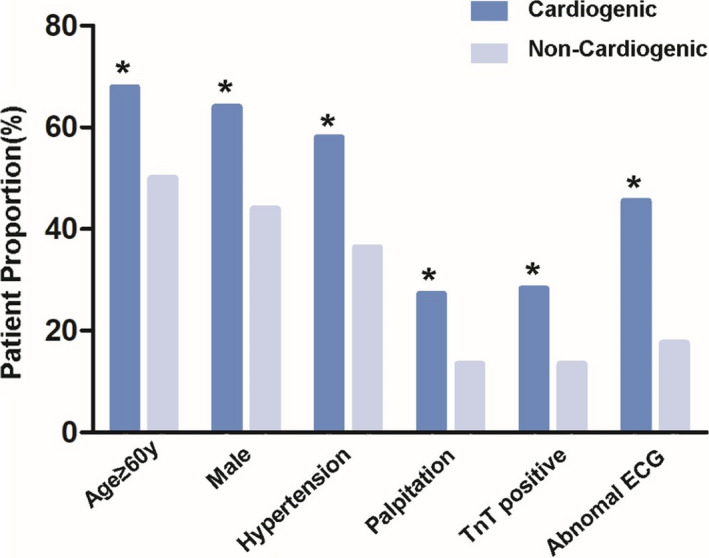
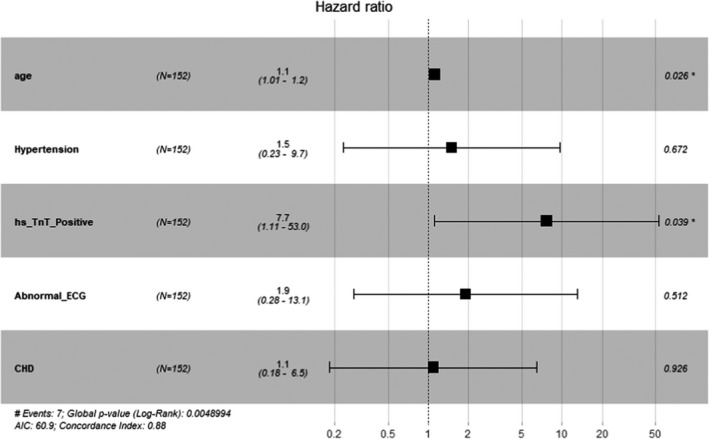
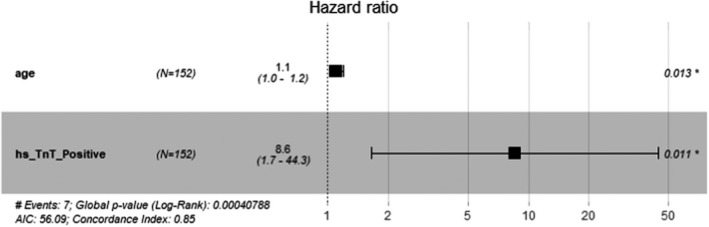
High-risk factors for cardiogenic syncope included age ≥60, male, hypertension, palpitation, troponin T-positive, abnormal ECG, CHD history, and syncope-related trauma. Mortality rate was 4.6%, recurrence rate of syncope was 10.5%, and the rehospitalization rate was 8.5%. Univariate analysis showed that prognosis of syncope was related to age ≥60 years old, hypertension, positive troponin T, abnormal electrocardiogram, and coronary heart disease (p < .05). Multivariate Cox proportional hazard analysis showed that age ≥60 years old (p = .021) and high-sensitivity troponin-positive (p = .024) were strongly related to the prognosis of syncope. Kaplan-Meier curve showed statistical difference in the survival rate between the groups divided by age ≥60 years (p = .028), hs-TnT-positive (p < .001), abnormal ECG (p = .027), and history of CHD (p = .020).
High-risk factors for cardiogenic syncope included age ≥60, male, hypertension, palpitation, troponin T-positive, abnormal ECG, CHD family history, and syncope-related trauma. Age, hypertension, troponin T-positive, abnormal ECG, and CHD history were associated with the prognosis of syncope.
探讨晕厥住院患者的主要病因、危险因素和预后。
纳入因晕厥住院的患者。我们分析了平均随访 15.3 个月的患者的病因、危险因素和预后。
心源性晕厥的高危因素包括年龄≥60 岁、男性、高血压、心悸、肌钙蛋白 T 阳性、心电图异常、冠心病史和晕厥相关外伤。死亡率为 4.6%,晕厥复发率为 10.5%,再住院率为 8.5%。单因素分析显示,晕厥的预后与年龄≥60 岁、高血压、肌钙蛋白 T 阳性、心电图异常和冠心病有关(p<.05)。多因素 Cox 比例风险分析显示,年龄≥60 岁(p=.021)和高敏肌钙蛋白阳性(p=.024)与晕厥的预后密切相关。Kaplan-Meier 曲线显示,按年龄≥60 岁(p=.028)、hs-TnT 阳性(p<.001)、心电图异常(p=.027)和冠心病史(p=.020)分组,生存率存在统计学差异。
心源性晕厥的高危因素包括年龄≥60 岁、男性、高血压、心悸、肌钙蛋白 T 阳性、心电图异常、冠心病家族史和晕厥相关外伤。年龄、高血压、肌钙蛋白 T 阳性、心电图异常和冠心病史与晕厥的预后相关。