Jiang Zhifeng, Chen Song, Zhang Lin, Shen Jie, Zhong Ming
Department of Critical Care Medicine, Jinshan Hospital, Fudan University, Shanghai, 201508, People's Republic of China.
Division of Critical Care Medicine, Zhongshan Hospital Fudan University, Shanghai, People's Republic of China.
J Inflamm Res. 2021 Sep 21;14:4817-4825. doi: 10.2147/JIR.S328732. eCollection 2021.
Intestinal ischemia-reperfusion (II/R) injury is a common clinical complication associated with high mortality, for which microRNA (miRNA) drives potentially its pathophysiological progression. MiRNAs regulate different messenger RNAs (mRNAs). However, the regulatory network between miRNAs and mRNAs in intestinal ischemia-reperfusion injury is elusive.
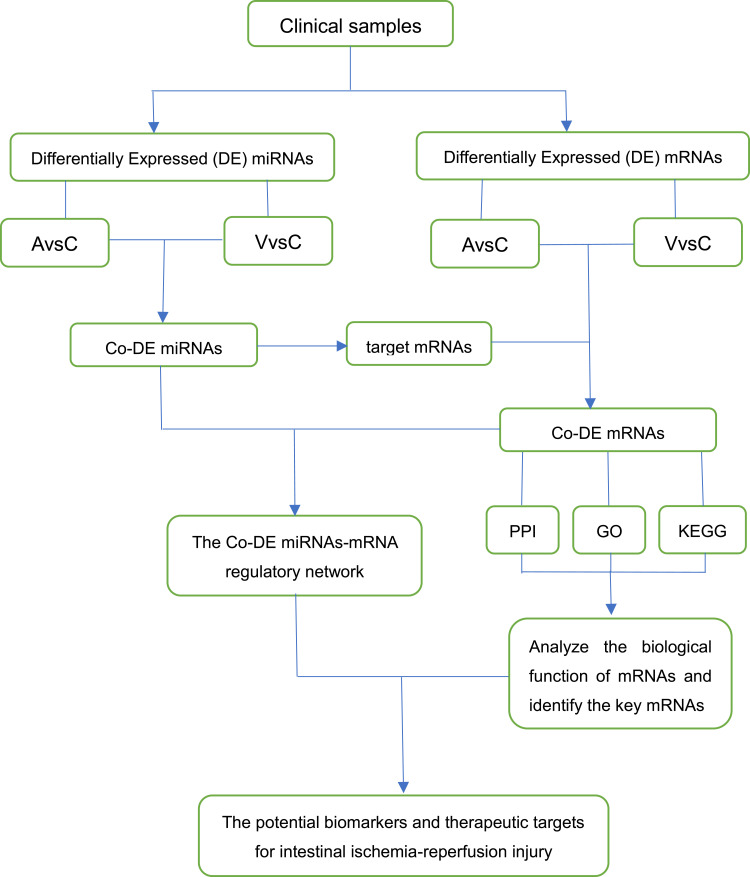
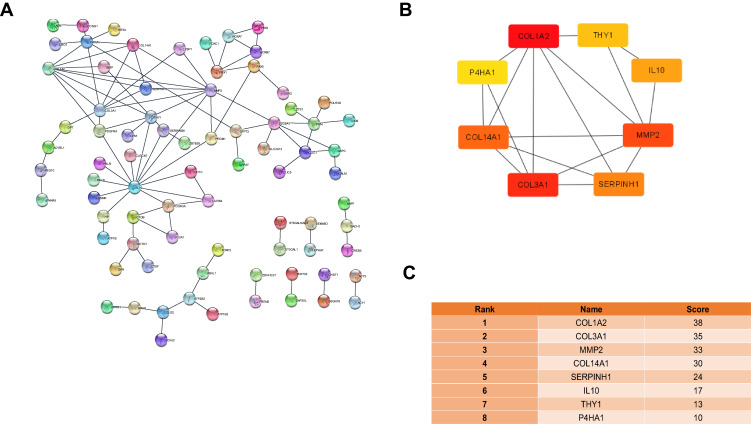
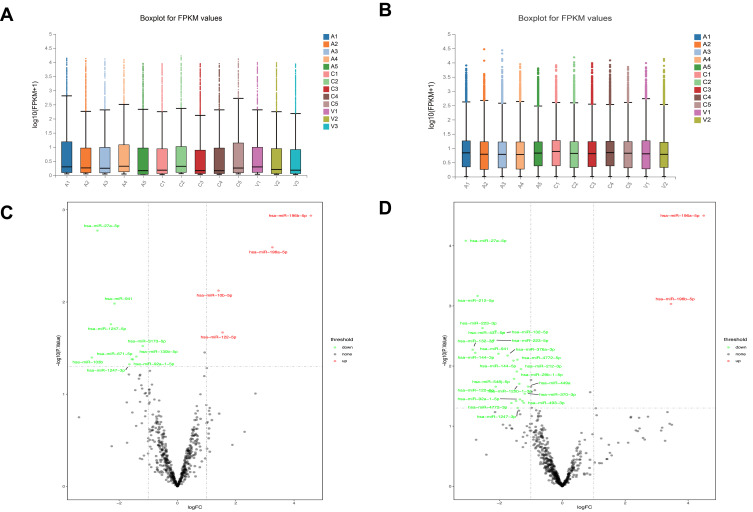
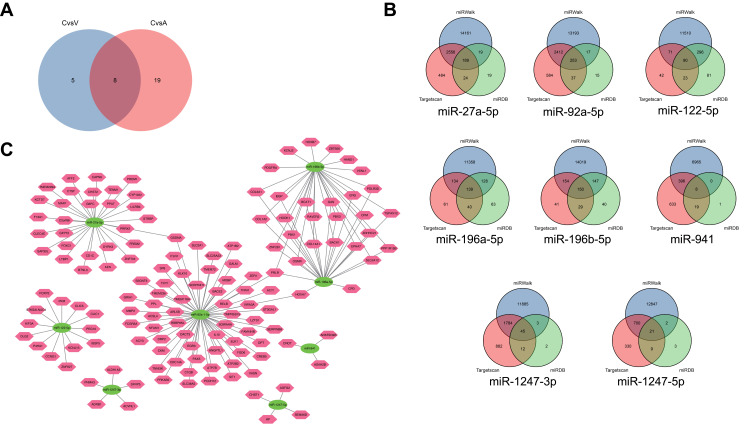
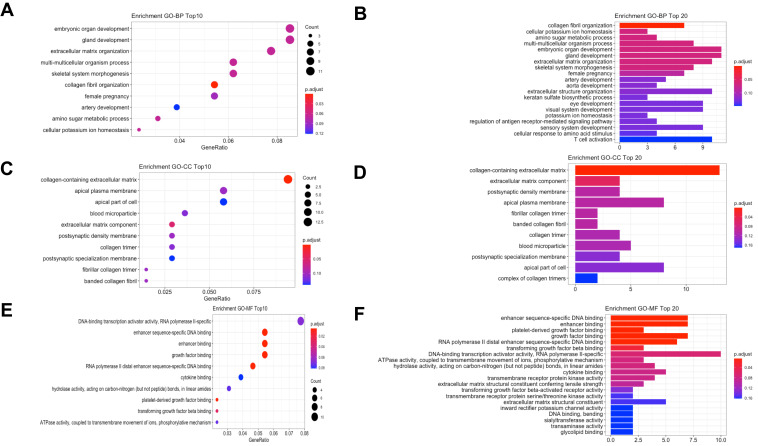
We analyzed the different expression of mRNAs and miRNAs in intestinal tissues from patients from three groups (arterial group (group A), venous group (group V), control group (group C)). Common differentially expressed (Co-DE) miRNAs and differentially expressed mRNAs were acquired via concerned analyses among the three groups. Co-DE mRNAs were shared parts of target mRNAs and differentially expression mRNAs. Cytoscape was employed to construct the regulatory network between miRNAs and mRNAs. Gene Ontology (GO) analysis and the Kyoto Encyclopedia of Genes and Genomes (KEGG) pathway depicted the functions and potential pathway associated with Co-DE mRNAs. Using the STRING and Cytoscape, we found critical mRNAs in the protein-protein interaction (PPI) network.
The miRNA-mRNA network comprised 8 Co-DE miRNAs and 140 Co-DE mRNAs. Of note, 140 Co-DE mRNAs were targets of these 8 miRNAs, and their roles were established through the functional exploration via GO analysis and KEGG analysis. PPI network and Cytoscape revealed COL1A2, THY1, IL10, MMP2, SERPINH1, COL3A1, COL14A1, and P4HA1 as the top 8 key mRNAs.
This study has demonstrated a miRNA-mRNA regulatory network in intestinal ischemia-reperfusion injury, and explored the key mRNAs and their potential functions. These findings could provide new insight into prognostic markers and therapeutic targets for patients with intestinal ischemia-reperfusion injury in clinical practice.
肠道缺血再灌注(II/R)损伤是一种常见的临床并发症,死亡率高,微小RNA(miRNA)可能在其病理生理进展中起驱动作用。miRNA调节不同的信使核糖核酸(mRNA)。然而,肠道缺血再灌注损伤中miRNA与mRNA之间的调控网络尚不清楚。
我们分析了三组患者(动脉组(A组)、静脉组(V组)、对照组(C组))肠道组织中mRNA和miRNA的差异表达。通过三组间的相关分析获得共同差异表达(Co-DE)的miRNA和差异表达的mRNA。Co-DE mRNA是靶mRNA和差异表达mRNA的共同部分。利用Cytoscape构建miRNA与mRNA之间的调控网络。基因本体论(GO)分析和京都基因与基因组百科全书(KEGG)通路描绘了与Co-DE mRNA相关的功能和潜在通路。利用STRING和Cytoscape,我们在蛋白质-蛋白质相互作用(PPI)网络中发现了关键mRNA。
miRNA-mRNA网络由8个Co-DE miRNA和140个Co-DE mRNA组成。值得注意的是,140个Co-DE mRNA是这8个miRNA的靶标,它们的作用通过GO分析和KEGG分析的功能探索得以确立。PPI网络和Cytoscape显示COL1A2、THY1、IL10、MMP2、SERPINH1、COL3A1、COL14A1和P4HA1为前8个关键mRNA。
本研究揭示了肠道缺血再灌注损伤中的miRNA-mRNA调控网络,并探索了关键mRNA及其潜在功能。这些发现可为临床实践中肠道缺血再灌注损伤患者的预后标志物和治疗靶点提供新的见解。