Probiotics Microbiome Convergence Center, Soonchunhyang University, Asan, South Korea.
Department of Microbiology and Immunology, School of Medicine, Soonchunhyang University, Cheonan, South Korea.
Pol J Microbiol. 2021 Sep;70(3):345-357. doi: 10.33073/pjm-2021-033. Epub 2021 Sep 17.
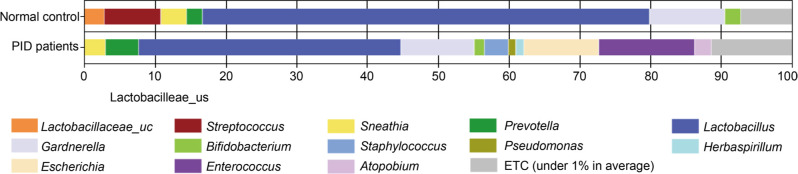
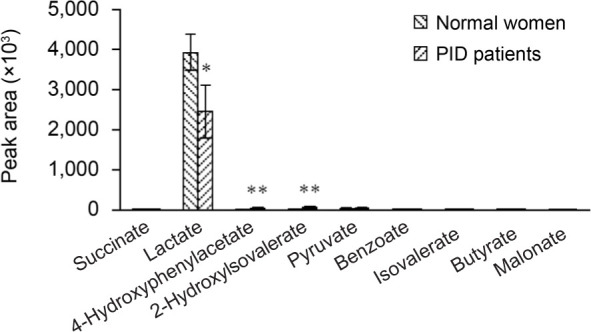
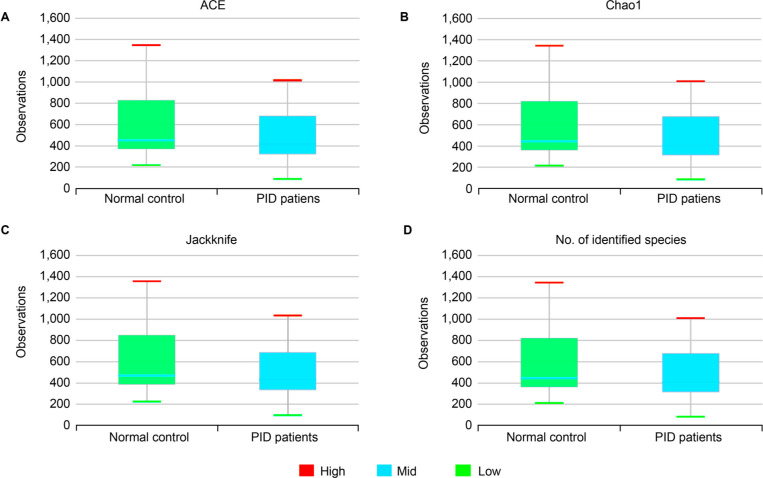
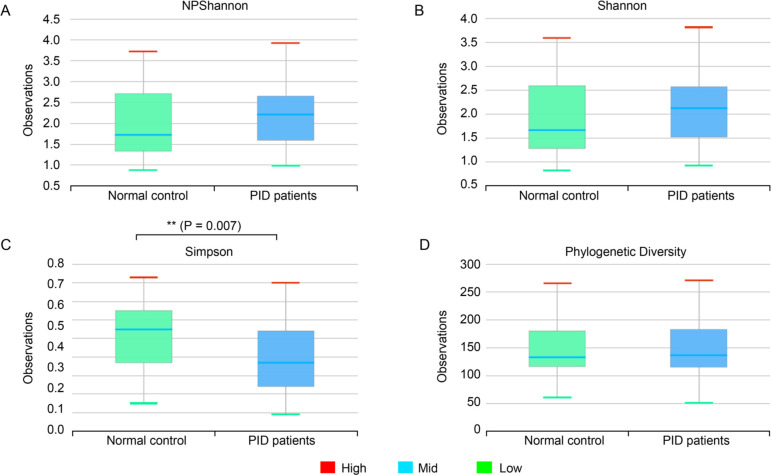
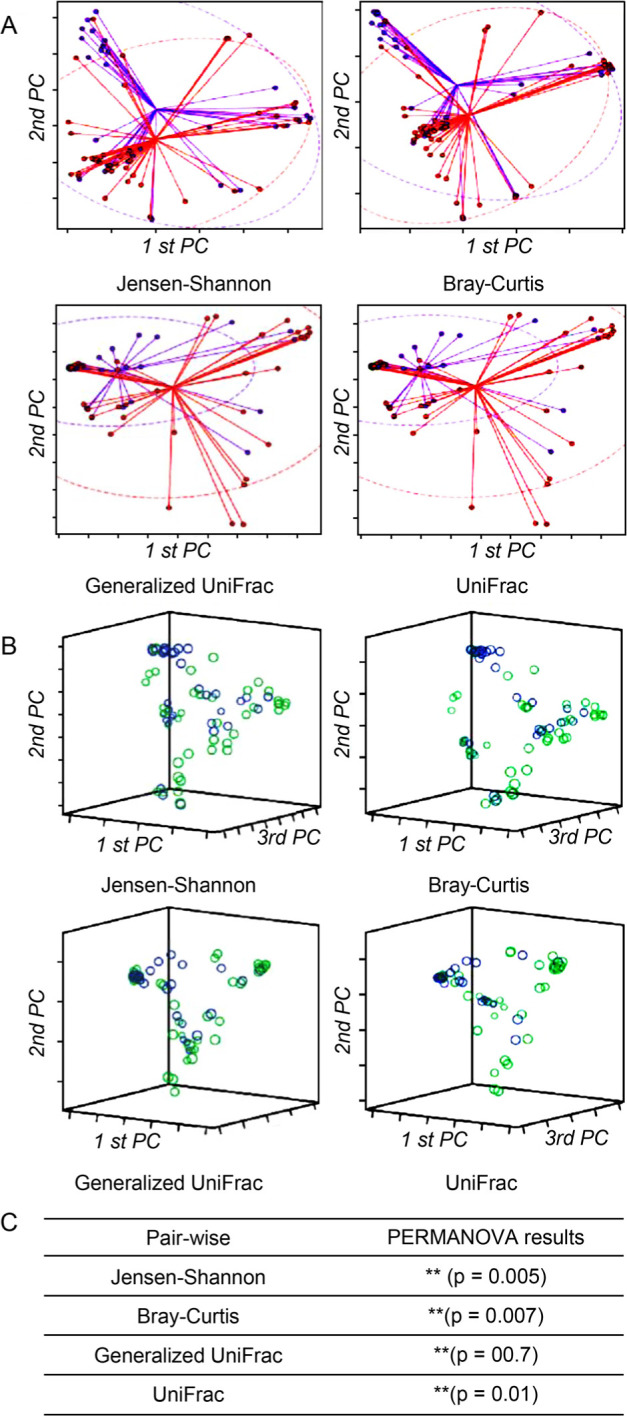
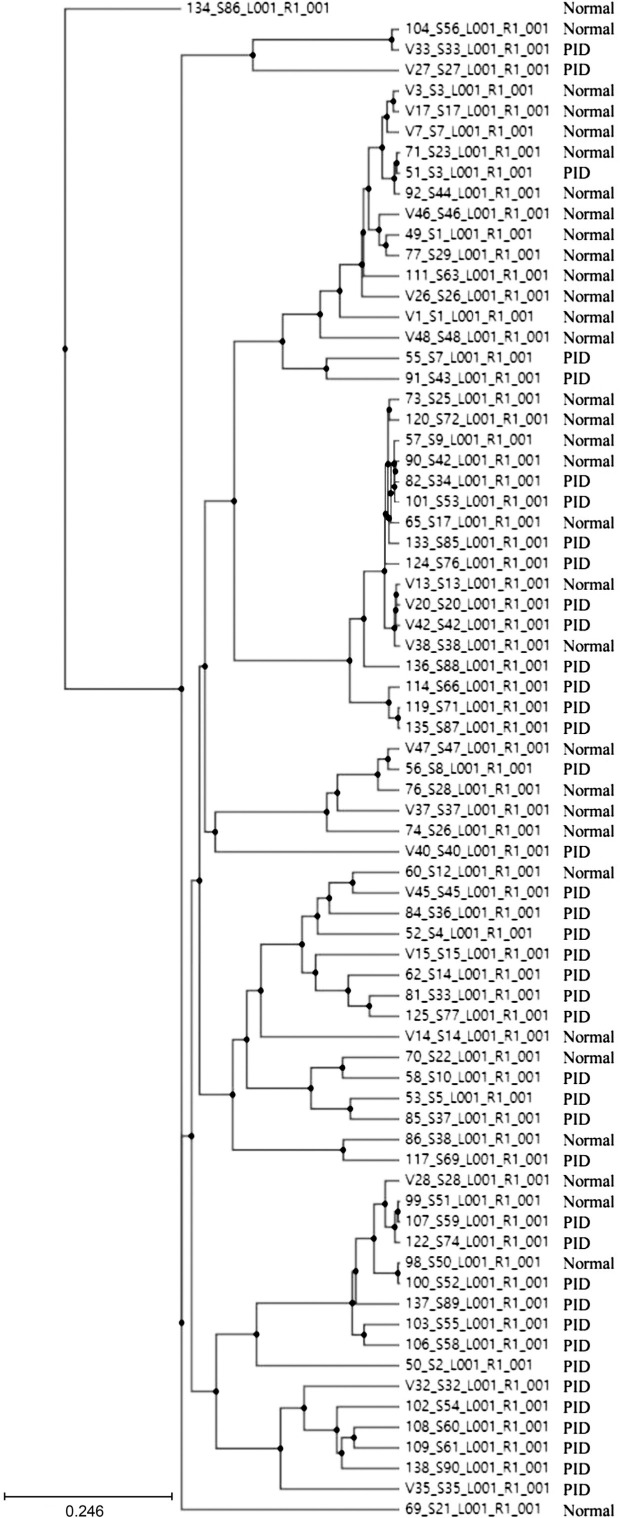
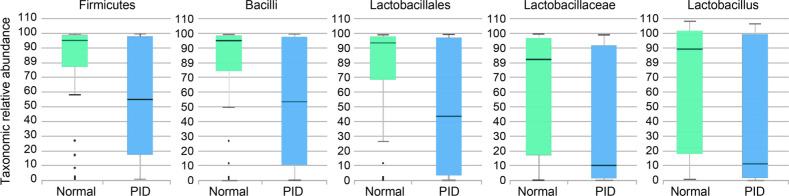
Human vaginal microorganisms play an important role in maintaining good health throughout the human life cycle. An imbalance in the vaginal microbiota is associated with an increased risk of pelvic inflammatory disease (PID). This study aimed to characterize and compare vaginal microbial profiles of premenopausal Korean women with and without PID. 74 Korean premenopausal female vaginal samples were obtained; 33 were from healthy women (a control group) and 41 from PID patients. Vaginal fluid samples were collected from the vaginal wall and posterior cervix and then analyzed by 16S ribosomal ribonucleic acid (rRNA) gene-based amplicon sequencing. Results showed a significant difference between the vaginal microbial communities of the two groups (Jensen-Shannon, = 0.014; Bray-Curtis, = 0.009; Generalized UniFrac, = 0.007; UniFrac, = 0.008). accounted for the highest percentage (61.0%) of the control group but was significantly decreased (34.9%) in PID patients; this was the most significant difference among all bacterial communities ( = 0.028, LDA effect size = 5.129). In addition, in the PID patient group, species diversity significantly increased (Simpson, = 0.07) as the proportion of various pathogens increased evenly, resulting in a polymicrobial infection. Similarly, lactate, which constituted the highest percentage of the organic acids in the control group, was significantly decreased in the PID patient group ( = 0.04). The present study's findings will help understand PID from the microbiome perspective and are expected to contribute to the development of more efficient PID diagnosis and treatment modalities.
人类阴道微生物在整个生命周期中维持身体健康方面发挥着重要作用。阴道微生物群失衡与盆腔炎性疾病(PID)风险增加有关。本研究旨在描述和比较韩国绝经前有 PID 和无 PID 的女性阴道微生物群特征。共获得 74 例韩国绝经前女性阴道样本,33 例来自健康女性(对照组),41 例来自 PID 患者。从阴道壁和后宫颈采集阴道液样本,然后通过 16S 核糖体核糖核酸(rRNA)基因扩增子测序进行分析。结果表明两组阴道微生物群落存在显著差异(Jensen-Shannon, = 0.014;Bray-Curtis, = 0.009;广义 UniFrac, = 0.007;UniFrac, = 0.008)。在对照组中占比最高(61.0%),但在 PID 患者中显著降低(34.9%);这是所有细菌群落中最显著的差异( = 0.028,LDA 效应大小 = 5.129)。此外,在 PID 患者组中,随着各种病原体比例均匀增加,物种多样性显著增加(Simpson, = 0.07),导致混合感染。同样,在对照组中构成有机酸比例最高的乳酸在 PID 患者组中显著降低( = 0.04)。本研究的发现将有助于从微生物组角度理解 PID,并有望为开发更有效的 PID 诊断和治疗方法做出贡献。