Edgar Landon J, Thompson Andrew J, Vartabedian Vincent F, Kikuchi Chika, Woehl Jordan L, Teijaro John R, Paulson James C
Department of Molecular Medicine, The Scripps Research Institute, La Jolla, California 92037, United States.
Department of Immunology and Microbiology, The Scripps Research Institute, La Jolla, California 92037, United States.
ACS Cent Sci. 2021 Sep 22;7(9):1508-1515. doi: 10.1021/acscentsci.1c00525. Epub 2021 Aug 23.
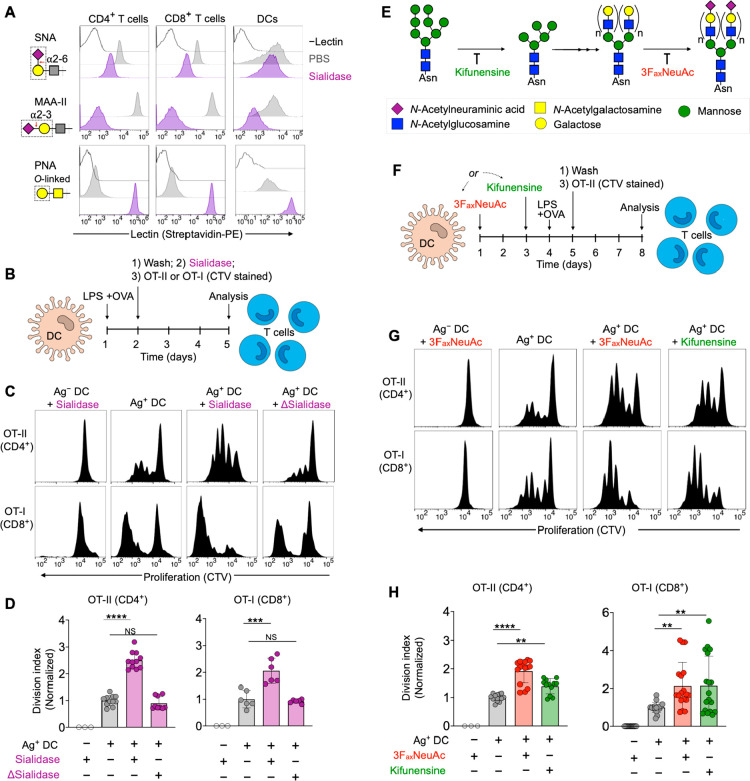
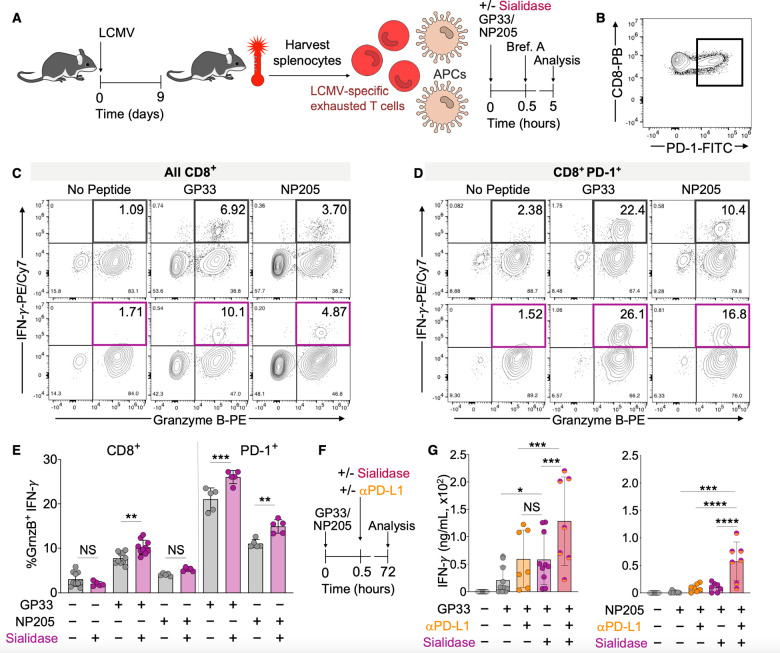
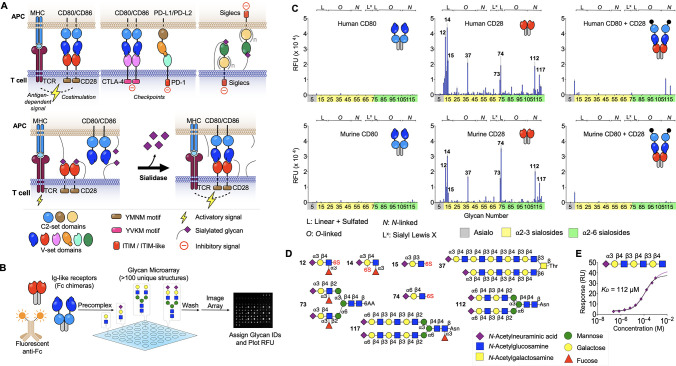
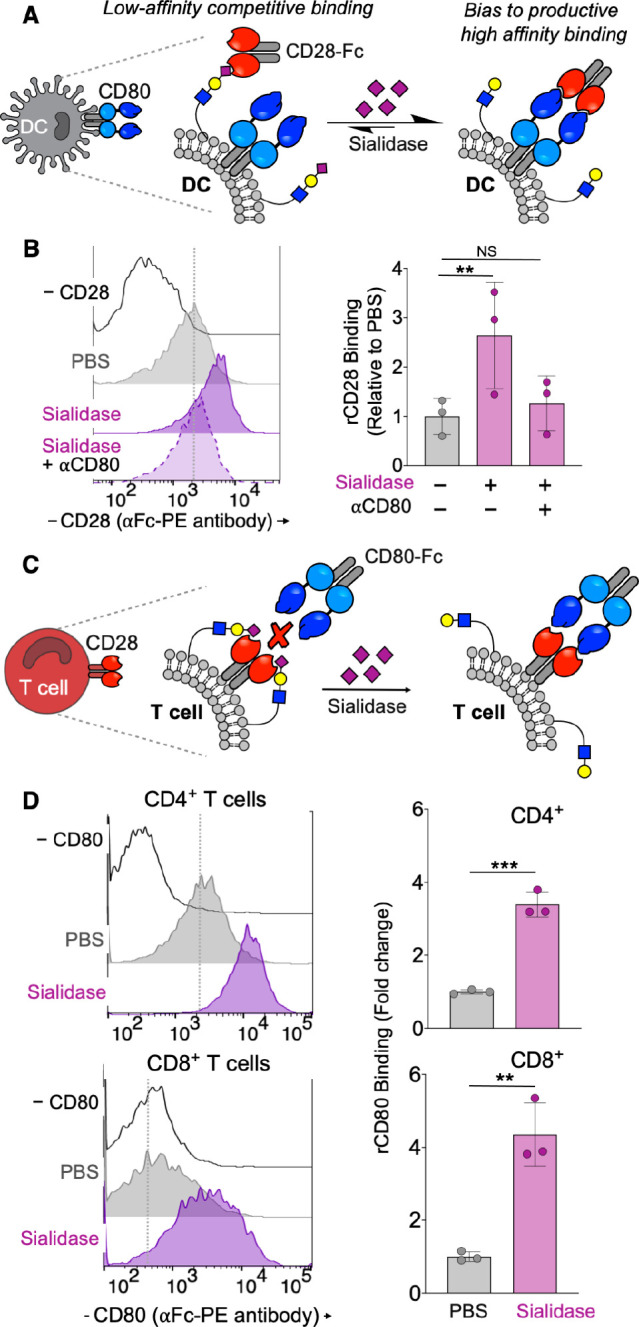
Effector T cells comprise the cellular arm of the adaptive immune system and are essential for mounting immune responses against pathogens and cancer. To reach effector status, costimulation through CD28 is required. Here, we report that sialic acid-containing glycans on the surface of both T cells and APCs are alternative ligands of CD28 that compete with binding to its well-documented activatory ligand CD80 on the APC, resulting in attenuated costimulation. Removal of sialic acids enhances antigen-mediated activation of naïve T cells and also increases the revival of effector T cells made hypofunctional or exhausted via chronic viral infection. This occurs through a mechanism that is synergistic with antibody blockade of the inhibitory PD-1 axis. These results reveal a previously unrecognized role of sialic acid ligands in attenuation of CD28-mediated costimulation of T cells.
效应T细胞构成适应性免疫系统的细胞分支,对于抵御病原体和癌症产生免疫反应至关重要。为达到效应细胞状态,需要通过CD28进行共刺激。在此,我们报告T细胞和抗原呈递细胞(APC)表面含唾液酸的聚糖是CD28的替代配体,它们与APC上已被充分证明的激活配体CD80的结合相互竞争,导致共刺激减弱。去除唾液酸可增强抗原介导的初始T细胞活化,还可增加因慢性病毒感染而功能低下或耗竭的效应T细胞的恢复。这是通过一种与抑制性PD-1轴的抗体阻断协同的机制发生的。这些结果揭示了唾液酸配体在减弱CD28介导的T细胞共刺激方面以前未被认识的作用。