Department of Neurosurgery, the Affiliated Hospital of Southwest Medical University, Luzhou, P. R. China.
Sichuan Clinical Research Center for Neurosurgery, Luzhou, P. R. China.
Clin Transl Med. 2021 Sep;11(9):e424. doi: 10.1002/ctm2.424.
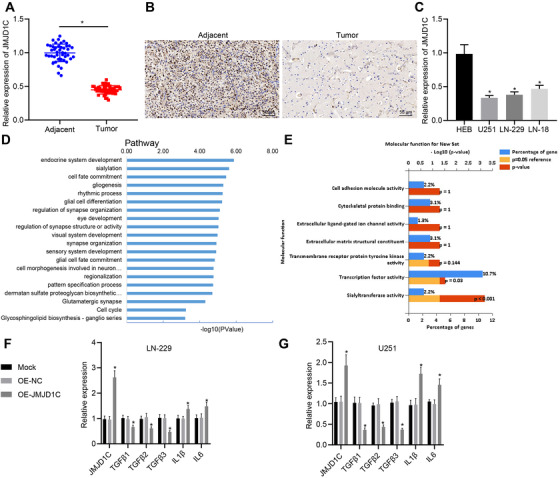
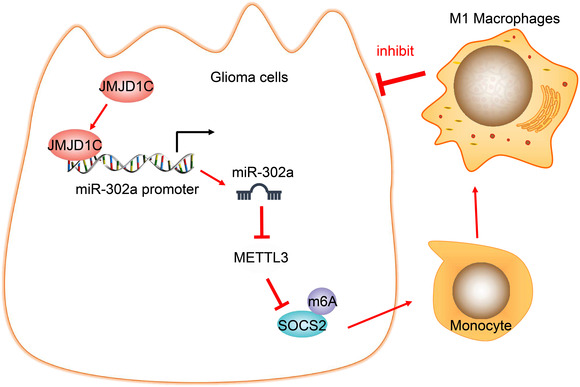
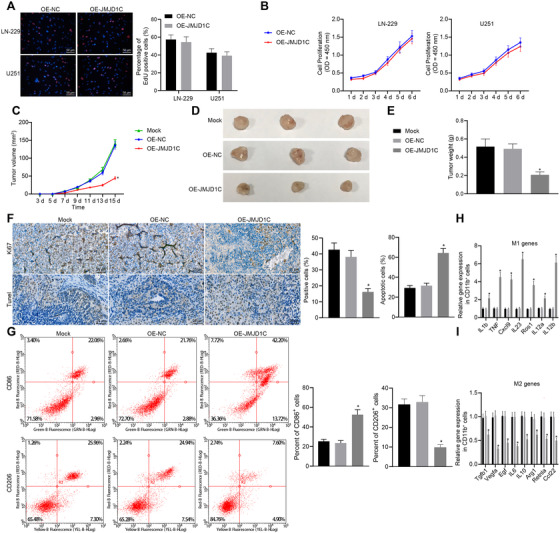
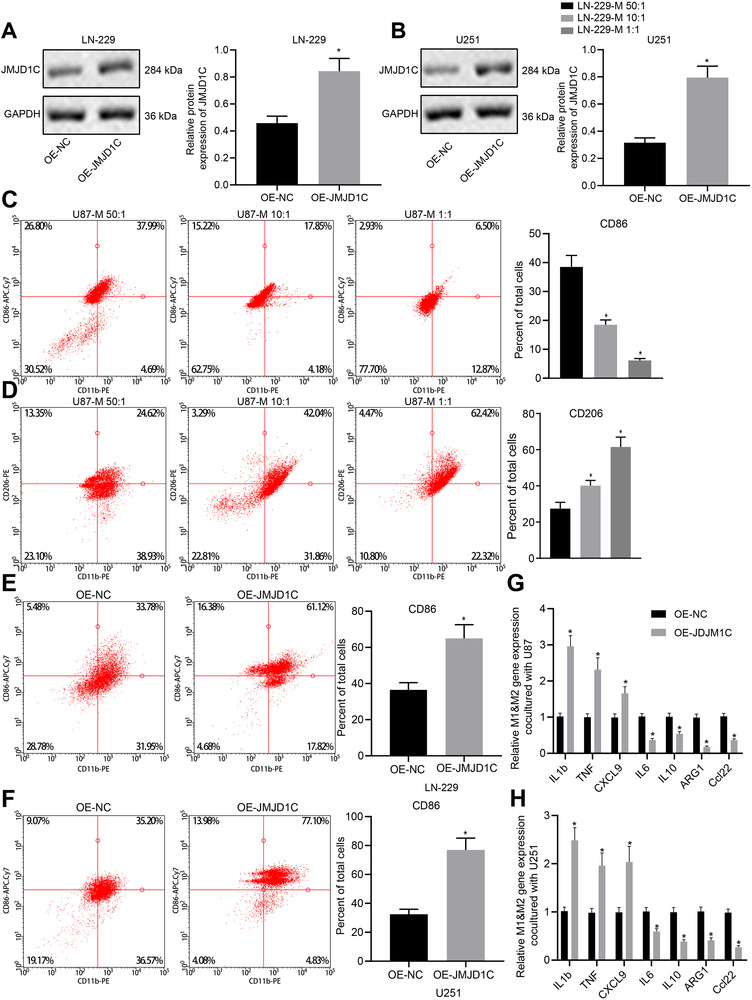
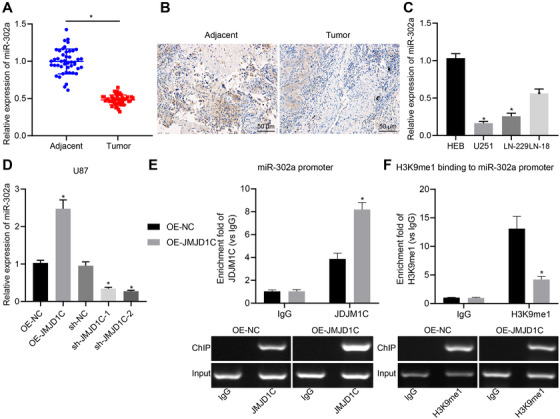
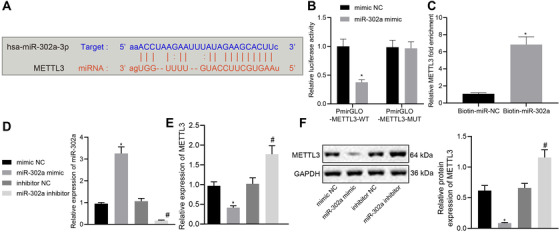
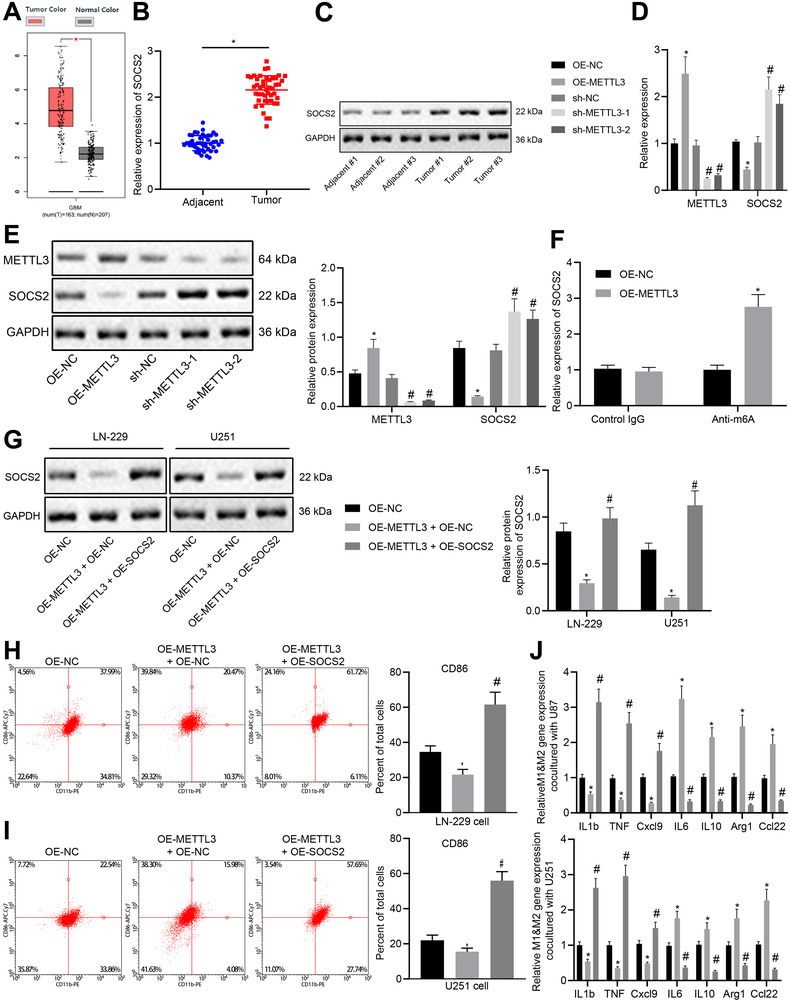
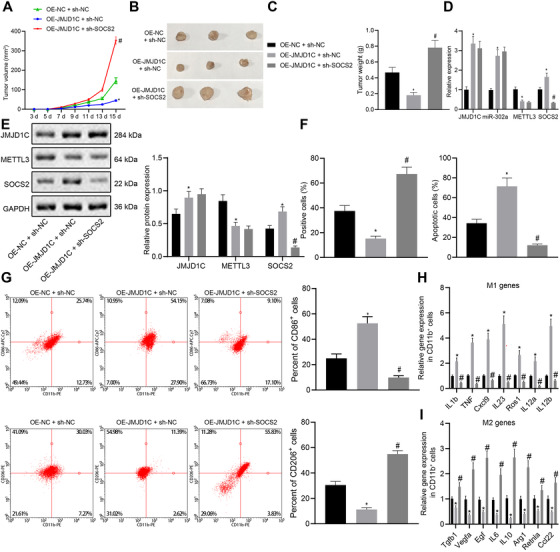
Glioma is regarded as an aggressive lethal primary brain tumor. Jumonji domain containing 1C (JMJD1C) is a H3K9 demethylase which participates in the progression of various tumors, but its specific function and underlying mechanism in glioma development remain undefined, which is the purpose of our work. We initially assessed JMJD1C expression in glioma tissues and cells using the assays of RT-qPCR and immunohistochemistry. Meanwhile, the H3K9 level at the microRNA (miR)-302a promoter region was measured by chromatin immunoprecipitation assay, while luciferase-based reporter assay was performed for validation of the binding affinity between miR-302a and methyltransferase-like 3 (METTL3). The effect of METTL3 on suppressor of cytokine signaling 2 (SOCS2) was subsequently analyzed by MeRIP-RT-qPCR. Finally, a xenograft tumor model was established in nude mice, followed by measurement of tumor-associated macrophages using flow cytometry. JMJD1C was poorly expressed in glioma tissues. Furthermore, JMJD1C increased miR-302a expression through promoting H3K9me1 demethylation at the miR-302a promoter region. miR-302a was identified to target METTL3, which could inhibit SOCS2 expression via m6A modification. JMJD1C promoted M1 macrophage polarization and suppressed the growth of glioma xenografts through the miR-302a/METTL3/SOCS2 axis both in vivo and in vitro. In conclusion, JMJD1C could enhance M1 macrophage polarization to inhibit the onset of glioma, bringing a new insight into the contribution of JMJD1C to the pathobiology of glioma, with possible implications for targeted therapeutic method.
神经胶质瘤被认为是一种侵袭性致死性原发性脑肿瘤。含有 JmjC 结构域的蛋白 1C(JMJD1C)是一种组蛋白 H3K9 去甲基化酶,参与多种肿瘤的进展,但它在神经胶质瘤发展中的具体功能和潜在机制尚不清楚,这是我们工作的目的。我们最初使用 RT-qPCR 和免疫组织化学检测评估了 JMJD1C 在神经胶质瘤组织和细胞中的表达。同时,通过染色质免疫沉淀检测测量了 microRNA(miR)-302a 启动子区域的 H3K9 水平,并用基于荧光素酶的报告基因检测验证了 miR-302a 与甲基转移酶样 3(METTL3)之间的结合亲和力。随后通过 MeRIP-RT-qPCR 分析了 METTL3 对细胞因子信号转导抑制因子 2(SOCS2)的影响。最后,在裸鼠中建立了异种移植肿瘤模型,并用流式细胞术测量了肿瘤相关巨噬细胞。JMJD1C 在神经胶质瘤组织中表达水平较低。此外,JMJD1C 通过促进 miR-302a 启动子区域的 H3K9me1 去甲基化增加了 miR-302a 的表达。miR-302a 被鉴定为靶向 METTL3,METTL3 可以通过 m6A 修饰抑制 SOCS2 的表达。JMJD1C 通过 miR-302a/METTL3/SOCS2 轴在体内和体外均促进 M1 巨噬细胞极化并抑制神经胶质瘤异种移植瘤的生长。总之,JMJD1C 可以增强 M1 巨噬细胞极化,抑制神经胶质瘤的发生,为 JMJD1C 对神经胶质瘤发病机制的贡献提供了新的认识,可能为靶向治疗方法提供了启示。