• 文献检索
  • 文档翻译
  • 深度研究
  • 学术资讯
  • Suppr Zotero 插件Zotero 插件
  • 邀请有礼
  • 套餐&价格
  • 历史记录
应用&插件
Suppr Zotero 插件Zotero 插件浏览器插件Mac 客户端Windows 客户端微信小程序
定价
高级版会员购买积分包购买API积分包
服务
文献检索文档翻译深度研究API 文档MCP 服务
关于我们
关于 Suppr公司介绍联系我们用户协议隐私条款
关注我们

Suppr 超能文献

核心技术专利:CN118964589B侵权必究
粤ICP备2023148730 号-1Suppr @ 2026

文献检索

告别复杂PubMed语法,用中文像聊天一样搜索,搜遍4000万医学文献。AI智能推荐,让科研检索更轻松。

立即免费搜索

文件翻译

保留排版,准确专业,支持PDF/Word/PPT等文件格式,支持 12+语言互译。

免费翻译文档

深度研究

AI帮你快速写综述,25分钟生成高质量综述,智能提取关键信息,辅助科研写作。

立即免费体验

一项关于物理治疗师在新冠疫情期间通过远程医疗管理膝关节骨关节炎的电子学习项目:使用注册和调查数据的真实世界评估研究

An e-Learning Program for Physiotherapists to Manage Knee Osteoarthritis Via Telehealth During the COVID-19 Pandemic: Real-World Evaluation Study Using Registration and Survey Data.

作者信息

Jorge Ana Elisa Serafim, Bennell Kim Louise, Kimp Alexander Jared, Campbell Penny Kate, Hinman Rana Shane

机构信息

Center for Biological and Health Sciences, Department of Physiotherapy, Federal University of São Carlos, São Paulo, Brazil.

Centre for Health, Exercise and Sports Medicine, Department of Physiotherapy, School of Health Sciences, The University of Melbourne, Melbourne, Australia.

出版信息

JMIR Med Educ. 2021 Dec 1;7(4):e30378. doi: 10.2196/30378.

DOI:10.2196/30378
PMID:34587585
原文链接:https://pmc.ncbi.nlm.nih.gov/articles/PMC8686455/
Abstract

BACKGROUND

The COVID-19 pandemic necessitated clinicians to transition to telehealth, often with little preparation or training. The Physiotherapy Exercise and Physical Activity for Knee Osteoarthritis (PEAK) e-learning modules were developed to upskill physiotherapists in management of knee osteoarthritis (OA) via telehealth and in-person. In the research setting, the e-learning modules are perceived by physiotherapists as effective when they are part of a comprehensive training program for a clinical trial. However, the effectiveness of the modules on their own in a real-world setting is unknown.

OBJECTIVE

This study aims to evaluate the reach, effectiveness, adoption, and implementation of PEAK e-learning modules.

METHODS

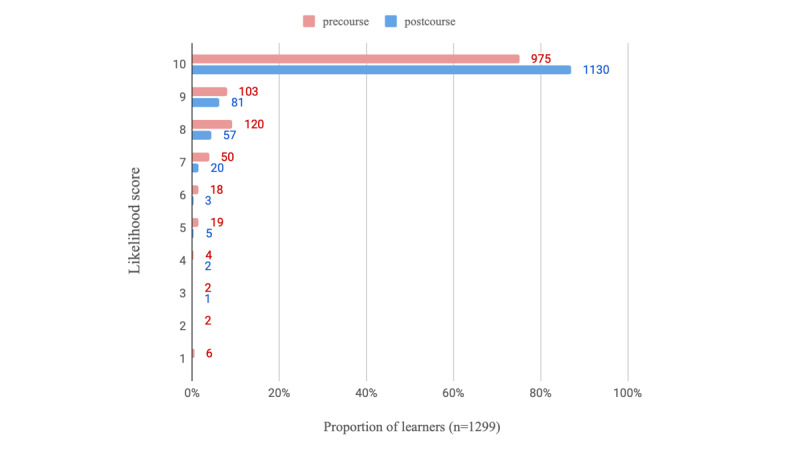
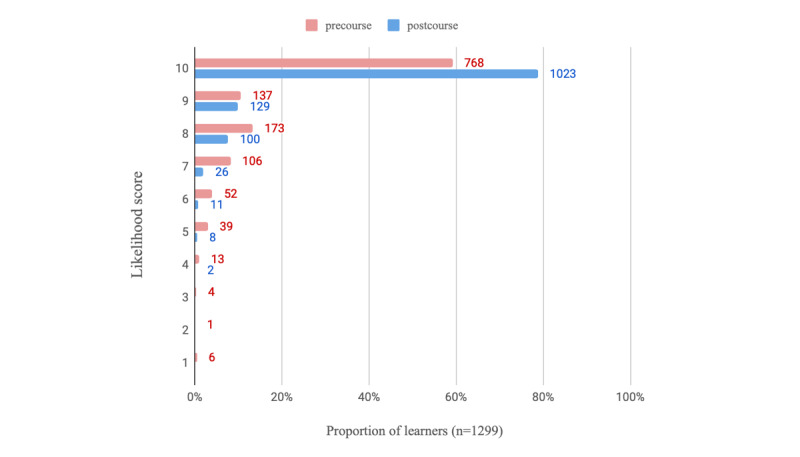
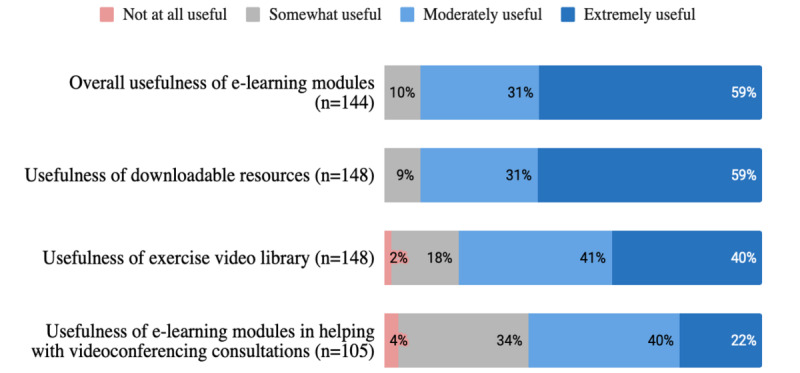
This longitudinal study was informed by the Reach, Effectiveness, Adoption, Implementation, and Maintenance (RE-AIM) framework. Participants were clinicians, researchers, educators, and health care students who registered for access to the modules between April 1 and November 30, 2020. Reach was evaluated by outcomes (countries, referral sources, and attrition) extracted from registration data and embedded within precourse surveys in the Learning Management System (LMS). Effectiveness was evaluated by outcomes (confidence with videoconferencing; likelihood of using education, strengthening exercise, and physical activity in a treatment plan for knee OA; usefulness of modules) measured using a 10-point numeric rating scale (NRS; score range from 1=not confident or likely or useful at all to 10=extremely confident or likely or useful) in pre- and postcourse (on completion) surveys in the LMS. Adoption and implementation were evaluated by demographic and professional characteristics and outcomes related to the use of learning and usefulness of program elements (measured via a 4-point Likert scale, from not at all useful to extremely useful) in a survey administered 4 months after module completion.

RESULTS

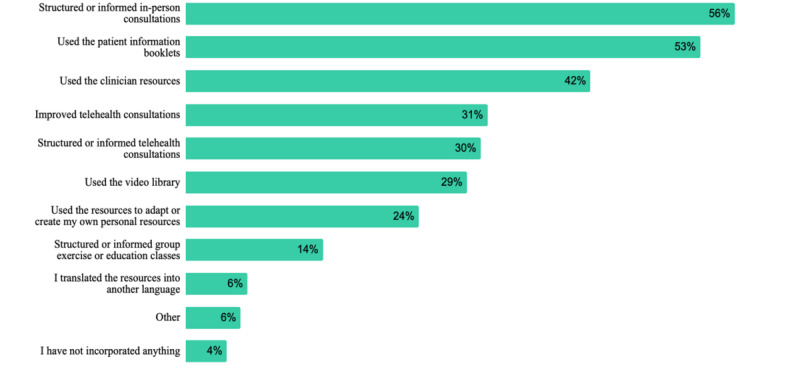
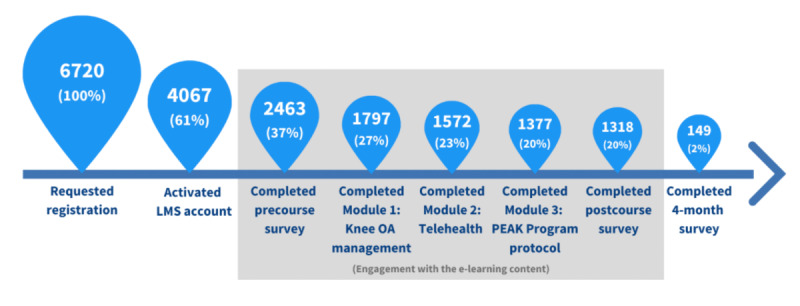
Broad reach was achieved, with 6720 people from 97 countries registering for access. Among registrants, there were high levels of attrition, with 36.65% (2463/6720) commencing the program and precourse survey and 19.61% (1318/6720) completing all modules and the postcourse survey. The program was effective. Learners who completed the modules demonstrated increased confidence with videoconferencing (mean change 3.1, 95% CI 3.0-3.3 NRS units) and increased likelihood of using education, strengthening and physical activity in a knee OA treatment plan, compared to precourse. Adoption and implementation of learning (n=149 respondents) occurred at 4 months. More than half of the respondents used their learning to structure in-person consultations with patients (80/142, 56.3%) and patient information booklets in their clinical practice (75/142, 52.8%).

CONCLUSIONS

Findings provide evidence of the reach and effectiveness of an asynchronous self-directed e-learning program in a real-world setting among physiotherapists. The e-learning modules offer clinicians an accessible educational course to learn about best-practice knee OA management, including telehealth delivery via videoconferencing. Attrition across the e-learning program highlights the challenges of keeping learners engaged in self-directed web-based learning.

摘要

背景

2019年冠状病毒病(COVID-19)大流行迫使临床医生转向远程医疗,而他们往往几乎没有准备或培训。膝关节骨关节炎的物理治疗运动与身体活动(PEAK)电子学习模块旨在提升物理治疗师通过远程医疗和面对面方式管理膝关节骨关节炎(OA)的技能。在研究环境中,当电子学习模块成为临床试验综合培训计划的一部分时,物理治疗师认为其是有效的。然而,这些模块在现实环境中单独使用的有效性尚不清楚。

目的

本研究旨在评估PEAK电子学习模块的覆盖范围、有效性、采用情况和实施情况。

方法

本纵向研究以覆盖范围、有效性、采用情况、实施情况和维持情况(RE-AIM)框架为依据。参与者为2020年4月1日至11月30日期间注册访问这些模块的临床医生、研究人员、教育工作者和医护专业学生。通过从注册数据中提取并嵌入学习管理系统(LMS)课前调查中的结果(国家、推荐来源和流失情况)来评估覆盖范围。通过在LMS的课前和课后(完成时)调查中使用10分数字评分量表(NRS;分数范围从1=完全不自信或不可能或无用至10=极其自信或可能或有用)测量的结果(对视频会议的信心;在膝关节OA治疗计划中使用教育、强化运动和身体活动的可能性;模块的有用性)来评估有效性。在模块完成4个月后进行的一项调查中,通过人口统计学和专业特征以及与学习使用和项目要素有用性相关联的结果(通过4分量表测量,从不有用至极其有用)来评估采用情况和实施情况。

结果

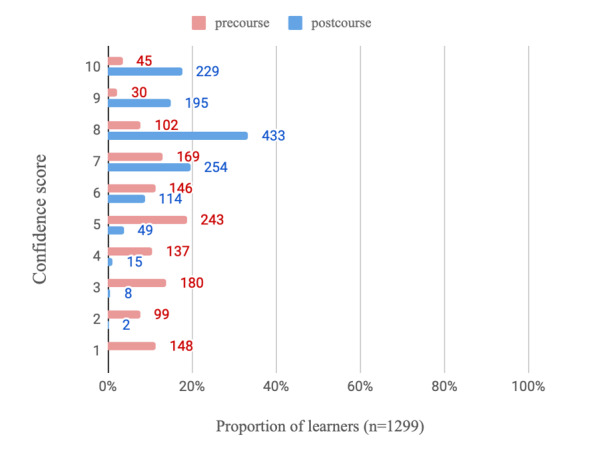
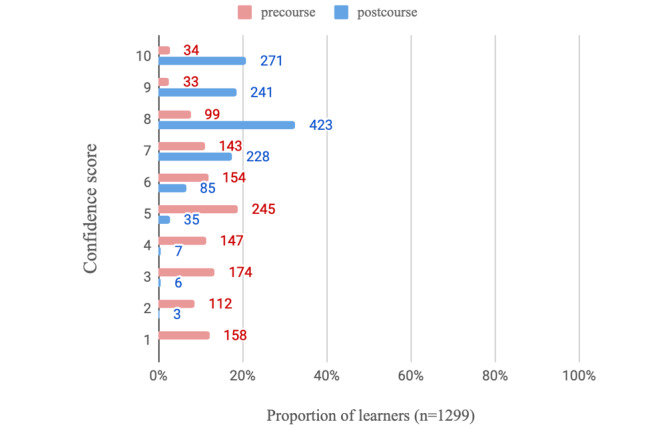
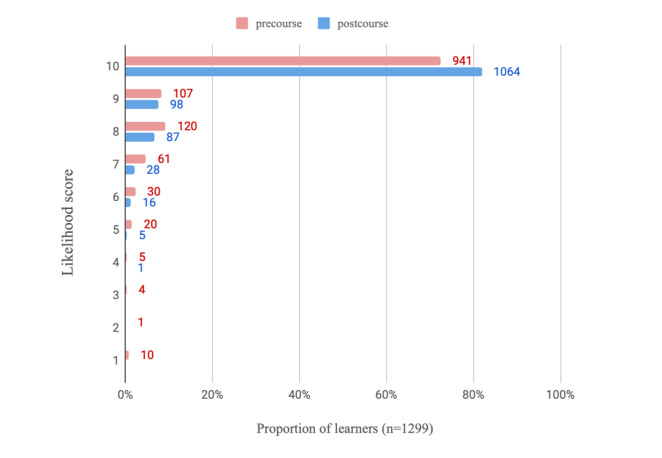
实现了广泛覆盖,来自97个国家的6720人注册访问。在注册者中,流失率很高,36.65%(2463/6720)开始该计划并参与课前调查,19.61%(1318/6720)完成所有模块和课后调查。该计划是有效的。与课前相比,完成模块的学习者对视频会议的信心有所增强(平均变化3.1,95%CI 3.0 - 3.3 NRS单位),并且在膝关节OA治疗计划中使用教育、强化运动和身体活动的可能性增加。学习的采用和实施情况(n = 149名受访者)在4个月时进行评估。超过一半的受访者在临床实践中利用所学知识组织与患者的面对面咨询(80/142,5
https://cdn.ncbi.nlm.nih.gov/pmc/blobs/7edb/8686455/82d633cab2f9/mededu_v7i4e30378_fig8.jpg
https://cdn.ncbi.nlm.nih.gov/pmc/blobs/7edb/8686455/244777c34baa/mededu_v7i4e30378_fig1.jpg
https://cdn.ncbi.nlm.nih.gov/pmc/blobs/7edb/8686455/3643fb932de4/mededu_v7i4e30378_fig2.jpg
https://cdn.ncbi.nlm.nih.gov/pmc/blobs/7edb/8686455/555f74943276/mededu_v7i4e30378_fig3.jpg
https://cdn.ncbi.nlm.nih.gov/pmc/blobs/7edb/8686455/ba41b265f7bb/mededu_v7i4e30378_fig4.jpg
https://cdn.ncbi.nlm.nih.gov/pmc/blobs/7edb/8686455/eba4f6278278/mededu_v7i4e30378_fig5.jpg
https://cdn.ncbi.nlm.nih.gov/pmc/blobs/7edb/8686455/3b245910c908/mededu_v7i4e30378_fig6.jpg
https://cdn.ncbi.nlm.nih.gov/pmc/blobs/7edb/8686455/4551e6c56a9a/mededu_v7i4e30378_fig7.jpg
https://cdn.ncbi.nlm.nih.gov/pmc/blobs/7edb/8686455/82d633cab2f9/mededu_v7i4e30378_fig8.jpg
https://cdn.ncbi.nlm.nih.gov/pmc/blobs/7edb/8686455/244777c34baa/mededu_v7i4e30378_fig1.jpg
https://cdn.ncbi.nlm.nih.gov/pmc/blobs/7edb/8686455/3643fb932de4/mededu_v7i4e30378_fig2.jpg
https://cdn.ncbi.nlm.nih.gov/pmc/blobs/7edb/8686455/555f74943276/mededu_v7i4e30378_fig3.jpg
https://cdn.ncbi.nlm.nih.gov/pmc/blobs/7edb/8686455/ba41b265f7bb/mededu_v7i4e30378_fig4.jpg
https://cdn.ncbi.nlm.nih.gov/pmc/blobs/7edb/8686455/eba4f6278278/mededu_v7i4e30378_fig5.jpg
https://cdn.ncbi.nlm.nih.gov/pmc/blobs/7edb/8686455/3b245910c908/mededu_v7i4e30378_fig6.jpg
https://cdn.ncbi.nlm.nih.gov/pmc/blobs/7edb/8686455/4551e6c56a9a/mededu_v7i4e30378_fig7.jpg
https://cdn.ncbi.nlm.nih.gov/pmc/blobs/7edb/8686455/82d633cab2f9/mededu_v7i4e30378_fig8.jpg

相似文献

1
An e-Learning Program for Physiotherapists to Manage Knee Osteoarthritis Via Telehealth During the COVID-19 Pandemic: Real-World Evaluation Study Using Registration and Survey Data.一项关于物理治疗师在新冠疫情期间通过远程医疗管理膝关节骨关节炎的电子学习项目:使用注册和调查数据的真实世界评估研究
JMIR Med Educ. 2021 Dec 1;7(4):e30378. doi: 10.2196/30378.
2
Evaluation of a Novel e-Learning Program for Physiotherapists to Manage Knee Osteoarthritis via Telehealth: Qualitative Study Nested in the PEAK (Physiotherapy Exercise and Physical Activity for Knee Osteoarthritis) Randomized Controlled Trial.通过远程医疗管理膝骨关节炎的新型电子学习计划对物理治疗师的评估:嵌套在 PEAK(膝骨关节炎的物理治疗运动和体育活动)随机对照试验中的定性研究。
J Med Internet Res. 2021 Apr 30;23(4):e25872. doi: 10.2196/25872.
3
Technology versus tradition: a non-inferiority trial comparing video to face-to-face consultations with a physiotherapist for people with knee osteoarthritis. Protocol for the PEAK randomised controlled trial.技术与传统:一项针对膝骨关节炎患者比较视频与面对面接受物理治疗师会诊的非劣效性试验。PEAK随机对照试验方案。
BMC Musculoskelet Disord. 2020 Aug 7;21(1):522. doi: 10.1186/s12891-020-03523-8.
4
The EPIPHA-KNEE trial: Explaining Pain to target unhelpful pain beliefs to Increase PHysical Activity in KNEE osteoarthritis - a protocol for a multicentre, randomised controlled trial with clinical- and cost-effectiveness analysis.EPIPHA-KNEE 试验:通过解释疼痛以针对无益的疼痛信念来增加膝骨关节炎的体力活动 - 一项具有临床和成本效益分析的多中心随机对照试验方案。
BMC Musculoskelet Disord. 2021 Aug 28;22(1):738. doi: 10.1186/s12891-021-04561-6.
5
Evaluation of an E-Learning Training Program to Support Implementation of a Group-Based, Theory-Driven, Self-Management Intervention For Osteoarthritis and Low-Back Pain: Pre-Post Study.评估一项电子学习培训计划以支持实施针对骨关节炎和腰痛的基于群体、理论驱动的自我管理干预措施:前后对照研究。
J Med Internet Res. 2019 Mar 7;21(3):e11123. doi: 10.2196/11123.
6
Implementation of the Good Life with osteoArthritis in Denmark (GLA:D) program via telehealth in Australia: A mixed-methods program evaluation.通过远程医疗在澳大利亚实施丹麦骨关节炎美好生活(GLA:D)项目:一项混合方法的项目评估。
J Telemed Telecare. 2025 Jan;31(1):104-120. doi: 10.1177/1357633X231167620. Epub 2023 Apr 20.
7
Better Knee, Better Me™: effectiveness of two scalable health care interventions supporting self-management for knee osteoarthritis - protocol for a randomized controlled trial.更好的膝盖,更好的我™:两种可扩展的医疗保健干预措施支持膝关节骨关节炎自我管理的有效性 - 一项随机对照试验方案。
BMC Musculoskelet Disord. 2020 Mar 12;21(1):160. doi: 10.1186/s12891-020-3166-z.
8
Training Intervention and Program of Support for Fostering the Adoption of Family-Centered Telehealth in Pediatric Rehabilitation: Protocol for a Multimethod, Prospective, Hybrid Type 3 Implementation-Effectiveness Study.促进在儿科康复中采用以家庭为中心的远程医疗的培训干预与支持计划:一项多方法、前瞻性、混合型3类实施-效果研究方案
JMIR Res Protoc. 2022 Oct 28;11(10):e40218. doi: 10.2196/40218.
9
Physiotherapy for patients with hip and knee osteoarthritis in Germany: a survey of current practice.德国髋膝关节骨关节炎患者的物理治疗:现状调查。
BMC Musculoskelet Disord. 2023 May 26;24(1):424. doi: 10.1186/s12891-023-06464-0.
10
The effectiveness of internet-based e-learning on clinician behavior and patient outcomes: a systematic review protocol.基于互联网的电子学习对临床医生行为和患者结局的有效性:一项系统评价方案。
JBI Database System Rev Implement Rep. 2015 Jan;13(1):52-64. doi: 10.11124/jbisrir-2015-1919.

引用本文的文献

1
'Removing a Blindfold': Perspectives of Physical Therapists After Completing the PEAK-Portuguese E-Learning Course.“摘掉眼罩”:物理治疗师完成PEAK-葡萄牙语电子学习课程后的观点
Musculoskeletal Care. 2025 Sep;23(3):e70163. doi: 10.1002/msc.70163.
2
Online osteoarthritis training programme for community-based clinicians: Mixed methods cohort study.面向社区临床医生的在线骨关节炎培训项目:混合方法队列研究。
Osteoarthr Cartil Open. 2025 Apr 5;7(2):100610. doi: 10.1016/j.ocarto.2025.100610. eCollection 2025 Jun.
3
Effects of an e-Learning Program (Physiotherapy Exercise and Physical Activity for Knee Osteoarthritis [PEAK]) on Chinese Physical Therapists' Confidence and Knowledge: Randomized Controlled Trial.

本文引用的文献

1
Physiotherapists and patients report positive experiences overall with telehealth during the COVID-19 pandemic: a mixed-methods study.一项混合方法研究表明,在新冠疫情期间,物理治疗师和患者总体上对远程医疗有积极体验。
J Physiother. 2021 Jul;67(3):201-209. doi: 10.1016/j.jphys.2021.06.009. Epub 2021 Jun 9.
2
Patient experiences with physiotherapy for knee osteoarthritis in Australia-a qualitative study.澳大利亚膝骨关节炎物理治疗的患者体验:一项定性研究。
BMJ Open. 2021 Mar 8;11(3):e043689. doi: 10.1136/bmjopen-2020-043689.
3
Evaluation of a Novel e-Learning Program for Physiotherapists to Manage Knee Osteoarthritis via Telehealth: Qualitative Study Nested in the PEAK (Physiotherapy Exercise and Physical Activity for Knee Osteoarthritis) Randomized Controlled Trial.
电子学习项目(膝关节骨关节炎的物理治疗运动与身体活动[PEAK])对中国物理治疗师信心和知识的影响:随机对照试验
J Med Internet Res. 2025 Apr 18;27:e71057. doi: 10.2196/71057.
4
Physiotherapy students' attitudes toward the use of telehealth in clinical practice: A cross-sectional survey.物理治疗专业学生对在临床实践中使用远程医疗的态度:一项横断面调查。
Health Sci Rep. 2024 Apr 21;7(4):e2067. doi: 10.1002/hsr2.2067. eCollection 2024 Apr.
5
Challenges with patient management of osteoarthritis during the COVID-19 pandemic: review.2019冠状病毒病大流行期间骨关节炎患者管理面临的挑战:综述
Ann Med Surg (Lond). 2023 Jun 21;85(8):3925-3930. doi: 10.1097/MS9.0000000000000978. eCollection 2023 Aug.
6
Virtual Tools to Enable Management of Knee Osteoarthritis.用于膝关节骨关节炎管理的虚拟工具
Curr Treatm Opt Rheumatol. 2023 Mar 11:1-21. doi: 10.1007/s40674-023-00202-2.
通过远程医疗管理膝骨关节炎的新型电子学习计划对物理治疗师的评估:嵌套在 PEAK(膝骨关节炎的物理治疗运动和体育活动)随机对照试验中的定性研究。
J Med Internet Res. 2021 Apr 30;23(4):e25872. doi: 10.2196/25872.
4
Knowledge, confidence and learning needs of physiotherapists treating persistent knee pain in Australia and Canada: a mixed-methods study.澳大利亚和加拿大治疗持续性膝关节疼痛的物理治疗师的知识、信心和学习需求:一项混合方法研究。
Physiother Theory Pract. 2022 Dec;38(12):2073-2085. doi: 10.1080/09593985.2021.1906805. Epub 2021 Apr 19.
5
'It's not hands-on therapy, so it's very limited': Telehealth use and views among allied health clinicians during the coronavirus pandemic.“这不是亲身实践的治疗,所以非常有限”:冠状病毒大流行期间,联合健康临床医生对远程医疗的使用和看法。
Musculoskelet Sci Pract. 2021 Apr;52:102340. doi: 10.1016/j.msksp.2021.102340. Epub 2021 Feb 5.
6
Clinicians use courses and conversations to change practice, not journal articles: is it time for journals to peer-review courses to stay relevant?临床医生通过课程和交流来改变医疗实践,而非期刊文章:期刊是否该对课程进行同行评审以保持相关性?
Br J Sports Med. 2021 Jun;55(12):651-652. doi: 10.1136/bjsports-2020-102736. Epub 2020 Oct 23.
7
Physiotherapists may improve management of knee osteoarthritis through greater psychosocial focus, being proactive with advice, and offering longer-term reviews: a qualitative study.物理治疗师可以通过更注重心理社会因素、积极主动地提供建议以及进行更长期的评估来改善膝骨关节炎的管理:一项定性研究。
J Physiother. 2020 Oct;66(4):256-265. doi: 10.1016/j.jphys.2020.09.005. Epub 2020 Oct 6.
8
Technology versus tradition: a non-inferiority trial comparing video to face-to-face consultations with a physiotherapist for people with knee osteoarthritis. Protocol for the PEAK randomised controlled trial.技术与传统:一项针对膝骨关节炎患者比较视频与面对面接受物理治疗师会诊的非劣效性试验。PEAK随机对照试验方案。
BMC Musculoskelet Disord. 2020 Aug 7;21(1):522. doi: 10.1186/s12891-020-03523-8.
9
Learning from COVID-19 to improve access to physiotherapy.从新冠疫情中汲取经验,改善物理治疗服务的可及性。
Aust J Prim Health. 2020 Aug;26(4):271-272. doi: 10.1071/PY20141.
10
Which Learning Activities Enhance Physical Therapist Practice? Part 2: Systematic Review of Qualitative Studies and Thematic Synthesis.哪些学习活动能增强物理治疗师的实践能力?第 2 部分:定性研究的系统评价和主题综合。
Phys Ther. 2020 Aug 31;100(9):1484-1501. doi: 10.1093/ptj/pzaa108.