Liu Jinyi, Ren Liwen, Li Sha, Li Wan, Zheng Xiangjin, Yang Yihui, Fu Weiqi, Yi Jie, Wang Jinhua, Du Guanhua
The State Key Laboratory of Bioactive Substance and Function of Natural Medicines, Beijing 100050, China.
Key Laboratory of Drug Target Research and Drug Screen, Institute of Materia Medica, Chinese Academy of Medical Science and Peking Union Medical College, Beijing 100050, China.
Acta Pharm Sin B. 2021 Sep;11(9):2783-2797. doi: 10.1016/j.apsb.2021.01.001. Epub 2021 Jan 7.
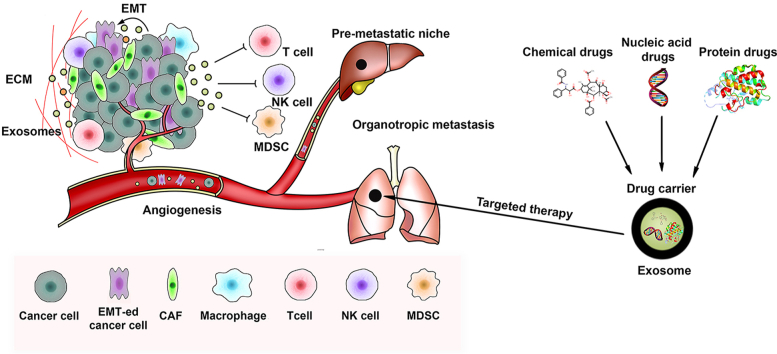
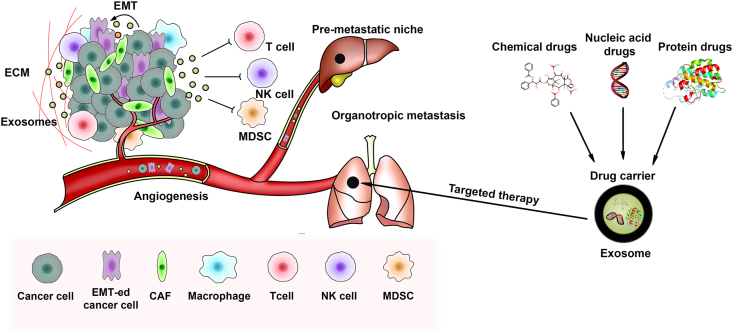
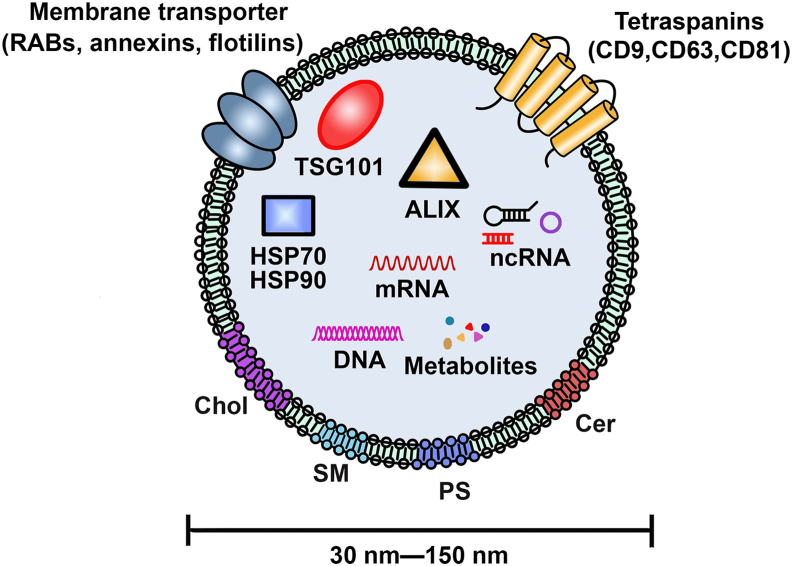
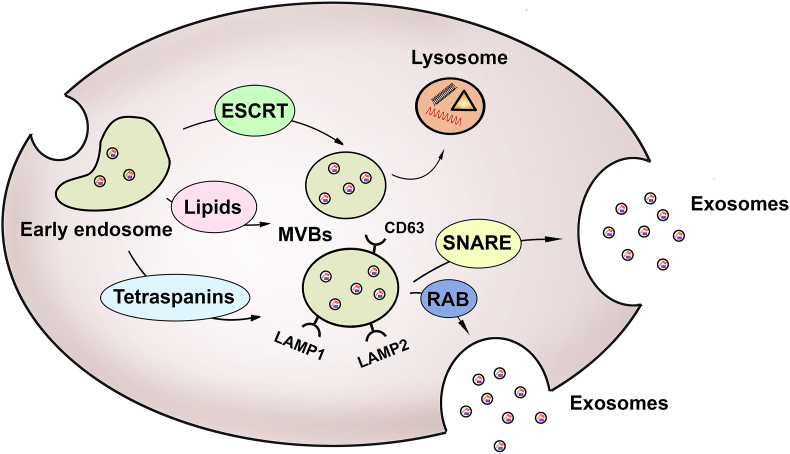
Exosomes are cell-derived nanovesicles with diameters from 30 to 150 nm, released upon fusion of multivesicular bodies with the cell surface. They can transport nucleic acids, proteins, and lipids for intercellular communication and activate signaling pathways in target cells. In cancers, exosomes may participate in growth and metastasis of tumors by regulating the immune response, blocking the epithelial-mesenchymal transition, and promoting angiogenesis. They are also involved in the development of resistance to chemotherapeutic drugs. Exosomes in liquid biopsies can be used as non-invasive biomarkers for early detection and diagnosis of cancers. Because of their amphipathic structure, exosomes are natural drug delivery vehicles for cancer therapy.
外泌体是细胞来源的纳米囊泡,直径为30至150纳米,由多泡体与细胞表面融合后释放。它们可以运输核酸、蛋白质和脂质以进行细胞间通讯,并激活靶细胞中的信号通路。在癌症中,外泌体可能通过调节免疫反应、阻断上皮-间质转化和促进血管生成来参与肿瘤的生长和转移。它们还参与化疗药物耐药性的产生。液体活检中的外泌体可作为癌症早期检测和诊断的非侵入性生物标志物。由于其两亲性结构,外泌体是癌症治疗的天然药物递送载体。