Pali Madhavi, Jagannath Badrinath, Lin Kai-Chun, Sankhala Devangsingh, Upasham Sayali, Muthukumar Sriram, Prasad Shalini
Department of Bioengineering University of Texas at Dallas Richardson Texas USA.
Department of Electrical Engineering The University of Texas at Dallas Richardson Texas USA.
Bioeng Transl Med. 2021 Jul 29;6(3):e10241. doi: 10.1002/btm2.10241. eCollection 2021 Sep.
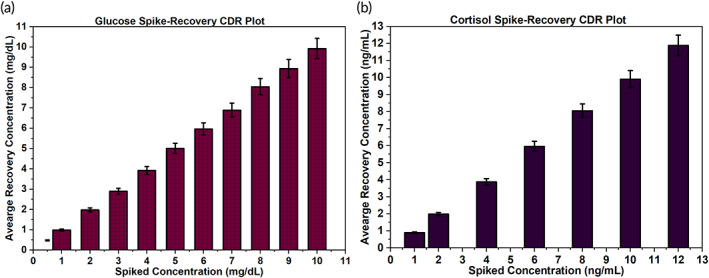
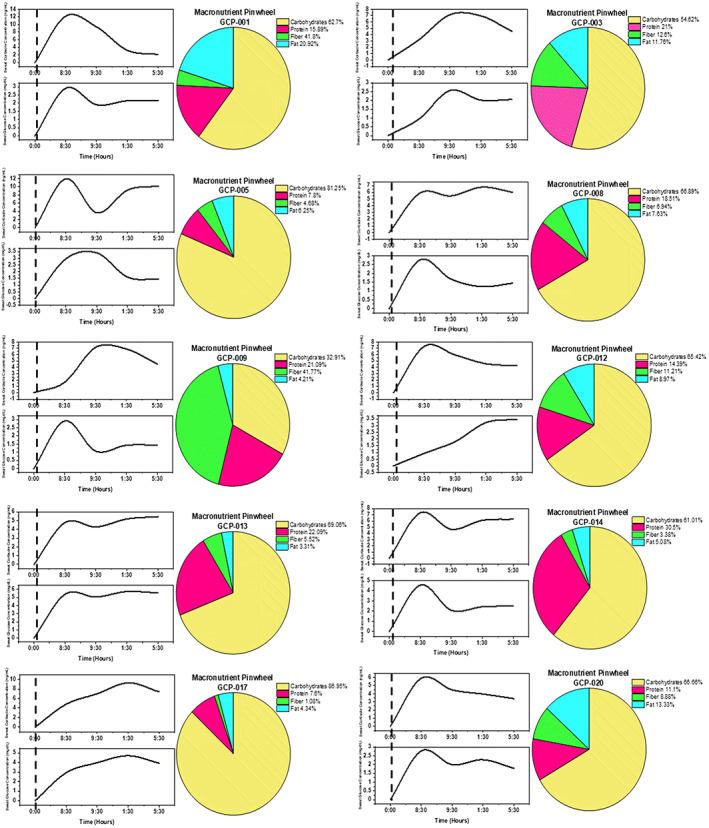
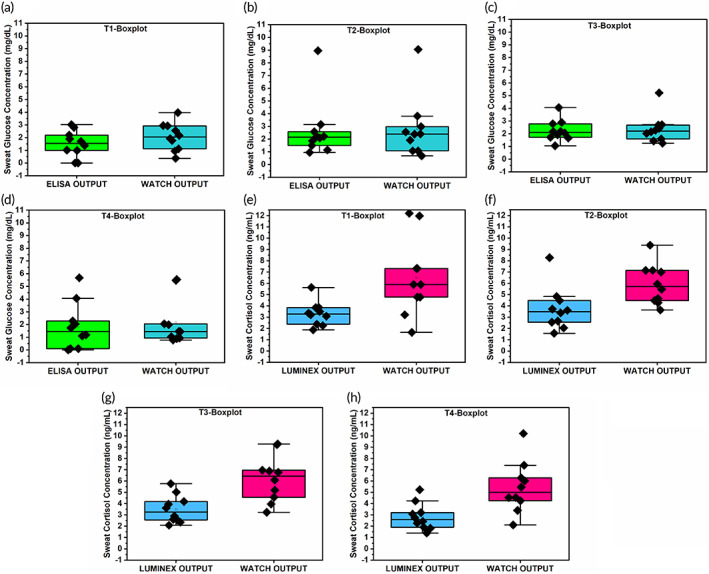
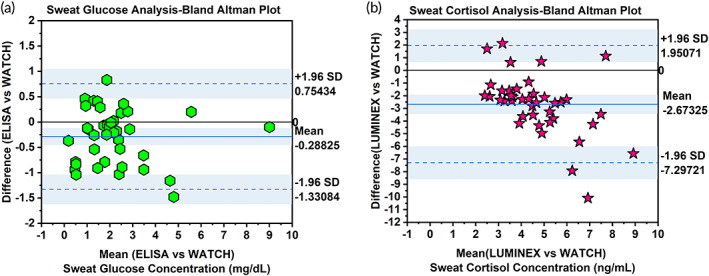
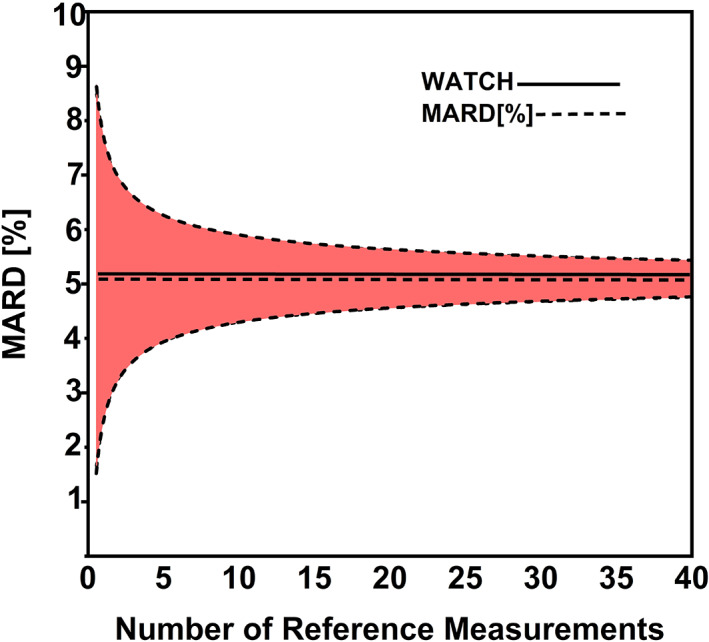
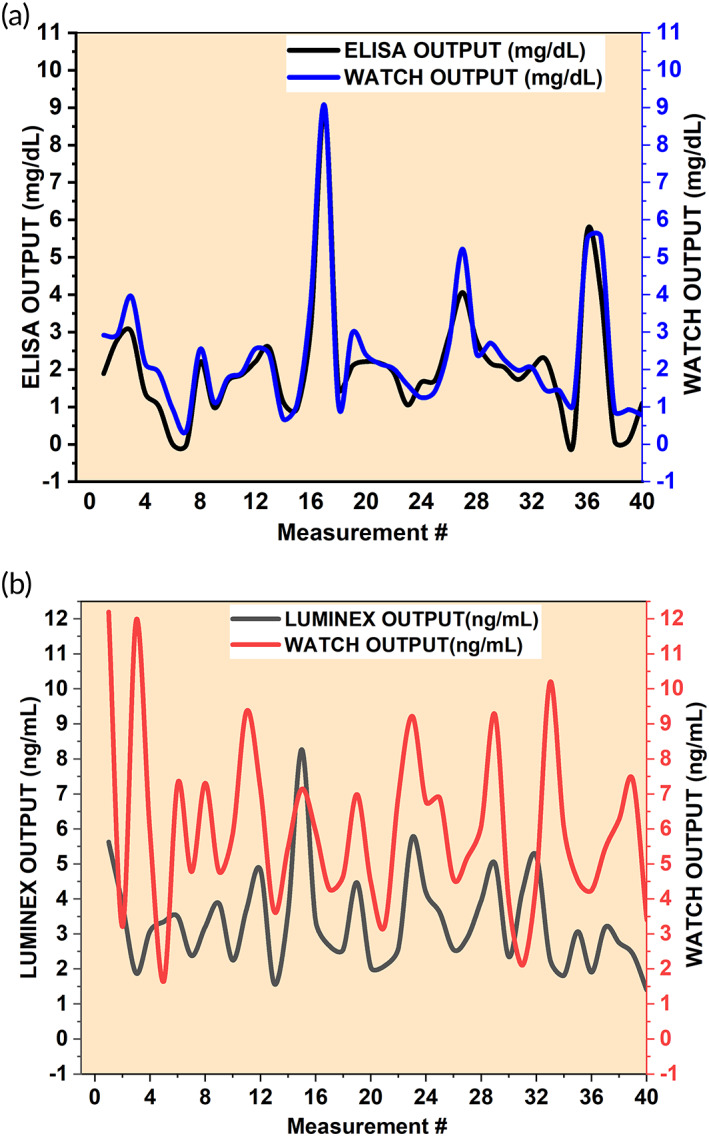
earable wareness hrough ontinuous idrosis (WATCH) sensor is a sweat based monitoring platform that tracks cortisol and glucose for the purpose of understanding metabolic responses related to macronutrient consumption. In this research article, we have demonstrated the ability of tracking these two biomarkers in passive human sweat over a workday period (8 h) for 10 human subjects in conjunction with their macronutrient consumption. The validation of the WATCH sensor performance was carried out via standard reference methods such as Luminex and ELISA This is a first demonstration of a passive sweat sensing technology that can detect interrelated dual metabolites, cortisol, and glucose, on a single sensing platform. The significance of detecting the two biomarkers simultaneously is that capturing the body's metabolic and endocrinal responses to dietary triggers can lead to improved lifestyle management. For sweat cortisol, we achieved a detection limit of 1 ng/ml (range ∼1-12.5 ng/ml) with Pearson's "" of 0.897 in reference studies and 0.868 in WATCH studies. Similarly, for sweat glucose, we achieved a detection limit of 1 mg/dl (range ∼ 1-11 mg/dl) with Pearson's "" of 0.968 in reference studies and 0.947 in WATCH studies, respectively. The statistical robustness of the WATCH sensor was established through the Bland-Altman analysis, whereby the sweat cortisol and sweat glucose levels are comparable to the standard reference method. The probability distribution (-test), power analysis (power 0.82-0.87), = 0.05. Mean absolute relative difference (MARD) outcome of ˷5.10-5.15% further confirmed the statistical robustness of the sweat sensing WATCH device output.
通过连续排汗实现可穿戴式感知(WATCH)传感器是一个基于汗液的监测平台,可追踪皮质醇和葡萄糖,以了解与常量营养素消耗相关的代谢反应。在这篇研究文章中,我们展示了该传感器在10名人类受试者的工作日期间(8小时),结合他们的常量营养素消耗情况,追踪这两种生物标志物于被动分泌的汗液中的能力。WATCH传感器性能的验证是通过Luminex和ELISA等标准参考方法进行的。这是首次证明一种被动汗液传感技术能够在单个传感平台上检测相互关联的两种代谢物——皮质醇和葡萄糖。同时检测这两种生物标志物的意义在于,捕捉身体对饮食诱因的代谢和内分泌反应有助于改善生活方式管理。对于汗液皮质醇,在参考研究中我们实现了1 ng/ml的检测限(范围约为1 - 12.5 ng/ml),Pearson相关系数为0.897,在WATCH研究中为0.868。同样,对于汗液葡萄糖,在参考研究中我们实现了1 mg/dl的检测限(范围约为1 - 11 mg/dl),Pearson相关系数分别为0.968和WATCH研究中的0.947。WATCH传感器的统计稳健性通过Bland - Altman分析得以确立,据此汗液皮质醇和汗液葡萄糖水平与标准参考方法具有可比性。概率分布(t检验)、功效分析(功效0.82 - 0.87),α = 0.05。平均绝对相对差异(MARD)结果为5.10 - 5.15%,进一步证实了汗液传感WATCH设备输出的统计稳健性。