Iijima Hirotaka, Takahashi Masaki
Department of System Design Engineering, Faculty of Science and Technology, Keio University, Yokohama, Japan.
Department of Physical Therapy, Human Health Sciences, Graduate School of Medicine, Kyoto University, Kyoto, Japan.
Arch Rehabil Res Clin Transl. 2021 Jul 21;3(3):100145. doi: 10.1016/j.arrct.2021.100145. eCollection 2021 Sep.
To summarize the level of knowledge regarding the effects of microcurrent therapy (MCT) on musculoskeletal pain in adults.
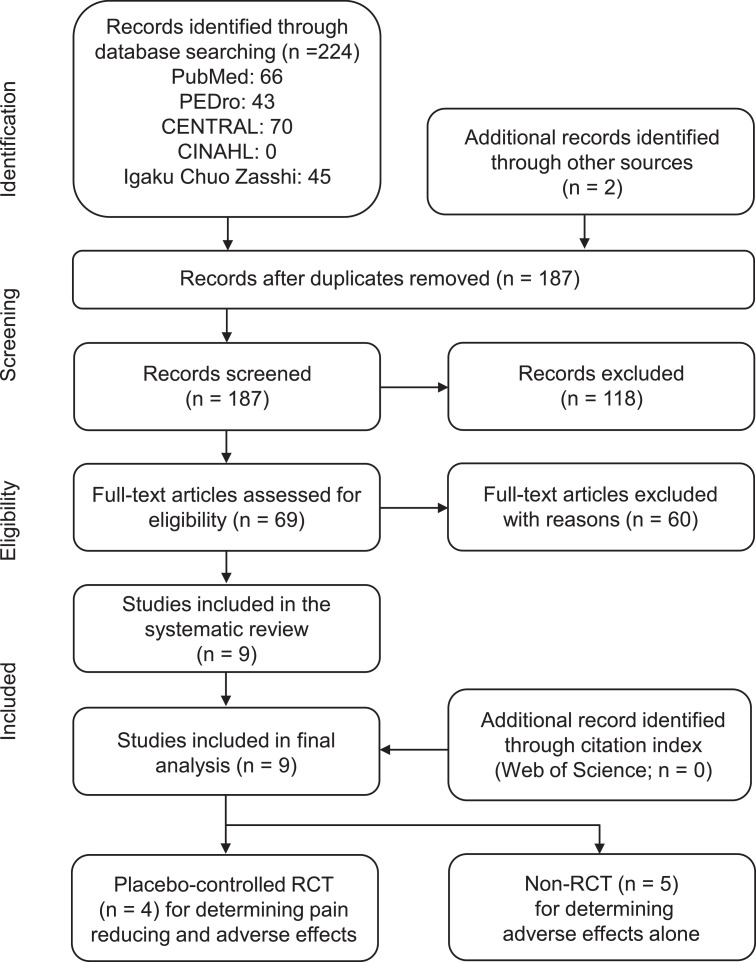
The PubMed, Physiotherapy Evidence Database, Cumulative Index to Nursing Allied Health Literature, Cochrane Central Register of Controlled Trials, and Igaku Chuo Zasshi database were searched from the time of their inception to December 2020.
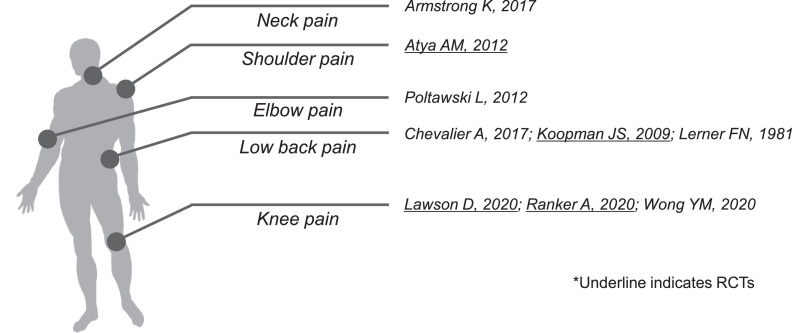
Randomized controlled trials (RCTs) investigating the effects of MCT on musculoskeletal pain were included. Additionally, non-RCTs were included to assess the adverse events.
The primary outcomes were pain and adverse events related to MCT. To assess the reproducibility of MCT, we evaluated the completeness of treatment description using the Template for Intervention Description and Replication (TIDieR) checklist. We also assessed the quality of evidence using the Grading of Recommendations Assessment, Development, and Evaluation (GRADE).
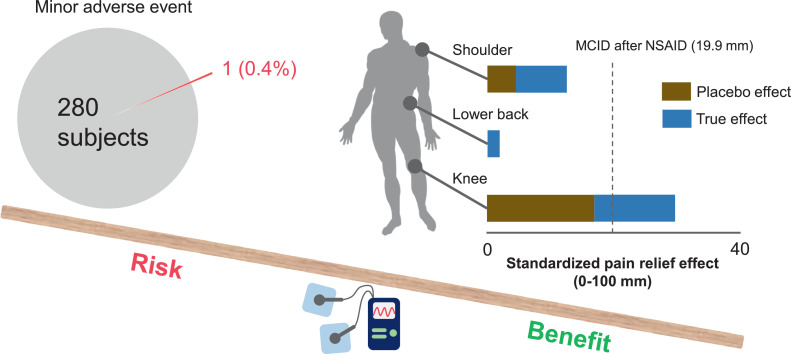
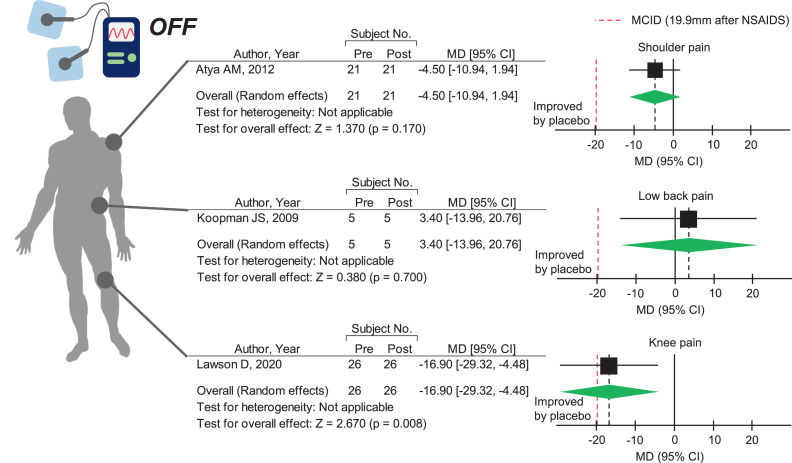
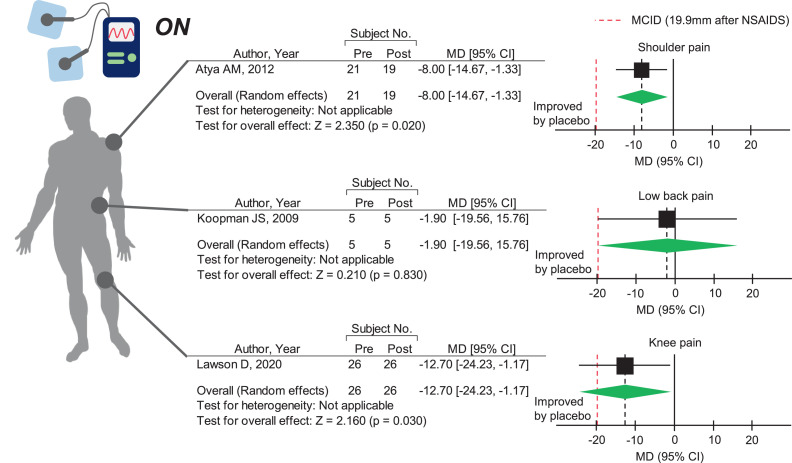
A comprehensive assessment of 4 RCTs and 5 non-RCTs that met the inclusion criteria revealed that MCT significantly improved shoulder pain (1 study, 40 patients) and knee pain (1 study, 52 patients) compared with sham MCT without any severe adverse events. MCT has clinically significant benefits for knee pain. This study also revealed a clinically significant placebo response in treating knee pain. This evidence highlights the substantial effect of placebo response in clinical care. These treatment effects on knee pain are further supported by the high quality of evidence in GRADE with high reproducibility in TIDieR.
The findings of this meta-analysis highlight the effect of placebo response in treating knee pain. MCT is a potential, core nonpharmacologic treatment option in clinical care with minimal adverse events and should be further investigated. This study proposes a framework for the future investigation of the effect of MCT on musculoskeletal pain to enhance the study quality and reproducibility.
总结关于微电流疗法(MCT)对成人肌肉骨骼疼痛影响的知识水平。
检索了PubMed、物理治疗证据数据库、护理及联合健康文献累积索引、Cochrane对照试验中央注册库和医学中央杂志数据库,检索时间从建库至2020年12月。
纳入调查MCT对肌肉骨骼疼痛影响的随机对照试验(RCT)。此外,纳入非RCT以评估不良事件。
主要结局为与MCT相关的疼痛和不良事件。为评估MCT的可重复性,我们使用干预描述与复制模板(TIDieR)清单评估治疗描述的完整性。我们还使用推荐分级评估、制定和评价(GRADE)来评估证据质量。
对4项符合纳入标准的RCT和5项非RCT进行的综合评估显示,与假MCT相比,MCT显著改善了肩部疼痛(1项研究,40例患者)和膝关节疼痛(1项研究,52例患者),且无任何严重不良事件。MCT对膝关节疼痛具有临床显著益处。本研究还揭示了在治疗膝关节疼痛方面具有临床显著意义的安慰剂反应。这一证据凸显了安慰剂反应在临床护理中的显著作用。这些对膝关节疼痛的治疗效果在GRADE中高质量证据以及TIDieR中的高可重复性得到进一步支持。
这项荟萃分析的结果凸显了安慰剂反应在治疗膝关节疼痛中的作用。MCT是临床护理中一种潜在的、核心的非药物治疗选择,不良事件极少,应进一步研究。本研究提出了一个未来研究MCT对肌肉骨骼疼痛影响的框架,以提高研究质量和可重复性。