Garon Edward B, Chih-Hsin Yang James, Dubinett Steven M
Division of Hematology and Oncology, David Geffen School of Medicine at UCLA (TRIO-US Network), Santa Monica, California.
Department of Oncology, National Taiwan University Hospital, National Taiwan University Cancer Center, Taipei City, Taiwan.
JTO Clin Res Rep. 2020 Feb 11;1(1):100001. doi: 10.1016/j.jtocrr.2020.100001. eCollection 2020 Mar.
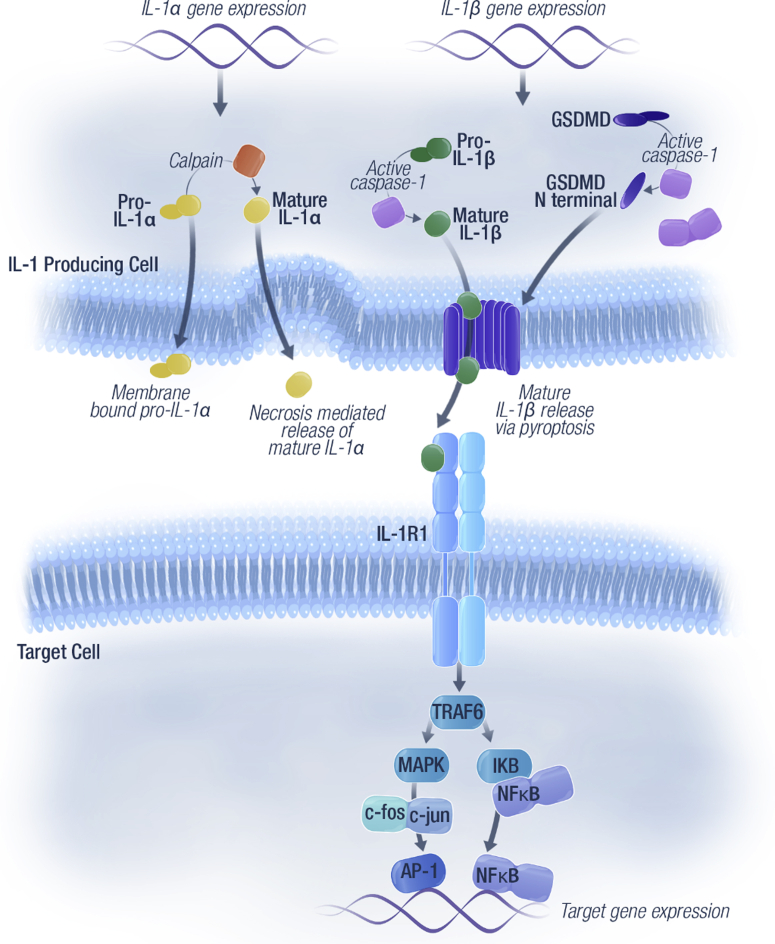
Chronic inflammation is associated with an increased risk of several diseases, including cancer. A complex tumor microenvironment created and maintained by a range of cell types promotes tumor growth, angiogenesis, and metastasis. Inflammasomes, multicomplex cytosolic proteins, generate much of this inflammation, including the activation of the cytokine interleukin (IL)-1β. Inflammation generated by IL-1β is present in several disease states, including atherosclerosis, diabetes, and arthritis. IL-1β is activated when a specific inflammasome, nucleotide-binding domain-like receptor protein 3, induces cleavage of pro-IL-1β into its active form. Nucleotide-binding domain-like receptor protein 3 is up-regulated in lung cancer; IL-1β binds to its receptor and activates signaling pathways, including the MAPK, cyclooxygenase, and nuclear factor-κB pathways, leading to macrophage activation, intratumoral accumulation of immunosuppressive myeloid cells, and tumor growth, invasiveness, metastasis, and angiogenesis. Evidence suggests a role for IL-1β and some of its downstream effectors (e.g., IL-6, IL-8, C-reactive protein, cyclooxygenase-2) as prognostic markers in many malignancies, including lung cancer.
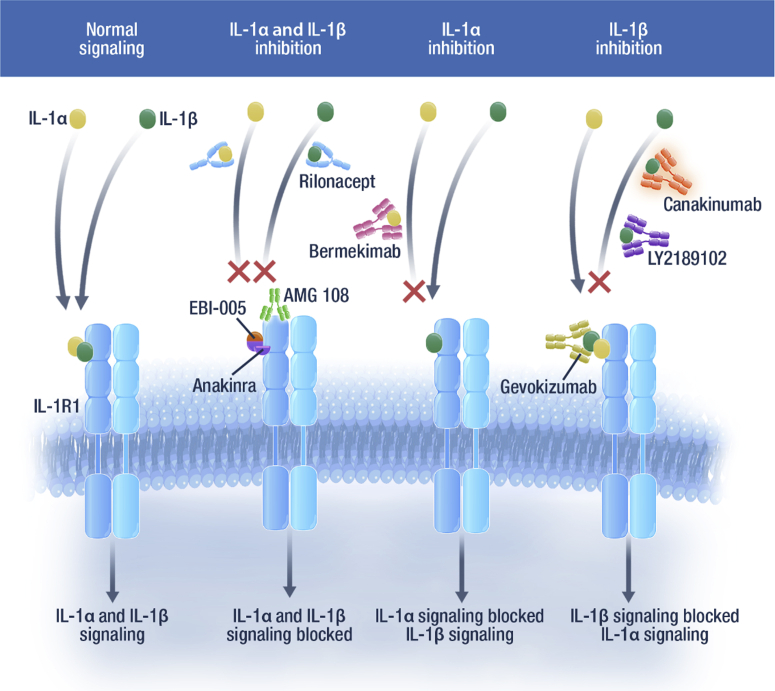
A phase III cardiovascular study of canakinumab, a human immunoglobulin Gk monoclonal antibody with high affinity and specificity for IL-1β, was conducted in patients who had a myocardial infarction.
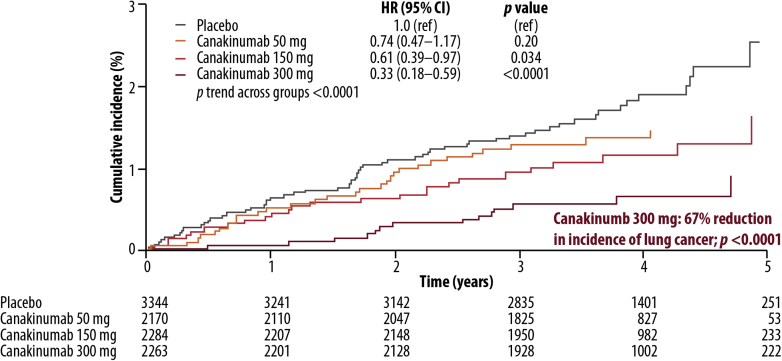
A subanalysis of this study found that treatment with canakinumab substantially reduced incident lung cancer and lung cancer mortality in a dose-dependent manner.
A phase III trial is currently recruiting participants to evaluate canakinumab as adjuvant treatment versus placebo in patients with lung cancer. Other studies are investigating combinations of established antineoplastic agents and canakinumab in both early- and advanced-stage NSCLC.
慢性炎症与包括癌症在内的多种疾病风险增加相关。由多种细胞类型创建和维持的复杂肿瘤微环境促进肿瘤生长、血管生成和转移。炎性小体是多复合物胞质蛋白,引发了大部分此类炎症,包括细胞因子白细胞介素(IL)-1β的激活。IL-1β产生的炎症存在于多种疾病状态中,包括动脉粥样硬化、糖尿病和关节炎。当特定的炎性小体——核苷酸结合寡聚化结构域样受体蛋白3诱导前体IL-1β裂解为其活性形式时,IL-1β被激活。核苷酸结合寡聚化结构域样受体蛋白3在肺癌中上调;IL-1β与其受体结合并激活信号通路,包括丝裂原活化蛋白激酶、环氧化酶和核因子κB通路,导致巨噬细胞活化、免疫抑制性髓样细胞在肿瘤内积聚以及肿瘤生长、侵袭、转移和血管生成。有证据表明IL-1β及其一些下游效应物(如IL-6、IL-8、C反应蛋白、环氧化酶-2)在包括肺癌在内的许多恶性肿瘤中作为预后标志物发挥作用。
在心肌梗死患者中进行了一项关于卡那单抗(一种对IL-1β具有高亲和力和特异性的人免疫球蛋白Gk单克隆抗体)的III期心血管研究。
该研究的一项亚分析发现,用卡那单抗治疗以剂量依赖的方式大幅降低了肺癌发病率和肺癌死亡率。
一项III期试验目前正在招募参与者,以评估卡那单抗作为肺癌患者辅助治疗与安慰剂的疗效对比。其他研究正在调查已确立的抗肿瘤药物与卡那单抗在早期和晚期非小细胞肺癌中的联合应用。