Department of Health Sciences, Northern Arizona University, Flagstaff, AZ 86011, USA.
Department of Chemistry and Biochemistry, Northern Arizona University, Flagstaff, AZ 86011, USA.
Curr Oncol. 2021 Sep 24;28(5):3705-3716. doi: 10.3390/curroncol28050316.
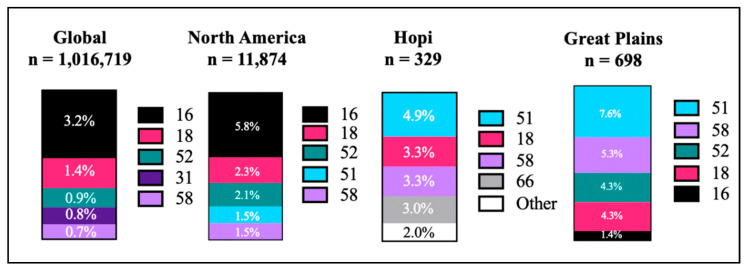
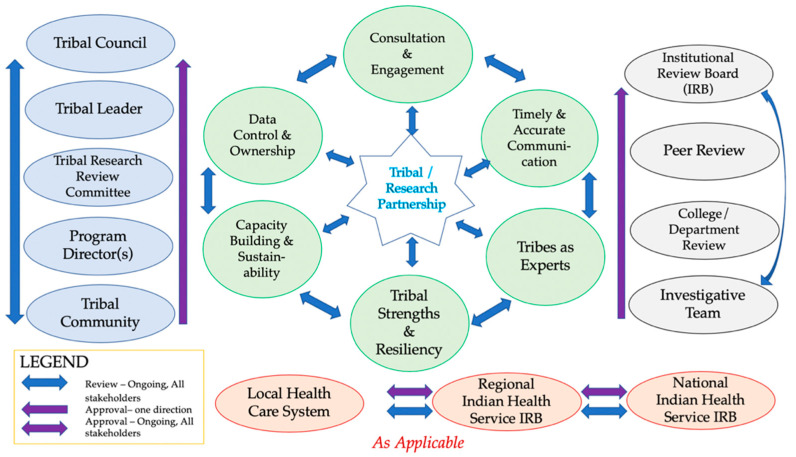
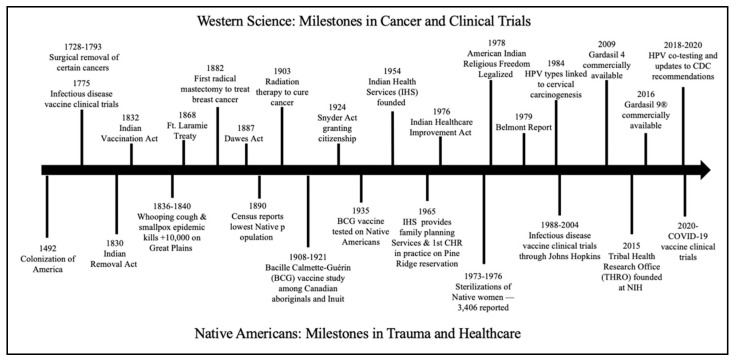
Despite a global and nationwide decrease, Native Americans continue to experience high rates of cancer morbidity and mortality. Vaccination is one approach to decrease cancer incidence such as the case of cervical cancer. However, the availability of vaccines does not guarantee uptake, as evident in the Coronavirus 2019 pandemic. Therefore, as we consider current and future cancer vaccines, there are certain considerations to be mindful of to increase uptake among Native Americans such as the incidence of disease, social determinants of health, vaccine hesitancy, and historical exclusion in clinical trials. This paper primarily focuses on human papillomavirus (HPV) and potential vaccines for Native Americans. However, we also aim to inform researchers on factors that influence Native American choices surrounding vaccination and interventions including cancer therapies. We begin by providing an overview of the historical distrust and trauma Native Americans experience, both past and present. In addition, we offer guidance and considerations when engaging with sovereign Tribal Nations in vaccine development and clinical trials in order to increase trust and encourage vaccine uptake.
尽管全球和全国范围内的发病率都有所下降,但美国原住民的癌症发病率和死亡率仍然很高。接种疫苗是降低癌症发病率的一种方法,例如宫颈癌。然而,疫苗的可及性并不能保证接种率,这在 2019 年冠状病毒病大流行中就可以明显看出。因此,在考虑当前和未来的癌症疫苗时,需要考虑一些因素,以增加美国原住民的接种率,如疾病的发生率、健康的社会决定因素、疫苗犹豫和临床试验中的历史排斥。本文主要关注人乳头瘤病毒(HPV)和针对美国原住民的潜在疫苗。然而,我们也旨在告知研究人员影响美国原住民接种疫苗和癌症治疗等干预措施选择的因素。我们首先提供了一个概述,介绍了美国原住民过去和现在所经历的历史上的不信任和创伤。此外,我们还提供了在疫苗开发和临床试验中与主权部落国家合作时的指导和考虑因素,以增加信任并鼓励疫苗接种。