Institute of Bio- and Geosciences, IBG-1: Biotechnology, Forschungszentrum Jülich GmbH, Jülich, Germany.
Institute of Biotechnology, RWTH Aachen University, Aachen, Germany.
Microb Cell Fact. 2021 Sep 30;20(1):191. doi: 10.1186/s12934-021-01672-6.
The split GFP assay is a well-known technology for activity-independent screening of target proteins. A superfolder GFP is split into two non-fluorescent parts, GFP11 which is fused to the target protein and GFP1-10. In the presence of both, GFP1-10 and the GFP11-tag are self-assembled and a functional chromophore is formed. However, it relies on the availability and quality of GFP1-10 detector protein to develop fluorescence by assembly with the GFP11-tag connected to the target protein. GFP1-10 detector protein is often produced in small scale shake flask cultivation and purified from inclusion bodies.
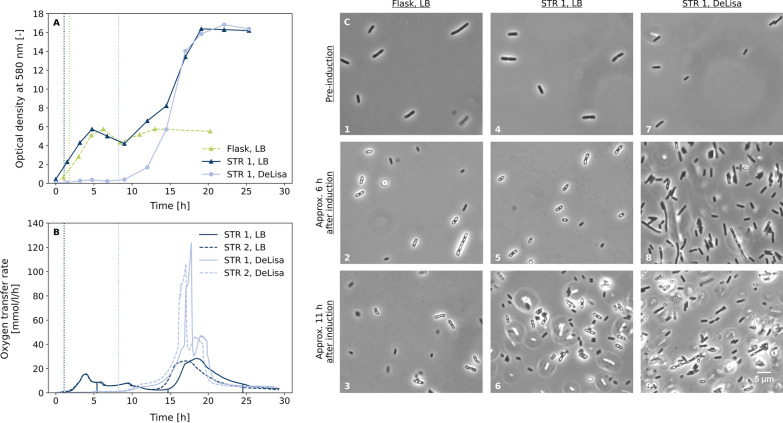
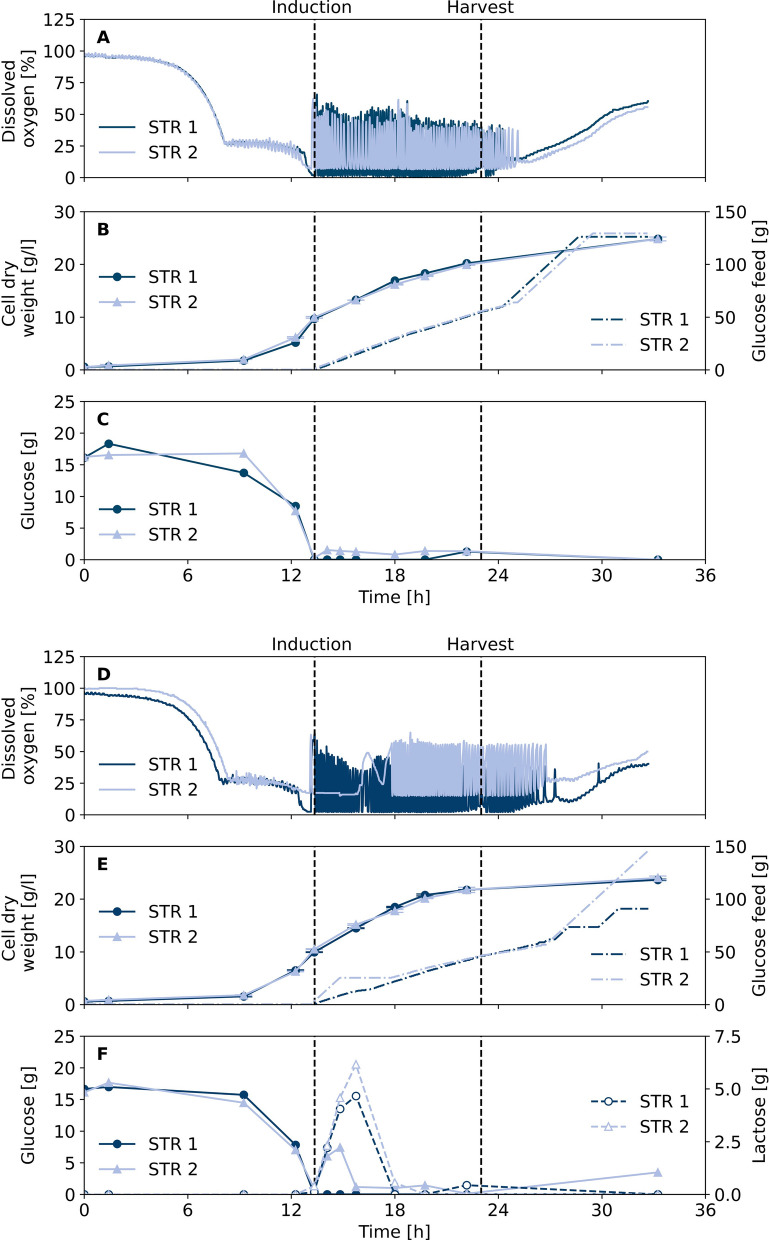
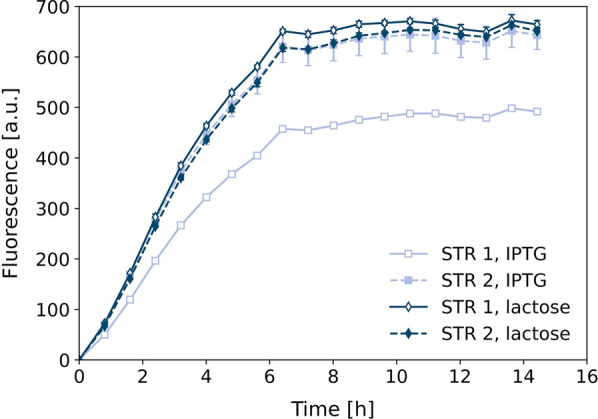
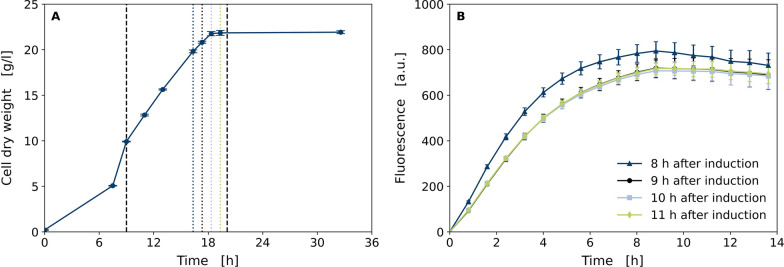
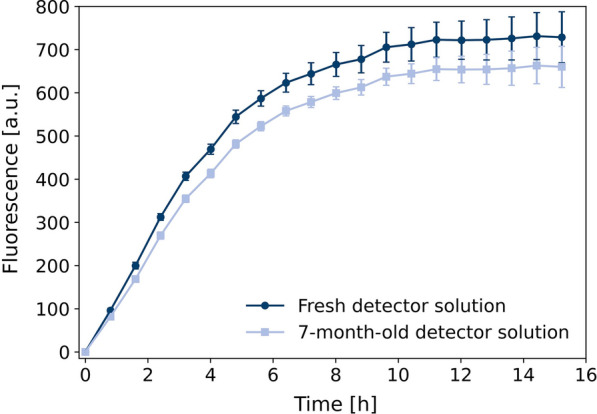
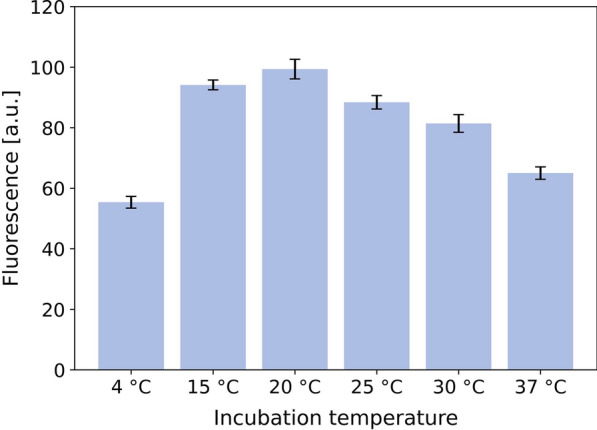
The production of GFP1-10 in inclusion bodies and purification was comprehensively studied based on Escherichia coli as host. Cultivation in complex and defined medium as well as different feed strategies were tested in laboratory-scale bioreactor cultivation and a standardized process was developed providing high quantity of GFP1-10 detector protein with suitable quality. Split GFP assay was standardized to obtain robust and reliable assay results from cutinase secretion strains of Corynebacterium glutamicum with Bacillus subtilis Sec signal peptides NprE and Pel. Influencing factors from environmental conditions, such as pH and temperature were thoroughly investigated.
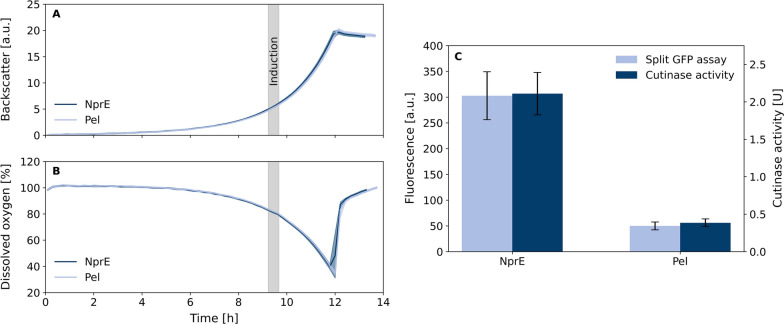
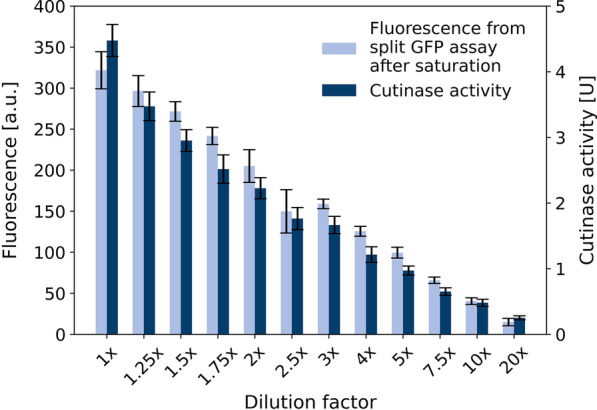
GFP1-10 detector protein production could be successfully scaled from shake flask to laboratory scale bioreactor. A single run yielded sufficient material for up to 385 96-well plate screening runs. The application study with cutinase secretory strains showed very high correlation between measured cutinase activity to split GFP fluorescence signal proofing applicability for larger screening studies.
分裂 GFP 测定法是一种用于非活性筛选靶蛋白的知名技术。超折叠 GFP 被分成两个非荧光部分,GFP11 与靶蛋白融合,GFP1-10。在两者都存在的情况下,GFP1-10 和 GFP11 标记自组装形成功能发色团。然而,它依赖于 GFP1-10 检测蛋白的可用性和质量,通过与连接到靶蛋白的 GFP11 标记组装来产生荧光。GFP1-10 检测蛋白通常在小规模摇瓶培养中产生,并从包涵体中纯化。
在以大肠杆菌为宿主的基础上,全面研究了 GFP1-10 在包涵体中的生产和纯化。在实验室规模的生物反应器培养中测试了复杂和定义培养基以及不同的补料策略,并开发了标准化的工艺,提供了大量具有适当质量的 GFP1-10 检测蛋白。对裂合 GFP 测定法进行了标准化,以从棒状杆菌属谷氨酸的角质酶分泌菌株中获得可靠和可靠的测定结果,这些菌株带有芽孢杆菌属信号肽 NprE 和 Pel。从环境条件(如 pH 和温度)等因素对影响因素进行了深入研究。
GFP1-10 检测蛋白的生产可以成功地从摇瓶扩大到实验室规模的生物反应器。一次运行可产生足够的材料,用于多达 385 个 96 孔板筛选运行。与角质酶分泌菌株的应用研究表明,测量的角质酶活性与裂合 GFP 荧光信号之间存在高度相关性,证明了其在更大规模筛选研究中的适用性。