Department of Neurosurgery, West China Hospital, West China School of Medicine, Sichuan University, Chengdu, Sichuan Province, People's Republic of China.
State Key Laboratory of Biotherapy, West China Hospital, West China School of Medicine, Sichuan University, Chengdu, Sichuan Province, People's Republic of China.
Oncoimmunology. 2021 Sep 27;10(1):1983306. doi: 10.1080/2162402X.2021.1983306. eCollection 2021.
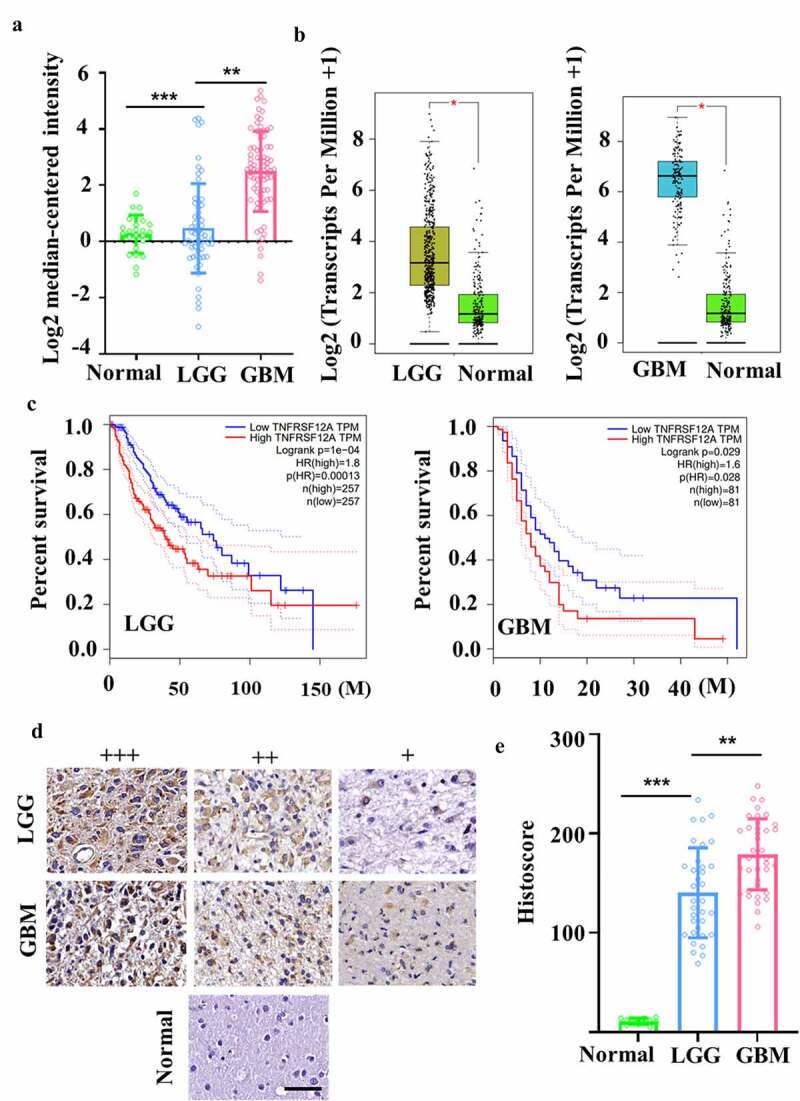
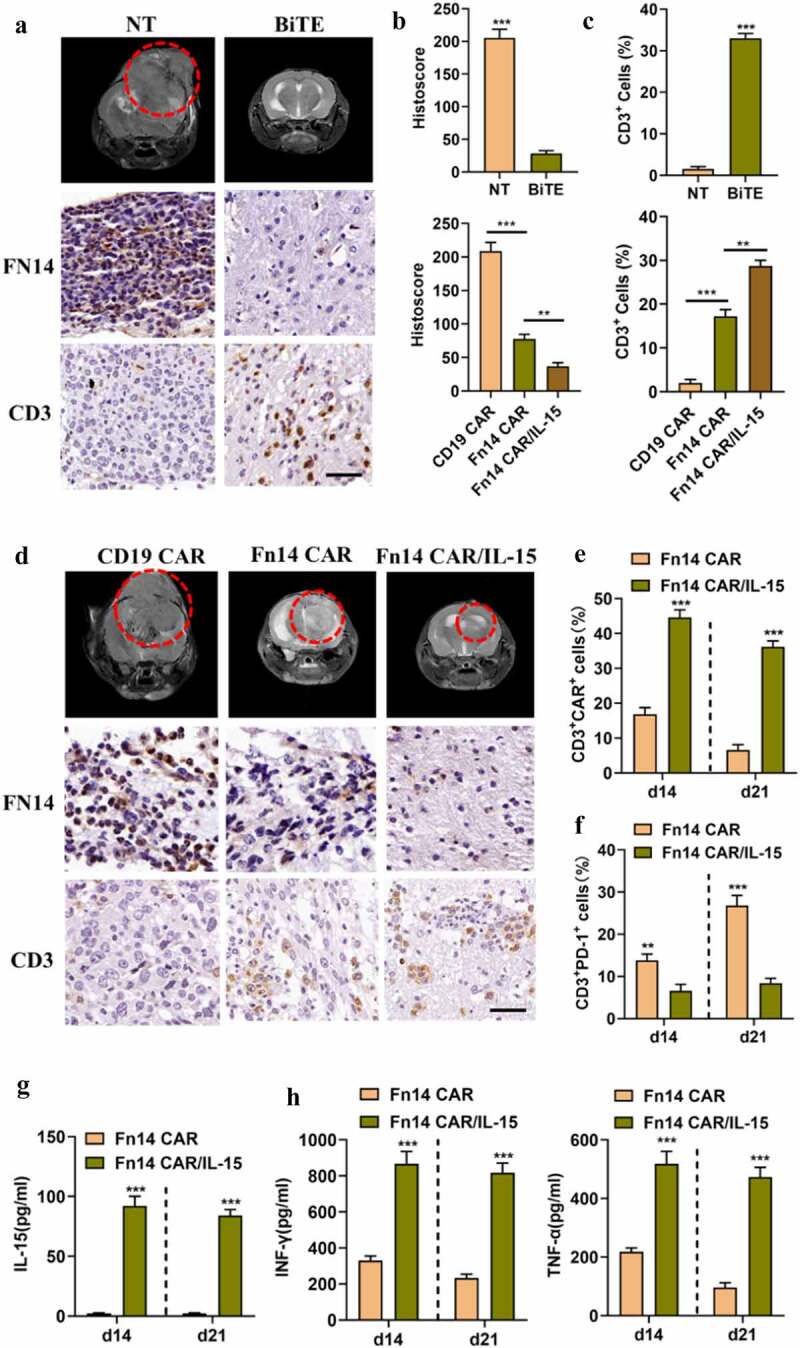
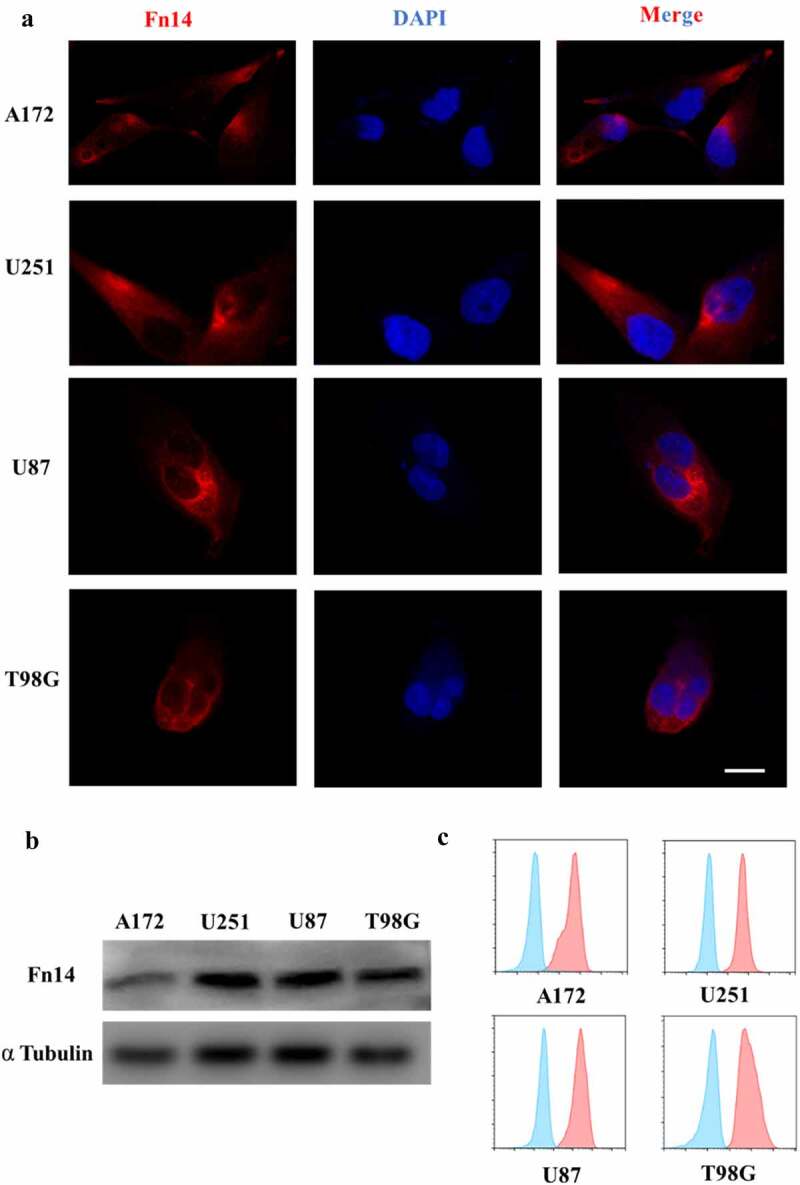
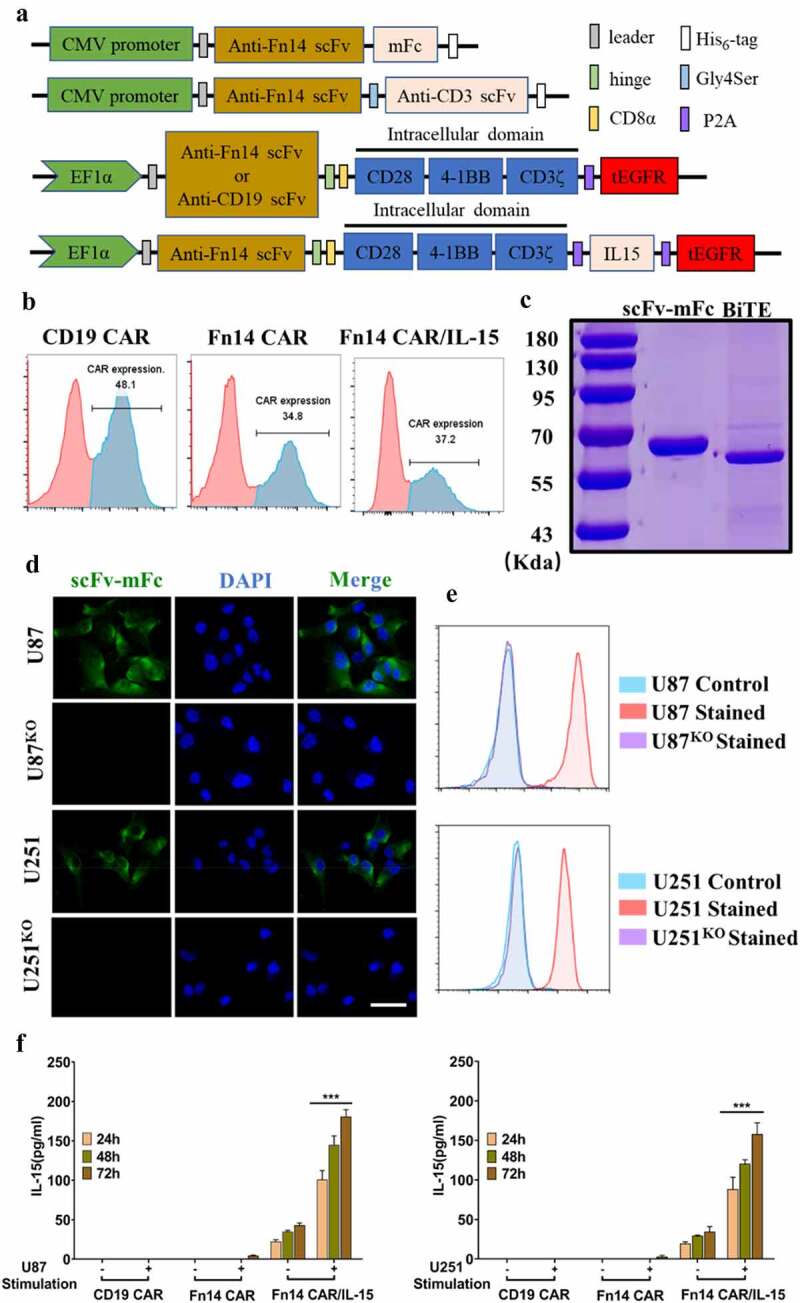
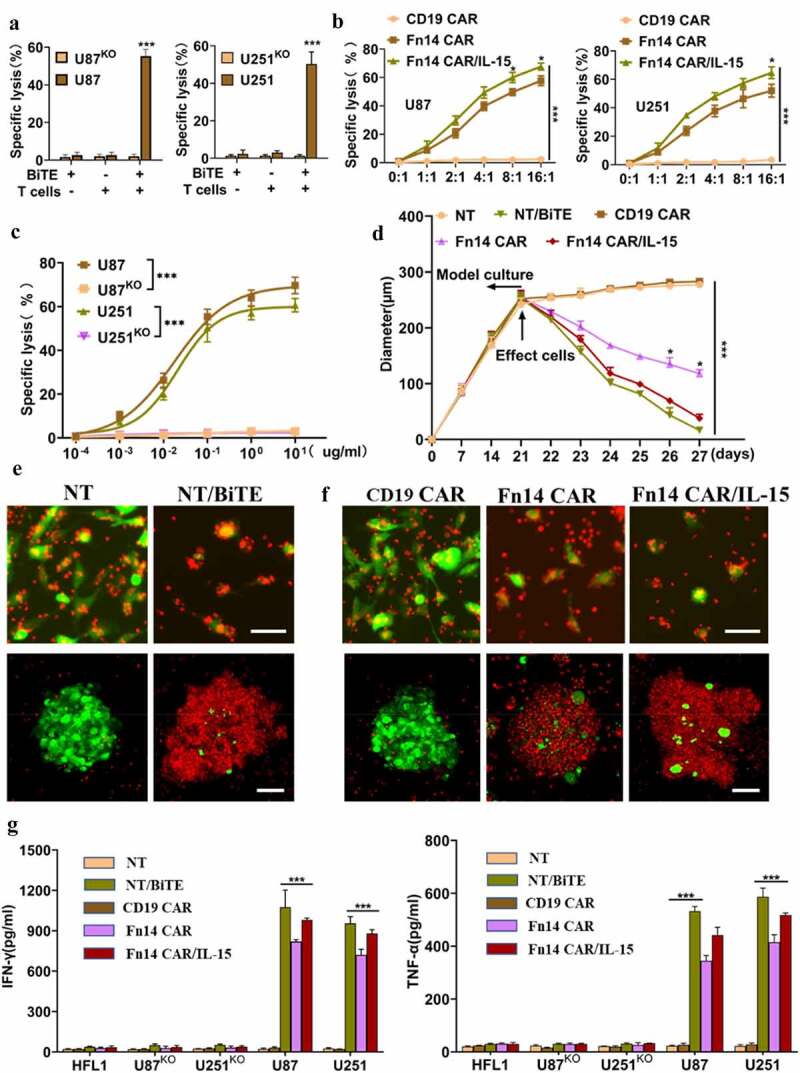
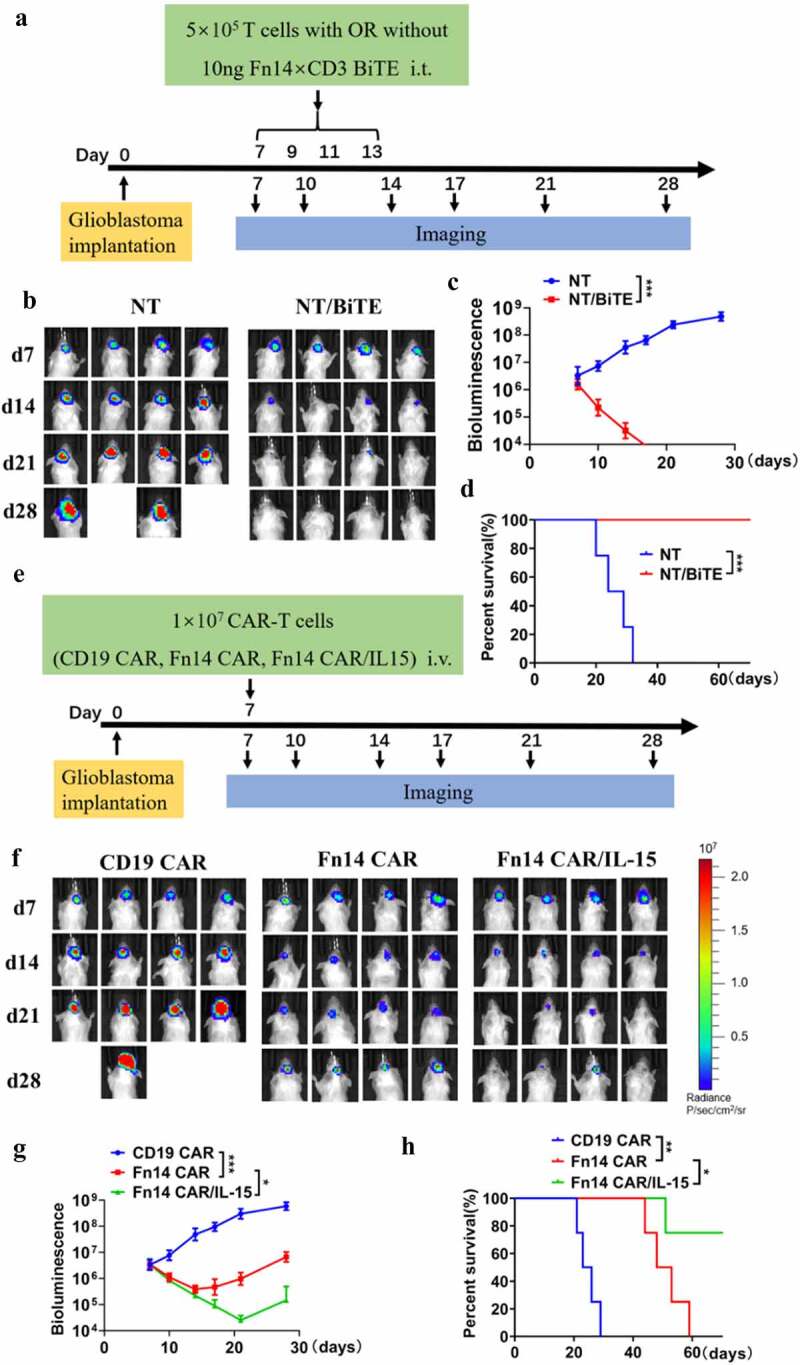
T cell-engaging therapies involving bispecific T cell engager (BiTE) and chimeric antigen receptor T (CAR-T) cells have achieved great success in the treatment of hematological tumors. However, the paucity of ideal cell surface molecules that can be targeted on glioblastoma (GBM) partially reduces the immunotherapeutic efficacy. Recently, high expression of Fn14 has been reported in several solid tumors, so the strategy of exploiting this specific antigen for GBM immunotherapy is worth studying. Consequently, we constructed Fn14× CD3 BiTE and Fn14-specific CAR-T cells and investigated their cytotoxic activity against GBM in vitro and in vivo. First, expression of Fn14 was confirmed in glioma tissues and GBM cells. Then, we designed Fn14-specific BiTE and CAR-T cells and tested their cytotoxicity in GBM cell cultures and mouse models of GBM. Fn14 was highly expressed in GBM tissues and cell lines, while it was undetectable in normal brain samples. Fn14× CD3 BiTE, Fn14 CAR-T cells and Fn14 CAR-T/IL-15 cells were antigen-specific and highly cytotoxic, showing good antitumor activity in vitro and causing significant regression of established solid tumors in xenograft models. However, the xenografts treated with Fn14 CAR-T cells regrew, whereas xenografts treated with Fn14 CAR-T/IL-15 cells did not. IL-15 engineering augmented the antitumor activity of Fn14 CAR-T cells and resulted in significant antitumor effects similar to those of Fn14× CD3 BiTE. Our results suggest that Fn14 is an appropriate target for GBM. Anti-Fn14 BiTE and Fn14-specific CAR-T/IL-15 cells may be exciting immunotherapeutic options for malignant brain cancer.
双特异性 T 细胞衔接器(BiTE)和嵌合抗原受体 T(CAR-T)细胞的 T 细胞激活疗法在治疗血液肿瘤方面取得了巨大成功。然而,由于在神经胶质瘤(GBM)上能够靶向的理想细胞表面分子较少,部分降低了免疫治疗效果。最近,已有报道称在几种实体瘤中 Fn14 高度表达,因此利用这种特定抗原进行 GBM 免疫治疗的策略值得研究。因此,我们构建了 Fn14×CD3 BiTE 和 Fn14 特异性 CAR-T 细胞,并研究了它们在体外和体内对 GBM 的细胞毒性。首先,在胶质瘤组织和 GBM 细胞中证实了 Fn14 的表达。然后,我们设计了 Fn14 特异性 BiTE 和 CAR-T 细胞,并在 GBM 细胞培养物和 GBM 小鼠模型中测试了它们的细胞毒性。Fn14 在 GBM 组织和细胞系中高度表达,而在正常脑组织样本中无法检测到。Fn14×CD3 BiTE、Fn14 CAR-T 细胞和 Fn14 CAR-T/IL-15 细胞均具有抗原特异性和高度细胞毒性,在体外显示出良好的抗肿瘤活性,并在异种移植模型中导致已建立的实体瘤显著消退。然而,用 Fn14 CAR-T 细胞治疗的异种移植物重新生长,而用 Fn14 CAR-T/IL-15 细胞治疗的异种移植物则没有。IL-15 工程增强了 Fn14 CAR-T 细胞的抗肿瘤活性,并产生了与 Fn14×CD3 BiTE 相似的显著抗肿瘤作用。我们的结果表明 Fn14 是 GBM 的一个合适的靶点。抗 Fn14 BiTE 和 Fn14 特异性 CAR-T/IL-15 细胞可能是恶性脑癌令人兴奋的免疫治疗选择。