Center for Reproductive Evolution, Department of Biology, Syracuse University, Syracuse, New York, USA.
Center for Reproductive Evolution, Department of Biology, Syracuse University, Syracuse, New York, USA.
Mol Cell Proteomics. 2021;20:100156. doi: 10.1016/j.mcpro.2021.100156. Epub 2021 Sep 29.
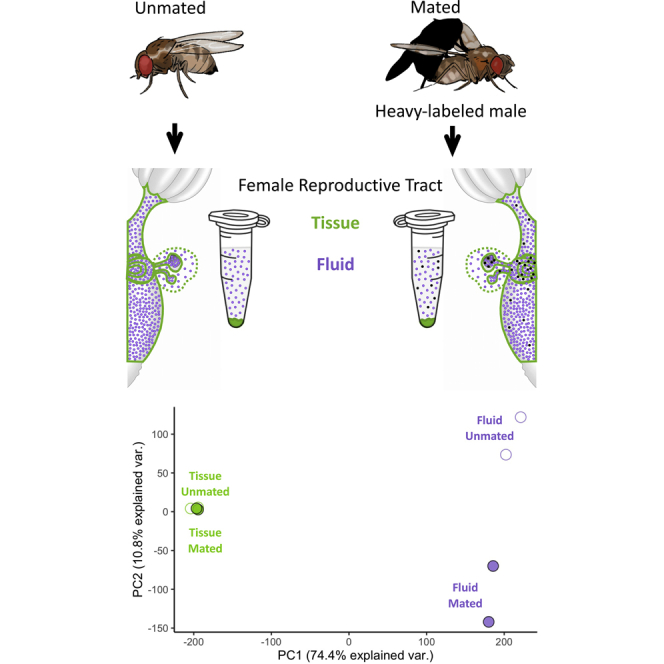
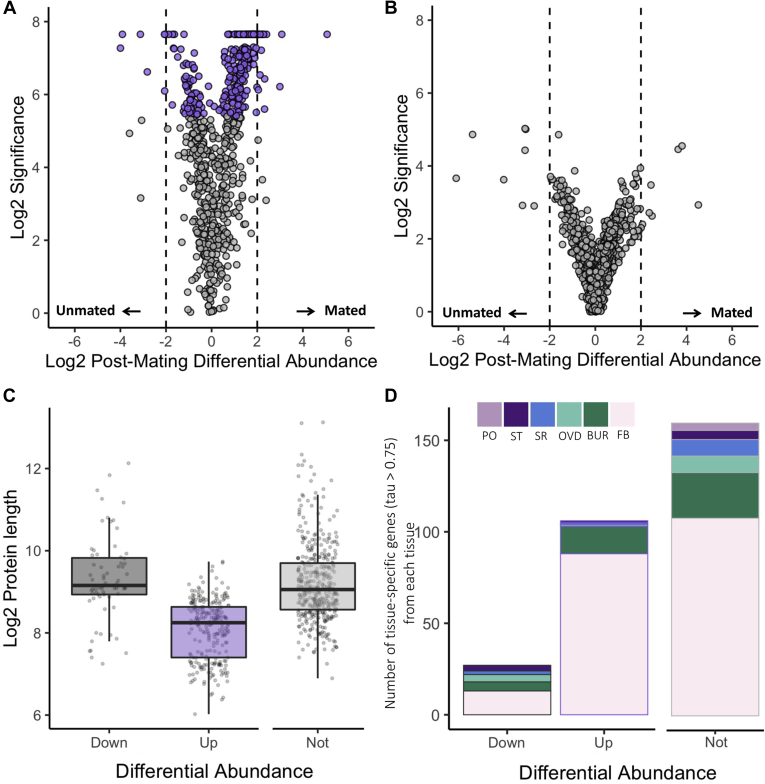
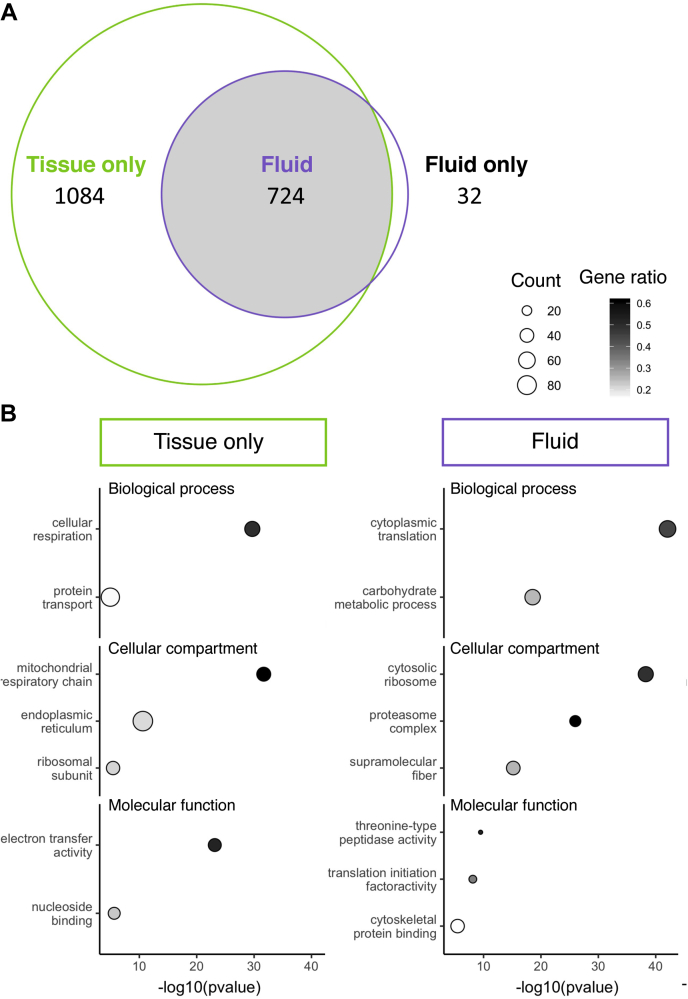
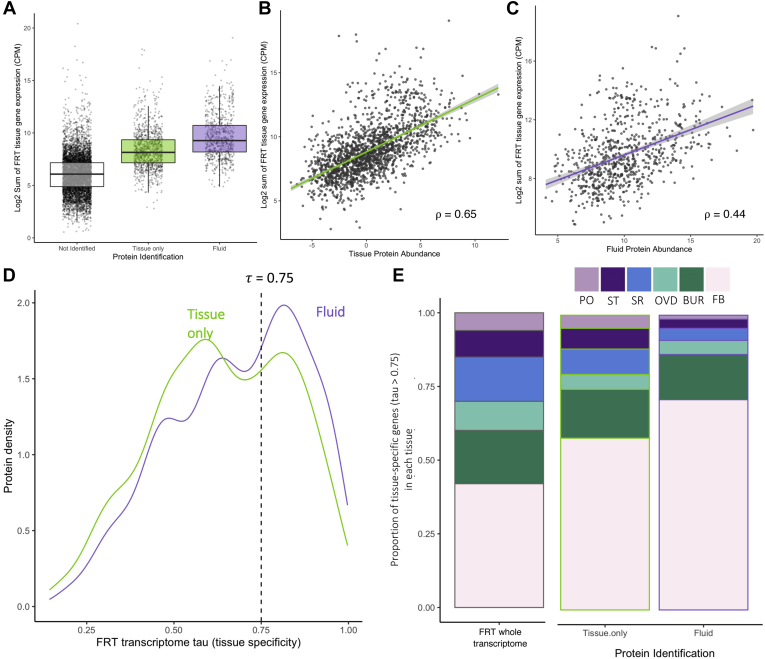
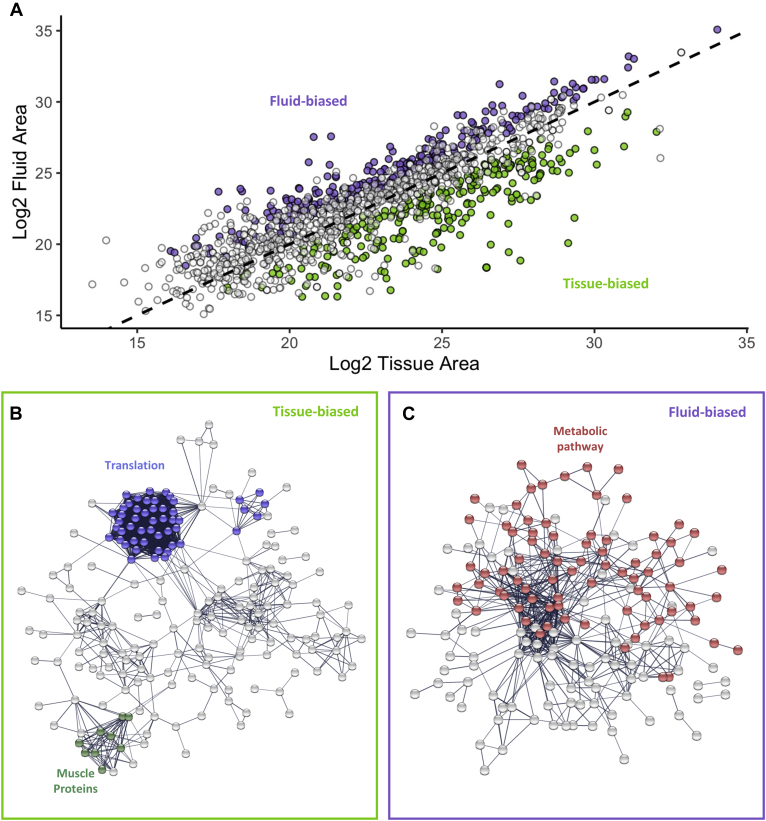
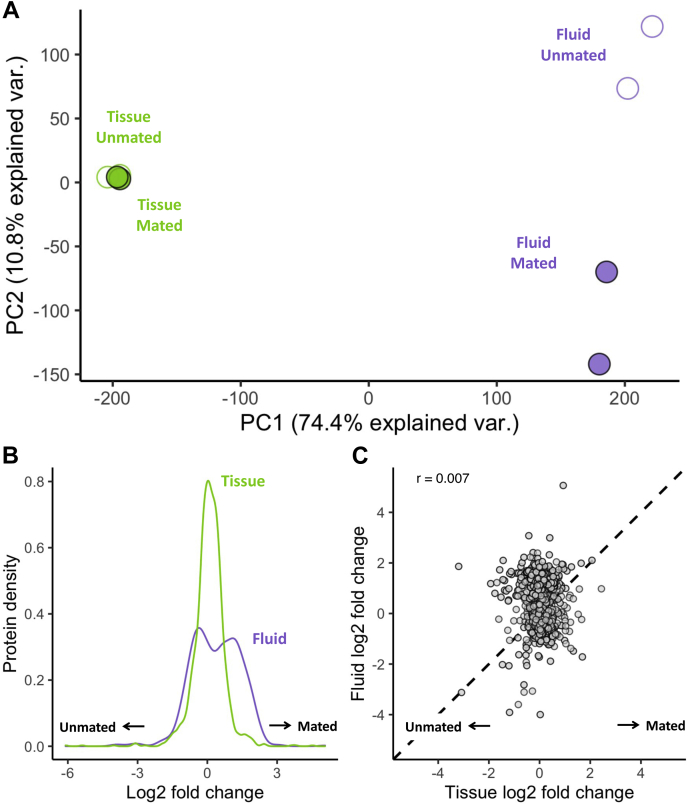
Fertility depends on the progression of complex and coordinated postmating processes within the extracellular environment of the female reproductive tract (FRT). Molecular interactions between ejaculate and FRT proteins regulate many of these processes, including sperm motility, migration, storage, and modification, along with concurrent changes in the female. Although extensive progress has been made in the proteomic characterization of the male-derived components of sperm and seminal fluid, investigations into the FRT have remained more limited. To achieve a comparable level of knowledge regarding female-derived proteins that comprise the reproductive environment, we utilized semiquantitative MS-based proteomics to study the composition of the FRT tissue and, separately, the luminal fluid, before and after mating in Drosophila melanogaster. Our approach leveraged whole-fly isotopic labeling to delineate female proteins from transferred male ejaculate proteins. Our results revealed several characteristics that distinguish the FRT fluid proteome from the FRT tissue proteome: (1) the fluid proteome is encoded by genes with higher overall levels of FRT gene expression and tissue specificity, including many genes with enriched expression in the fat body, (2) fluid-biased proteins are enriched for metabolic functions, and (3) the fluid exhibits pronounced postmating compositional changes. The dynamic mating-induced proteomic changes in the FRT fluid inform our understanding of secretory mechanisms of the FRT, serve as a foundation for establishing female contributions to the ejaculate-female interactions that regulate fertility, and highlight the importance of applying proteomic approaches to characterize the composition and dynamics of the FRT environment.
生育能力取决于雌性生殖道(FRT)细胞外环境中复杂而协调的交配后过程的进展。精液和 FRT 蛋白之间的分子相互作用调节着许多这些过程,包括精子的运动、迁移、储存和修饰,以及女性的同步变化。尽管在精子和精液的雄性来源成分的蛋白质组学表征方面取得了广泛的进展,但对 FRT 的研究仍然更为有限。为了在构成生殖环境的雌性来源蛋白方面获得相当水平的知识,我们利用基于 MS 的半定量蛋白质组学来研究黑腹果蝇交配前后 FRT 组织和腔液的组成。我们的方法利用全蝇同位素标记来区分来自转移的雄性精液蛋白的雌性蛋白。我们的研究结果揭示了几个将 FRT 液蛋白组与 FRT 组织蛋白组区分开来的特征:(1) 液蛋白组由整体 FRT 基因表达水平和组织特异性更高的基因编码,包括许多在脂肪体中表达丰富的基因,(2) 偏向于液体的蛋白富含代谢功能,以及(3) 液体在交配后表现出明显的组成变化。FRT 液中的动态交配诱导的蛋白质组变化为我们理解 FRT 的分泌机制提供了信息,为确定雌性对调节生育能力的精液-雌性相互作用的贡献奠定了基础,并突出了应用蛋白质组学方法来描述 FRT 环境的组成和动态的重要性。