Institute for Cell Biology, Department of Immunology, University of Tübingen, Tubingen, Germany.
Rudolf-Virchow Zentrum, University Würzburg, Würzburg, Germany.
J Immunother Cancer. 2021 Oct;9(10). doi: 10.1136/jitc-2021-003404.
Atypical teratoid/rhabdoid tumors (AT/RT) are highly aggressive CNS tumors of infancy and early childhood. Hallmark is the surprisingly simple genome with inactivating mutations or deletions in the SMARCB1 gene as the oncogenic driver. Nevertheless, AT/RTs are infiltrated by immune cells and even clonally expanded T cells. However, it is unclear which epitopes T cells might recognize on AT/RT cells.
Here, we report a comprehensive mass spectrometry (MS)-based analysis of naturally presented human leukocyte antigen (HLA) class I and class II ligands on 23 AT/RTs. MS data were validated by matching with a human proteome dataset and exclusion of peptides that are part of the human benignome. Cryptic peptide ligands were identified using Peptide-PRISM.
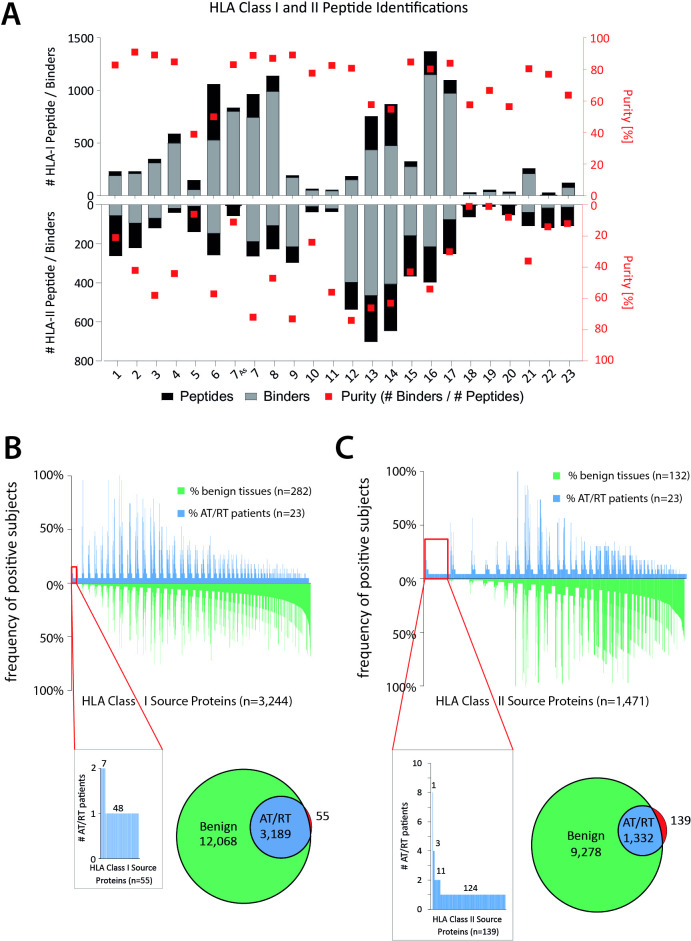
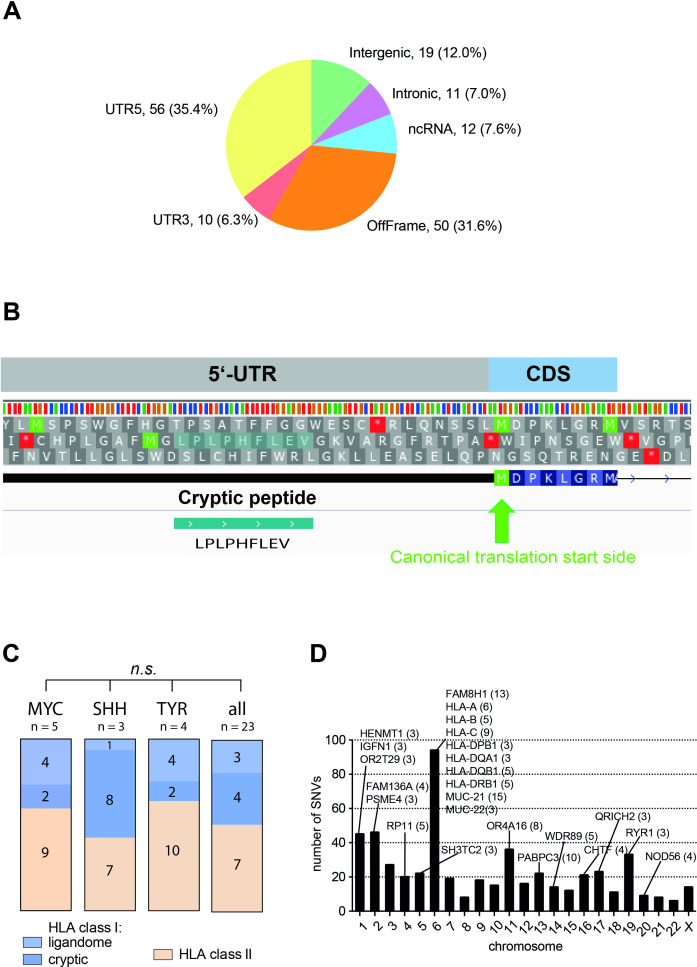
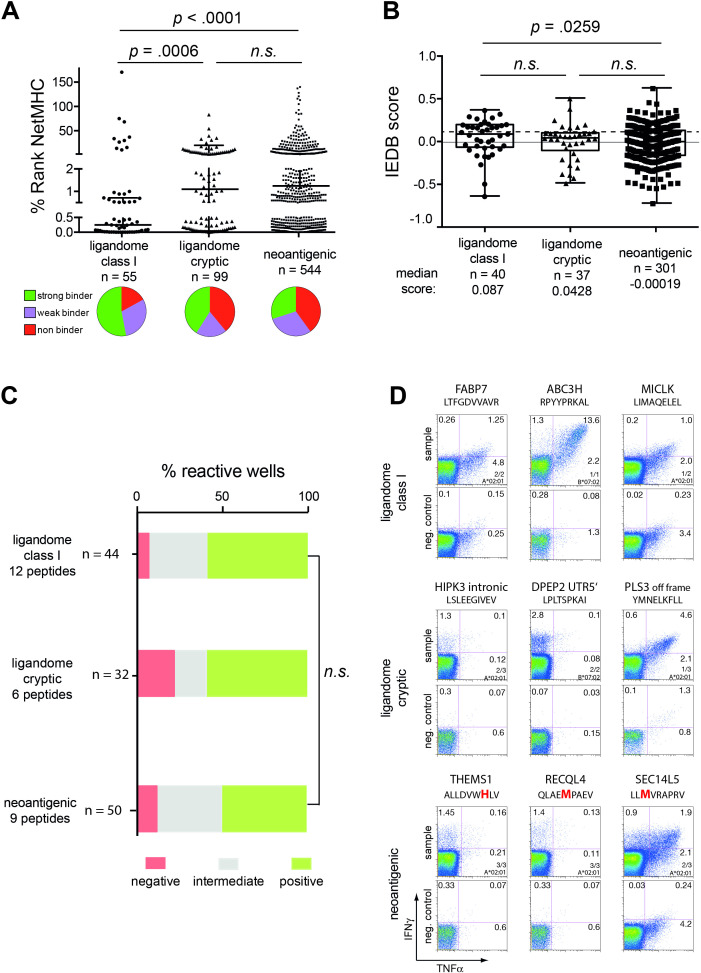
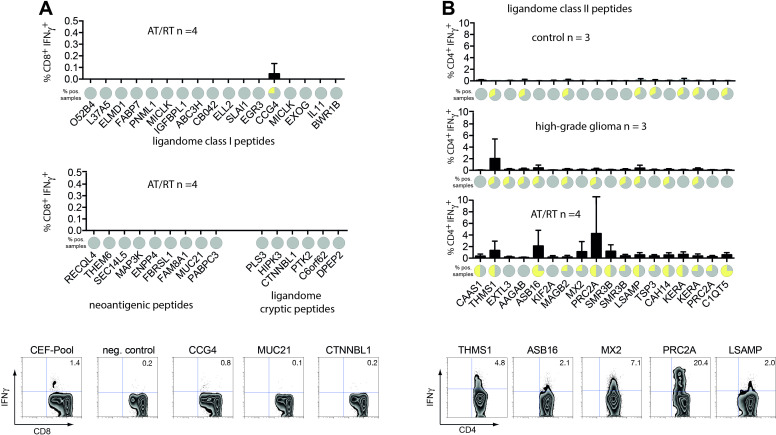
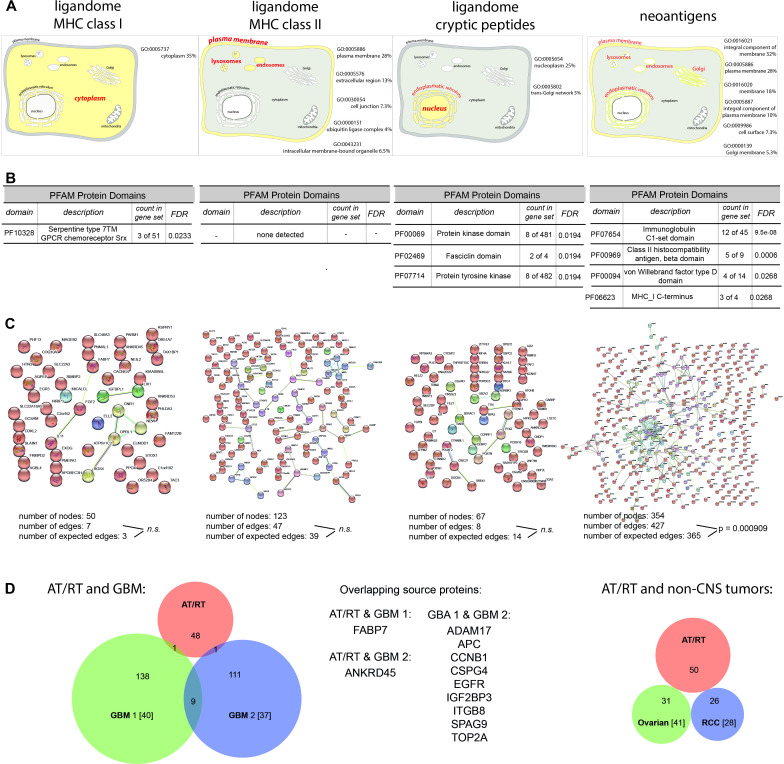
Comparative HLA ligandome analysis of the HLA ligandome revealed 55 class I and 139 class II tumor-exclusive peptides. No peptide originated from the SMARCB1 region. In addition, 61 HLA class I tumor-exclusive peptide sequences derived from non-canonically translated proteins. Combination of peptides from natural and cryptic class I and class II origin gave optimal representation of tumor cell compartments. Substantial overlap existed with the cryptic immunopeptidome of glioblastomas, but no concordance was found with extracranial tumors. More than 80% of AT/RT exclusive peptides were able to successfully prime CD8 T cells, whereas naturally occurring memory responses in AT/RT patients could only be detected for class II epitopes. Interestingly, >50% of AT/RT exclusive class II ligands were also recognized by T cells from glioblastoma patients but not from healthy donors.
These findings highlight that AT/RTs, potentially paradigmatic for other pediatric tumors with a low mutational load, present a variety of highly immunogenic HLA class I and class II peptides from canonical as well as non-canonical protein sources. Inclusion of such cryptic peptides into therapeutic vaccines would enable an optimized mapping of the tumor cell surface, thereby reducing the likelihood of immune evasion.
非典型畸胎样/横纹肌样肿瘤(AT/RT)是婴幼儿和儿童早期具有高度侵袭性的中枢神经系统肿瘤。其特征是存在简单的基因组,SMARCB1 基因发生失活突变或缺失,是致癌驱动因素。尽管如此,AT/RT 中仍有免疫细胞浸润,甚至有克隆扩增的 T 细胞。然而,目前尚不清楚 T 细胞可能识别 AT/RT 细胞上的哪些表位。
本研究报告了对 23 例 AT/RT 中天然呈现的人类白细胞抗原(HLA)I 类和 II 类配体进行的全面质谱(MS)分析。通过与人类蛋白质组数据集匹配并排除良性人类基因组的一部分肽段,对 MS 数据进行了验证。使用 Peptide-PRISM 鉴定潜在的肽配体。
对 HLA 配体组的 HLA 配体组比较分析显示,55 种 I 类和 139 种 II 类肿瘤特异性肽。没有肽源自 SMARCB1 区域。此外,61 种 I 类肿瘤特异性肽序列源自非经典翻译蛋白。天然和潜在的 I 类和 II 类来源的肽的组合能很好地代表肿瘤细胞区室。与胶质母细胞瘤的潜在免疫肽组有很大的重叠,但与颅外肿瘤没有一致性。超过 80%的 AT/RT 特异性肽能够成功地诱导 CD8 T 细胞,而在 AT/RT 患者中只能检测到自然发生的记忆反应的 II 类表位。有趣的是,超过 50%的 AT/RT 特异性 II 类配体也被胶质母细胞瘤患者的 T 细胞识别,但不能被健康供体的 T 细胞识别。
这些发现强调了 AT/RT 可能是其他具有低突变负荷的儿科肿瘤的典型代表,从经典和非经典蛋白来源呈现多种高度免疫原性的 HLA I 类和 II 类肽。将这些潜在的肽纳入治疗性疫苗中,可以优化肿瘤细胞表面的作图,从而降低免疫逃逸的可能性。