University Hospital Tübingen, Clinical Collaboration Unit Translational Immunology, German Cancer Consortium (DKTK), Tübingen, Germany.
University of Tübingen, Institute for Cell Biology, Department of Immunology, Tübingen, Germany.
Blood Cancer J. 2020 Feb 28;10(2):24. doi: 10.1038/s41408-020-0288-3.
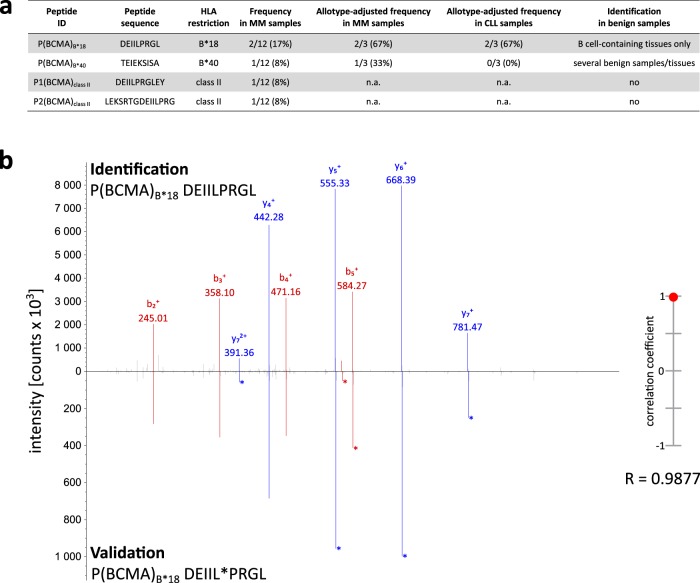
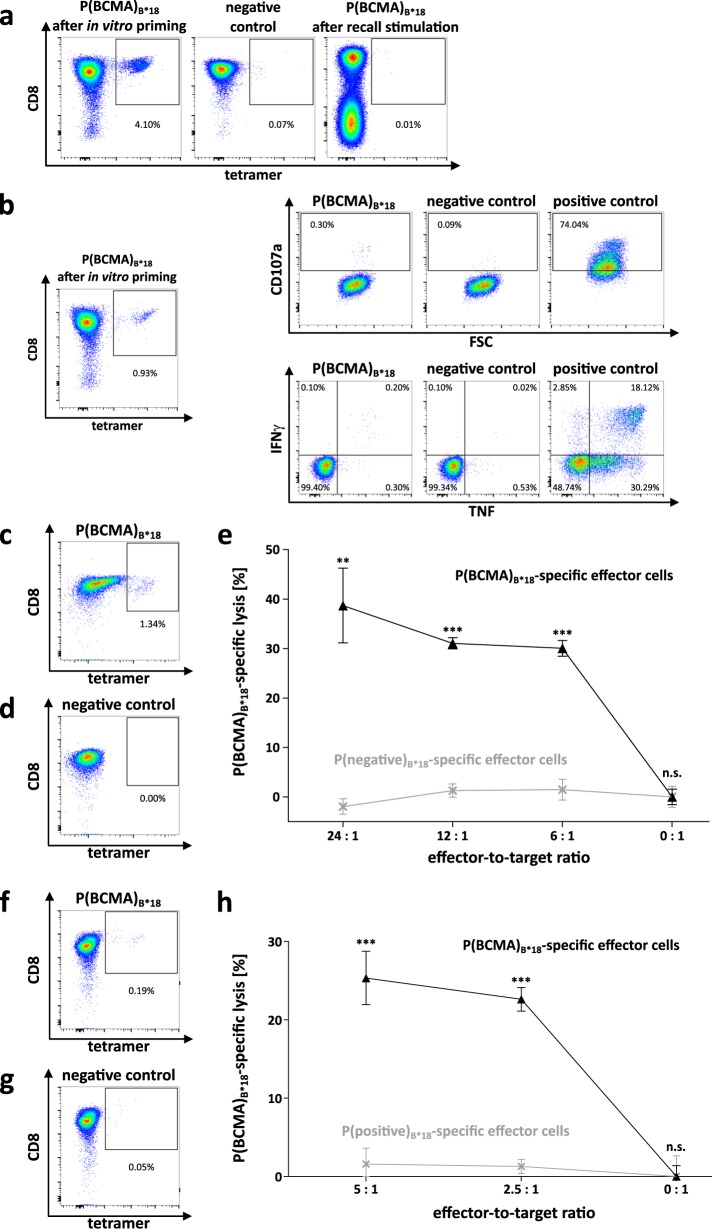
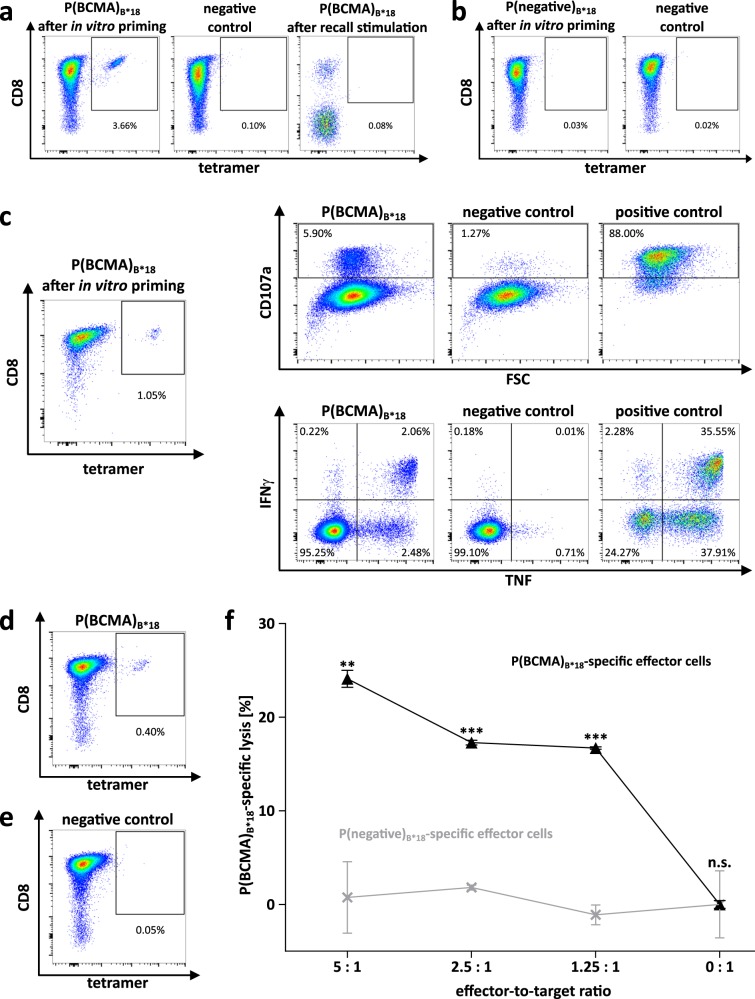
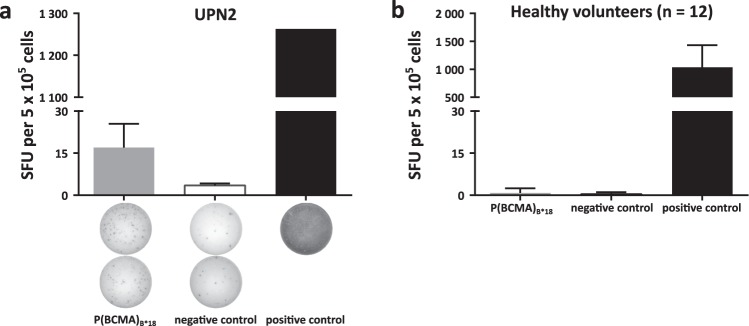
The B-cell maturation antigen (BCMA) is currently being evaluated as promising tumor-associated surface antigen for T-cell-based immunotherapy approaches, such as CAR T cells and bispecific antibodies, in multiple myeloma (MM). Cytotoxic T cells bearing BCMA-specific T-cell receptors might further allow targeting HLA-presented antigens derived from the intracellular domain of BCMA. By analyzing a mass spectrometry-acquired immunopeptidome dataset of primary MM samples and MM cell lines for BCMA-derived HLA ligands, we identified the naturally presented HLA-B*18-restricted ligand P(BCMA). Additionally, P(BCMA) was identified on primary CLL samples, thereby expanding the range for possible applications. P(BCMA) induced multifunctional BCMA-specific cells de novo from naïve CD8 T cells of healthy volunteers. These T cells exhibited antigen-specific lysis of autologous peptide-loaded cells. Even in the immunosuppressive context of MM, we detected spontaneous memory T-cell responses against P(BCMA) in patients. By applying CTLA-4 and PD-1 inhibition in vitro we induced multifunctional P(BCMA)-specific CD8 T cells in MM patients lacking preexisting BCMA-directed immune responses. Finally, we could show antigen-specific lysis of autologous peptide-loaded target cells and even MM.1S cells naturally presenting P(BCMA) using patient-derived P(BCMA)-specific T cells. Hence, this BCMA-derived T-cell epitope represents a promising target for T-cell-based immunotherapy and monitoring following immunotherapy in B-cell malignancy patients.
B 细胞成熟抗原 (BCMA) 目前正被评估为有前途的肿瘤相关表面抗原,可用于多发性骨髓瘤 (MM) 中的 T 细胞为基础的免疫治疗方法,如嵌合抗原受体 T 细胞 (CAR T 细胞) 和双特异性抗体。携带 BCMA 特异性 T 细胞受体的细胞毒性 T 细胞可能进一步允许针对源自 BCMA 细胞内结构域的 HLA 呈递抗原。通过分析原发性 MM 样本和 MM 细胞系的质谱获得的免疫肽组数据集,我们鉴定出源自 BCMA 的 HLA 配体 P(BCMA)。此外,在原发性 CLL 样本中也鉴定出 P(BCMA),从而扩大了可能的应用范围。P(BCMA)可从健康志愿者的幼稚 CD8 T 细胞中诱导产生新的多功能 BCMA 特异性细胞。这些 T 细胞表现出对自体肽负载细胞的抗原特异性溶解。即使在 MM 的免疫抑制环境中,我们也在患者中检测到针对 P(BCMA)的自发记忆 T 细胞反应。通过体外应用 CTLA-4 和 PD-1 抑制,我们在缺乏预先存在的 BCMA 靶向免疫反应的 MM 患者中诱导产生了多功能 P(BCMA)特异性 CD8 T 细胞。最后,我们使用患者来源的 P(BCMA)特异性 T 细胞,能够显示对自体肽负载靶细胞甚至 MM.1S 细胞的抗原特异性溶解。因此,这个源自 BCMA 的 T 细胞表位代表了一种有前途的 B 细胞恶性肿瘤患者 T 细胞为基础的免疫治疗和免疫治疗后监测的靶标。