M Saber Shihab Ezzuldin, Abdullah Luqman Chuah, Jamil Siti Nurul Ain Md, Choong Thomas S Y, Ting Teo Ming
Department of Chemical and Environmental Engineering, Faculty of Engineering, Universiti Putra Malaysia, UPM Serdang, 43400, Selangor, Malaysia.
North Refineries Company, Baiji, Salahuddin, Ministry of Oil, Iraq.
Sci Rep. 2021 Oct 1;11(1):19573. doi: 10.1038/s41598-021-97397-y.
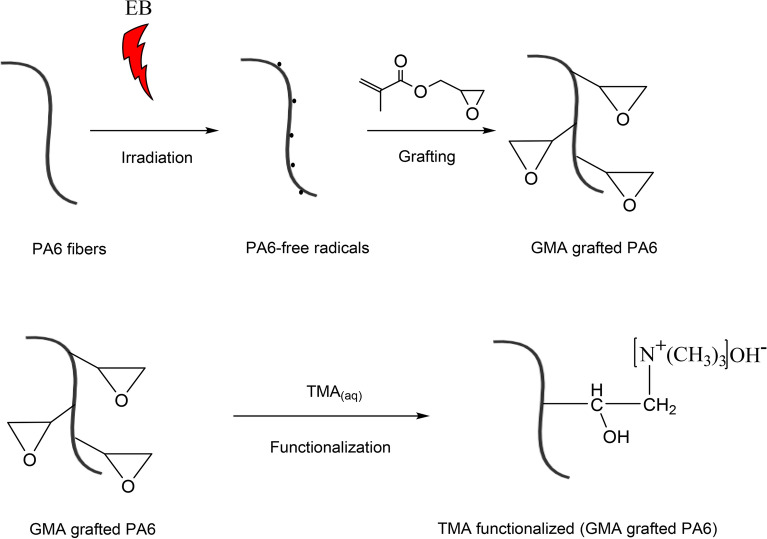
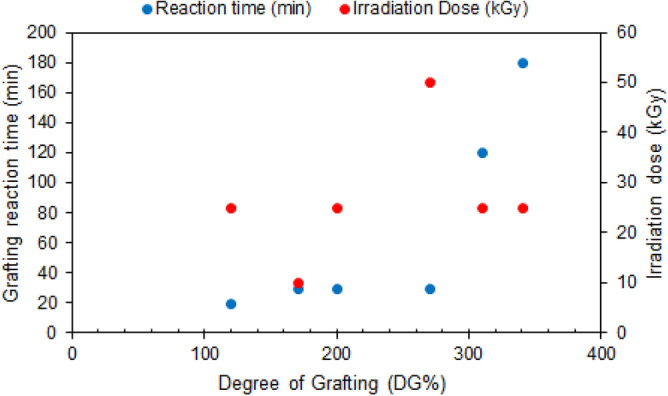
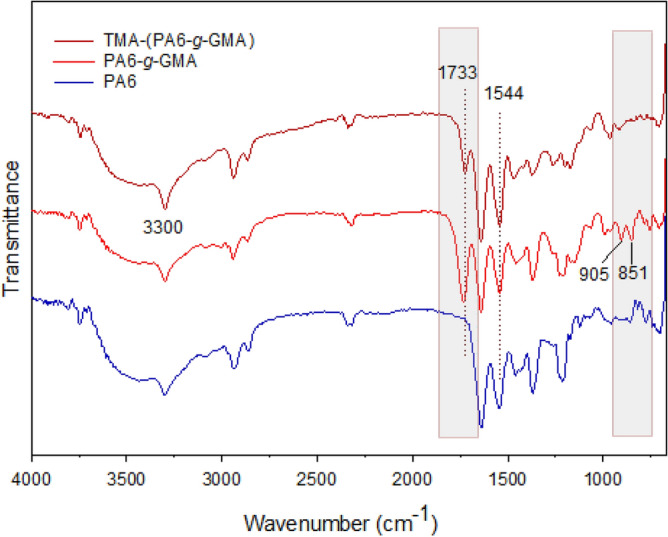
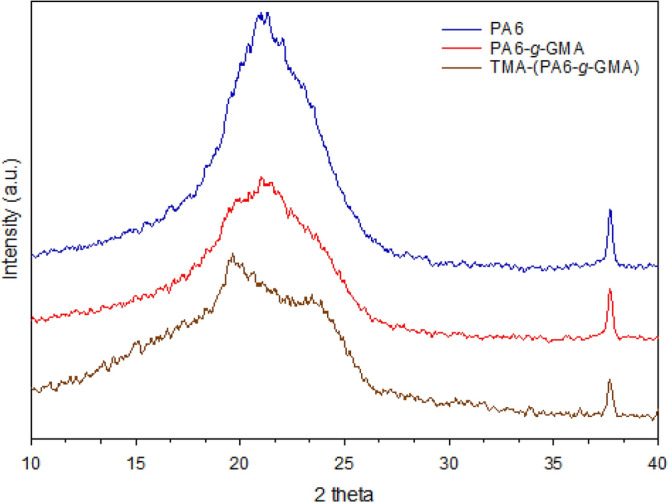
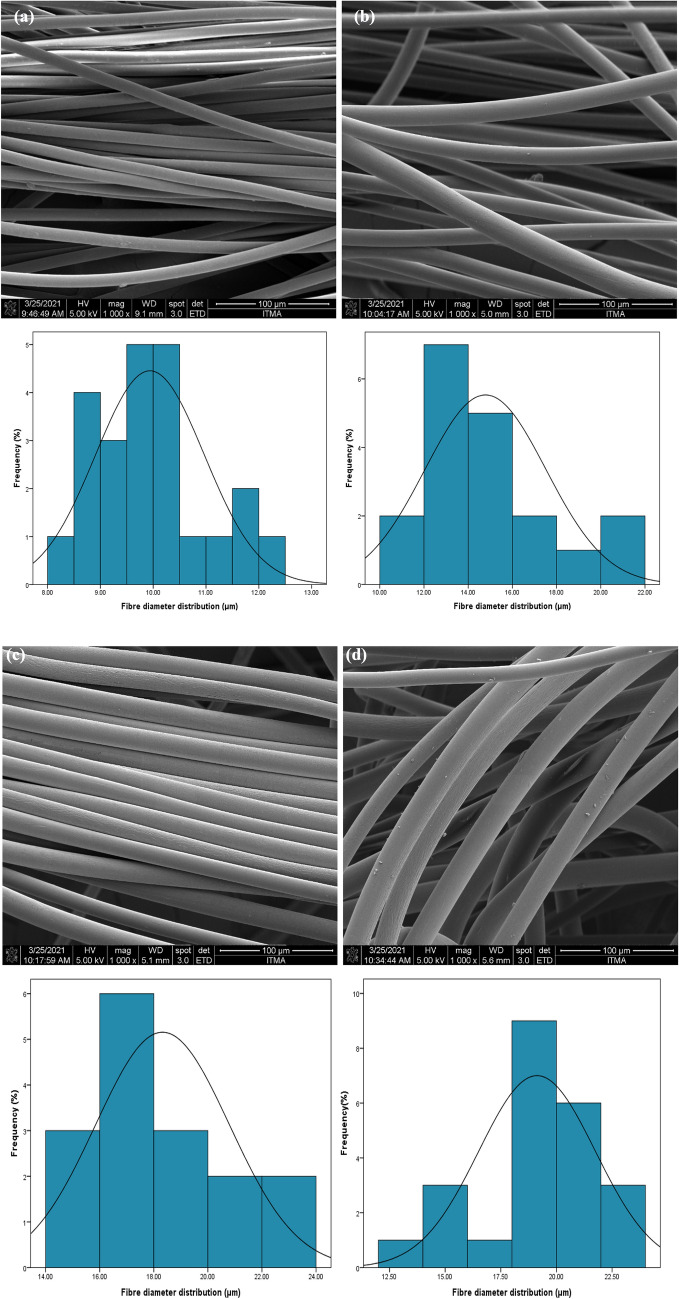
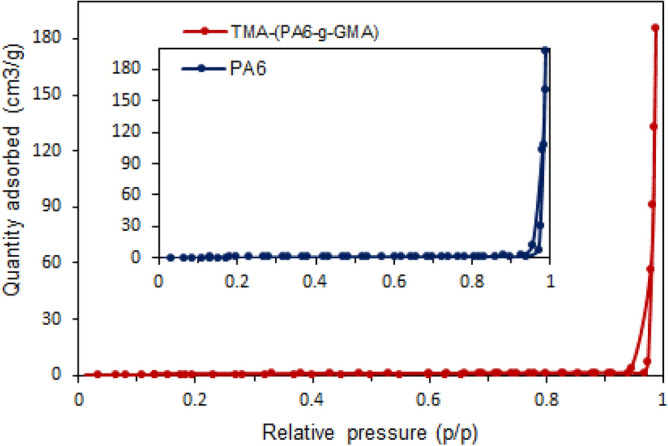
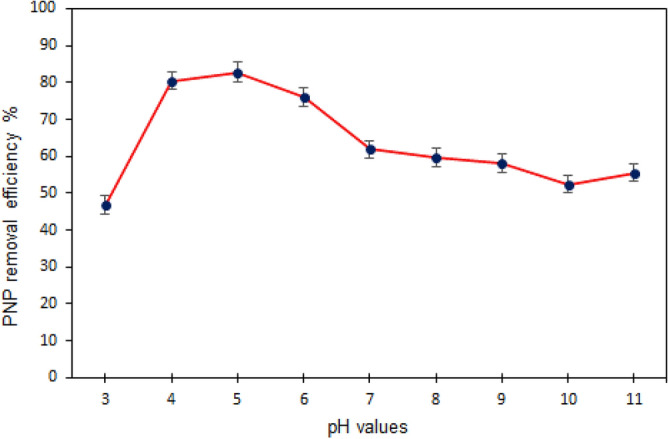
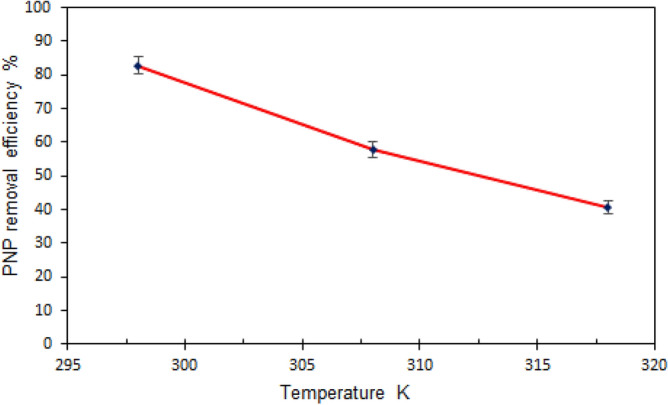
The method of pre-irradiation grafting was used with the aid of electron beam (EB) accelerator to accomplish the grafting of polyamide 6 fibers (PA6) with glycidyl methacrylate (GMA). The extent to which GMA was grafted on PA6 was found to be markedly influenced by the absorbed dose of radiation and the reaction time of grafting. Trimethylamine (TMA) was afterwards employed for the functionalization of GMA-grafted fibers (PA6-g-GMA). A range of analyses (e.g., FTIR, FESEM, XRD, BET, and pHpzc) were carried out to determine the physiochemical and morphological properties of the fibrous adsorbent. p-Nitrophenol (PNP) adsorption from aqueous solution was conducted with the resulting TMA-(PA6-g-GMA) adsorbent. The adsorption behaviour of PNP on the fibrous adsorbent was clarified by investigating the adsorption kinetics and isotherm. According to the results, the adsorption of PNP on TMA-(PA6-g-GMA) reflected the pseudo-second order model. Meanwhile, the isotherm analysis revealed that the best description of the equilibrium data was provided by Redlich-Peterson model, followed closely by Langmuir isotherm model. The achieved adsorption capacity was highest at 176.036 mg/g. Moreover, the adsorption was indicated by the thermodynamic analysis to be spontaneous and exothermic. Regeneration and recycling of the adsorbent was possible for a minimum of five cycles with no reduction in adsorption capacity. It was concluded that the fibrous adsorbent could have applications for the removal of PNP at industrial pilot scale.
采用预辐照接枝法,借助电子束(EB)加速器实现聚酰胺6纤维(PA6)与甲基丙烯酸缩水甘油酯(GMA)的接枝。结果发现,GMA接枝到PA6上的程度受辐射吸收剂量和接枝反应时间的显著影响。随后使用三甲胺(TMA)对GMA接枝纤维(PA6-g-GMA)进行功能化。进行了一系列分析(如傅里叶变换红外光谱、场发射扫描电子显微镜、X射线衍射、比表面积分析仪和零电荷点)以确定纤维吸附剂的物理化学和形态学性质。用所得的TMA-(PA6-g-GMA)吸附剂对水溶液中的对硝基苯酚(PNP)进行吸附。通过研究吸附动力学和等温线来阐明PNP在纤维吸附剂上的吸附行为。结果表明,PNP在TMA-(PA6-g-GMA)上的吸附符合准二级模型。同时,等温线分析表明,Redlich-Peterson模型对平衡数据的描述最佳,其次是Langmuir等温线模型。实现的吸附容量最高为176.036 mg/g。此外,热力学分析表明吸附是自发的且放热的。吸附剂至少可以再生和循环使用五个周期,且吸附容量没有降低。得出的结论是,这种纤维吸附剂可用于工业中试规模去除PNP。