Faculté de Médecine, Université Catholique de Bukavu, Bukavu, Democratic Republic of the Congo.
Hôpital Provincial Général de Référence de Bukavu, Bukavu, Democratic Republic of the Congo.
BMC Emerg Med. 2021 Oct 2;21(1):109. doi: 10.1186/s12873-021-00504-5.
Penetrating craniocerebral injuries (PCCI) are types of open head injuries caused by sharp objects or missiles, resulting in communication between the cranial cavity and the external environment. This condition is deemed to be more prevalent in armed conflict regions where both civilians and military are frequently assaulted on the head, but paradoxically their hospital outcomes are under-reported. We aimed to identify factors associated with poor hospital outcomes of patients with PCCI.
This was a retrospective series of patients admitted at the Regional Hospital of Bukavu, DRC, from 2010 to 2020. We retrieved medical records of patients with PCCI operated in the surgical departments. A multivariate logistic regression model was performed to find associations between patients' admission clinico-radiological parameters and hospital outcomes. Poor outcome was defined as a Glasgow Outcomes Score below 4.
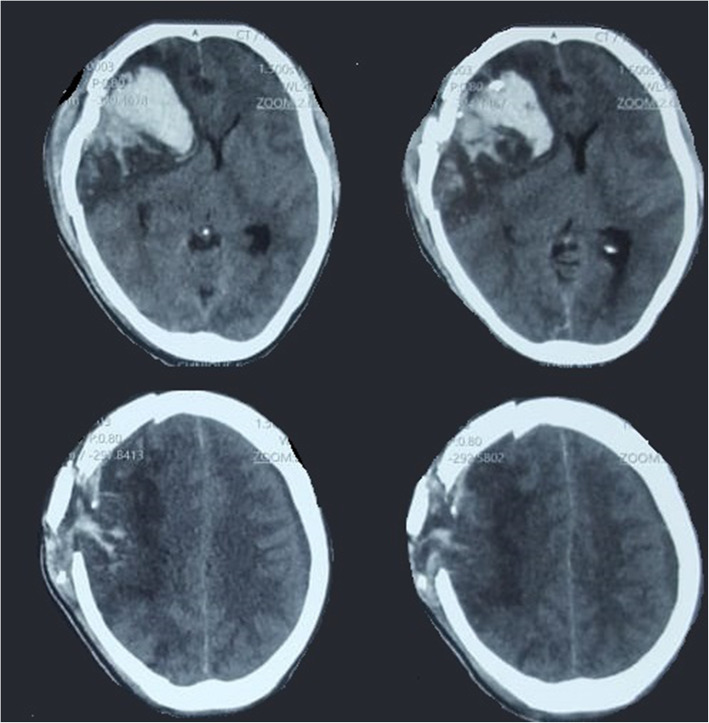
The prevalence of PCCI was 9.1% (91/858 cases) among admitted TBI patients. More than one-third (36.2%) of patients were admitted with GCS < 13, and 40.6% of them were unstable hemodynamic. Hemiplegia was found in 23.1% on admission. Eight patients had an intracerebral hemorrhage. Among the 69 operated patients, complications, mainly infectious, occurred in half (50.7%) of patients. Poor hospital outcomes were observed in 30.4% and associated with an admission GCS < 13, hemodynamic instability, intracerebral hemorrhage, and hemiplegia (p < 0.05).
The hospital poor outcomes are observed when patients present with hemodynamic instability, an admission GCS < 13, intracerebral hemorrhage, and hemiplegia. There is a need for optimizing the initial care of patients with PCCI in armed conflict regions.
穿透性颅脑损伤(PCCI)是由锐器或弹丸引起的开放性颅脑损伤类型,导致颅腔与外部环境之间相通。这种情况在武装冲突地区更为常见,平民和军人头部经常受到袭击,但矛盾的是,他们的医院治疗结果报告却很少。我们旨在确定与 PCCI 患者不良医院结局相关的因素。
这是一项对 2010 年至 2020 年期间在刚果民主共和国布卡武地区医院收治的患者进行的回顾性系列研究。我们检索了在外科部门接受 PCCI 手术的患者的病历。采用多变量逻辑回归模型,确定患者入院临床放射学参数与医院结局之间的关联。不良结局定义为格拉斯哥结局评分低于 4 分。
在入院的 TBI 患者中,PCCI 的患病率为 9.1%(91/858 例)。超过三分之一(36.2%)的患者入院时 GCS<13,其中 40.6%的患者血流动力学不稳定。入院时发现偏瘫的患者占 23.1%。8 例患者发生脑内血肿。在 69 例接受手术的患者中,并发症主要为感染,发生在一半(50.7%)的患者中。观察到 30.4%的患者医院结局较差,与入院时 GCS<13、血流动力学不稳定、脑内血肿和偏瘫相关(p<0.05)。
当患者出现血流动力学不稳定、入院 GCS<13、脑内血肿和偏瘫时,医院结局较差。需要优化武装冲突地区 PCCI 患者的初始治疗。