Department of Medicine, Section of Internal Medicine, EuroBloodNet Center, University of Verona and Azienda Ospedaliera Universitaria Integrata Verona, Verona, Italy.
INSERM, Univ-Rennes, Institut National de la Recherche Agronomique, Unité Mixte de Recherche 1241, Institut NuMeCan, Rennes, France.
Blood. 2022 May 19;139(20):3018-3029. doi: 10.1182/blood.2021011338.
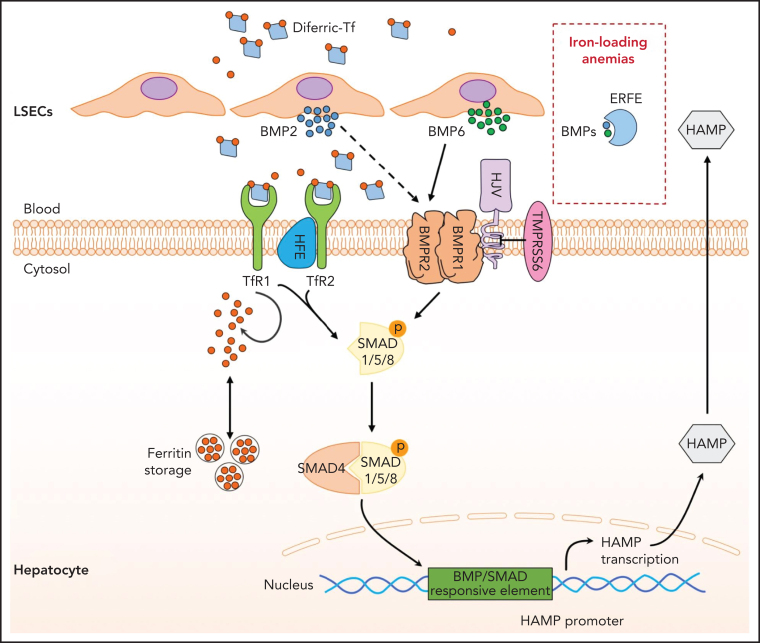
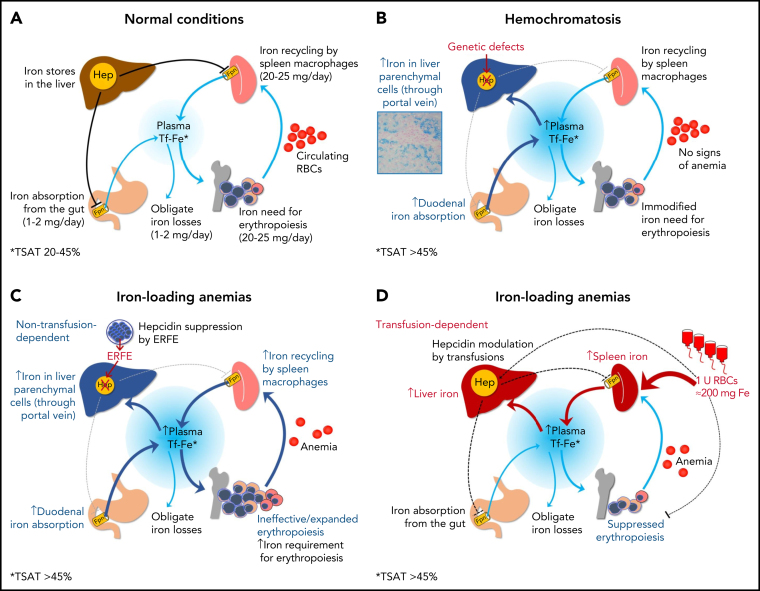
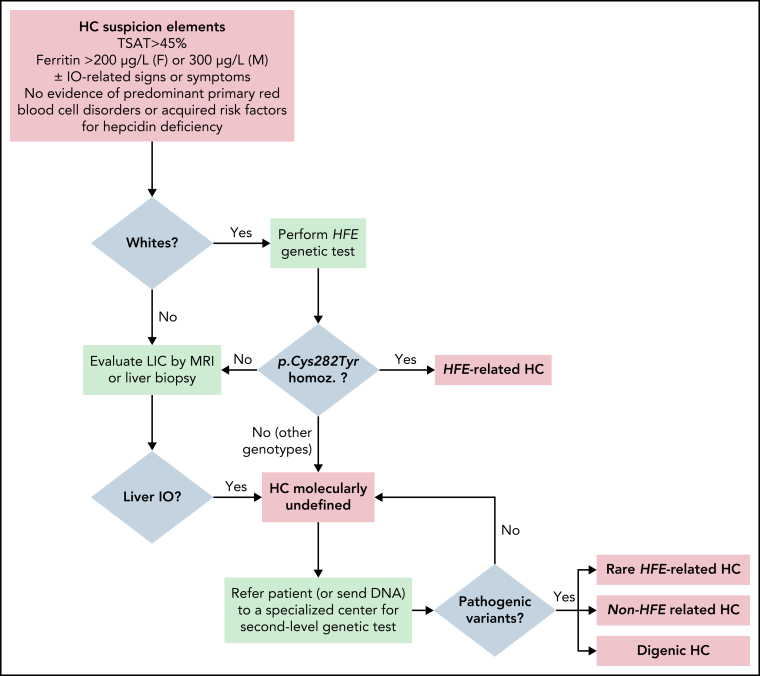
Hemochromatosis (HC) is a genetically heterogeneous disorder in which uncontrolled intestinal iron absorption may lead to progressive iron overload (IO) responsible for disabling and life-threatening complications such as arthritis, diabetes, heart failure, hepatic cirrhosis, and hepatocellular carcinoma. The recent advances in the knowledge of pathophysiology and molecular basis of iron metabolism have highlighted that HC is caused by mutations in at least 5 genes, resulting in insufficient hepcidin production or, rarely, resistance to hepcidin action. This has led to an HC classification based on different molecular subtypes, mainly reflecting successive gene discovery. This scheme was difficult to adopt in clinical practice and therefore needs revision. Here we present recommendations for unambiguous HC classification developed by a working group of the International Society for the Study of Iron in Biology and Medicine (BIOIRON Society), including both clinicians and basic scientists during a meeting in Heidelberg, Germany. We propose to deemphasize the use of the molecular subtype criteria in favor of a classification addressing both clinical issues and molecular complexity. Ferroportin disease (former type 4a) has been excluded because of its distinct phenotype. The novel classification aims to be of practical help whenever a detailed molecular characterization of HC is not readily available.
血色病(HC)是一种遗传异质性疾病,其肠道铁吸收不受控制可能导致进行性铁过载(IO),从而导致致残和危及生命的并发症,如关节炎、糖尿病、心力衰竭、肝硬化和肝细胞癌。铁代谢的病理生理学和分子基础的最新研究进展强调,HC 是由至少 5 个基因的突变引起的,导致铁调素产生不足,或很少对铁调素作用产生抵抗。这导致了基于不同分子亚型的 HC 分类,主要反映了连续的基因发现。该方案在临床实践中难以采用,因此需要修订。在这里,我们提出了由国际生物医学铁研究学会(BIOIRON 学会)的一个工作组制定的明确 HC 分类建议,包括德国海德堡会议期间的临床医生和基础科学家。我们建议不再强调使用分子亚型标准,而是采用一种既解决临床问题又解决分子复杂性的分类方法。因为其独特的表型,铁蛋白病(前 4a 型)已被排除在外。新的分类旨在在无法轻易获得 HC 的详细分子特征时提供实际帮助。