Paz-Fumagalli Ricardo, Core Jacob, Padula Carlos, Montazeri Seyed, McKinney John, Frey Gregory, Devcic Zlatko, Lewis Andrew, Ritchie Charles, Mody Kabir, Krishnan Sunil, Toskich Beau
Department of Radiology, Division of Interventional Radiology, Mayo Clinic Florida, Jacksonville, FL 32224, USA.
Division of Medical Oncology, Mayo Clinic Florida, Jacksonville, FL 32224, USA.
Oncotarget. 2021 Sep 28;12(20):2075-2088. doi: 10.18632/oncotarget.28060.
To investigate safety, response, and survival after ablative glass microsphere Y radioembolization for unresectable intrahepatic cholangiocarcinoma.
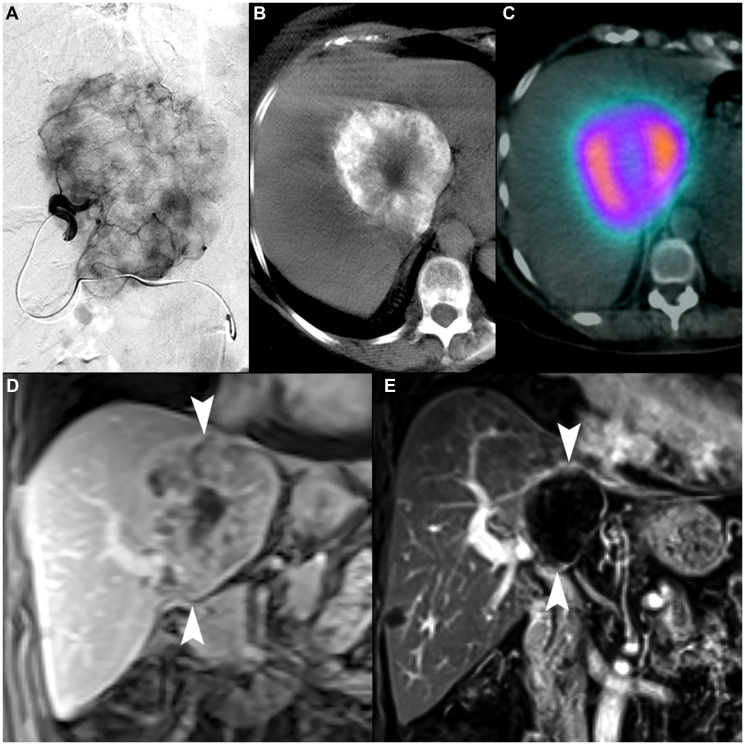
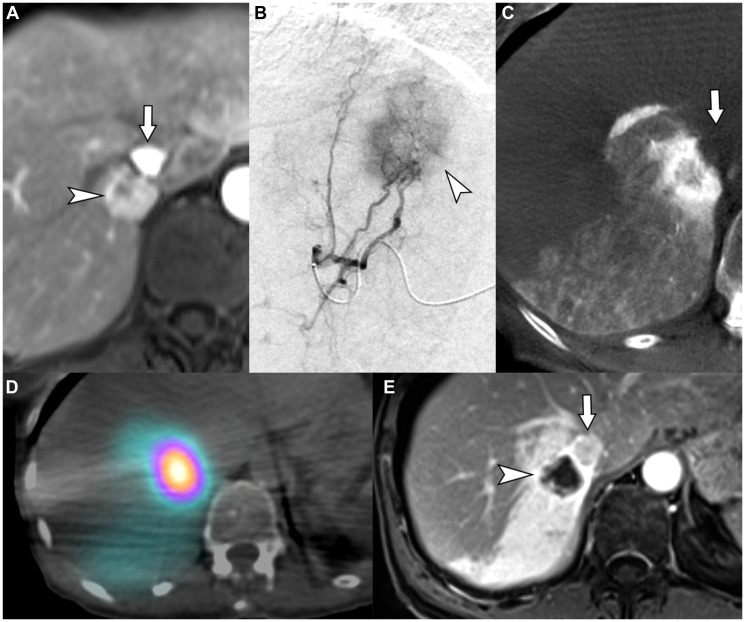
A retrospective review of 37 radioembolizations in 28 patients treated with single compartment dose of ≥190 Gy encompassing >75% of the largest tumor was performed. Tumors were assessed for stage, morphology, and arterial supply. Response per Modified Response Evaluation Criteria in Solid Tumors (mRECIST), freedom from progression (FFP), progression-free survival (PFS), overall survival (OS), biochemical hepatic function, performance status, and adverse events were investigated.
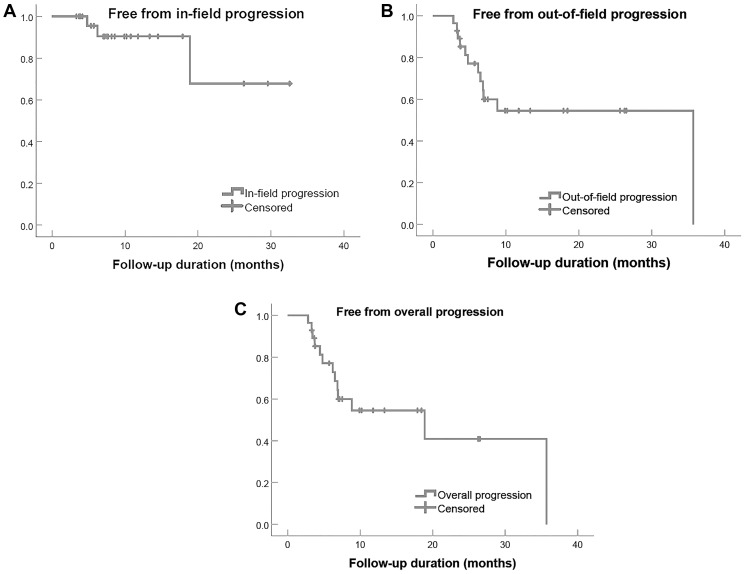
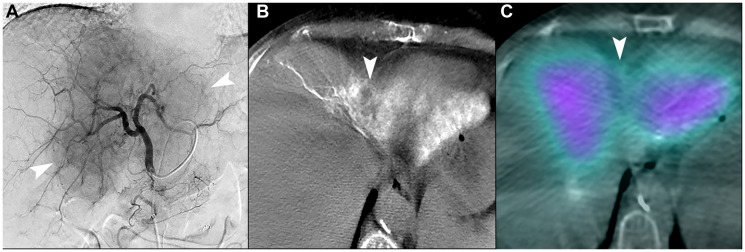
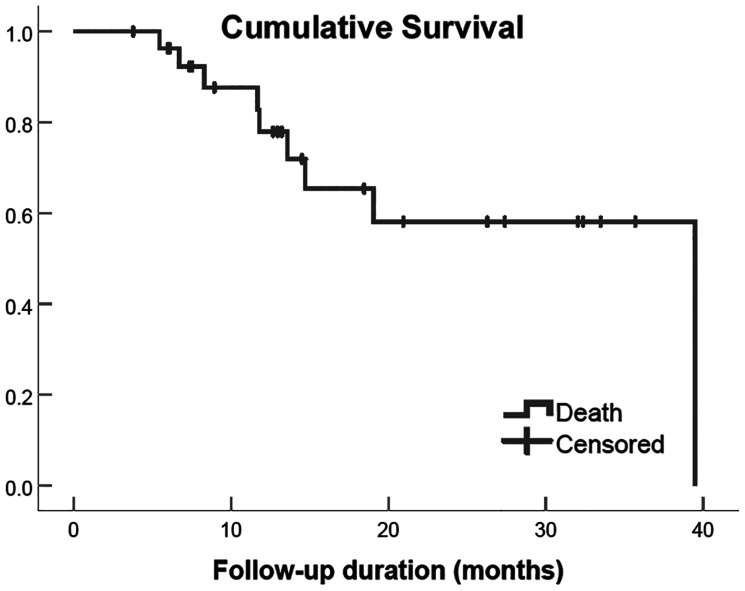
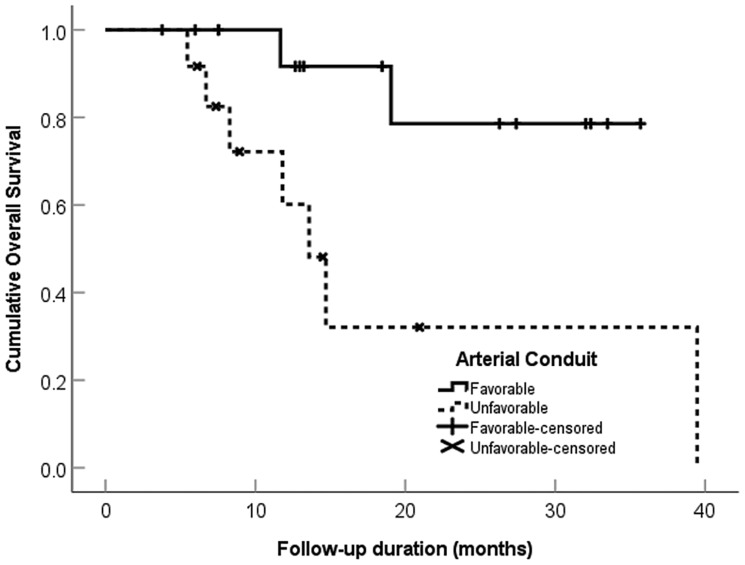
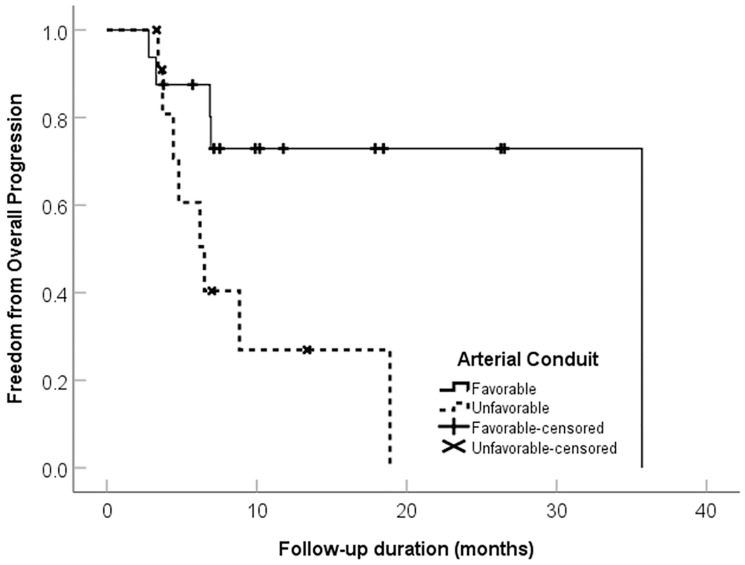
The median highest dose per patient was 256.8 Gy (195.7-807.8). Objective response at 3 months was 94.1% (complete 44.1% and partial 50%). Median OS was not reached and the 30-month OS rate was 59%, with a median follow-up of 13.4 months (5.4-39.4). FFP in the radiated field and overall FFP at 30 months were 67% and 40%, respectively. Favorable arterial supply was associated with improved OS ( = 0.018). Unfavorable arterial supply was associated with worse OS [HR 5.7 (95% CI 1.1-28.9, = 0.034)], and PFS [HR 5.9 (95% CI 1.9-18.4, = 0.002)]. Patients with mass-forming tumors had a survival benefit ( = 0.002). Laboratory values and performance status did not significantly change 3 months after radioembolization. Grade 3 and 4 adverse events occurred in 2 (7.1%) patients.
Radioembolization of unresectable intrahepatic cholangiocarcinoma with ablative intent has a high response rate, promising survival, and is well tolerated.
探讨采用消融性玻璃微球钇90放射性栓塞术治疗不可切除肝内胆管癌后的安全性、反应及生存情况。
回顾性分析28例患者的37次放射性栓塞治疗,单次肝叶剂量≥190 Gy,覆盖最大肿瘤的>75%。评估肿瘤的分期、形态及动脉供血情况。根据实体瘤改良疗效评价标准(mRECIST)评估反应、无进展生存期(FFP)、无进展生存(PFS)、总生存(OS)、肝脏生化功能、体能状态及不良事件。
每位患者的中位最高剂量为256.8 Gy(195.7 - 807.8)。3个月时的客观缓解率为94.1%(完全缓解44.1%,部分缓解50%)。中位总生存期未达到,30个月总生存率为59%,中位随访时间为13.4个月(5.4 - 39.4)。30个月时,照射野内的无进展生存期和总体无进展生存期分别为67%和40%。良好的动脉供血与总生存期改善相关(P = 0.018)。不良动脉供血与较差的总生存期[风险比5.7(95%置信区间1.1 - 28.9,P = 0.034)]及无进展生存期[风险比5.9(95%置信区间1.9 - 18.4,P = 0.002)]相关。肿块形成型肿瘤患者有生存获益(P = 0.002)。放射性栓塞术后3个月,实验室检查值及体能状态无显著变化。2例(7.1%)患者发生3级和4级不良事件。
采用消融性意图的不可切除肝内胆管癌放射性栓塞术具有高缓解率、有前景的生存率且耐受性良好。