Department of Cardiology, Union Hospital, Tongji Medical College, Huazhong University of Science and Technology, Wuhan 430022, China.
Department of Cardiovascular Surgery, Union Hospital, Tongji Medical College, Huazhong University of Science and Technology, Wuhan 430022, China.
Oxid Med Cell Longev. 2021 Sep 25;2021:2216314. doi: 10.1155/2021/2216314. eCollection 2021.
Observational studies indicate that insomnia may increase risk of peptic ulcer disease (PUD). Our purpose is to clarify the possible causal relationship between insomnia and PUD by Mendelian randomization analyses.
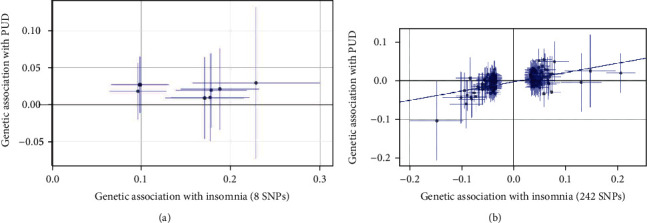
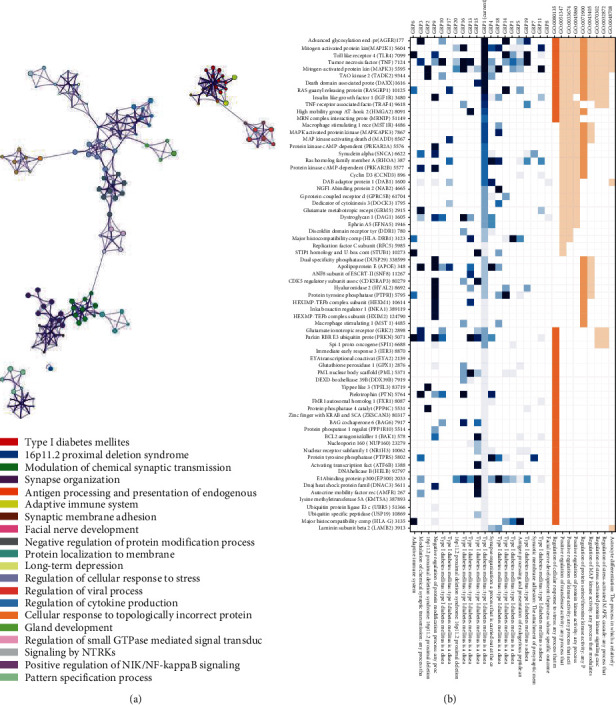
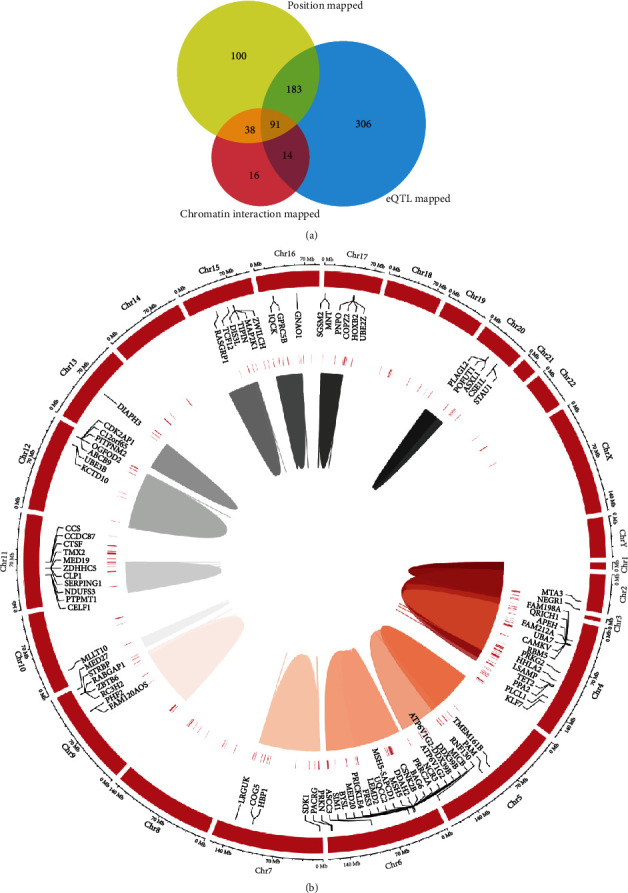
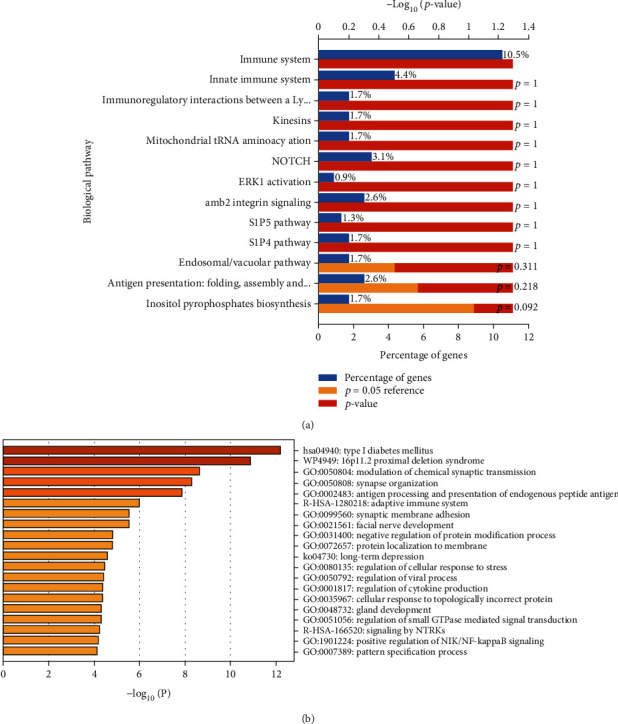
We carried out analyses using summary statistics data for genetic variants reported from a GWAS of insomnia ( = up to 1,331,010 individuals) and from a GWAS of PUD ( = up to 456,327 individuals). Three Mendelian randomization approaches were used to explore whether insomnia might play a causal role in PUD, and pathway and functional enrichment analyses were conducted to anticipate the underlying mechanisms.
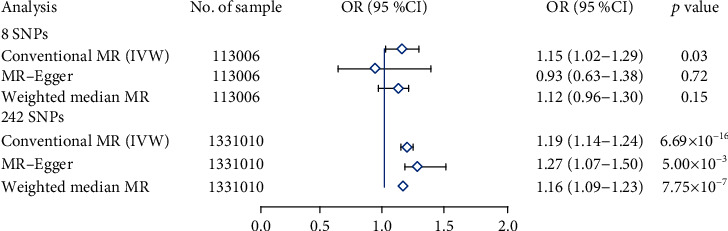
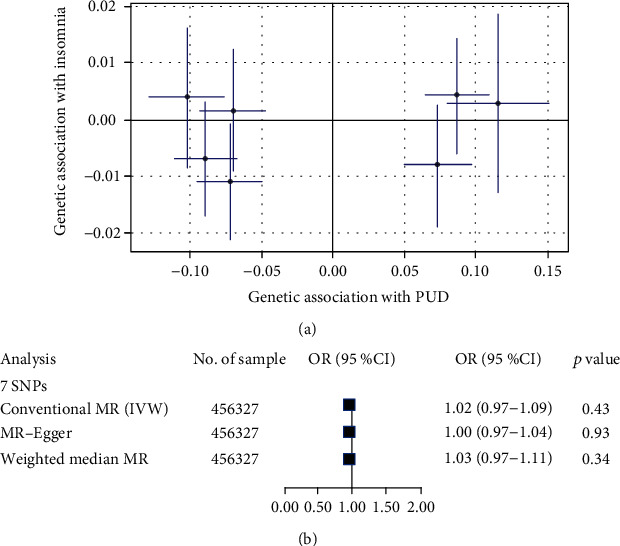
Conventional Mendelian randomization analysis showed clear causality between insomnia and PUD; 1 SD increased insomnia incident was related to a 19% higher risk of PUD ( = 6.69 × 10; OR, 1.19 (95% CI, 1.14-1.24)). The associations between insomnia and PUD were consistent in the other two analyses performed using the weighted median method ( = 7.75 × 10; OR, 1.16 (95% CI, 1.09-1.23)) and MR-Egger regression ( = 5.00 × 10; OR, 1.27 (95% CI, 1.07-1.50)). Moreover, no evidence indicated a reverse causality between PUD events and insomnia symptoms. Pathway and functional enrichment analyses indicated that the mechanisms of insomnia effect on PUD may be through various ways, such as the immune system and oxidative stress.
This Mendelian randomization study suggests insomnia as a causal risk factor for PUD. The potential mechanisms included may be immune and oxidative stress. These findings indicate that improving sleep quality could have substantial health benefits.
观察性研究表明,失眠可能会增加患消化性溃疡病(PUD)的风险。我们的目的是通过孟德尔随机化分析来阐明失眠与 PUD 之间可能存在的因果关系。
我们使用来自失眠全基因组关联研究(GWAS)(多达 1331010 人)和 PUD GWAS(多达 456327 人)的遗传变异的汇总统计数据进行分析。使用三种孟德尔随机化方法来探索失眠是否可能在 PUD 中发挥因果作用,并进行途径和功能富集分析以预测潜在机制。
传统的孟德尔随机化分析表明,失眠与 PUD 之间存在明确的因果关系;1 个标准差的失眠发生率增加与 PUD 风险增加 19%相关( = 6.69×10;OR,1.19(95% CI,1.14-1.24))。使用加权中位数法( = 7.75×10;OR,1.16(95% CI,1.09-1.23))和 MR-Egger 回归( = 5.00×10;OR,1.27(95% CI,1.07-1.50))进行的另外两项分析中,失眠与 PUD 之间的关联是一致的。此外,没有证据表明 PUD 事件与失眠症状之间存在反向因果关系。途径和功能富集分析表明,失眠对 PUD 的影响机制可能通过免疫系统和氧化应激等多种方式。
这项孟德尔随机化研究表明,失眠是 PUD 的一个因果风险因素。潜在的机制可能包括免疫和氧化应激。这些发现表明,改善睡眠质量可能会带来显著的健康益处。