Atherothrombosis and Vascular Biology Laboratory, Baker Heart and Diabetes Institute, Melbourne, Australia.
Department of Medicine, Monash University, Melbourne, Australia.
Thromb Haemost. 2022 Feb;122(2):196-207. doi: 10.1055/a-1663-8208. Epub 2022 Jan 21.
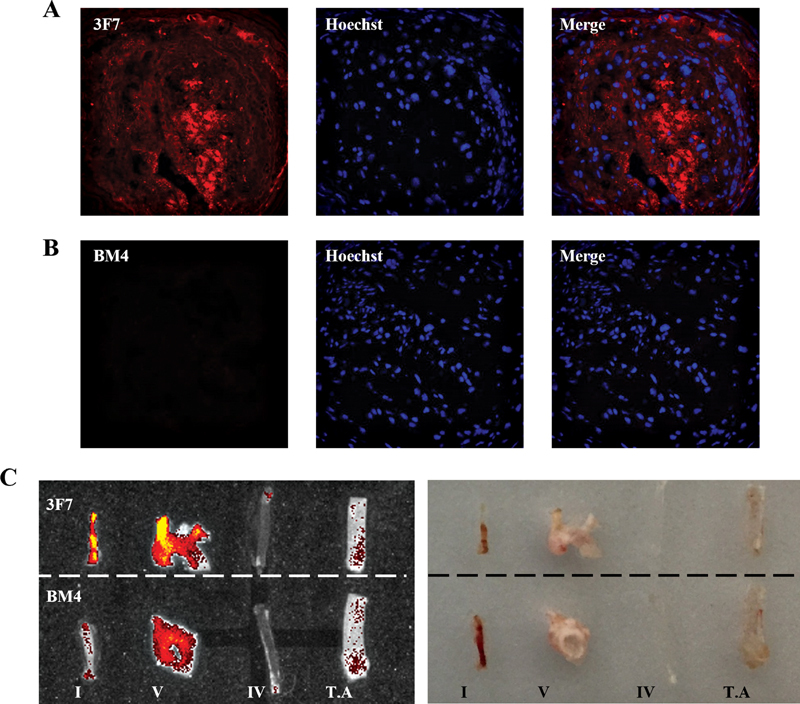
3F7 is a monoclonal antibody targeting the enzymatic pocket of activated factor XII (FXIIa), thereby inhibiting its catalytic activity. Given the emerging role of FXIIa in promoting thromboinflammation, along with its apparent redundancy for hemostasis, the selective inhibition of FXIIa represents a novel and highly attractive approach targeting pathogenic processes that cause thromboinflammation-driven cardiovascular diseases.
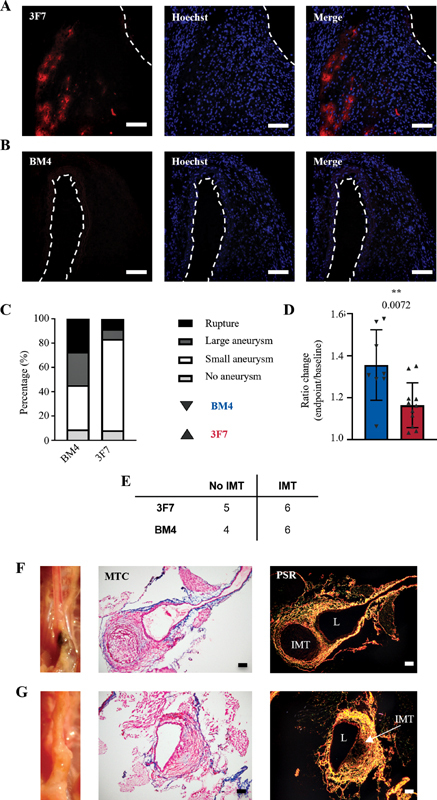
The effects of FXIIa inhibition were investigated using three distinct mouse models of cardiovascular disease-angiotensin II-induced abdominal aortic aneurysm (AAA), an ApoE model of atherosclerosis, and a tandem stenosis model of atherosclerotic plaque instability. 3F7 or its isotype control, BM4, was administered to mice (10 mg/kg) on alternate days for 4 to 8 weeks, depending on the experimental model. Mice were examined for the development and size of AAAs, or the burden and instability of atherosclerosis and associated markers of inflammation.
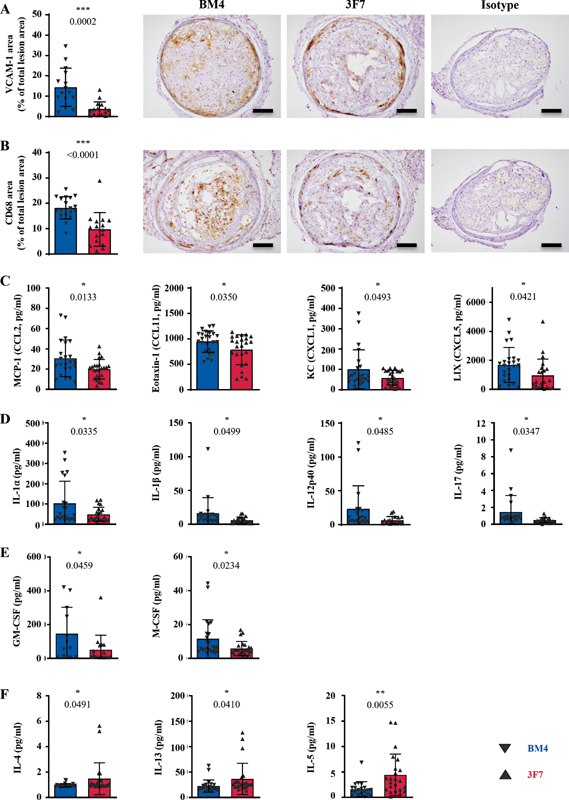
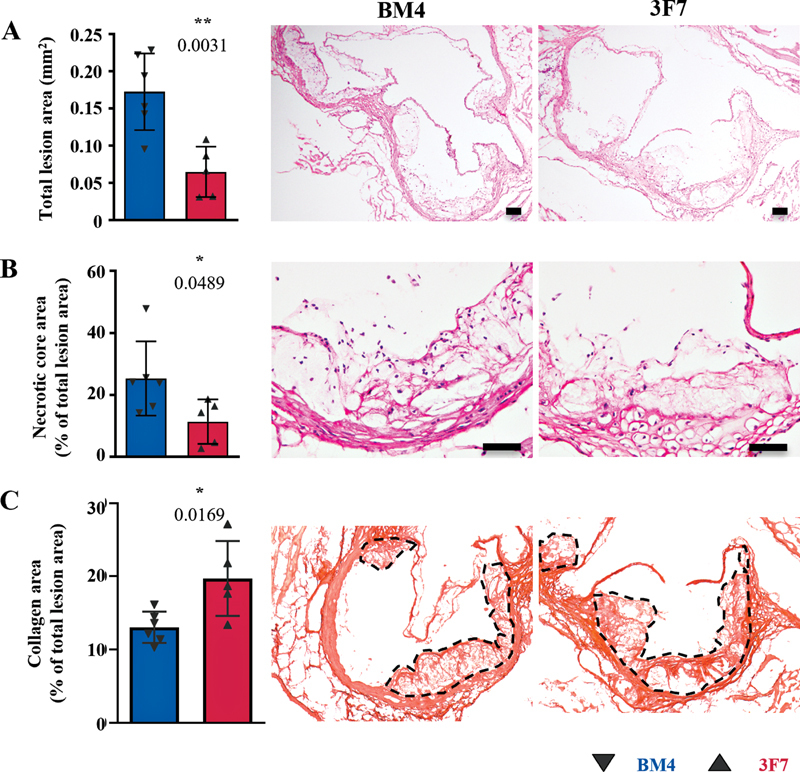
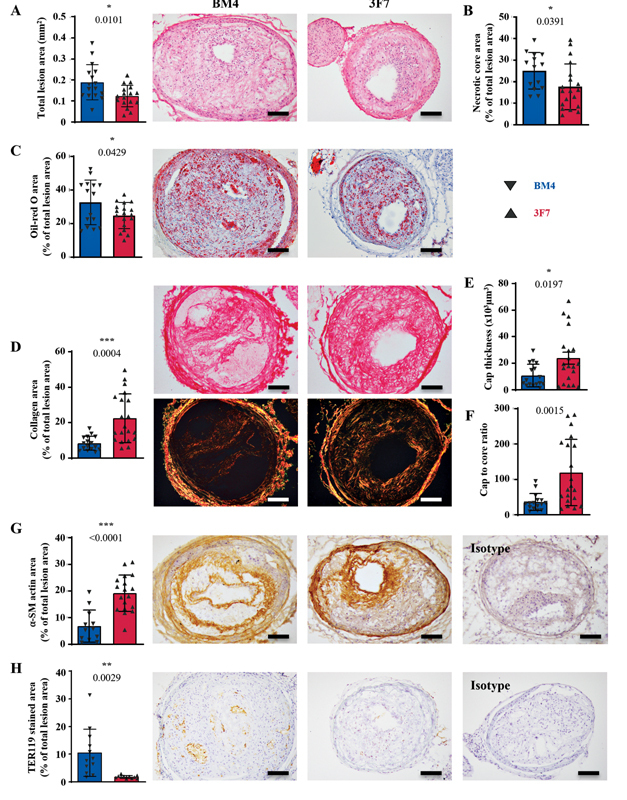
Inhibition of FXIIa resulted in a reduced incidence of larger AAAs, with less acute aortic ruptures and an associated fibro-protective phenotype. FXIIa inhibition also decreased stable atherosclerotic plaque burden and achieved plaque stabilization associated with increased deposition of fibrous structures, a >2-fold thicker fibrous cap, increased cap-to-core ratio, and reduction in localized and systemic inflammatory markers.
Inhibition of FXIIa attenuates disease severity across three mouse models of thromboinflammation-driven cardiovascular diseases. Specifically, the FXIIa-inhibiting monoclonal antibody 3F7 reduces AAA severity, inhibits the development of atherosclerosis, and stabilizes vulnerable plaques. Ultimately, clinical trials in patients with cardiovascular diseases such as AAA and atherosclerosis are warranted to demonstrate the therapeutic potential of FXIIa inhibition.
3F7 是一种针对激活的因子 XII(FXIIa)酶口袋的单克隆抗体,从而抑制其催化活性。鉴于 FXIIa 在促进血栓炎症中的新兴作用,以及其在止血方面的明显冗余性,选择性抑制 FXIIa 代表了一种针对导致血栓炎症驱动的心血管疾病的致病过程的新型且极具吸引力的方法。
使用三种不同的心血管疾病模型——血管紧张素 II 诱导的腹主动脉瘤(AAA)、载脂蛋白 E 模型的动脉粥样硬化和动脉粥样硬化斑块不稳定的串联狭窄模型,研究 FXIIa 抑制的效果。根据实验模型,3F7 或其同种型对照 BM4 以 10mg/kg 的剂量隔日给药 4 至 8 周。检查小鼠 AAA 的发展和大小,或动脉粥样硬化和相关炎症标志物的负担和不稳定性。
FXIIa 抑制导致 AAA 发生率降低,更大的 AAA 减少,急性主动脉破裂减少,并伴有纤维保护表型。FXIIa 抑制还减少了稳定的动脉粥样硬化斑块负担,并实现了斑块稳定,与纤维结构的沉积增加、纤维帽厚度增加超过 2 倍、帽核比增加以及局部和全身炎症标志物减少相关。
FXIIa 抑制可减轻三种血栓炎症驱动的心血管疾病小鼠模型的疾病严重程度。具体来说,FXIIa 抑制单克隆抗体 3F7 可降低 AAA 严重程度、抑制动脉粥样硬化的发展并稳定易损斑块。最终,需要在患有 AAA 和动脉粥样硬化等心血管疾病的患者中进行临床试验,以证明 FXIIa 抑制的治疗潜力。