Division of Cardiovascular Medicine, British Heart Foundation Centre of Research Excellence, Radcliffe Department of Medicine, John Radcliffe Hospital, University of Oxford, Oxford, OX3 9DU, UK; Wellcome Centre for Human Genetics, University of Oxford, Oxford, OX3 7BN, UK.
Division of Cardiovascular Medicine, British Heart Foundation Centre of Research Excellence, Radcliffe Department of Medicine, John Radcliffe Hospital, University of Oxford, Oxford, OX3 9DU, UK; Wellcome Centre for Human Genetics, University of Oxford, Oxford, OX3 7BN, UK.
Atherosclerosis. 2018 Sep;276:74-82. doi: 10.1016/j.atherosclerosis.2018.07.019. Epub 2018 Jul 23.
Angiotensin II (Ang II) infusion promotes the development of aortic aneurysms and accelerates atherosclerosis in ApoE mice. In order to elucidate the role of hematopoietic cells in these pathologies, irradiation and bone marrow transplantation (BMT) are commonly utilized. The aim of this study was to investigate the effects of irradiation and BMT on abdominal and thoracic aortic aneurysm formation and acute leukocyte recruitment in the aortic root and descending aorta, in an experimental mouse model of aortic aneurysm formation.
ApoE mice were either lethally irradiated and reconstituted with ApoE bone marrow or non-irradiated. Following engraftment, mice were treated with Ang II to induce aortic inflammation and accelerate atherosclerosis.
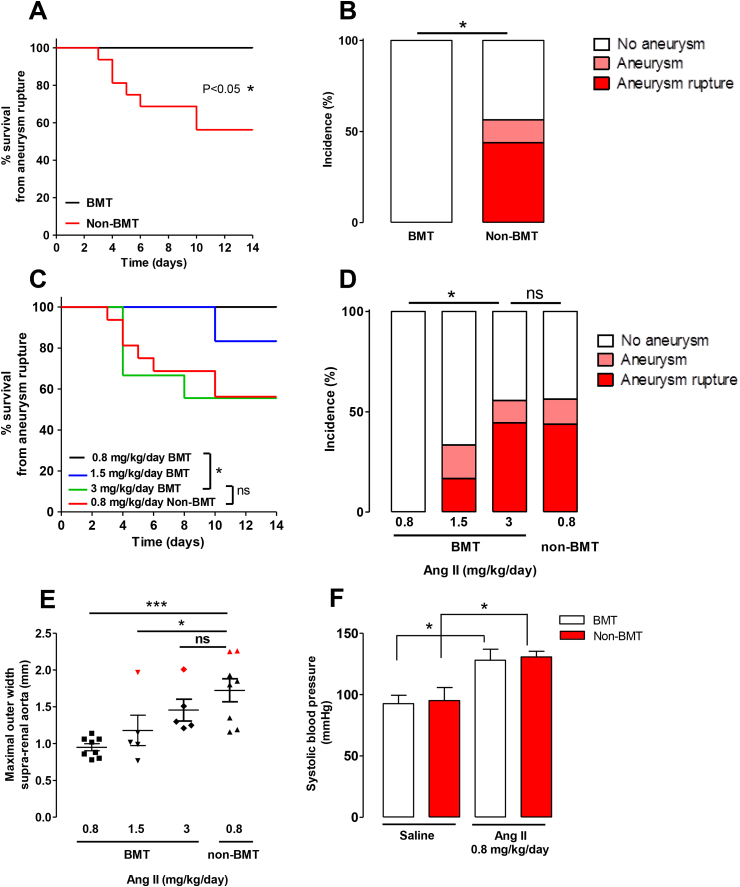
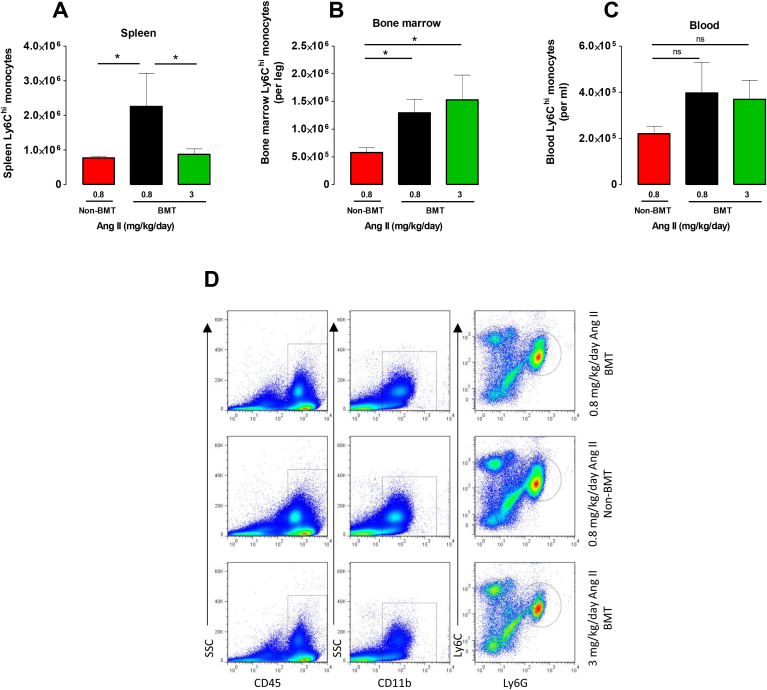
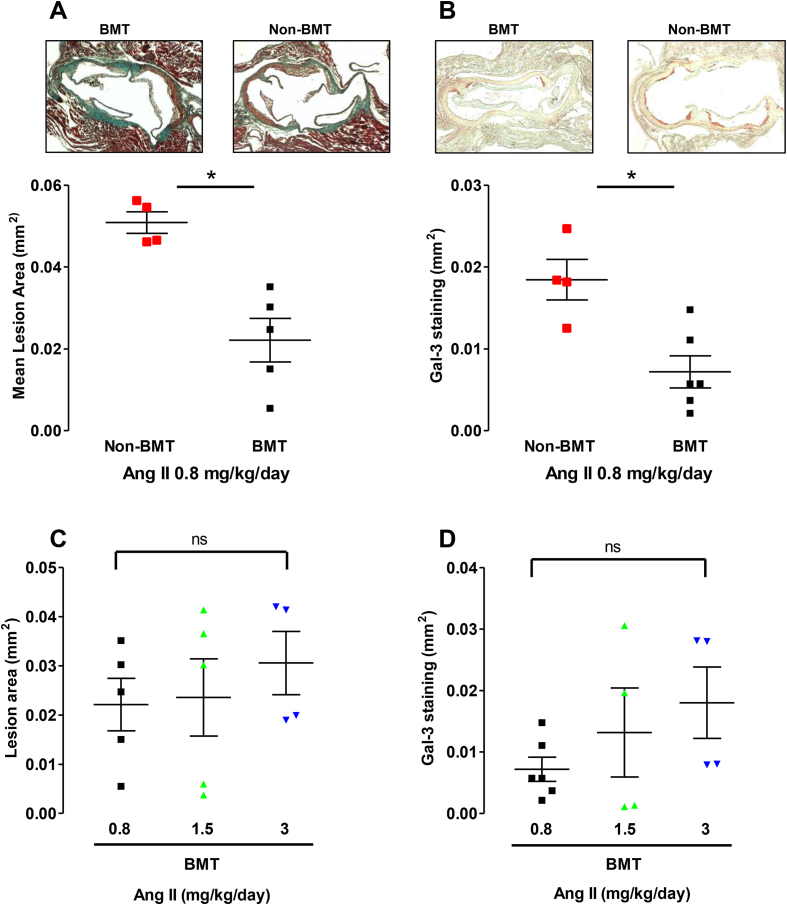
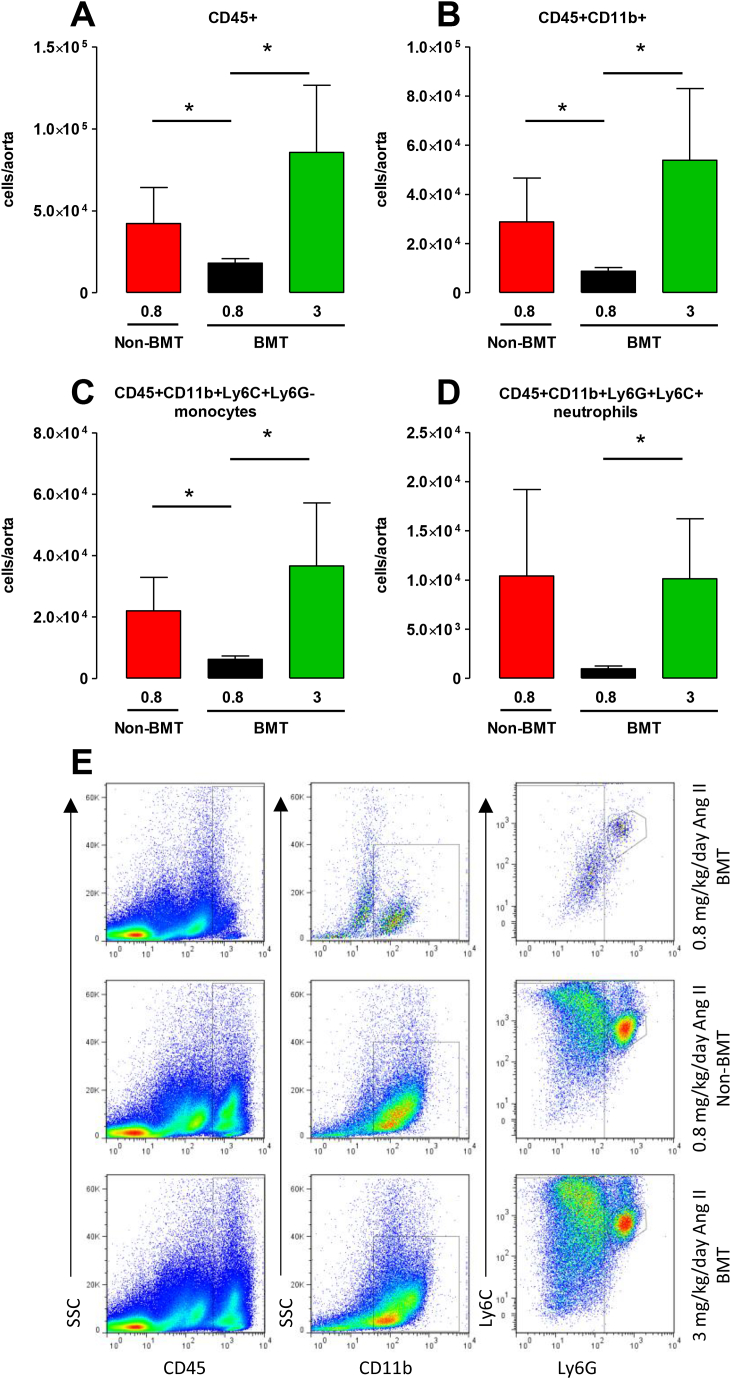
Ang II infusion (0.8 mg/kg/day) in BMT mice resulted in reduced aortic aneurysms and atherosclerosis with decreased leukocyte infiltration in the aorta compared to non-BMT mice, when receiving the same dose of Ang II. Furthermore, the reduced aortic infiltration in BMT mice was accompanied by increased levels of monocytes in the spleen and bone marrow. A dose of 3 mg/kg/day Ang II was required to achieve a similar incidence of aneurysm formation as achieved with 0.8 mg/kg/day in non-BMT mice.
This study provides evidence that BMT can alter inflammatory cell recruitment in experimental mouse models of aortic aneurysm formation and atherosclerosis and suggests that irradiation and BMT have a considerably more complex effect on vascular inflammation, which should be evaluated.
血管紧张素 II(Ang II)输注可促进 ApoE 小鼠主动脉瘤的形成,并加速动脉粥样硬化的发生。为了阐明造血细胞在这些病变中的作用,常常用辐照和骨髓移植(BMT)来实现。本研究的目的是研究辐照和 BMT 对实验性主动脉瘤形成小鼠的腹主动脉和胸主动脉瘤形成以及主动脉根部和降主动脉急性白细胞募集的影响。
ApoE 小鼠要么接受致死剂量的辐照并用 ApoE 骨髓重建成活,要么不接受辐照。植入后,用 Ang II 处理小鼠以诱导主动脉炎症并加速动脉粥样硬化的发生。
与未接受 BMT 的小鼠相比,Ang II 输注(0.8mg/kg/天)在 BMT 小鼠中导致主动脉瘤和动脉粥样硬化减少,主动脉白细胞浸润减少,当给予相同剂量的 Ang II 时。此外,BMT 小鼠主动脉浸润减少伴随着脾脏和骨髓中单核细胞水平升高。需要 3mg/kg/天的 Ang II 剂量才能达到与非 BMT 小鼠 0.8mg/kg/天相似的动脉瘤形成发生率。
本研究提供了证据表明,BMT 可以改变实验性主动脉瘤形成和动脉粥样硬化小鼠模型中炎症细胞的募集,并表明辐照和 BMT 对血管炎症有更复杂的影响,应进行评估。