Department of Medical Biotechnology, Faculty of Paramedicine, Guilan University of Medical Sciences, Rasht, Iran.
Student Research Committee, Medical Biotechnology Research Center, School of Nursing, Midwifery, and Paramedicine, Guilan University of Medical Sciences, Rasht, Iran.
Stem Cell Res Ther. 2021 Oct 7;12(1):527. doi: 10.1186/s13287-021-02595-0.
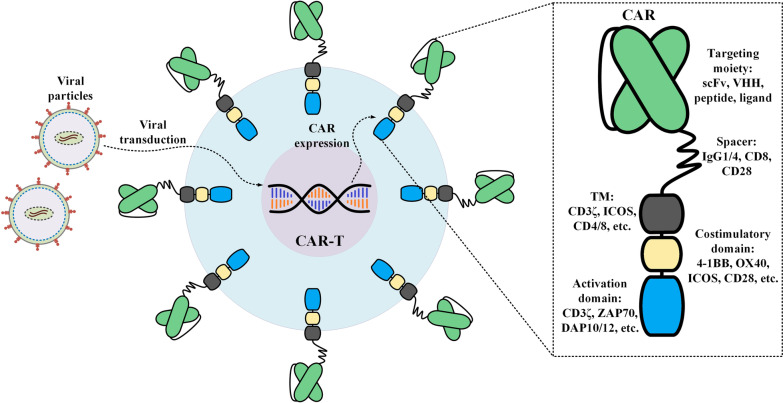
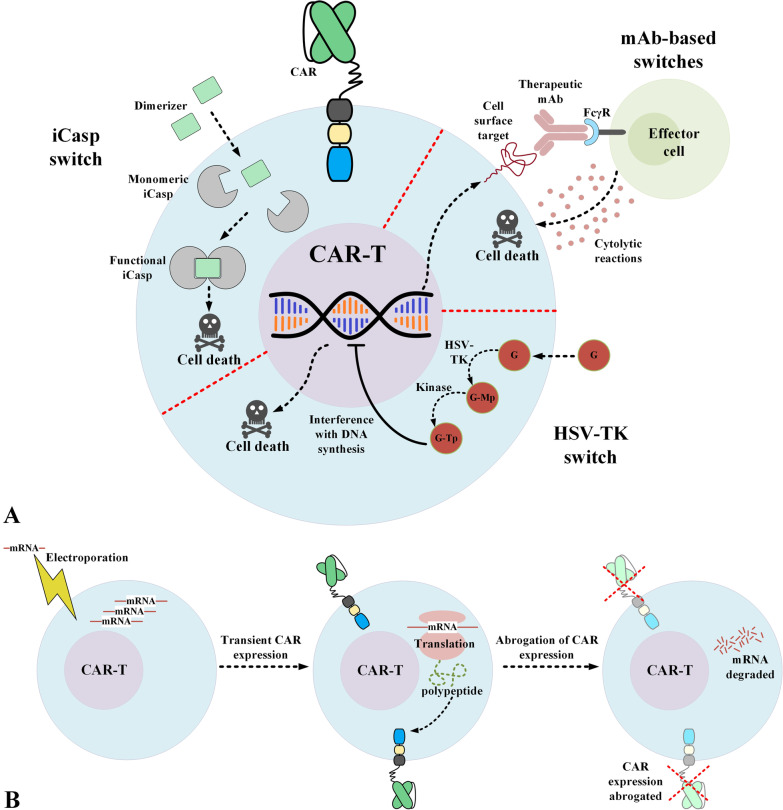
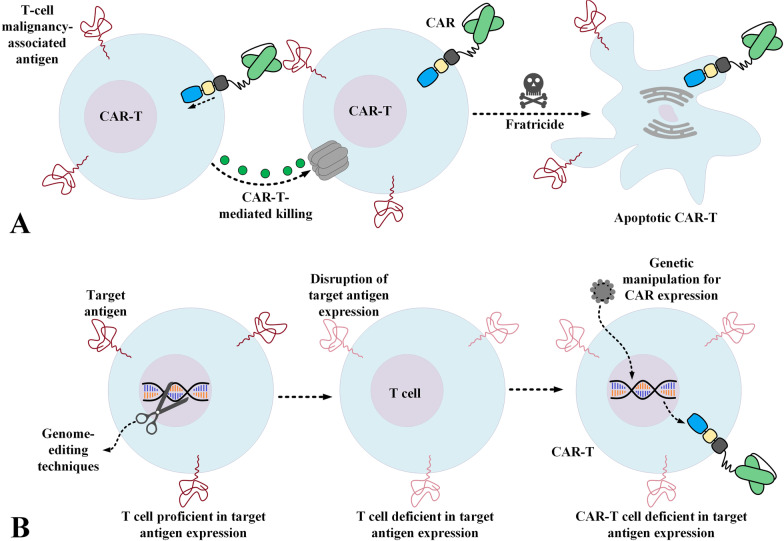
Chimeric antigen receptor T-cell (CAR-T) therapy has been prosperous in the treatment of patients with various types of relapsed/refractory (R/R) B-cell malignancies including diffuse large B-cell lymphoma (DLBCL), B-cell acute lymphoblastic leukemia (B-ALL), follicular lymphoma (FL), mantle cell lymphoma (MCL), and multiple myeloma (MM). However, this type of therapy has faced serious hindrances in combating T-cell neoplasms. R/R T-cell malignancies are generally associated with poor clinical outcomes, and the available effective treatment approaches are very limited. CAR-T therapy of T-cell malignancies has unique impediments in comparison with that of B-cell malignancies. Fratricide, T-cell aplasia, and product contamination with malignant T cells when producing autologous CAR-Ts are the most important challenges of CAR-T therapy in T-cell malignancies necessitating in-depth investigations. Herein, we highlight the preclinical and clinical efforts made for addressing these drawbacks and also review additional potent stratagems that could improve CAR-T therapy in T-cell malignancies.
嵌合抗原受体 T 细胞(CAR-T)疗法在治疗各种复发/难治性(R/R)B 细胞恶性肿瘤方面取得了巨大成功,包括弥漫性大 B 细胞淋巴瘤(DLBCL)、B 细胞急性淋巴细胞白血病(B-ALL)、滤泡性淋巴瘤(FL)、套细胞淋巴瘤(MCL)和多发性骨髓瘤(MM)。然而,这种疗法在对抗 T 细胞肿瘤方面面临着严重的阻碍。R/R T 细胞恶性肿瘤通常与不良的临床结局相关,并且现有的有效治疗方法非常有限。与 B 细胞恶性肿瘤相比,CAR-T 疗法在治疗 T 细胞恶性肿瘤方面存在独特的障碍。同种细胞杀伤、T 细胞再生障碍以及在制备自体 CAR-T 时产品被恶性 T 细胞污染,是 CAR-T 疗法在 T 细胞恶性肿瘤中面临的最重要挑战,需要深入研究。本文重点介绍了为解决这些问题而进行的临床前和临床研究,并回顾了其他可能改善 T 细胞恶性肿瘤 CAR-T 疗法的有效策略。