Szücs Daria, Köhler Andreas, Holthaus Mika M, Güldenring Annette, Balk Lena, Motmans Joz, Nieder Timo O
Institut für Sexualforschung, Sexualmedizin und Forensische Psychiatrie, Interdisziplinäres Transgender Versorgungscentrum Hamburg, Universitätsklinikum Hamburg-Eppendorf, Martinistraße 52, 20246, Hamburg, Deutschland.
Klinik für Psychiatrie, Psychotherapie und Psychosomatik, Westküstenklinikum Heide, Heide, Deutschland.
Bundesgesundheitsblatt Gesundheitsforschung Gesundheitsschutz. 2021 Nov;64(11):1452-1462. doi: 10.1007/s00103-021-03432-8. Epub 2021 Oct 7.
Since spring of 2020, the COVID‑19 pandemic has disrupted our day-to-day lives and led to negative consequences in various areas of life, including mental and physical wellbeing. In this article, we take a closer look at the situation of trans people, who - due to experiences with discrimination and marginalization as well as their specific health-related interests - could be characterized by a particular vulnerability.
Using an online cross-sectional survey, which we designed collaboratively with experts from the trans community, we investigated the mental and physical health of trans people from German-speaking countries and their access to trans-related healthcare during the COVID‑19 pandemic in the period from 1 May 2020 to 31 January 2021.
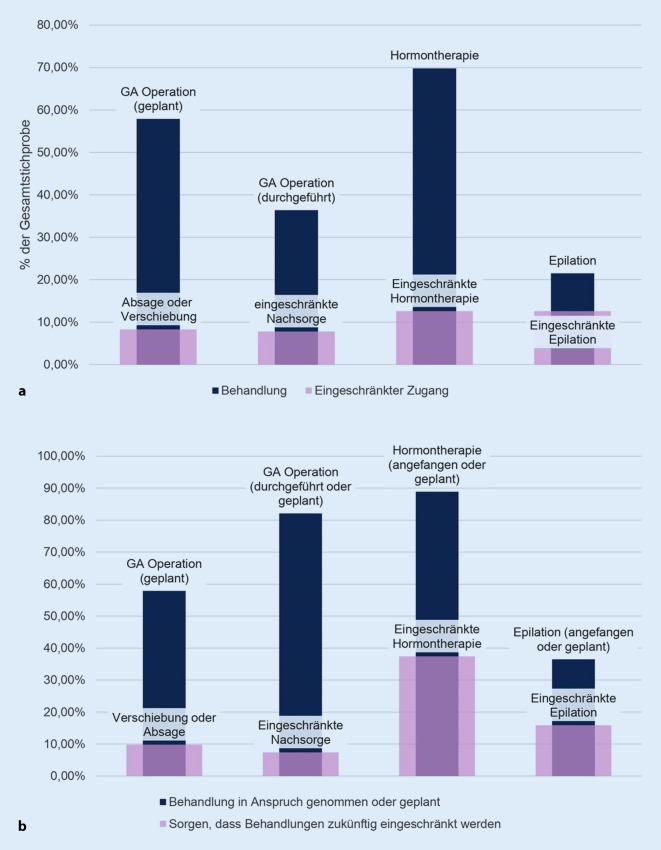
Since the beginning of the COVID‑19 pandemic, trans people have experienced barriers in access to gender-affirming treatments, mental health services, and COVID‑19-related medical care. At the same time, trans people reported being affected by chronic diseases disproportionately more often than the general population, including those leading to a higher risk for poorer outcomes of a COVID‑19 infection. Moreover, the participants reported being exposed to many risk factors associated with higher mental distress (e.g., having a chronic illness, belonging to a minority based on a non-heterosexual orientation, or having a low income).
The results of this survey indicate that prior vulnerabilities with regards to health problems and the restricted access to an informed and qualified transgender healthcare were exacerbated by the COVID‑19 pandemic.
自2020年春季以来,新冠疫情扰乱了我们的日常生活,并在生活的各个领域带来了负面影响,包括身心健康。在本文中,我们将更深入地探讨跨性别者的情况,由于他们遭受歧视和边缘化的经历以及与健康相关的特定利益,他们可能具有特殊的脆弱性。
我们与跨性别群体的专家合作设计了一项在线横断面调查,调查了2020年5月1日至2021年1月31日新冠疫情期间德语国家跨性别者的身心健康状况以及他们获得跨性别相关医疗保健的情况。
自新冠疫情开始以来,跨性别者在获得性别肯定治疗、心理健康服务和新冠相关医疗护理方面遇到了障碍。与此同时,跨性别者报告称,他们比普通人群更容易受到慢性病的影响,包括那些导致新冠感染不良后果风险更高的疾病。此外,参与者报告称面临许多与更高精神痛苦相关的风险因素(例如,患有慢性病、属于非异性恋少数群体或收入低)。
本次调查结果表明,新冠疫情加剧了跨性别者在健康问题方面先前存在的脆弱性以及获得专业跨性别医疗保健服务的受限情况。