Guo He-Zhou, Guo Zi-Hua, Yu Shan-He, Niu Li-Ting, Qiang Wan-Ting, Huang Meng-Meng, Tian Yuan-Yuan, Chen Juan, Yang Hui, Weng Xiang-Qin, Zhang Yi, Zhang Wu, Hu Shao-Yan, Shi Jun, Zhu Jiang
Shanghai Institute of Hematology and State Key Laboratory of Medical Genomics, National Research Center for Translational Medicine (Shanghai), Collaborative Innovation Center of Hematology, Ruijin Hospital affiliated with Shanghai Jiao-Tong University School of Medicine, Shanghai 200025, China.
Department of Hematology, Shanghai Ninth People's Hospital, Shanghai Jiao-Tong University School of Medicine, Shanghai 200011, China.
Sci Adv. 2021 Oct 8;7(41):eabg4167. doi: 10.1126/sciadv.abg4167.
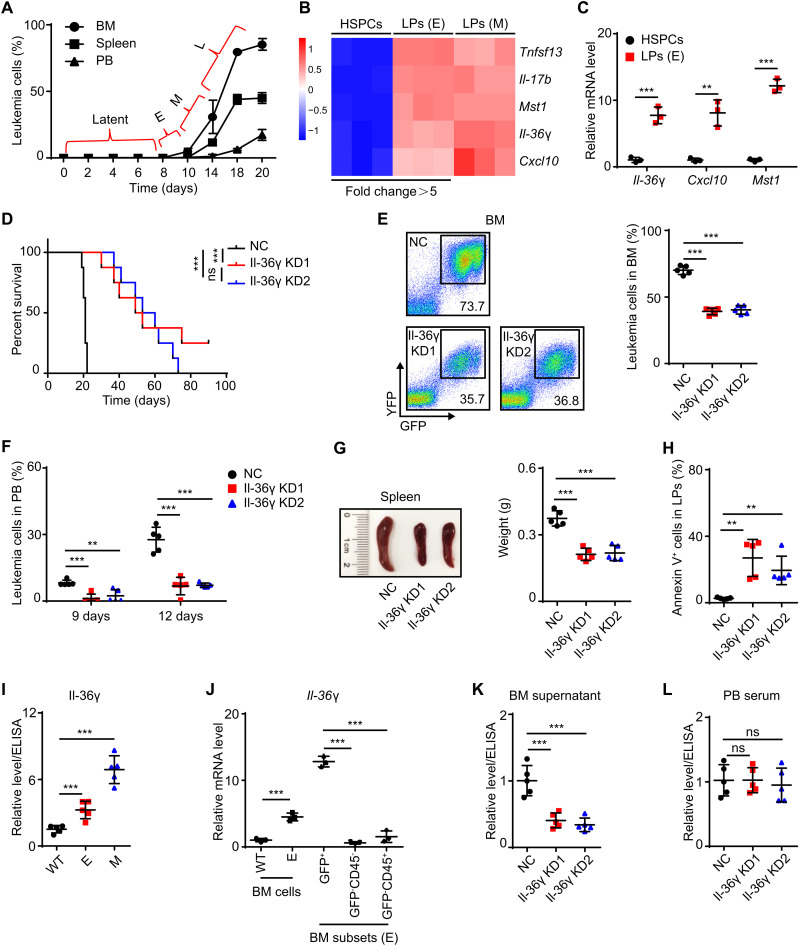
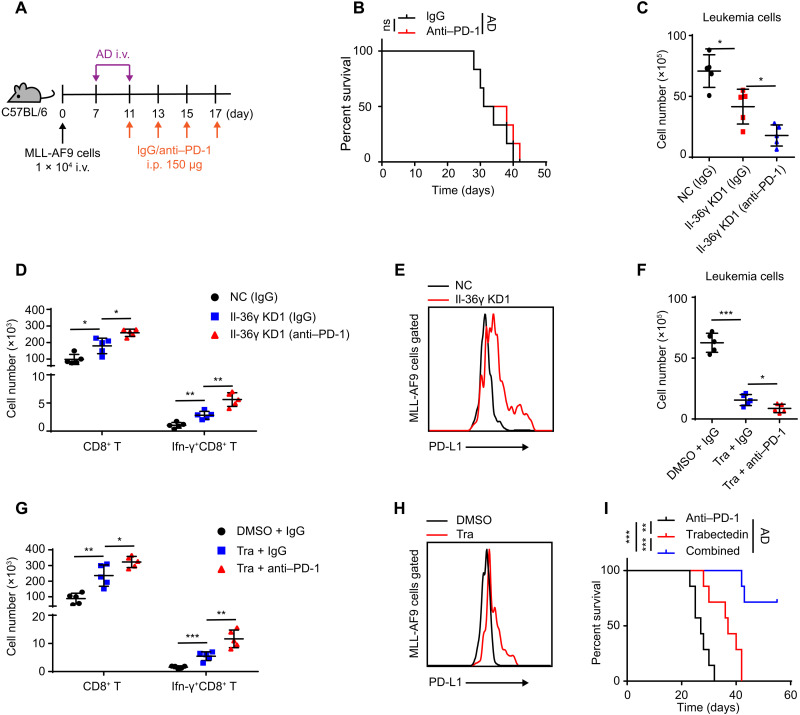
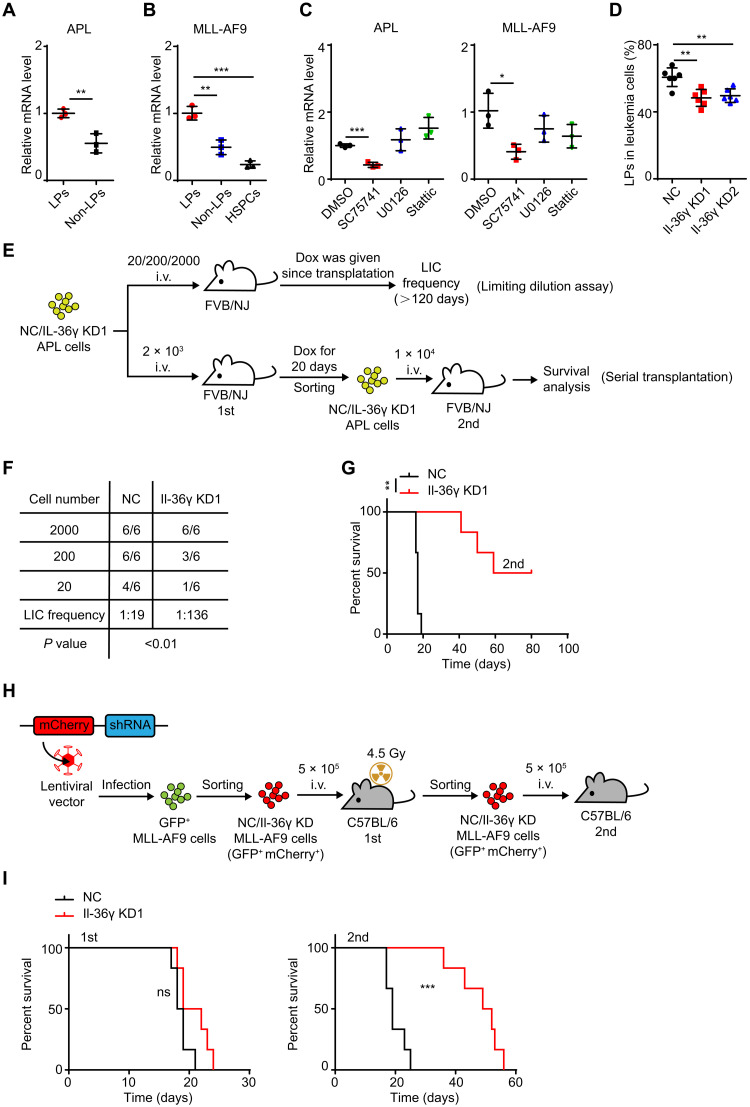
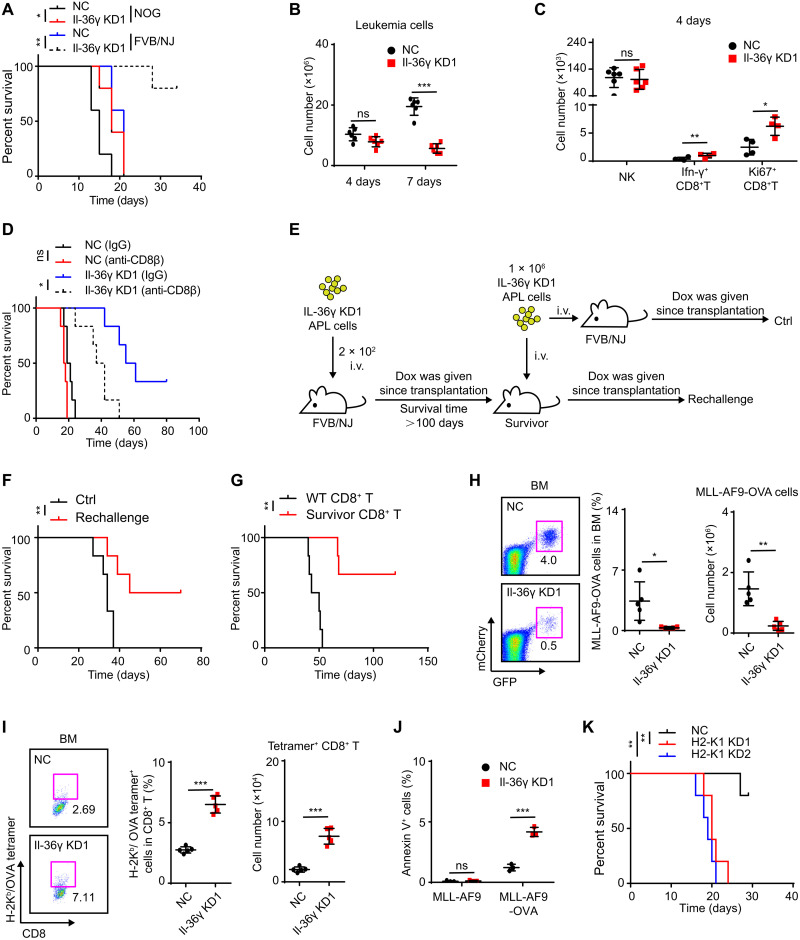
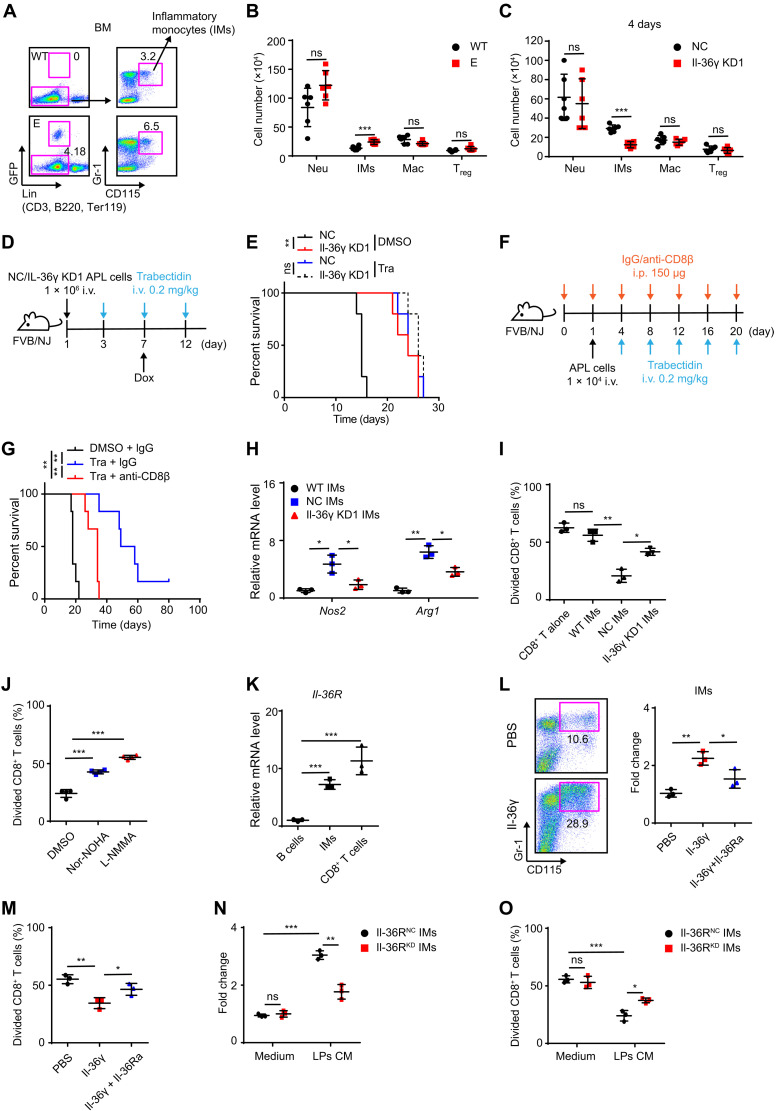
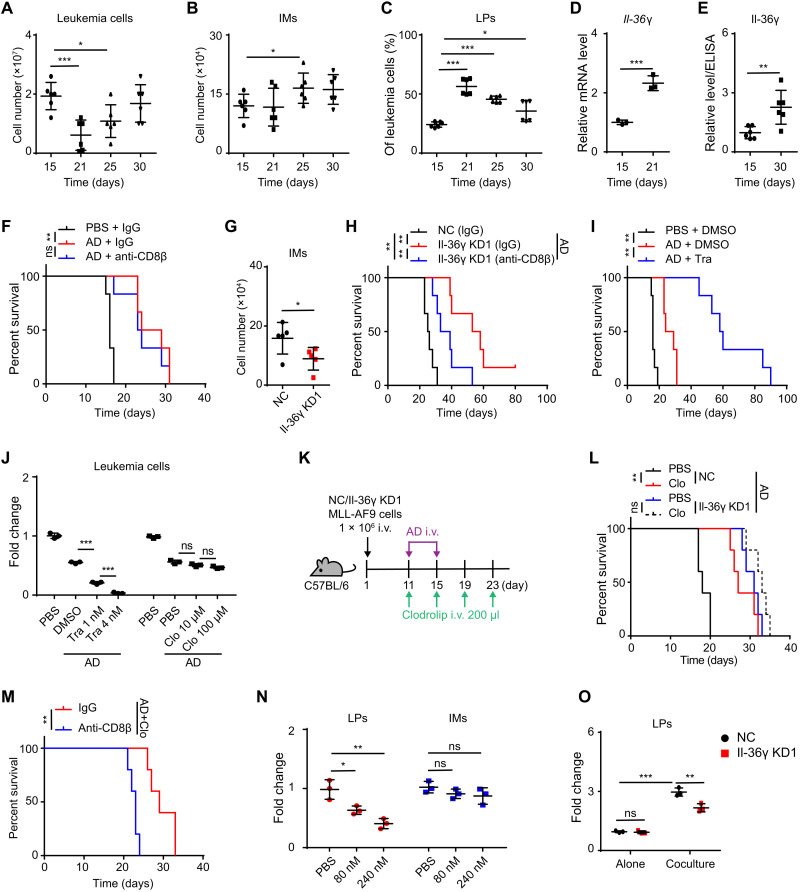
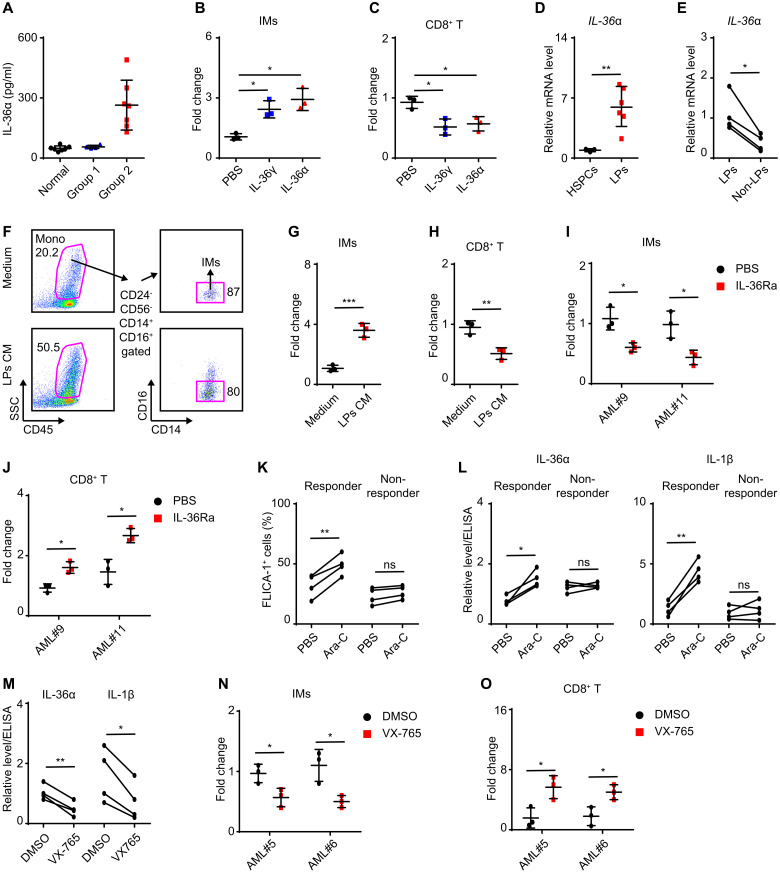
Chemotherapy can effectively reduce the leukemic burden and restore immune cell production in most acute myeloid leukemia (AML) cases. Nevertheless, endogenous immunosurveillance usually fails to recover after chemotherapy, permitting relapse. The underlying mechanisms of this therapeutic failure have remained poorly understood. Here, we show that abnormal IL-36 production activated by NF-κB is an essential feature of mouse and human leukemic progenitor cells (LPs). Mechanistically, IL-36 directly activates inflammatory monocytes (IMs) in bone marrow, which then precludes clearance of leukemia mediated by CD8 T cells and facilitates LP growth. While sparing IMs, common chemotherapeutic agents stimulate IL-36 production from residual LPs via caspase-1 activation, thereby enabling the persistence of this immunosuppressive IL-36–IM axis after chemotherapy. Furthermore, IM depletion by trabectedin, with chemotherapy and PD-1 blockade, can synergistically restrict AML progression and relapse. Collectively, these results suggest inhibition of the IL-36–IM axis as a potential strategy for improving AML treatment.
化疗可有效减轻大多数急性髓系白血病(AML)病例的白血病负担并恢复免疫细胞生成。然而,化疗后内源性免疫监视通常无法恢复,从而导致复发。这种治疗失败的潜在机制仍知之甚少。在此,我们表明由NF-κB激活的异常IL-36产生是小鼠和人类白血病祖细胞(LP)的一个基本特征。从机制上讲,IL-36直接激活骨髓中的炎性单核细胞(IM),进而阻止CD8 T细胞介导的白血病清除,并促进LP生长。在不影响IM的情况下,常见化疗药物通过激活caspase-1刺激残留LP产生IL-36,从而使化疗后这种免疫抑制性IL-36-IM轴持续存在。此外,曲贝替定联合化疗和PD-1阻断清除IM,可协同限制AML进展和复发。这些结果共同表明,抑制IL-36-IM轴可能是改善AML治疗的一种策略。