Yang Bing, Ma Shengsuo, Zhang Chunlan, Sun Jianxin, Zhang Di, Chang Shiquan, Lin Yi, Zhao Guoping
School of Traditional Chinese Medicine, Jinan University, Guangzhou, China.
Front Pharmacol. 2021 Sep 24;12:716684. doi: 10.3389/fphar.2021.716684. eCollection 2021.
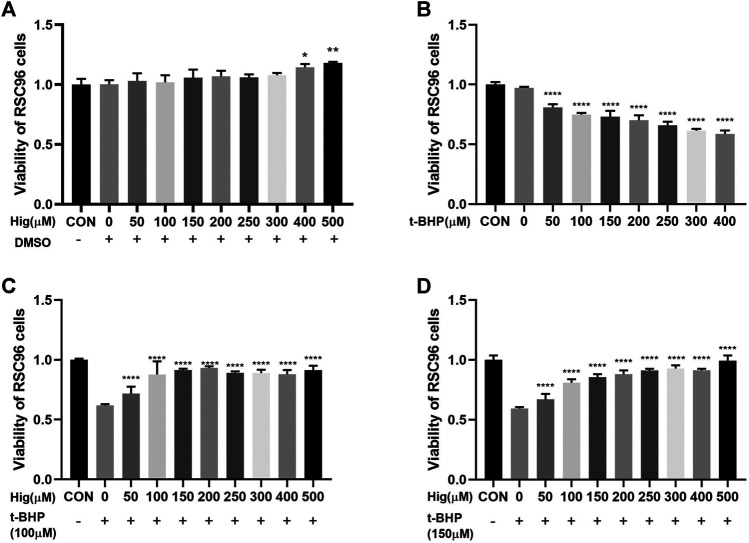
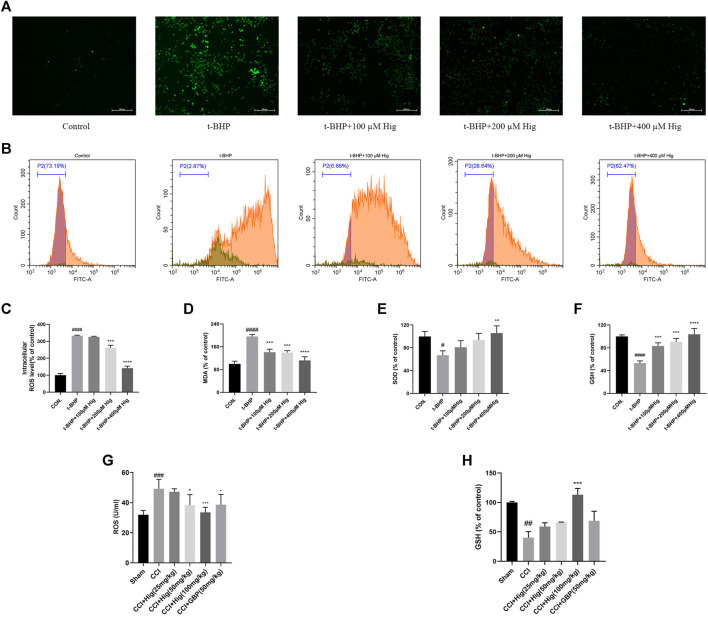
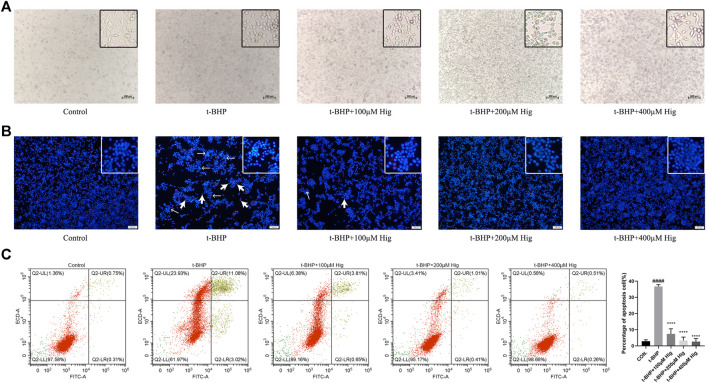
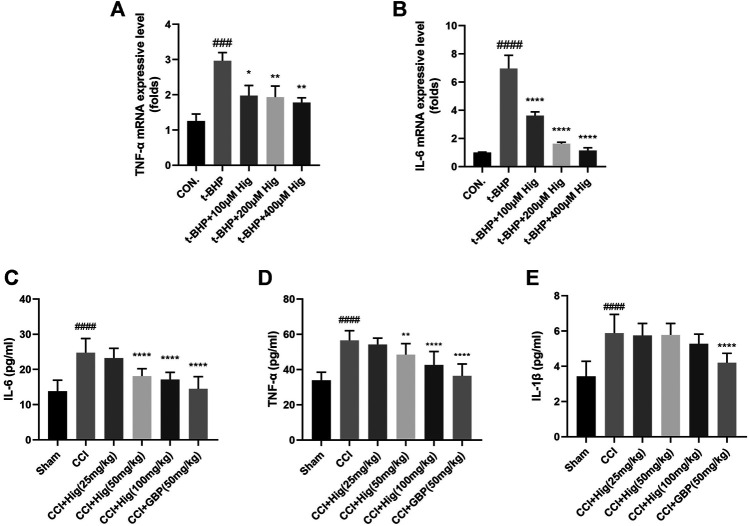
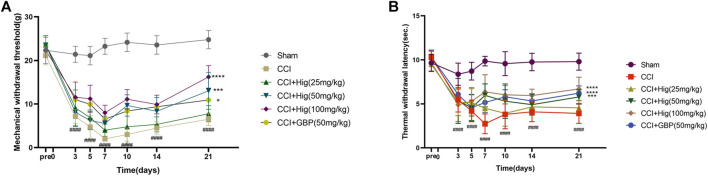
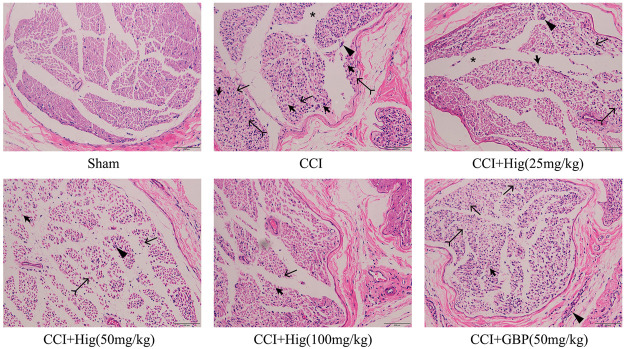
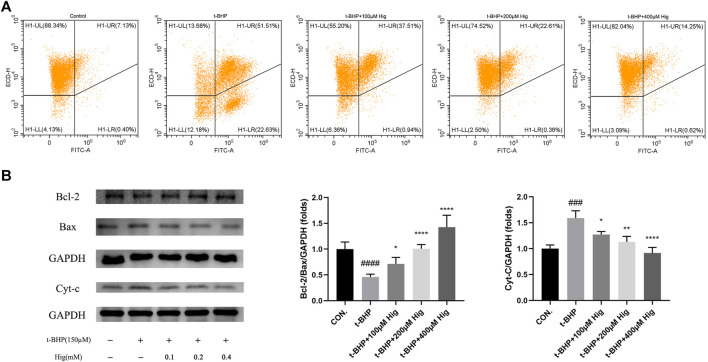
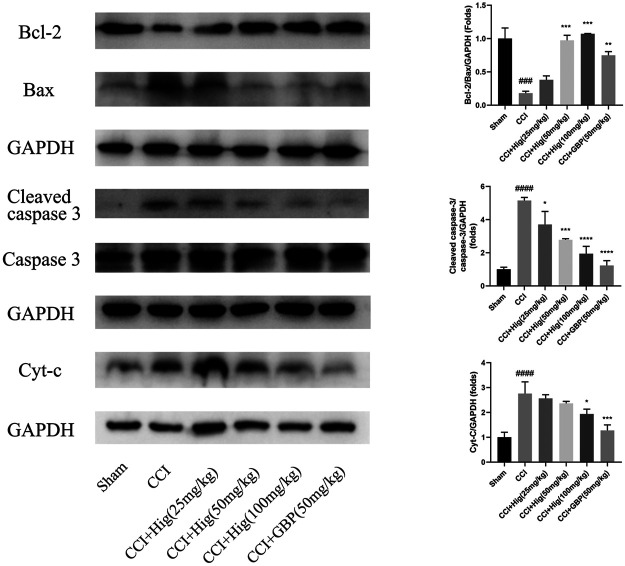
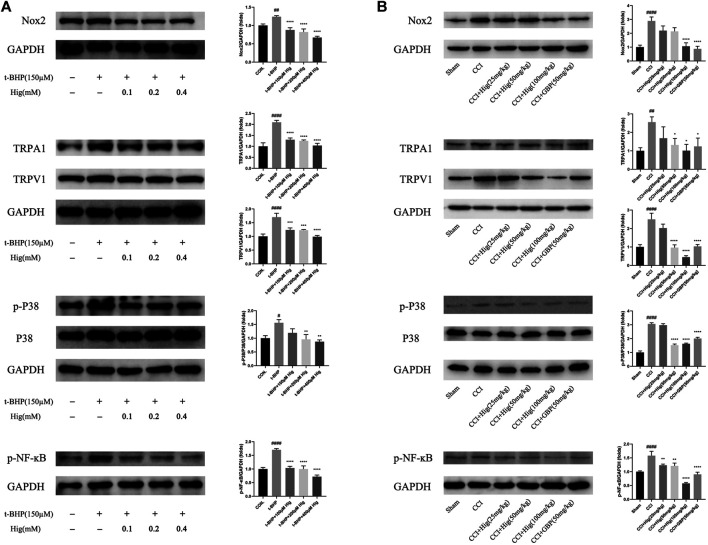
Oxidative stress damage is known as one of the important factors that induce neuropathic pain (NP). Using antioxidant therapy usually achieves an obvious curative effect and alleviates NP. Previous pharmacological studies have shown that higenamine (Hig) performs to be antioxidant and anti-inflammatory. However, the protective effect and mechanism of Hig on NP are still unclear. This study mainly evaluated the changes in reactive oxygen species (ROS) level, lipid peroxidation, and antioxidant system composed of superoxide dismutase (SOD) and glutathione (GSH) through chronic constrict injury (CCI) model rats and t-BHP-induced Schwann cell (SC) oxidative stress model. The expressions of two inflammatory factors, tumor necrosis factor-alpha (TNF-α) and interleukin-6 (IL-6), were also assessed. The possible molecular mechanism of Hig in the treatment of NP was explored in conjunction with the expression of mitochondrial apoptosis pathway and NOX2/ROS/TRP/P38 mitogen-activated protein kinase (MAPK)/NF-ĸB pathway-related indicators. Hig showed substantial antioxidant and anti-inflammatory properties both and . Hig significantly reduced the upregulated levels of ROS, malondialdehyde (MDA), TNF-α, and IL-6 and increased the levels of SOD and GSH, which rebalanced the redox system and improved the survival rate of cells. In the animal behavioral test, it was also observed that Hig relieved the CCI-induced pain, indicating that Hig had a pain relief effect. Our research results suggested that Hig improved NP-induced oxidative stress injury, inflammation, and apoptosis, and this neuroprotective effect may be related to the NOX2/ROS/TRP/P38 MAPK/NF-ĸB signaling pathway.
氧化应激损伤被认为是诱发神经性疼痛(NP)的重要因素之一。使用抗氧化疗法通常能取得明显疗效并减轻NP。先前的药理学研究表明,去甲乌药碱(Hig)具有抗氧化和抗炎作用。然而,Hig对NP的保护作用及其机制仍不清楚。本研究主要通过慢性缩窄损伤(CCI)模型大鼠和叔丁基过氧化氢(t-BHP)诱导的雪旺细胞(SC)氧化应激模型,评估活性氧(ROS)水平、脂质过氧化以及由超氧化物歧化酶(SOD)和谷胱甘肽(GSH)组成的抗氧化系统的变化。还评估了两种炎症因子肿瘤坏死因子-α(TNF-α)和白细胞介素-6(IL-6)的表达。结合线粒体凋亡途径以及NOX2/ROS/TRP/P38丝裂原活化蛋白激酶(MAPK)/NF-κB途径相关指标的表达,探讨Hig治疗NP的可能分子机制。Hig在体内和体外均表现出显著的抗氧化和抗炎特性。Hig显著降低了ROS、丙二醛(MDA)、TNF-α和IL-6上调的水平,并提高了SOD和GSH的水平,从而重新平衡了氧化还原系统并提高了细胞存活率。在动物行为测试中,还观察到Hig缓解了CCI诱导的疼痛,表明Hig具有止痛作用。我们的研究结果表明,Hig改善了NP诱导的氧化应激损伤、炎症和细胞凋亡,这种神经保护作用可能与NOX2/ROS/TRP/P38 MAPK/NF-κB信号通路有关。