Xu Jiao, Hao Qinjian, Qian Ruiyi, Mu Xingyu, Dai Minhan, Wu Yulu, Tang Yiguo, Xie Min, Wang Qiang
Department of General Practice, West China Hospital of Sichuan University, Chengdu, China.
The Center of Gerontology and Geriatrics, West China Hospital of Sichuan University, Chengdu, China.
Front Psychiatry. 2021 Sep 23;12:717999. doi: 10.3389/fpsyt.2021.717999. eCollection 2021.
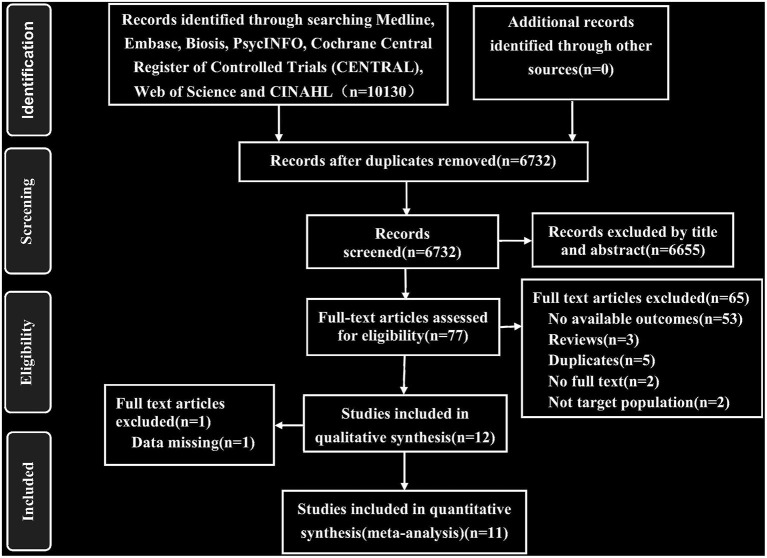
Obsessive-compulsive disorder (OCD) is a common chronic mental disorder with a high disability rate. Serotonin reuptake inhibitors (SRIs), including selective serotonin reuptake inhibitors (SSRIs) and tricyclic antidepressants, such as clomipramine, are the most common choices for the pharmacological treatment of OCD. Optimizing their use is pivotal in guiding clinical practice of OCD. However, there are few studies on the optimal dose of SRIs and there is controversy about their dose-response relationship and optimal target dose. Therefore, the objective of this study was to summarize the relationship between the dose and effect of SRIs, as well as the optimal dose of SRIs for OCD, as to propose future research directions. Medline, Embase, Biosis, PsycINFO, Cochrane Central Register of Controlled Trials (CENTRAL), Web of Science, and CINAHL were searched for relevant publications, and the search was up to February 22, 2020. We used a one-stage, robust error meta-regression (REMR) model to deal with the correlated dose-response data for SRIs from different studies. Doses of SRIs were converted to fluoxetine equivalents when performing dose-response analysis. Review Manager Program Version 5.3 and STATA software package (version 15.1) were applied to analyze data. The study protocol was registered with PROSPERO (number CRD42020168344). Eleven studies involving 2,322 participants were included in final analysis. For SRIs, the dose-efficacy curve showed a gradual increase trend in the 0-40-mg dose range and then had a decreased trend in doses up to 100 mg fluoxetine equivalent. Dropouts due to adverse effects gradually increased throughout the inspected dose slope. The curve of dose of all-cause dropouts suggested no relationship between them. Sensitivity analysis proved that these results were robust. The systematic review found that the optimal dose for efficacy was about 40mg fluoxetine equivalent. Tolerability decreased with increased doses, and there was no significant correlation between acceptability and doses of SRIs. Therefore, the optimal dose of SRIs needs to consider effectiveness and tolerability. [PROSPERO], identifier [CRD42020168344].
强迫症(OCD)是一种常见的慢性精神障碍,致残率很高。5-羟色胺再摄取抑制剂(SRIs),包括选择性5-羟色胺再摄取抑制剂(SSRIs)和三环类抗抑郁药,如氯米帕明,是强迫症药物治疗最常用的选择。优化它们的使用对指导强迫症的临床实践至关重要。然而,关于SRIs最佳剂量的研究很少,并且它们的剂量-反应关系和最佳目标剂量存在争议。因此,本研究的目的是总结SRIs的剂量与效果之间的关系以及强迫症的SRIs最佳剂量,以提出未来的研究方向。检索了Medline、Embase、Biosis、PsycINFO、Cochrane对照试验中央注册库(CENTRAL)、科学网和CINAHL以获取相关出版物,检索截至2020年2月22日。我们使用单阶段稳健误差元回归(REMR)模型来处理来自不同研究的SRIs相关剂量-反应数据。在进行剂量-反应分析时,将SRIs的剂量转换为氟西汀等效剂量。应用Review Manager程序版本5.3和STATA软件包(版本15.1)分析数据。该研究方案已在国际前瞻性系统评价注册库(PROSPERO)注册(编号CRD42020168344)。最终分析纳入了11项涉及2322名参与者的研究。对于SRIs,剂量-疗效曲线在0至40毫克剂量范围内呈逐渐上升趋势,然后在高达100毫克氟西汀等效剂量时呈下降趋势。在整个检查的剂量斜率范围内,因不良反应导致的退出率逐渐增加。全因退出剂量曲线表明它们之间没有关系。敏感性分析证明这些结果是稳健的。系统评价发现,疗效的最佳剂量约为40毫克氟西汀等效剂量。耐受性随剂量增加而降低,SRIs的可接受性与剂量之间无显著相关性。因此,SRIs的最佳剂量需要考虑有效性和耐受性。[国际前瞻性系统评价注册库(PROSPERO)],标识符[CRD42020168344]