Hong Haofeng, Xiao Jian, Guo Quanquan, Du Jinhui, Jiang Zhichen, Lu Sisi, Zhang Hongyuan, Zhang Xiaolei, Wang Xiangyang
Department of Orthopedics, The Second Affiliated Hospital and Yuying Children's Hospital of Wenzhou Medical University, Second Medical School of Wenzhou Medical University, Hangzhou, Zhejiang 310000, P.R. China.
Zhejiang Provincial Key Laboratory of Orthopedics, Wenzhou, Zhejiang 325027, P.R. China.
Exp Ther Med. 2021 Nov;22(5):1326. doi: 10.3892/etm.2021.10761. Epub 2021 Sep 20.
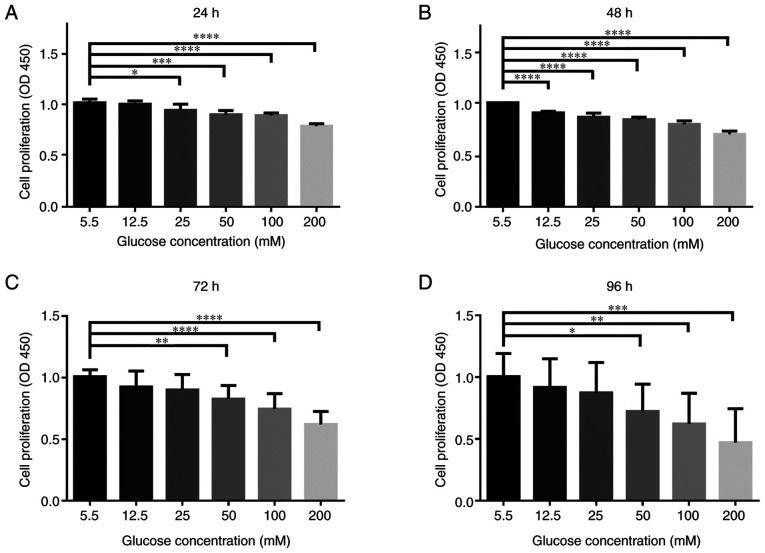
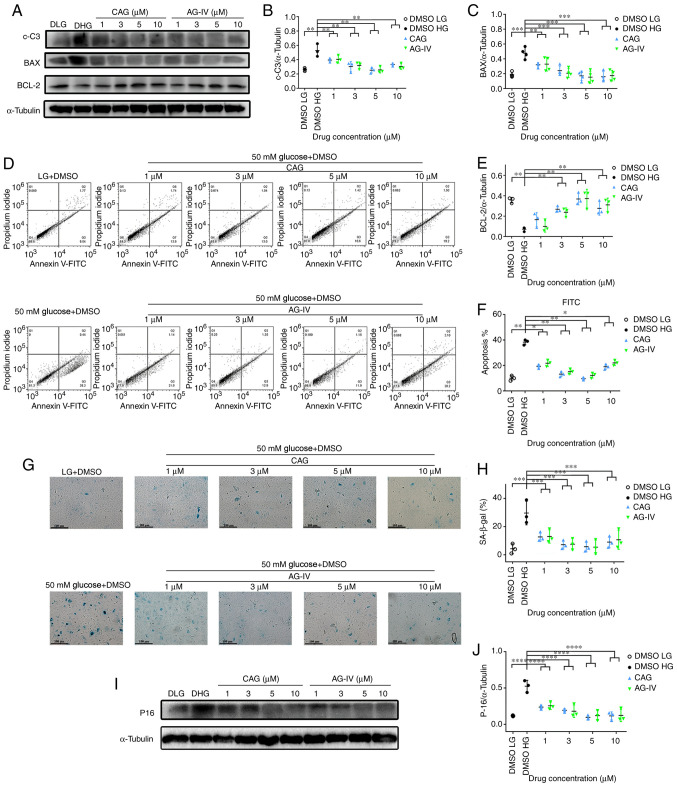
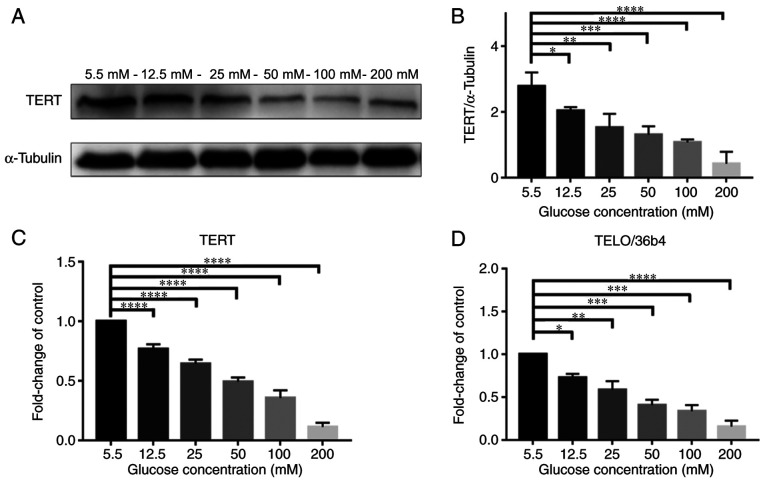
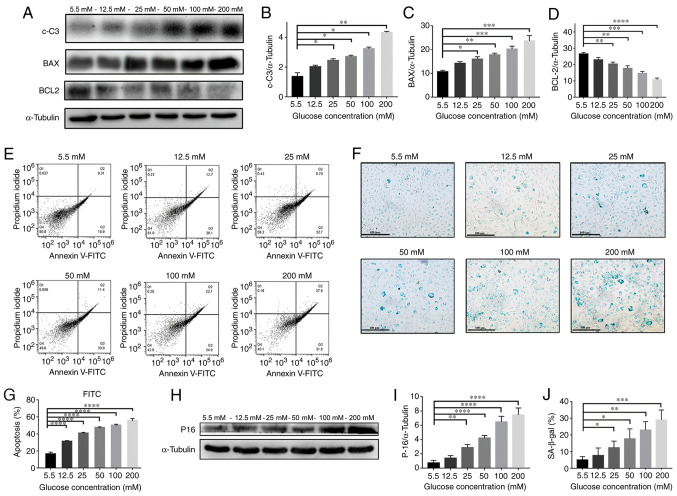
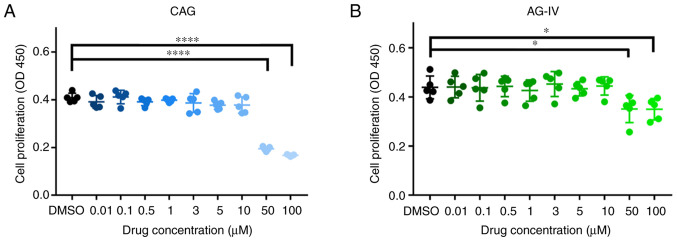
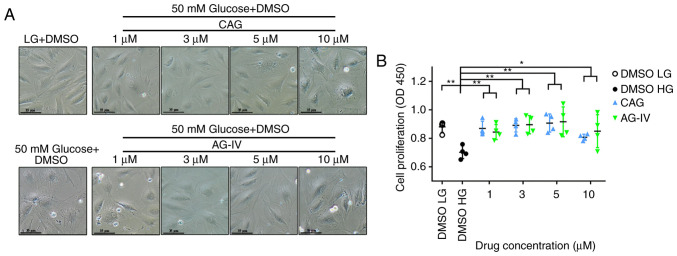
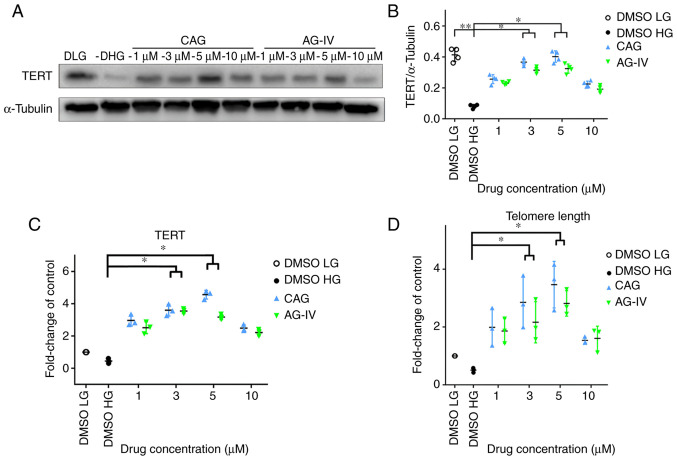
In diabetes-induced intervertebral disc degeneration (Db-IVDD), senescence and apoptosis of nucleus pulposus cells (NPCs) are major contributing factors. Telomere attrition and telomerase downregulation are some of the main reasons for senescence and eventual apoptosis. The derivatives of the Chinese herb , Cycloastragenol (CAG) and Astragaloside IV (AG-IV), are reportedly effective telomerase activators against telomere shortening; however, their effect in Db-IVDD have not been explored. The present study simultaneously investigated the regulation of these derivatives on senescence, apoptosis, telomeres and telomerase a model of high-glucose (HG)-induced stress using rat primary NPCs. The NPCs were stimulated with HG (50 mM) to evoke HG-induced stress, and the effects of CAG and AG-IV were observed on: i) The expression level of senescence marker p16; ii) β-Gal staining; iii) the expression levels of apoptosis markers cleaved-caspase 3 (c-C3), BAX and Bcl-2; iv) telomerase activation with telomerase reverse transcriptase (TERT) mRNA and protein expression, while telomere length was measured with reverse transcription-quantitative PCR. Cell proliferation was determined using the Cell Counting Kit-8 assay. Results demonstrated an upregulation in the expression levels of p16, c-C3 and BAX, and increased β-Gal staining; while the expression level of Bcl-2 was downregulated in a concentration-dependent manner. Pre-treatment of the NPCs with CAG and AG-IV downregulated the protein expression levels of p16, c-C3 and BAX, and decreased the percentage of β-Gal and FITC staining; while upregulating the Bcl-2 expression. These effects protected the cells from HG stress-induced senescence and apoptosis. HG also downregulated the expression profile of TERT and shortened the telomere length in a glucose concentration-dependent manner. While pretreatment with CAG and AG-IV upregulated TERT expression and ameliorated the telomere attrition. CAG and AG-IV also increased cell proliferation and improved cell morphology in HG conditions. Overall, these findings indicated that CAG and AG-IV suppressed HG stress-induced senescence and apoptosis, in addition to enhancing telomerase activation and lengthening of the Telomere. Therefore, CAG and AG-IV prolonged the replicative capability and longevity of the NPCs and they have the potential to be therapeutic agents in Db-IVDD.
在糖尿病诱导的椎间盘退变(Db-IVDD)中,髓核细胞(NPCs)的衰老和凋亡是主要促成因素。端粒磨损和端粒酶下调是衰老及最终凋亡的一些主要原因。据报道,中药黄芪甲苷(CAG)和黄芪皂苷IV(AG-IV)的衍生物是有效的端粒酶激活剂,可对抗端粒缩短;然而,它们在Db-IVDD中的作用尚未得到研究。本研究使用大鼠原代NPCs,同时研究了这些衍生物对高糖(HG)诱导的应激模型中衰老、凋亡、端粒和端粒酶的调节作用。用HG(50 mM)刺激NPCs以引发HG诱导的应激,并观察CAG和AG-IV对以下方面的影响:i)衰老标志物p16的表达水平;ii)β-半乳糖苷酶染色;iii)凋亡标志物裂解的半胱天冬酶3(c-C3)、BAX和Bcl-2的表达水平;iv)通过端粒酶逆转录酶(TERT)mRNA和蛋白表达进行端粒酶激活,同时用逆转录定量PCR测量端粒长度。使用细胞计数试剂盒-8测定法测定细胞增殖。结果显示p16、c-C3和BAX的表达水平上调,β-半乳糖苷酶染色增加;而Bcl-2的表达水平以浓度依赖性方式下调。用CAG和AG-IV预处理NPCs可下调p16、c-C3和BAX的蛋白表达水平,并降低β-半乳糖苷酶和FITC染色的百分比;同时上调Bcl-2的表达。这些作用保护细胞免受HG应激诱导的衰老和凋亡。HG还以葡萄糖浓度依赖性方式下调TERT的表达谱并缩短端粒长度。而用CAG和AG-IV预处理可上调TERT表达并改善端粒磨损。CAG和AG-IV还增加了HG条件下的细胞增殖并改善了细胞形态。总体而言,这些发现表明CAG和AG-IV除了增强端粒酶激活和延长端粒外,还抑制了HG应激诱导的衰老和凋亡。因此,CAG和AG-IV延长了NPCs的复制能力和寿命,它们有可能成为治疗Db-IVDD的药物。