da Silva Laise C, Viganó Juliane, de Souza Mesquita Leonardo M, Dias Arthur L Baião, de Souza Mariana C, Sanches Vitor L, Chaves Jaisa O, Pizani Rodrigo S, Contieri Leticia S, Rostagno Mauricio A
Multidisciplinary Laboratory of Food and Health (LabMAS), School of Applied Sciences (FCA), University of Campinas (UNICAMP), Rua Pedro Zaccaria 1300, 13484-350 Limeira, SP, Brazil.
Laboratory of High Pressure in Food Engineering, School of Food Engineering (FEA), University of Campinas (UNICAMP), Rua Monteiro Lobato 80, 13083-862 Campinas, SP, Brazil.
Food Chem X. 2021 Sep 25;12:100133. doi: 10.1016/j.fochx.2021.100133. eCollection 2021 Dec 30.
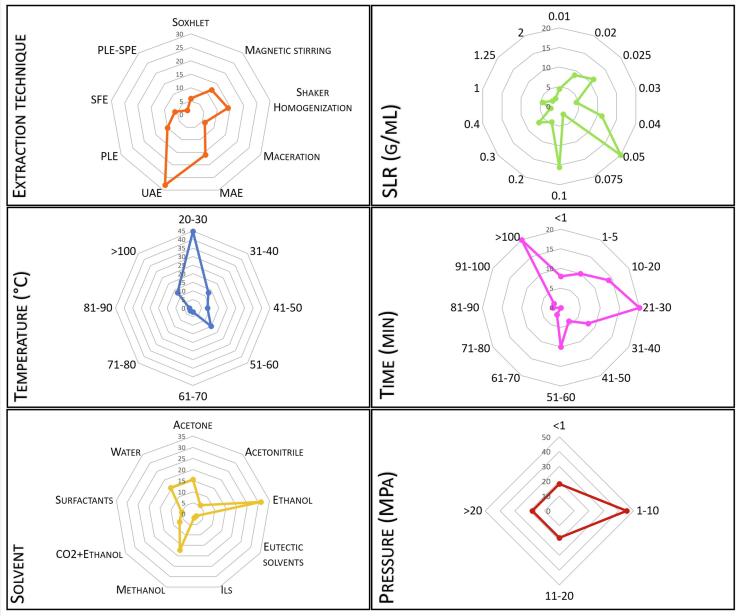
Apple is one of the most consumed fruits worldwide and has recognized nutritional properties. Besides being consumed fresh, it is the raw material for several food products, whose production chain generates a considerable amount of by-products that currently have an underestimated use. These by-products are a rich source of chemical compounds with several potential applications. Therefore, new ambitious platforms focused on reusing are needed, targeting a process chain that achieves well-defined products and mitigates waste generation. This review covers an essential part of the apple by-products reuse chain. The apple composition regarding phenolic compounds subclasses is addressed and related to biological activities. The extraction processes to recover apple biocompounds have been revised, and an up-to-date overview of the scientific literature on conventional and emerging extraction techniques adopted over the past decade is reported. Finally, gaps and future trends related to the management of apple by-products are critically presented.
苹果是全球消费最多的水果之一,具有公认的营养特性。除了鲜食外,它还是多种食品的原料,其生产链会产生大量目前利用不足的副产品。这些副产品富含具有多种潜在应用的化合物。因此,需要有新的雄心勃勃的专注于再利用的平台,目标是建立一个能生产明确产品并减少废物产生的工艺链。本综述涵盖了苹果副产品再利用链的重要部分。阐述了苹果中酚类化合物子类的组成及其与生物活性的关系。对回收苹果生物化合物的提取工艺进行了修订,并报告了过去十年采用的传统和新兴提取技术的科学文献的最新综述。最后,批判性地介绍了与苹果副产品管理相关的差距和未来趋势。