Department of Biology, University of North Carolina at Chapel Hill, Chapel Hill, NC 27599, USA.
Department of Biology/FB17, Philipps University, Karl-von-Frisch-Straße 8, 35043 Marburg, Germany.
J Cell Sci. 2021 Nov 1;134(21). doi: 10.1242/jcs.258973. Epub 2021 Nov 5.
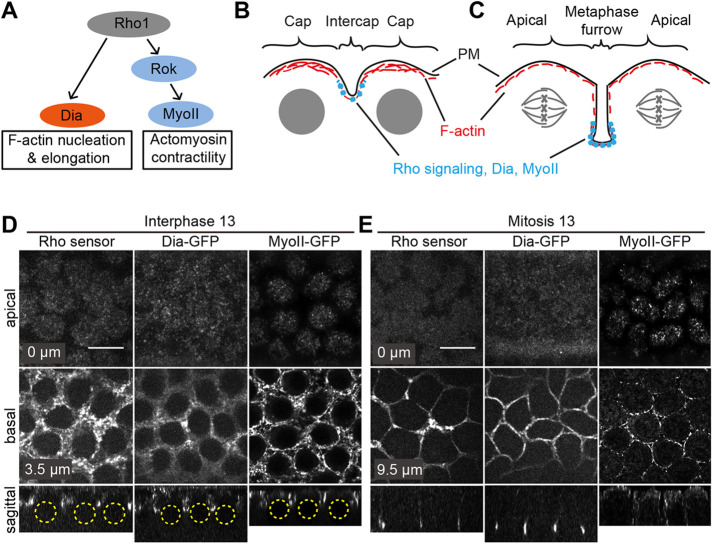
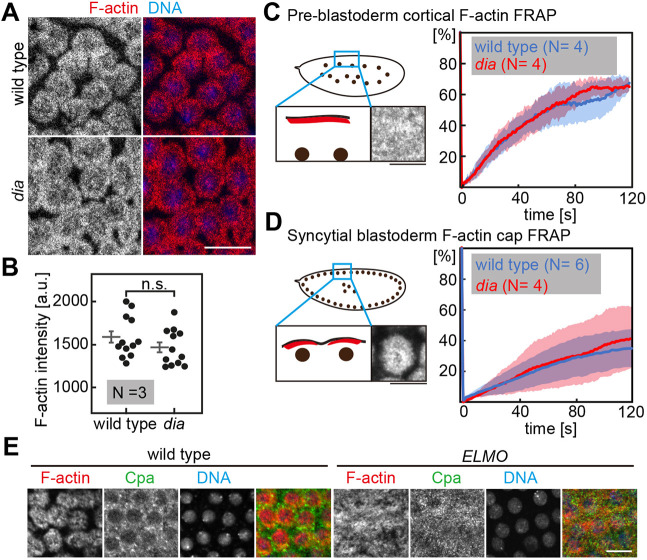
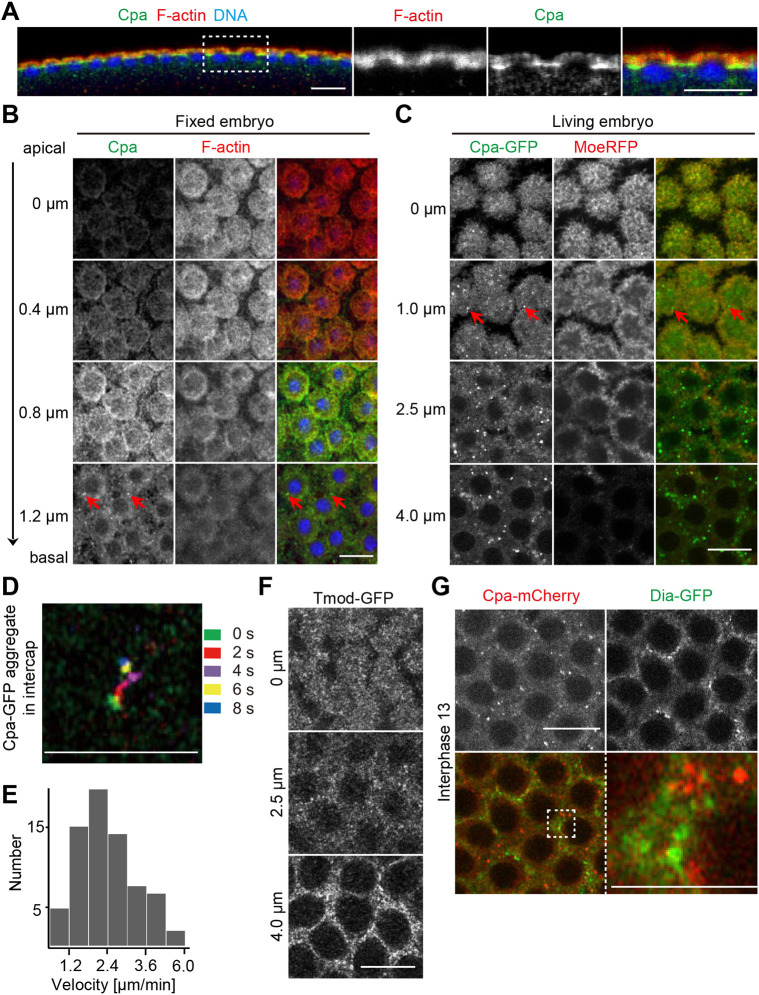
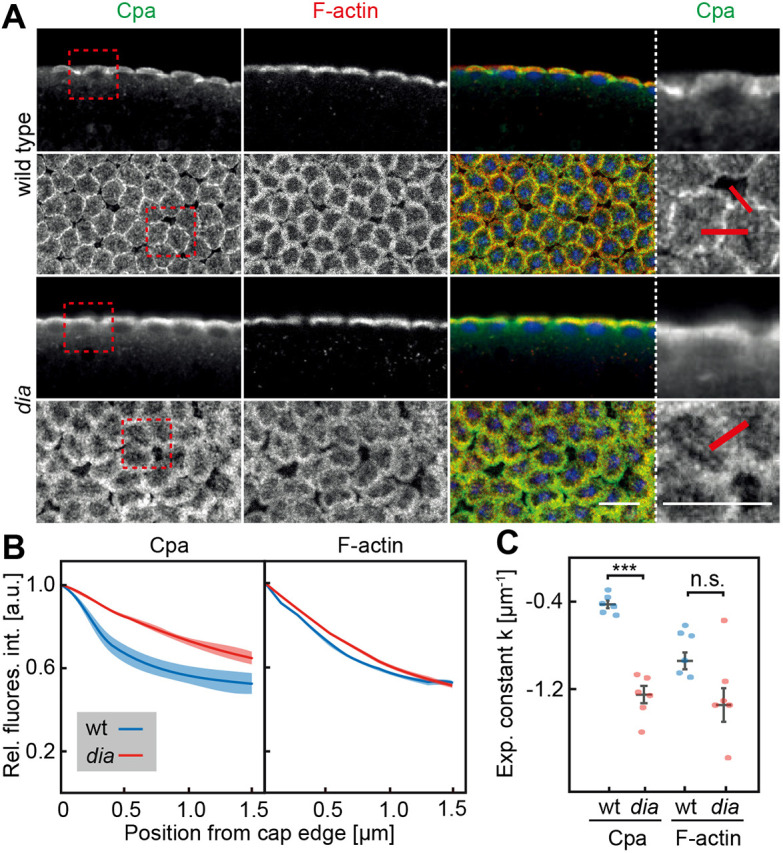
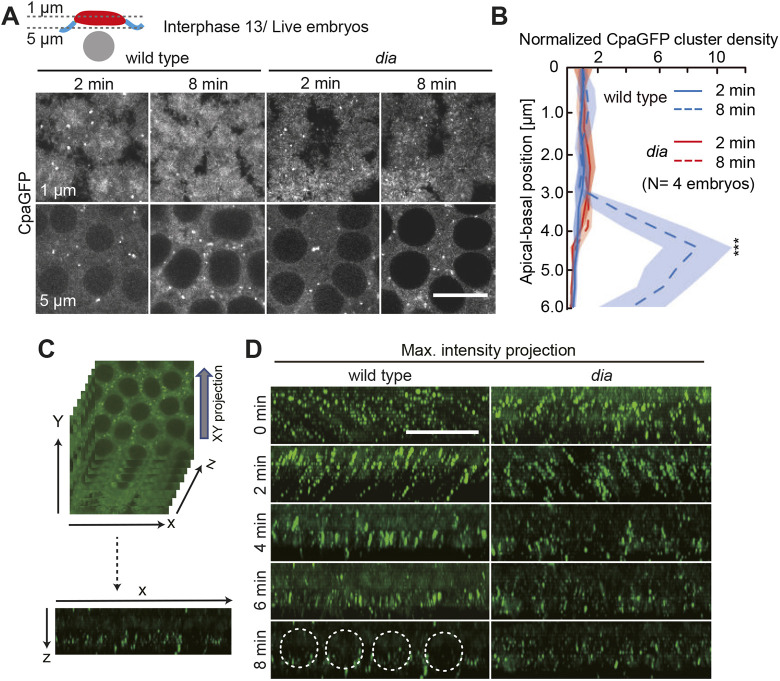
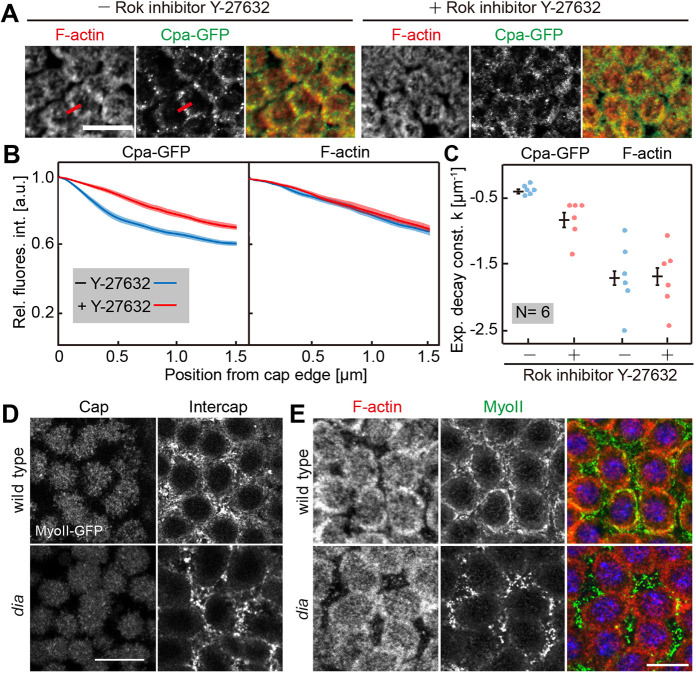
Rho signaling with its major targets the formin Dia, Rho kinase (Rok) and non-muscle myosin II (MyoII, encoded by zip in flies) control turnover, amount and contractility of actomyosin. Much less investigated has been a potential function for the distribution of F-actin plus and minus ends. In syncytial Drosophila embryos, Rho1 signaling is high between actin caps, i.e. the cortical intercap region. Capping protein binds to free plus ends of F-actin to prevent elongation of the filament. Capping protein has served as a marker to visualize the distribution of F-actin plus ends in cells and in vitro. In the present study, we probed the distribution of plus ends with capping protein in syncytial Drosophila embryos. We found that capping proteins are specifically enriched in the intercap region similar to Dia and MyoII but distinct from overall F-actin. The intercap enrichment of Capping protein was impaired in dia mutants and embryos, in which Rok and MyoII activation was inhibited. Our observations reveal that Dia and Rok-MyoII control Capping protein enrichment and support a model that Dia and Rok-MyoII control the organization of cortical actin cytoskeleton downstream of Rho1 signaling. This article has an associated First Person interview with the first authors of the paper.
Rho 信号及其主要靶标formin Dia、Rho 激酶(Rok)和非肌肉肌球蛋白 II(MyoII,在果蝇中由 zip 编码)控制肌动球蛋白的周转率、数量和收缩性。Rho1 信号在果蝇胚胎的细胞质中高度活跃,位于肌动蛋白帽之间,即皮质帽间区域。封端蛋白结合到 F-肌动蛋白的游离正端,以防止纤维的延伸。封端蛋白一直是在细胞和体外可视化 F-肌动蛋白正端分布的标记物。在本研究中,我们用封端蛋白在合胞体果蝇胚胎中探测正端的分布。我们发现封端蛋白在帽间区域特别丰富,类似于 Dia 和 MyoII,但与整体 F-肌动蛋白不同。在 dia 突变体和 Rok 和 MyoII 激活被抑制的胚胎中,封端蛋白在帽间的富集受到损害。我们的观察结果表明,Dia 和 Rok-MyoII 控制封端蛋白的富集,并支持 Dia 和 Rok-MyoII 控制 Rho1 信号下游皮质肌动蛋白细胞骨架组织的模型。这篇文章有一个与之相关的第一人称采访,是论文的第一作者。