Department of Pediatrics, University of Michigan Medical School, 1500 E. Medical Center Drive, F-6890, Ann Arbor, MI, 48109, USA.
Susan B. Meister Child Health Evaluation and Research (CHEAR) Center, University of Michigan, Ann Arbor, MI, USA.
BMC Nephrol. 2021 Oct 11;22(1):336. doi: 10.1186/s12882-021-02540-6.
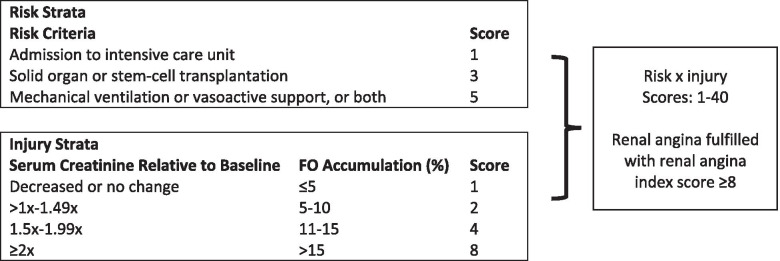
Fluid overload and acute kidney injury are common and associated with poor outcomes among critically ill children. The prodrome of renal angina stratifies patients by risk for severe acute kidney injury, but the predictive discrimination for fluid overload is unknown.
Post-hoc analysis of patients admitted to a tertiary care pediatric intensive care unit (PICU). The primary outcome was the performance of renal angina fulfillment on day of ICU admission to predict fluid overload ≥15% on Day 3.
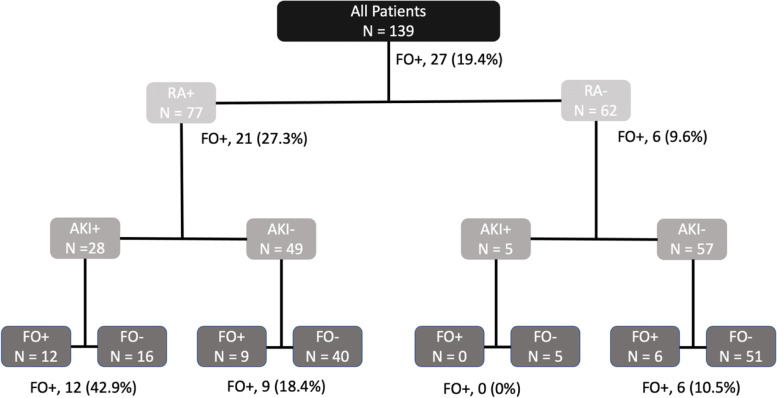
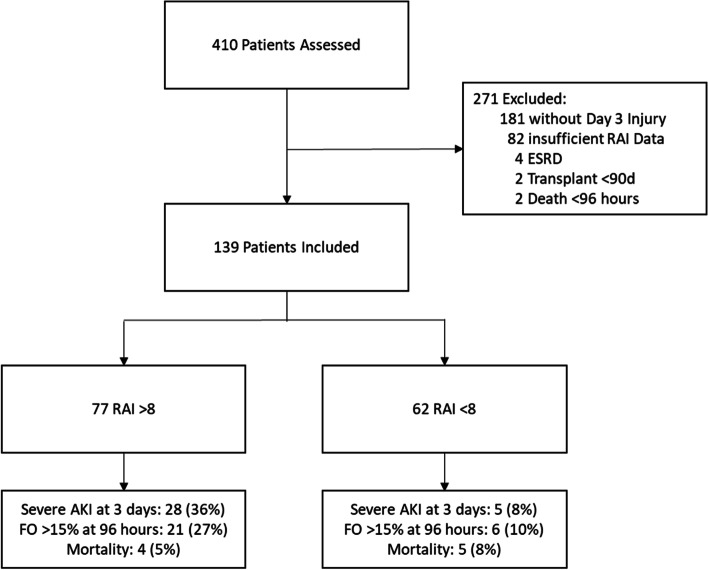
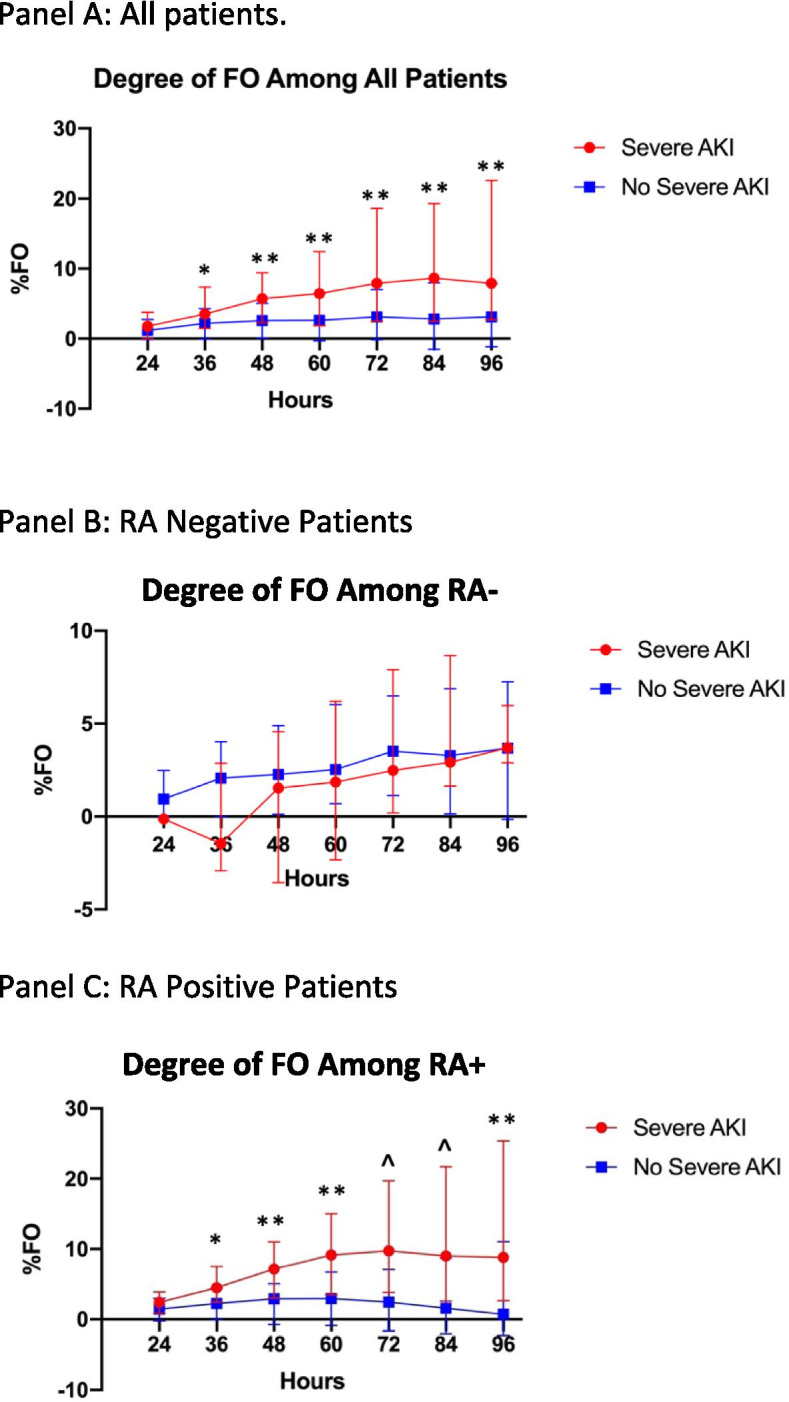
77/139 children (55%) fulfilled renal angina (RA+). After adjusting for covariates, RA+ was associated with increased odds of fluid overload on Day 3 (adjusted odds ratio (aOR) 5.1, 95% CI 1.23-21.2, p = 0.025, versus RA-). RA- resulted in a 90% negative predictive value for fluid overload on Day 3. Median fluid overload was significantly higher in RA+ patients with severe acute kidney injury compared to RA+ patients without severe acute kidney injury (% fluid overload on Day 3: 8.8% vs. 0.73%, p = 0.002).
Among critically ill children, fulfillment of renal angina was associated with increased odds of fluid overload versus the absence of renal angina and a higher fluid overload among patients who developed acute kidney injury. Renal angina directed risk classification may identify patients at highest risk for fluid accumulation. Expanded study in larger populations is warranted.
液体超负荷和急性肾损伤在危重症儿童中很常见,且与不良结局相关。肾绞痛前驱症可根据发生严重急性肾损伤的风险对患者进行分层,但目前尚不清楚其对液体超负荷的预测能力。
对入住三级儿童重症监护病房(PICU)的患者进行回顾性分析。主要结局是在入住 ICU 当天满足肾绞痛标准,以预测第 3 天液体超负荷≥15%。
139 例患儿中有 77 例(55%)满足肾绞痛(RA+)。调整协变量后,RA+与第 3 天液体超负荷的发生几率增加相关(调整优势比(aOR)5.1,95%CI 1.23-21.2,p=0.025,与 RA-相比)。RA-对第 3 天液体超负荷的阴性预测值为 90%。与无严重急性肾损伤的 RA+患者相比,有严重急性肾损伤的 RA+患者的液体超负荷中位数明显更高(第 3 天的液体超负荷:8.8% vs. 0.73%,p=0.002)。
在危重症儿童中,与不存在肾绞痛相比,满足肾绞痛标准与液体超负荷的发生几率增加相关,且发生急性肾损伤的患者中液体超负荷更高。肾绞痛指导的风险分层可能会识别出液体蓄积风险最高的患者。需要在更大的人群中进行扩展研究。