Department of Evolutionary Biology, Unit for Theoretical Biology, University of Vienna, Djerassiplatz 1, 1030, Vienna, Austria.
Konrad Lorenz Institute for Evolution and Cognition Research, Martinstrasse 12, 3400, Klosterneuburg, Austria.
BMC Biol. 2021 Oct 11;19(1):224. doi: 10.1186/s12915-021-01150-w.
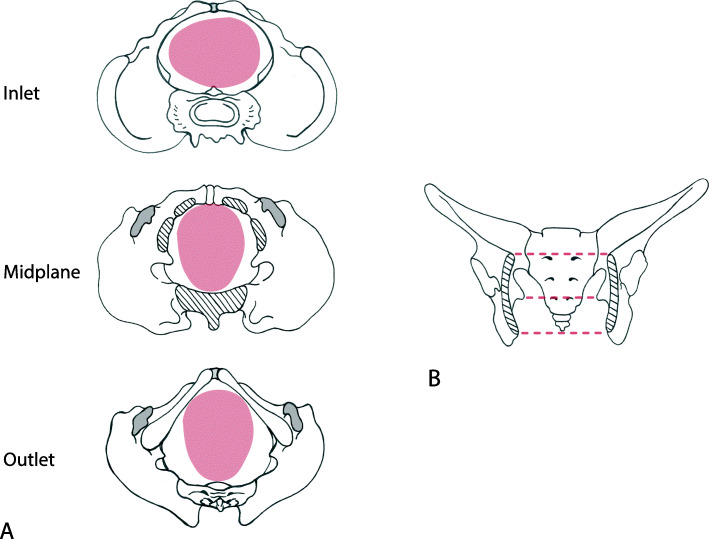
The human foetus typically needs to rotate when passing through the tight birth canal because of the complex shape of the pelvis. In most women, the upper part, or inlet, of the birth canal has a round or mediolaterally oval shape, which is considered ideal for parturition, but it is unknown why the lower part of the birth canal has a pronounced anteroposteriorly oval shape.
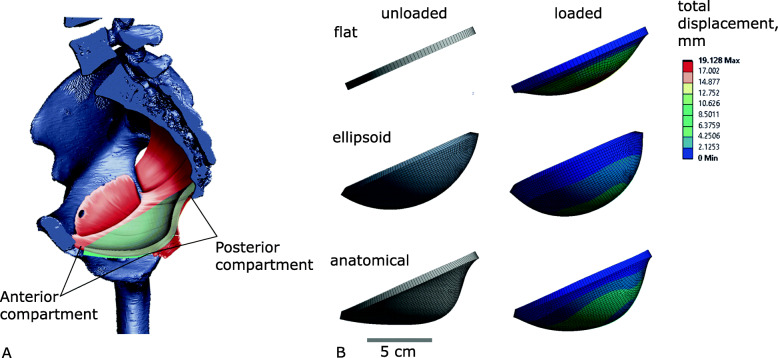
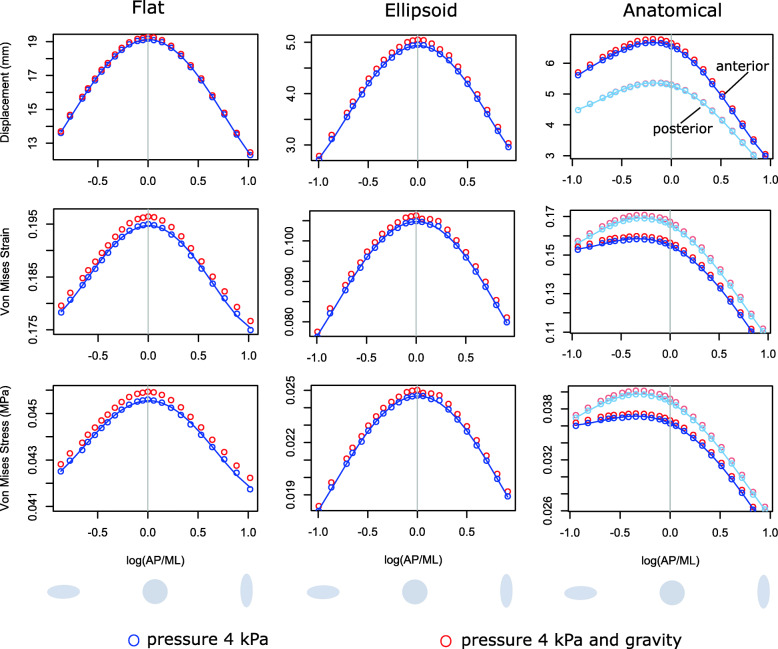
Here, we show that the shape of the lower birth canal affects the ability of the pelvic floor to resist the pressure exerted by the abdominal organs and the foetus. Based on a series of finite element analyses, we found that the highest deformation, stress, and strain occur in pelvic floors with a circular or mediolaterally oval shape, whereas an anteroposterior elongation increases pelvic floor stability.
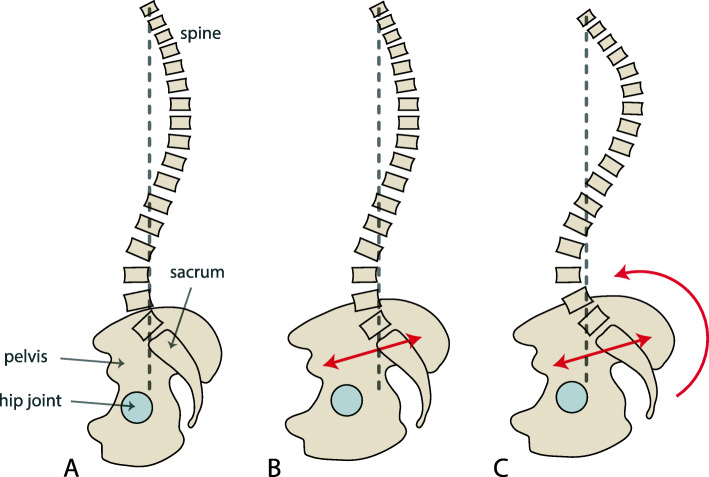
This suggests that the anteroposterior oval outlet shape is an evolutionary adaptation for pelvic floor support. For the pelvic inlet, by contrast, it has long been assumed that the mediolateral dimension is constrained by the efficiency of upright locomotion. But we argue that the mediolateral elongation has evolved because of the limits on the anteroposterior diameter imposed by upright posture. We show that an anteroposteriorly deeper inlet would require greater pelvic tilt and lumbar lordosis, which compromises spine health and the stability of upright posture. These different requirements of the pelvic inlet and outlet likely have led to the complex shape of the pelvic canal and to the evolution of rotational birth characteristic of humans.
由于骨盆的复杂形状,人类胎儿在通过狭窄的产道时通常需要旋转。在大多数女性中,产道的上部或入口呈圆形或左右椭圆形,这被认为是分娩的理想形状,但不知道为什么产道的下部呈明显的前后椭圆形。
在这里,我们表明,产道下部的形状影响骨盆底抵抗腹部器官和胎儿施加的压力的能力。基于一系列有限元分析,我们发现圆形或左右椭圆形的骨盆底会产生最大的变形、应力和应变,而前后拉长则会增加骨盆底的稳定性。
这表明前后椭圆形出口形状是骨盆底支撑的进化适应。相比之下,对于骨盆入口,人们一直认为左右宽度受到直立行走效率的限制。但我们认为,左右拉长是由于直立姿势对前后直径的限制而进化而来的。我们表明,前后更深的入口将需要更大的骨盆倾斜和腰椎前凸,这会损害脊柱健康和直立姿势的稳定性。骨盆入口和出口的这些不同要求可能导致了骨盆管的复杂形状和人类特有的旋转分娩的进化。