Clinical Pharmacology, Pfizer Inc., New York, New York, USA.
Pfizer Inc., Groton, Connecticut, USA.
J Clin Pharmacol. 2022 Apr;62(4):505-519. doi: 10.1002/jcph.1980. Epub 2022 Feb 15.
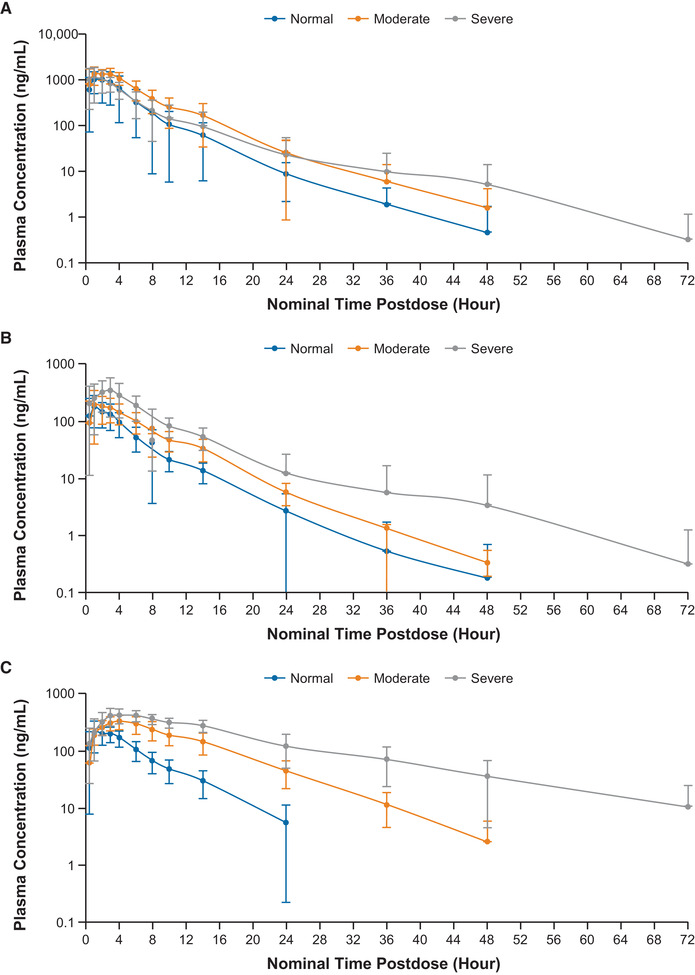
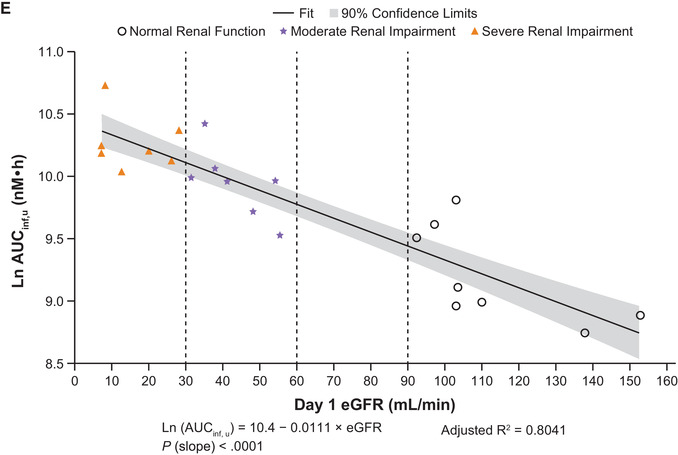
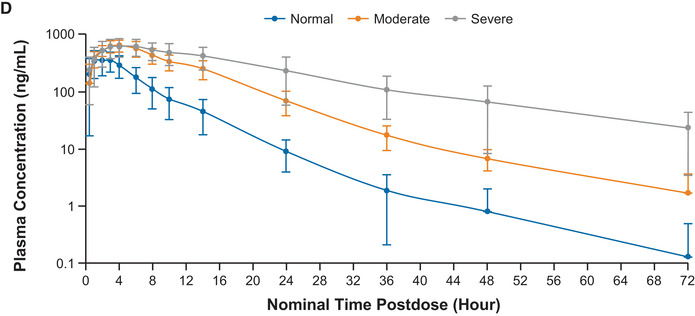
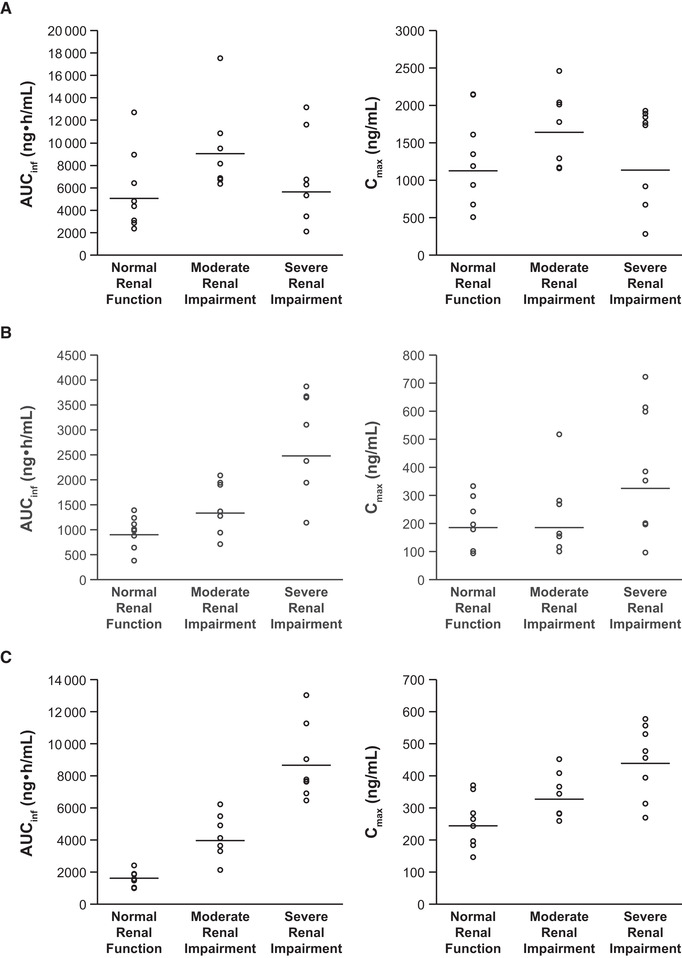
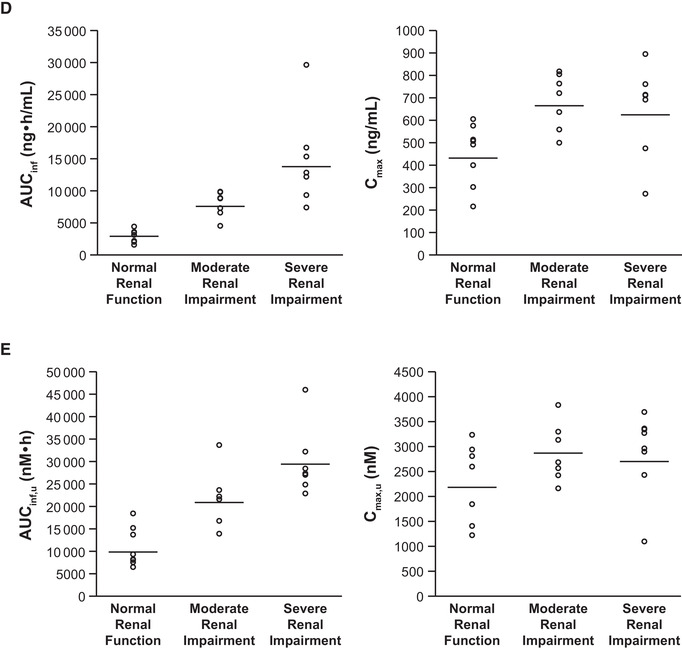
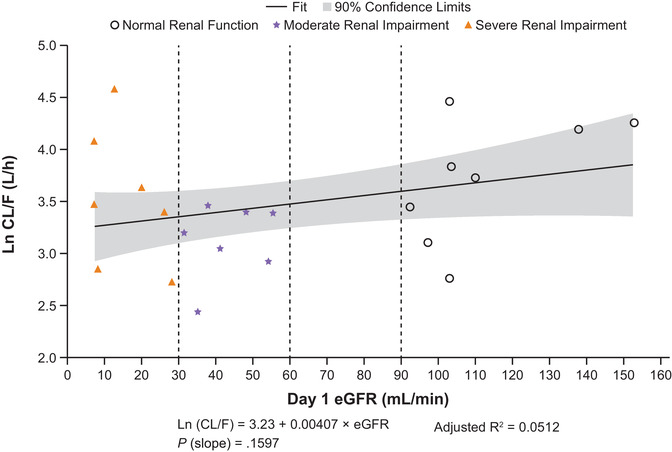
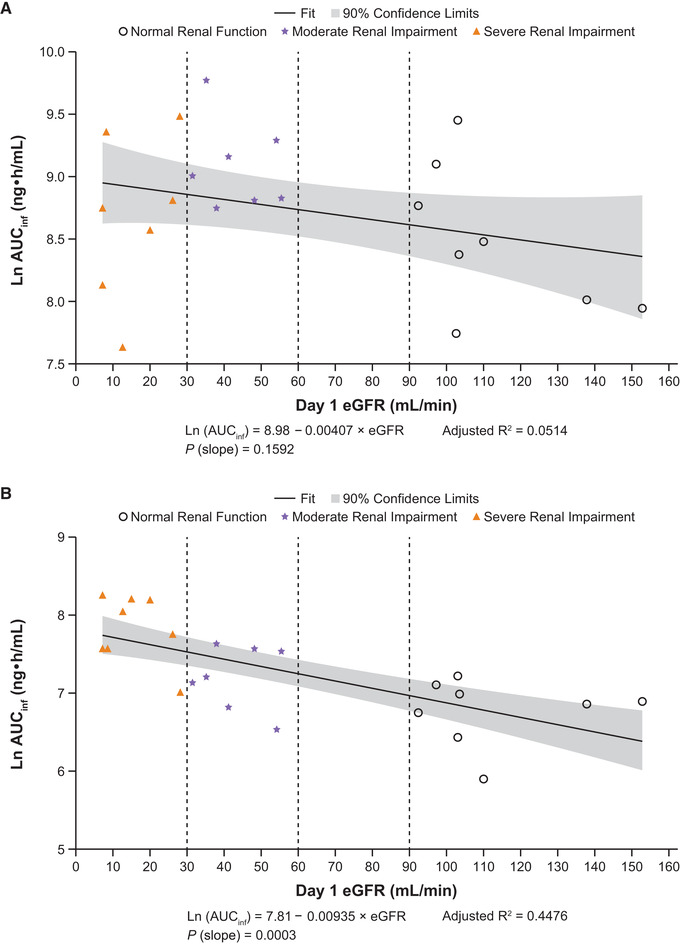
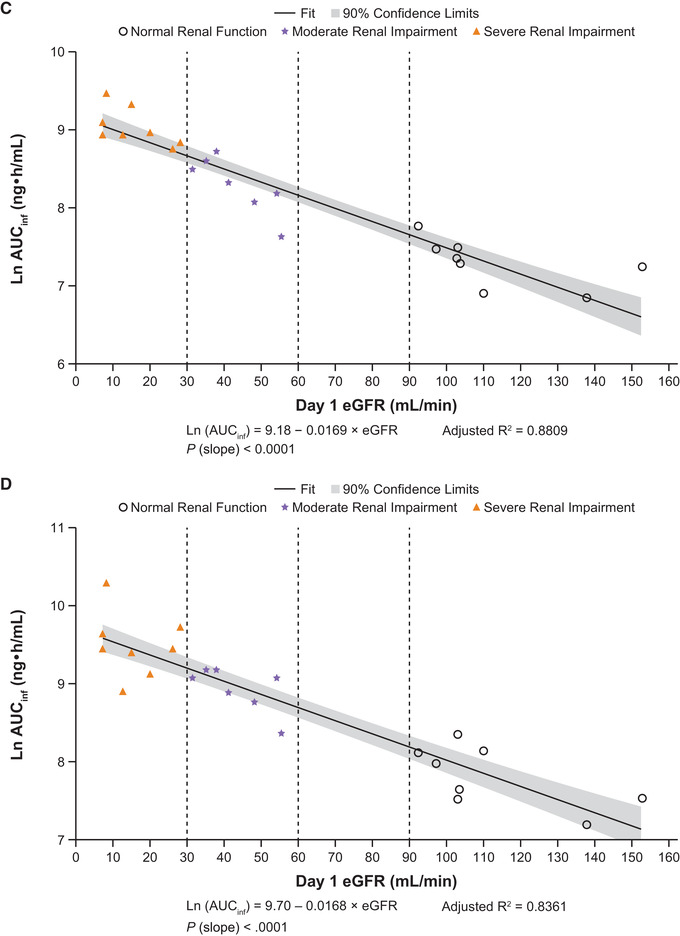
Abrocitinib, an oral once-daily Janus kinase 1 selective inhibitor, is under development for the treatment of atopic dermatitis. This phase 1, nonrandomized, open-label, single-dose study (NCT03660241) investigated the effect of renal impairment on the pharmacokinetics, safety, and tolerability of abrocitinib and its metabolites following a 200-mg oral dose. Twenty-three subjects with varying degrees of renal function (normal, moderate, and severe impairment) were enrolled. Active moiety exposures were calculated as the sum of unbound exposures for abrocitinib and its active metabolites. For abrocitinib, the adjusted geometric mean ratios (GMRs; %) for area under the concentration-time curve from time 0 extrapolated to infinite time and maximum plasma concentration were 182.91 (90% confidence interval [CI], 117.09-285.71) and 138.49 (90% CI, 93.74-204.61), respectively, for subjects with moderate renal impairment vs normal renal function; corresponding GMRs were 121.32 (90% CI, 68.32-215.41) and 99.11 (90% CI, 57.30-171.43) for subjects with severe impairment vs normal renal function. Metabolite exposures generally increased in subjects with renal impairment. The GMRs of unbound area under the concentration-time curve from time 0 extrapolated to infinite time and maximum plasma concentration of active moiety were 210.20 (90% CI, 154.60-285.80) and 133.87 (90% CI, 102.45-174.92), respectively, for subjects with moderate renal impairment vs normal renal function. Corresponding values were 290.68 (90% CI, 217.39-388.69) and 129.49 (90% CI, 92.86-180.57) for subjects with severe renal impairment vs normal renal function. Abrocitinib was generally safe and well tolerated. Both moderate and severe renal impairment led to higher exposure to abrocitinib active moiety, suggesting that abrocitinib dose should be reduced by half for patients with moderate or severe renal impairment. ClinicalTrials.gov identifier: NCT03660241.
阿布昔替尼是一种每日口服一次的选择性 Janus 激酶 1 抑制剂,目前正在开发用于治疗特应性皮炎。这项 1 期、非随机、开放标签、单次剂量研究(NCT03660241)调查了肾功能损害对阿布昔替尼及其代谢物在口服 200mg 后药代动力学、安全性和耐受性的影响。23 名肾功能不同(正常、中度和重度损害)的受试者被纳入研究。活性母体物质的暴露量被计算为阿布昔替尼及其活性代谢物的未结合暴露量的总和。对于阿布昔替尼,中度肾功能损害与正常肾功能相比,曲线下浓度-时间从 0 点外推至无穷大时间和最大血浆浓度的调整后的几何平均比值(GMR;%)分别为 182.91(90%置信区间 [CI],117.09-285.71)和 138.49(90% CI,93.74-204.61);对于严重肾功能损害与正常肾功能相比,相应的 GMR 分别为 121.32(90% CI,68.32-215.41)和 99.11(90% CI,57.30-171.43)。在肾功能损害的受试者中,代谢物暴露量普遍增加。从 0 点外推至无穷大时间和活性母体物质的最大血浆浓度的未结合曲线下浓度-时间面积的 GMR 分别为 210.20(90% CI,154.60-285.80)和 133.87(90% CI,102.45-174.92),中度肾功能损害与正常肾功能相比。对于严重肾功能损害与正常肾功能相比,相应的值分别为 290.68(90% CI,217.39-388.69)和 129.49(90% CI,92.86-180.57)。阿布昔替尼通常是安全且耐受良好的。中度和重度肾功能损害均导致阿布昔替尼活性母体物质的暴露量增加,这表明中度或重度肾功能损害患者的阿布昔替尼剂量应减半。临床试验.gov 标识符:NCT03660241。