Proteome Center Rostock, University Medicine Rostock and University of Rostock, Schillingallee 69, 18057 Rostock, Germany.
Department of Pharmaceutical Chemistry, School of Pharmacy, College of Health Science, University of Ghana, P.O. Box LG43, Legon, Ghana.
Int J Mol Sci. 2021 Sep 22;22(19):10183. doi: 10.3390/ijms221910183.
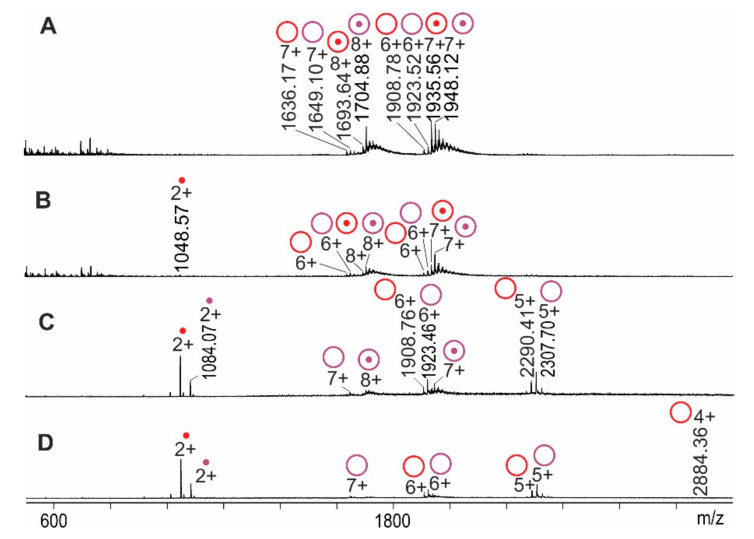
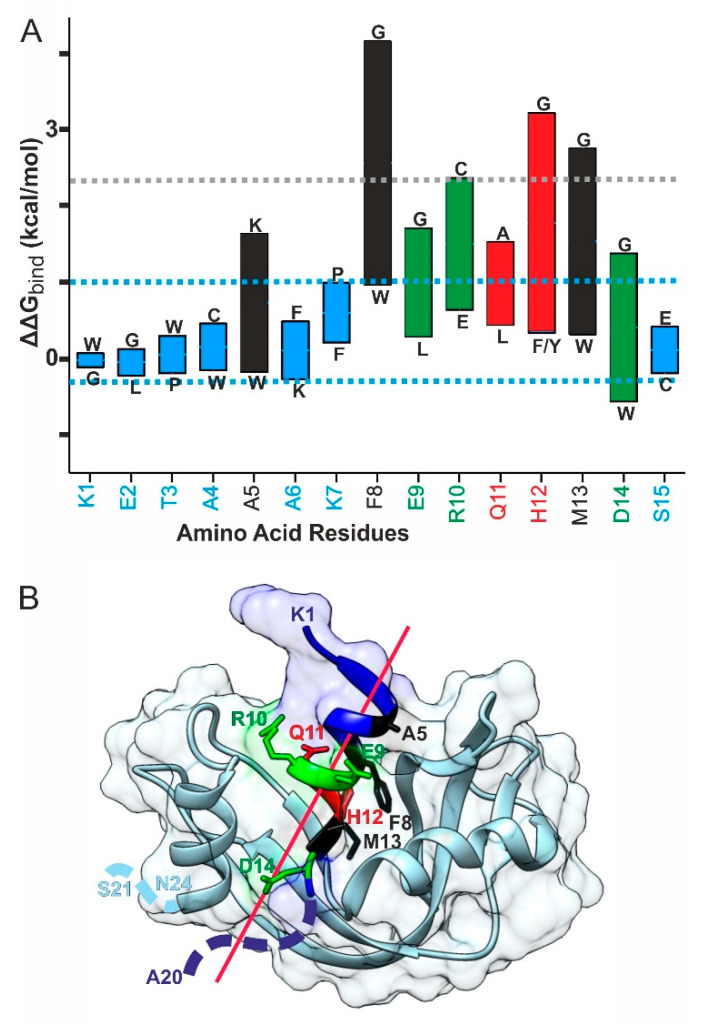
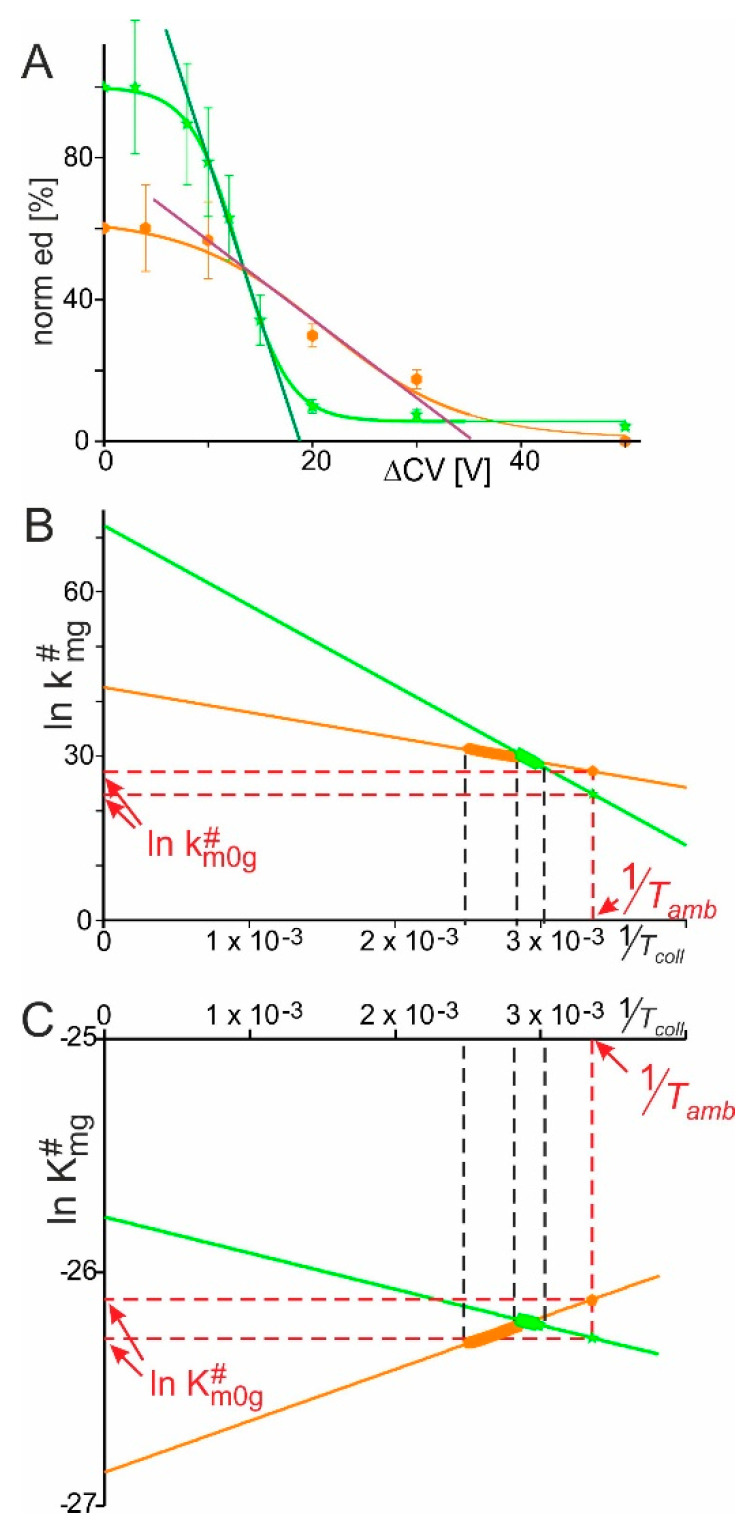
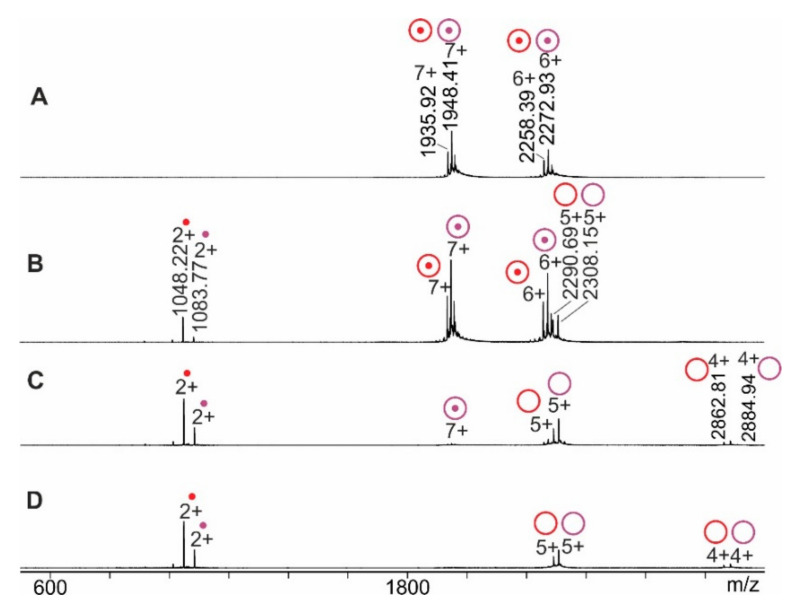
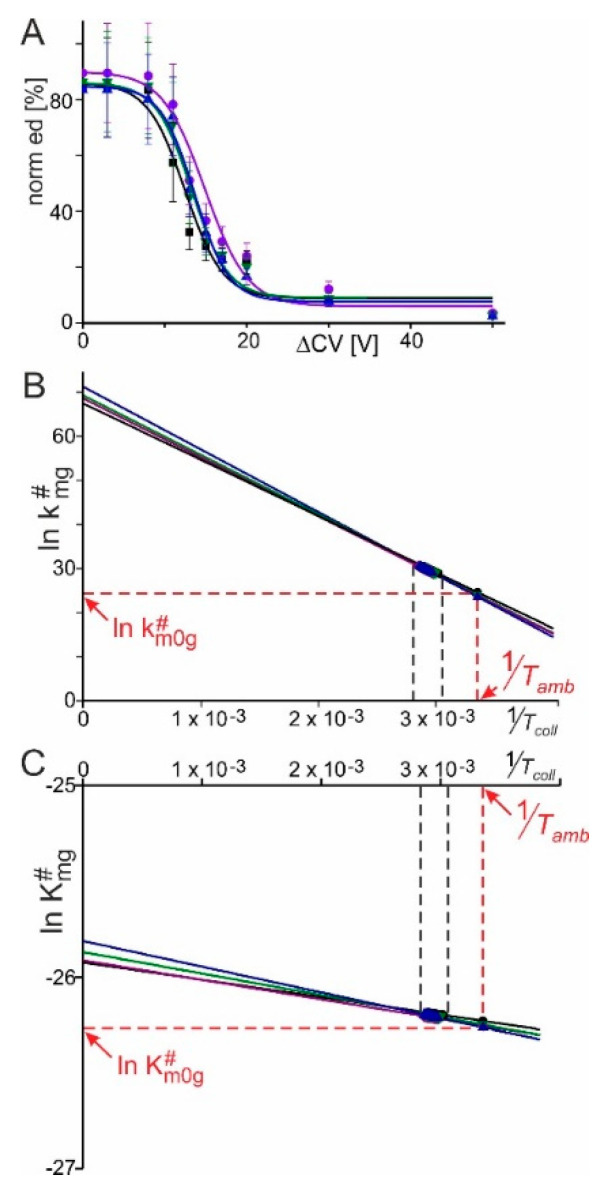
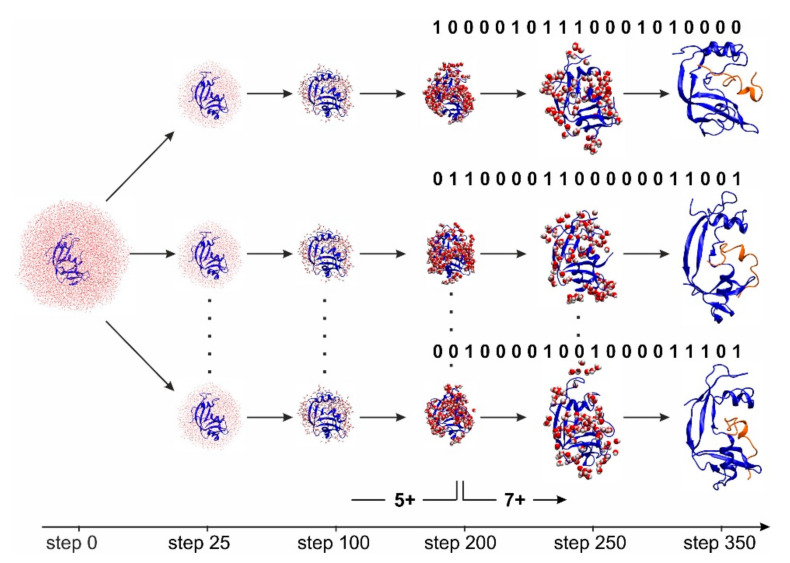
We investigated the influence of a solvent's composition on the stability of desorbed and multiply charged RNAse S ions by analyzing the non-covalent complex's gas-phase dissociation processes. RNAse S was dissolved in electrospray ionization-compatible buffers with either increasing organic co-solvent content or different pHs. The direct transition of all the ions and the evaporation of the solvent from all the in-solution components of RNAse S under the respective in-solution conditions by electrospray ionization was followed by a collision-induced dissociation of the surviving non-covalent RNAse S complex ions. Both types of changes of solvent conditions yielded in mass spectrometrically observable differences of the in-solution complexation equilibria. Through quantitative analysis of the dissociation products, i.e., from normalized ion abundances of RNAse S, S-protein, and S-peptide, the apparent kinetic and apparent thermodynamic gas-phase complex properties were deduced. From the experimental data, it is concluded that the stability of RNAse S in the gas phase is independent of its in-solution equilibrium but is sensitive to the complexes' gas-phase charge states. Bio-computational in-silico studies showed that after desolvation and ionization by electrospray, the remaining binding forces kept the S-peptide and S-protein together in the gas phase predominantly by polar interactions, which indirectly stabilized the in-bulk solution predominating non-polar intermolecular interactions. As polar interactions are sensitive to in-solution protonation, bio-computational results provide an explanation of quantitative experimental data with single amino acid residue resolution.
我们通过分析非共价复合物的气相解离过程,研究了溶剂组成对解吸和多电荷 RNAse S 离子稳定性的影响。将 RNAse S 溶解在电喷雾电离兼容的缓冲液中,缓冲液中含有不同比例的有机溶剂或不同的 pH 值。通过电喷雾,直接监测所有离子的跃迁以及所有溶液成分中溶剂的蒸发,然后对存活的非共价 RNAse S 配合物离子进行碰撞诱导解离。这两种溶剂条件的变化都导致了溶液中配合物平衡的质谱可观察到的差异。通过对解离产物的定量分析,即从 RNAse S、S-蛋白和 S-肽的归一化离子丰度,可以推断出表观动力学和表观热力学气相复合物性质。从实验数据得出结论,RNAse S 在气相中的稳定性与其溶液平衡无关,但对复合物的气相电荷状态敏感。生物计算的计算机模拟研究表明,在电喷雾解吸和电离后,剩余的结合力主要通过极性相互作用将 S-肽和 S-蛋白保留在气相中,这间接稳定了在溶液中占主导地位的非极性分子间相互作用。由于极性相互作用对溶液中的质子化敏感,因此生物计算结果提供了对具有单个氨基酸残基分辨率的定量实验数据的解释。