Massachusetts Institute of Technology, Cambridge, MA 02139, USA.
Departments of Biological Sciences, University of Memphis, Memphis, TN 38152, USA.
Int J Mol Sci. 2021 Sep 25;22(19):10317. doi: 10.3390/ijms221910317.
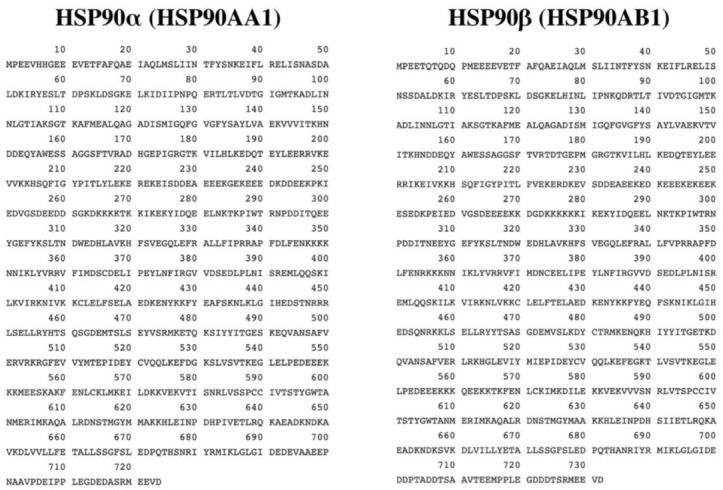
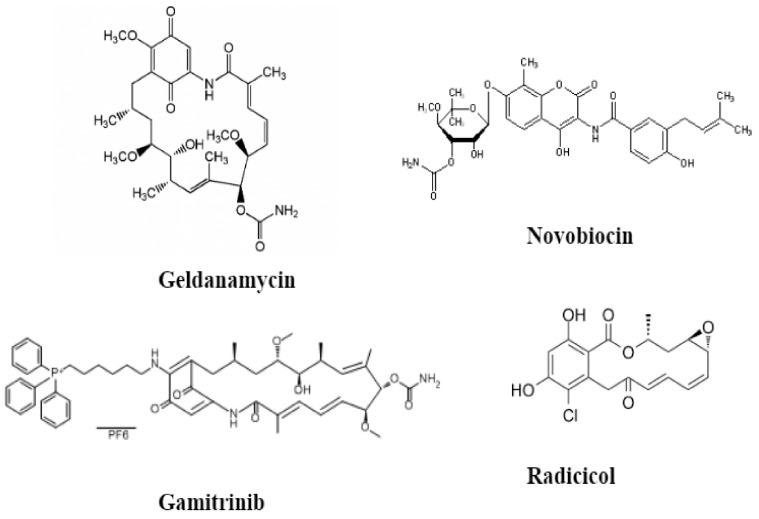
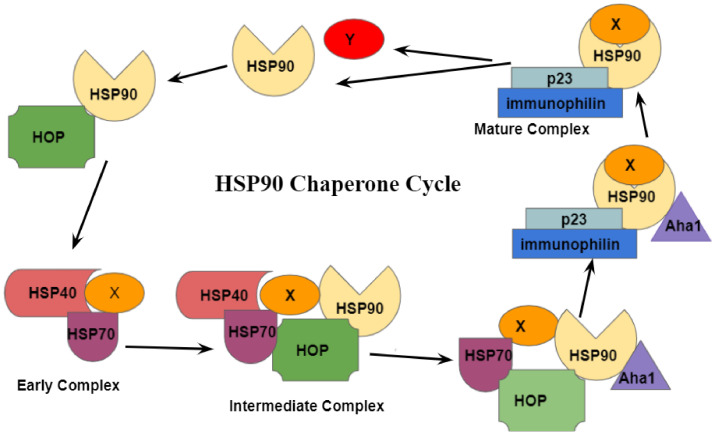
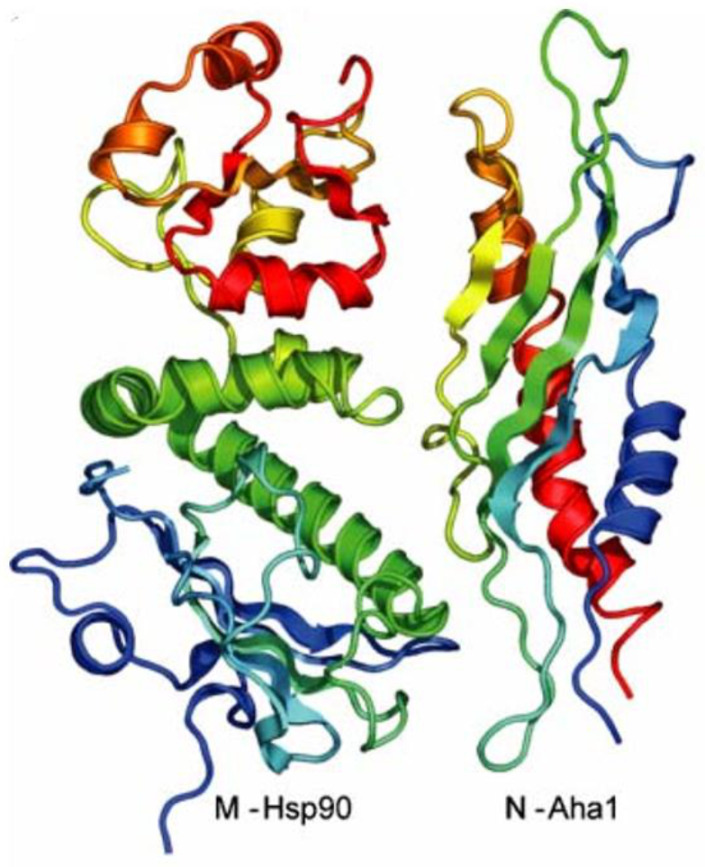
HSP90 is a vital chaperone protein conserved across all organisms. As a chaperone protein, it correctly folds client proteins. Structurally, this protein is a dimer with monomer subunits that consist of three main conserved domains known as the N-terminal domain, middle domain, and the C-terminal domain. Multiple isoforms of HSP90 exist, and these isoforms share high homology. These isoforms are present both within the cell and outside the cell. Isoforms HSP90 and HSP90 are present in the cytoplasm; TRAP1 is present in the mitochondria; and GRP94 is present in the endoplasmic reticulum and is likely secreted due to post-translational modifications (PTM). HSP90 is also secreted into an extracellular environment via an exosome pathway that differs from the classic secretion pathway. Various co-chaperones are necessary for HSP90 to function. Elevated levels of HSP90 have been observed in patients with cancer. Despite this observation, the possible role of HSP90 in cancer was overlooked because the chaperone was also present in extreme amounts in normal cells and was vital to normal cell function, as observed when the drastic adverse effects resulting from gene knockout inhibited the production of this protein. Differences between normal HSP90 and HSP90 of the tumor phenotype have been better understood and have aided in making the chaperone protein a target for cancer drugs. One difference is in the conformation: HSP90 of the tumor phenotype is more susceptible to inhibitors. Since overexpression of HSP90 is a factor in tumorigenesis, HSP90 inhibitors have been studied to combat the adverse effects of HSP90 overexpression. Monotherapies using HSP90 inhibitors have shown some success; however, combination therapies have shown better results and are thus being studied for a more effective cancer treatment.
HSP90 是一种普遍存在于所有生物中的重要伴侣蛋白。作为伴侣蛋白,它能正确折叠靶蛋白。从结构上看,这种蛋白是一种二聚体,单体亚基由三个主要保守结构域组成,分别称为 N 端结构域、中间结构域和 C 端结构域。HSP90 存在多种同工型,这些同工型具有高度同源性。这些同工型存在于细胞内和细胞外。HSP90 和 HSP90 同工型存在于细胞质中;TRAP1 存在于线粒体中;GRP94 存在于内质网中,由于翻译后修饰(PTM)可能被分泌。HSP90 也通过不同于经典分泌途径的外泌体途径分泌到细胞外环境中。HSP90 的功能需要多种共伴侣。在癌症患者中观察到 HSP90 水平升高。尽管有这种观察,但 HSP90 在癌症中的可能作用被忽视了,因为这种伴侣蛋白在正常细胞中也存在大量表达,并且对正常细胞功能至关重要,当由于基因敲除导致产生这种蛋白的严重不良反应时,就会观察到这种情况。正常 HSP90 和肿瘤表型 HSP90 之间的差异已得到更好的理解,并有助于使伴侣蛋白成为癌症药物的靶点。一个区别在于构象:肿瘤表型的 HSP90 更容易受到抑制剂的影响。由于 HSP90 的过表达是肿瘤发生的一个因素,因此已经研究了 HSP90 抑制剂来对抗 HSP90 过表达的不良影响。使用 HSP90 抑制剂的单药治疗已显示出一些成功;然而,联合治疗显示出更好的结果,因此正在研究用于更有效的癌症治疗。