Adelaide Glycomics, Waite Campus, School of Agriculture, Food and Wine, University of Adelaide, Adelaide, SA 5064, Australia.
Commonwealth Scientific and Industrial Research Organisation (CSIRO), Waite Campus, Glen Osmond, SA 5064, Australia.
Int J Mol Sci. 2021 Oct 5;22(19):10760. doi: 10.3390/ijms221910760.
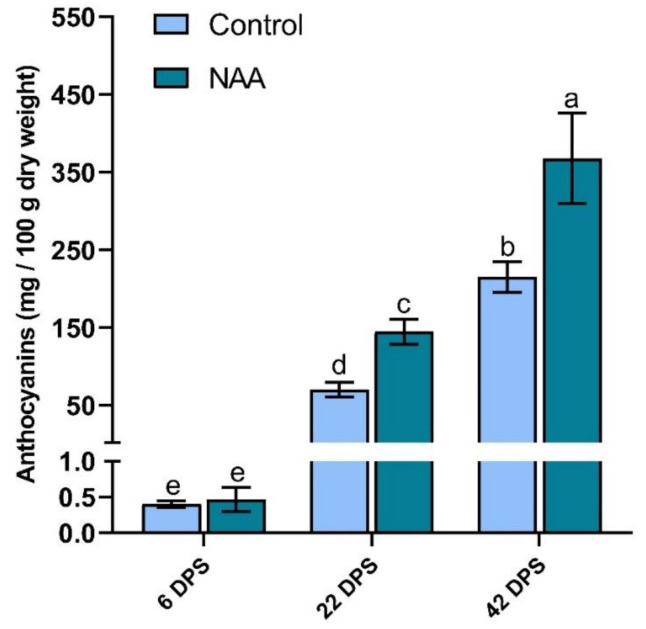
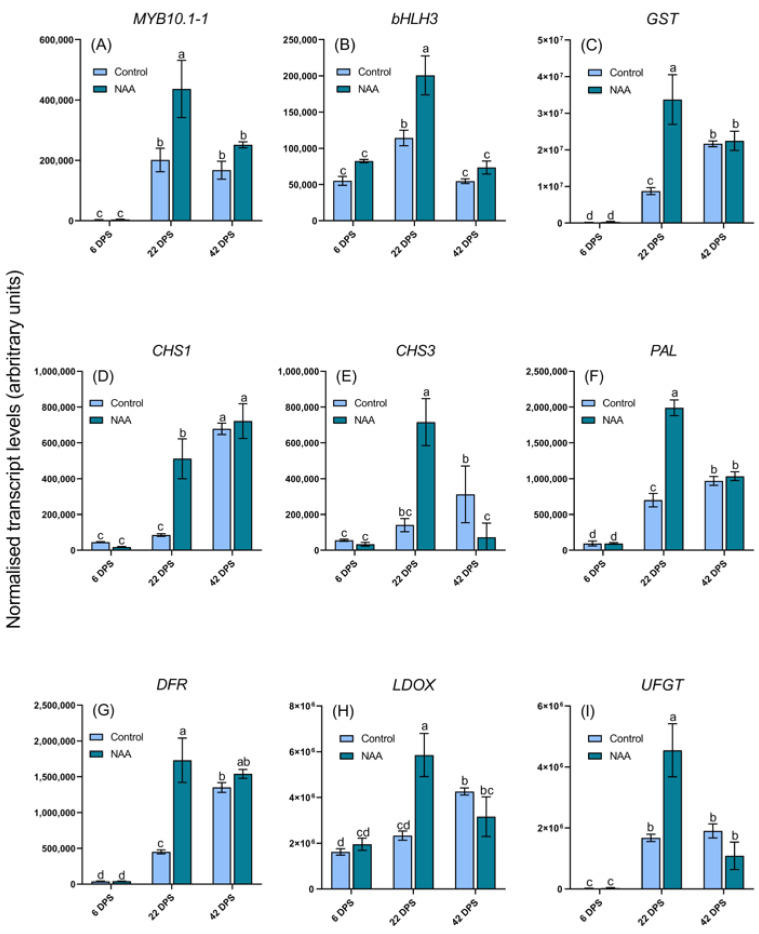
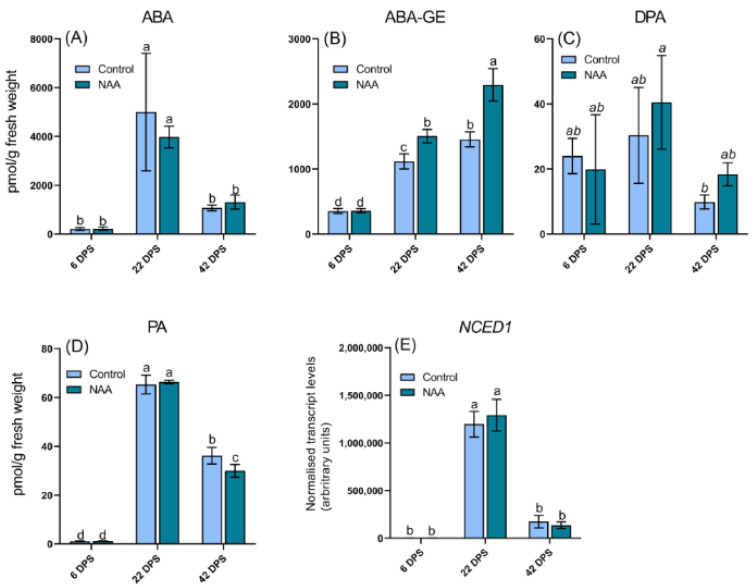
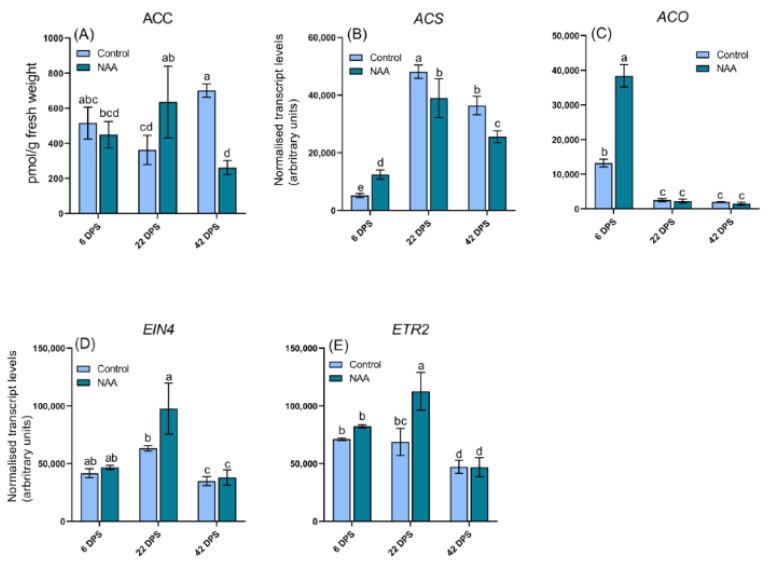
Abscisic acid (ABA) is a key signaling molecule promoting ripening of non-climacteric fruits such as sweet cherry ( L.). To shed light on the role of other hormones on fruit development, ripening and anthocyanin production, the synthetic auxin 1-naphthaleneacetic acid (NAA) was applied to sweet cherry trees during the straw-color stage of fruit development. NAA-treated fruits exhibited higher concentrations of 1-aminocyclopropane-1-carboxylic acid (ACC) and ABA-glucose ester (ABA-GE), which are a precursor of ethylene and a primary storage form of ABA, respectively. Consistent with these observations, transcript levels of genes encoding ACC synthase and ACC oxidase, both involved in ethylene biosynthesis, were increased after 6 days of NAA treatment, and both ABA concentration and expression of the regulator gene of ABA biosynthesis ( encoding 9-cis-epoxycarotenoid dioxygenase) were highest during early fruit ripening. In addition, transcript levels of key anthocyanin regulatory, biosynthetic and transport genes were significantly upregulated upon fruit exposure to NAA. This was accompanied by an increased anthocyanin concentration and fruit weight whilst fruit firmness and cracking index decreased. Altogether our data suggest that NAA treatment alters ethylene production, which in turn induces ripening in sweet cherry and enhanced anthocyanin production, possibly through ABA metabolism. The results from our study highlight the potential to use a single NAA treatment for manipulation of cherry ripening.
脱落酸 (ABA) 是一种关键的信号分子,可促进非跃变型果实如甜樱桃 ( L. ) 的成熟。为了阐明其他激素在果实发育、成熟和花青素合成中的作用,在甜樱桃果实发育的 straw-color 阶段,应用合成生长素 1-萘乙酸 (NAA)。NAA 处理的果实表现出更高浓度的 1-氨基环丙烷-1-羧酸 (ACC) 和 ABA-葡萄糖酯 (ABA-GE),分别是乙烯的前体和 ABA 的主要储存形式。与这些观察结果一致,参与乙烯生物合成的 ACC 合成酶和 ACC 氧化酶基因的转录水平在 NAA 处理 6 天后增加,并且 ABA 浓度和 ABA 生物合成调节剂基因的表达 (编码 9-顺式-环氧类胡萝卜素双加氧酶) 在果实早期成熟时最高。此外,关键的花青素调控、生物合成和转运基因的转录水平在果实暴露于 NAA 时显著上调。这伴随着花青素浓度和果实重量的增加,而果实硬度和裂果指数降低。总的来说,我们的数据表明,NAA 处理改变了乙烯的产生,这反过来又诱导了甜樱桃的成熟和增强了花青素的产生,可能通过 ABA 代谢。我们研究的结果强调了单一 NAA 处理在樱桃成熟调控中的潜力。