Darius Philipp, Urquhart Michael
Centre for Digital Governance, Hertie School, Berlin, Germany.
Media Measurement Limited, London, United Kingdom.
Online Soc Netw Media. 2021 Nov;26:100174. doi: 10.1016/j.osnem.2021.100174. Epub 2021 Oct 4.
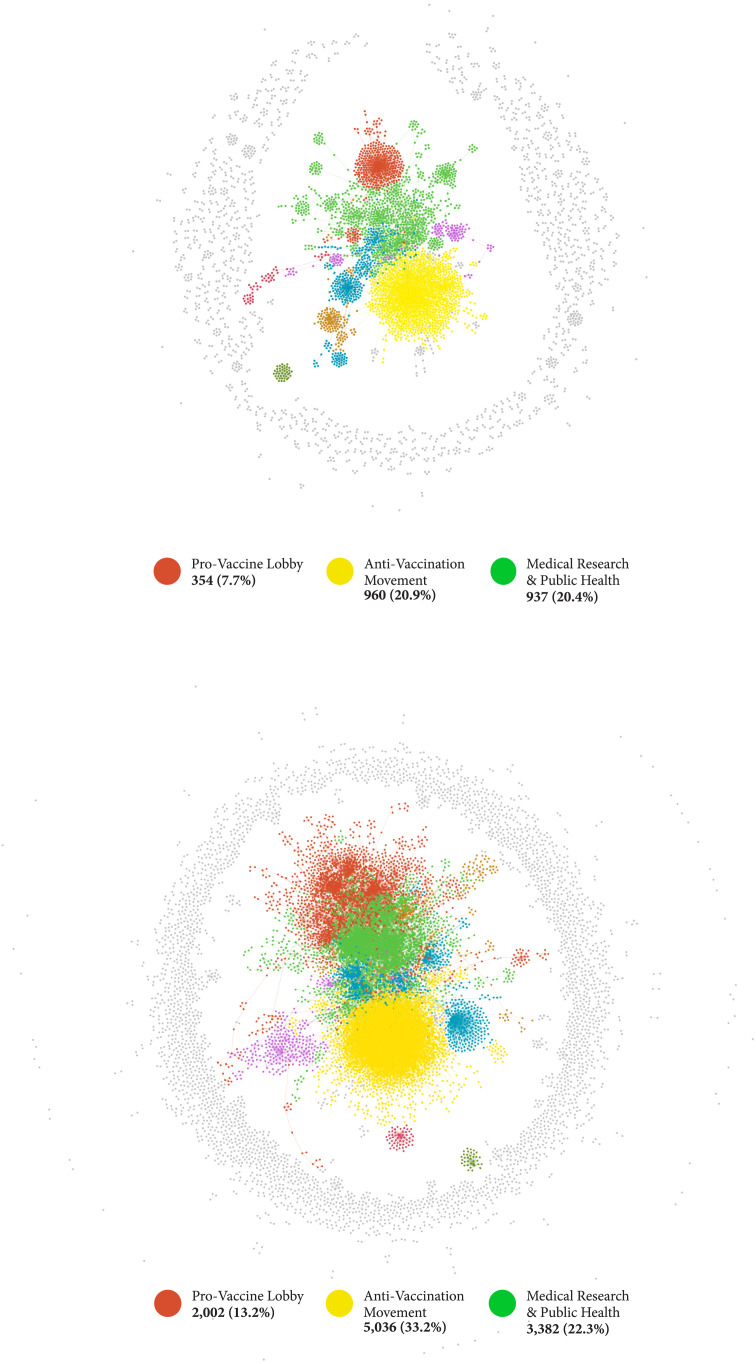
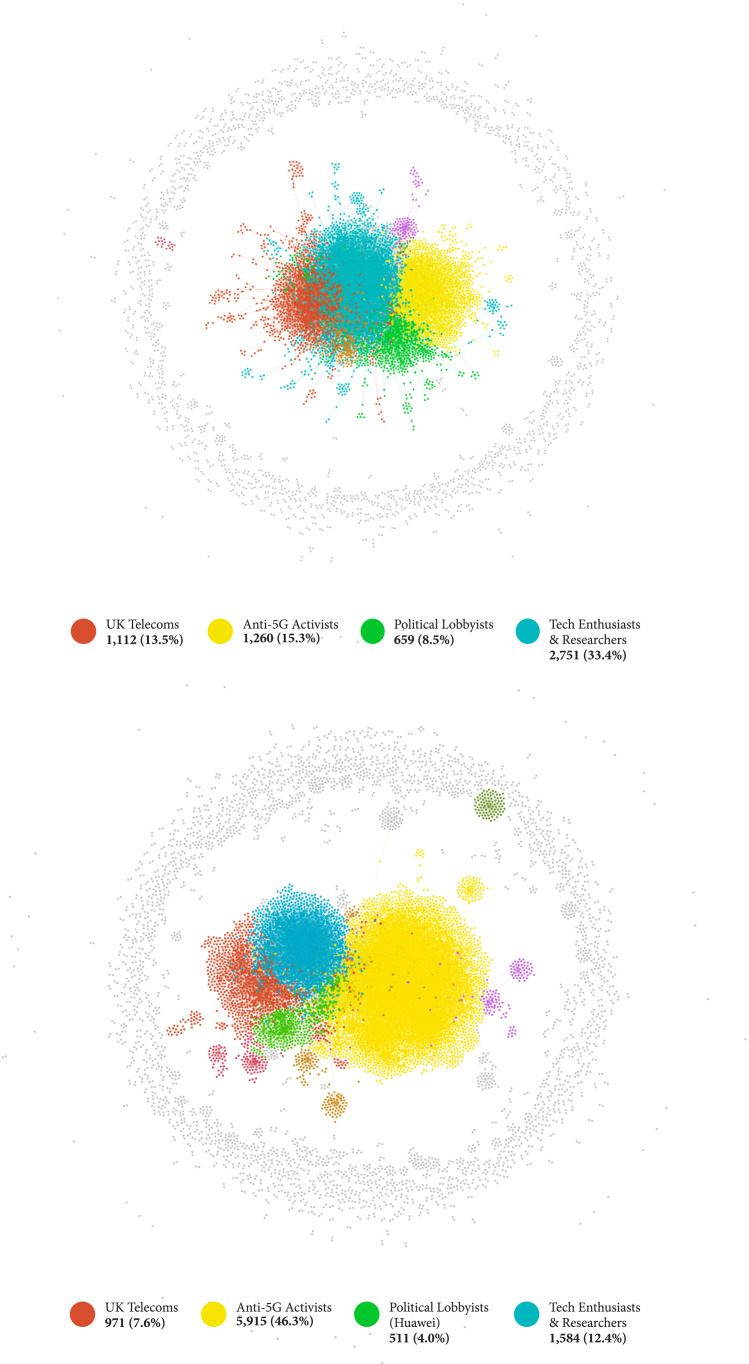
The COVID-19 pandemic caused high uncertainty regarding appropriate treatments and public policy reactions. This uncertainty provided a perfect breeding ground for spreading conspiratorial anti-science narratives based on disinformation. Disinformation on public health may alter the population's hesitance to vaccinations, counted among the ten most severe threats to global public health by the United Nations. We understand conspiracy narratives as a combination of disinformation, misinformation, and rumour that are especially effective in drawing people to believe in post-factual claims and form disinformed social movements. Conspiracy narratives provide a pseudo-epistemic background for disinformed social movements that allow for self-identification and cognitive certainty in a rapidly changing information environment. This study monitors two established conspiracy narratives and their communities on Twitter, the anti-vaccination and anti-5G communities, before and during the first UK lockdown. The study finds that, despite content moderation efforts by Twitter, conspiracy groups were able to proliferate their networks and influence broader public discourses on Twitter, such as #Lockdown in the United Kingdom.
新冠疫情引发了关于适当治疗方法和公共政策应对措施的高度不确定性。这种不确定性为基于虚假信息传播阴谋论的反科学叙事提供了绝佳的滋生土壤。有关公共卫生的虚假信息可能会改变民众对接种疫苗的犹豫态度,而接种疫苗的犹豫被联合国列为对全球公共卫生最严重的十大威胁之一。我们将阴谋论叙事理解为虚假信息、错误信息和谣言的结合,它们在吸引人们相信后事实主张并形成无知的社会运动方面特别有效。阴谋论叙事为无知的社会运动提供了一个伪认知背景,使人们在快速变化的信息环境中能够进行自我认同并获得认知确定性。本研究在英国首次封锁之前和期间,监测了推特上两个既定的阴谋论叙事及其社群,即反疫苗社群和反5G社群。研究发现,尽管推特进行了内容审核,但阴谋论团体仍能够扩大其网络,并影响推特上更广泛的公众话语,例如英国的#封锁。