Azrieli Faculty of Medicine, Bar Ilan University, Safed, Israel.
Department of Computer Science, Tel-Hai Academic College, Qiryat Shemona, Israel.
Blood Adv. 2022 Jan 25;6(2):568-573. doi: 10.1182/bloodadvances.2021005110.
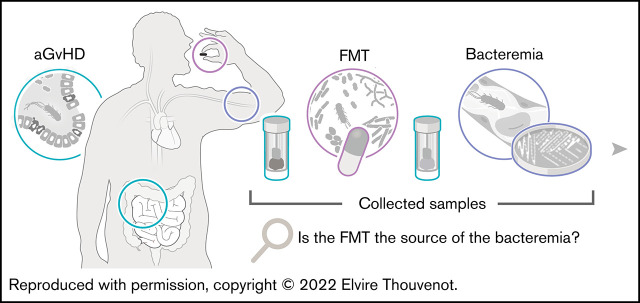
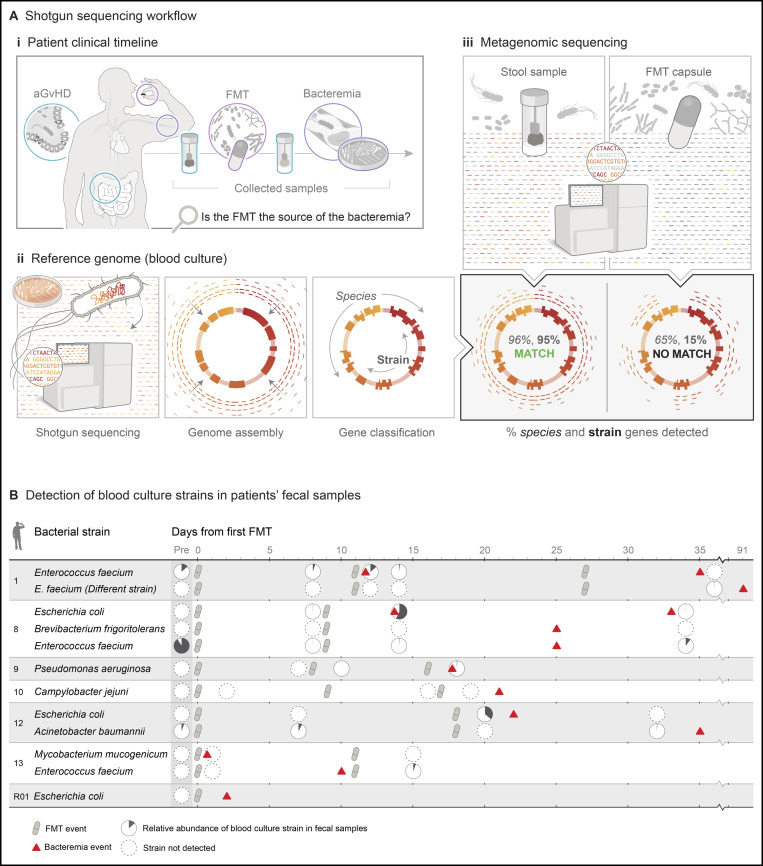
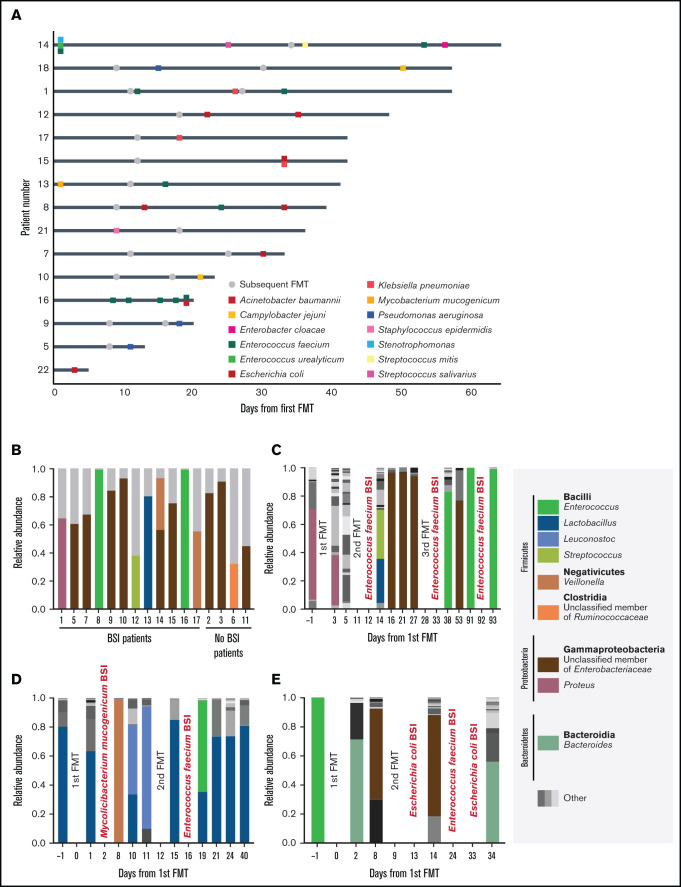
We observed high rates of bloodstream infections (BSIs) following fecal microbiota transplantation (FMT) for graft-versus-host-disease (33 events in 22 patients). To trace the BSIs' origin, we applied a metagenomic bioinformatic pipeline screening donor and recipient stool samples for bacteremia-causing strains in 13 cases. Offending strains were not detected in FMT donations. Enterococcus faecium, Escherichia coli, Pseudomonas aeruginosa, and Acinetobacter baumannii could be detected in stool samples before emerging in the blood. In this largest report of BSIs post-FMT, we present an approach that may be applicable for evaluating BSI origin following microbiota-based interventions. Our findings support FMT safety in immunocompromised patients but do not rule out FMT as an inducer of bacterial translocation.
我们观察到在移植物抗宿主病(GVHD)的粪便微生物群移植(FMT)后,血流感染(BSI)的发生率很高(22 名患者中有 33 例事件)。为了追踪 BSI 的起源,我们在 13 例病例中应用了一种宏基因组生物信息学管道,对供体和受体粪便样本进行引起菌血症的菌株筛查。在 FMT 供体中未检测到致病菌株。粪样中可检测到屎肠球菌、大肠埃希菌、铜绿假单胞菌和鲍曼不动杆菌,然后这些菌才在血液中出现。在这项最大的 FMT 后 BSI 报告中,我们提出了一种可能适用于评估基于微生物群的干预措施后 BSI 起源的方法。我们的发现支持 FMT 在免疫功能低下患者中的安全性,但不能排除 FMT 是细菌易位的诱导因素。