Division of HIV/AIDS and Sex-transmitted Virus Vaccines, Institute for Biological Product Control, National Institutes for Food and Drug Control (NIFDC) and WHO Collaborating Center for Standardization and Evaluation of Biologicals, Beijing, China.
Jiangsu Recbio Technology Co., Ltd., Taizhou, China.
Commun Biol. 2021 Oct 13;4(1):1196. doi: 10.1038/s42003-021-02728-4.
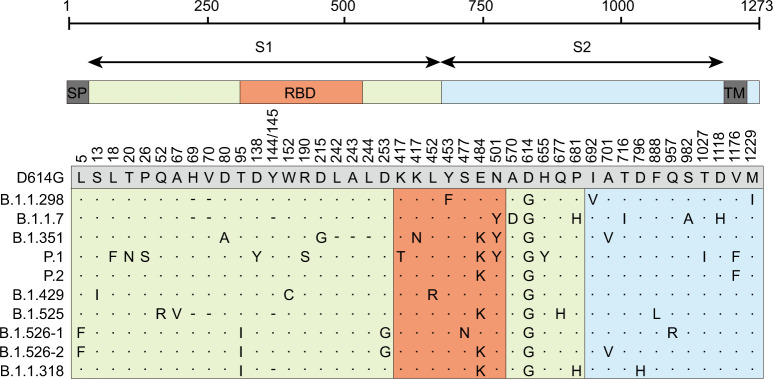
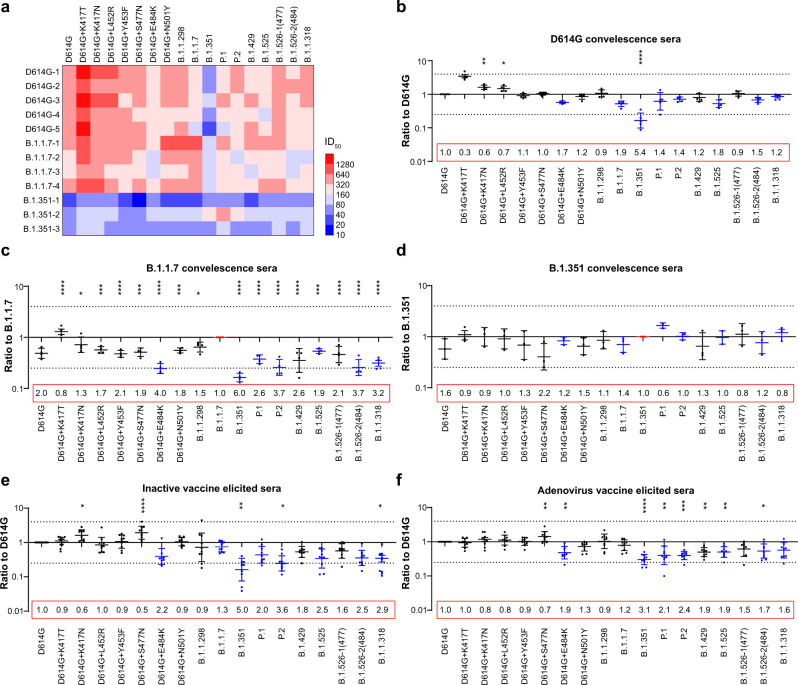
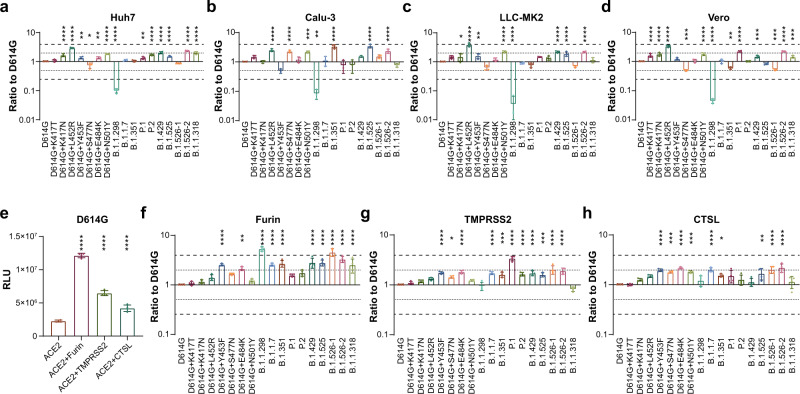
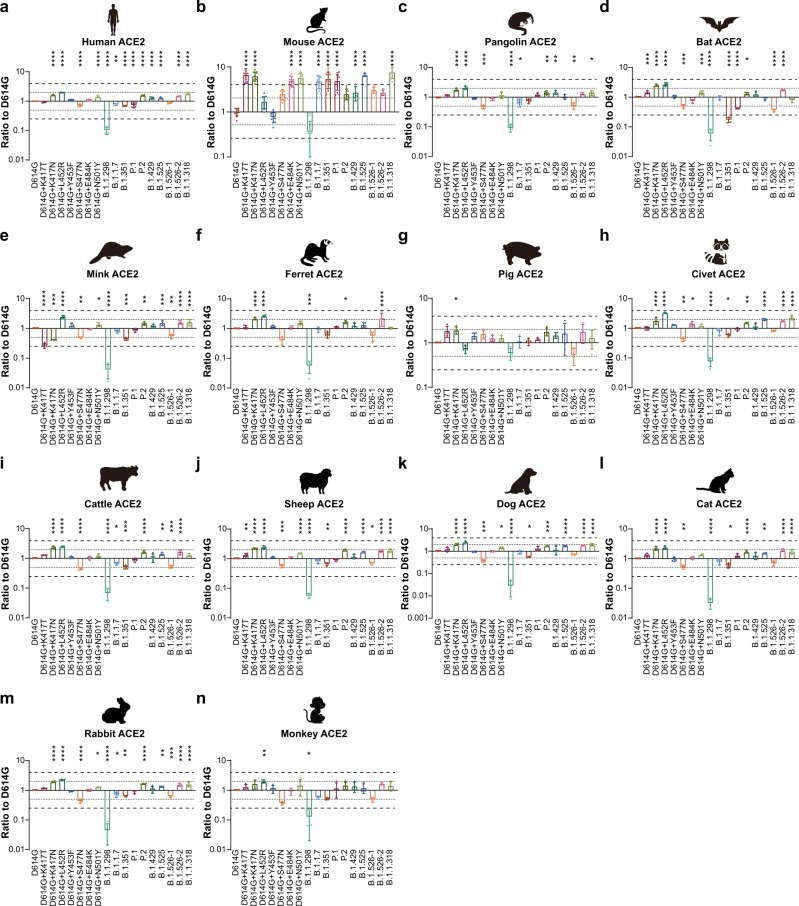
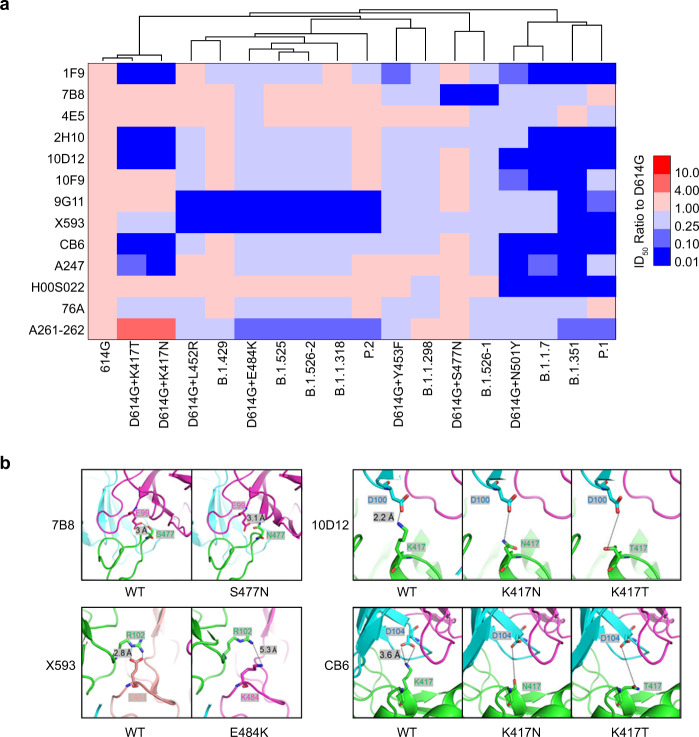
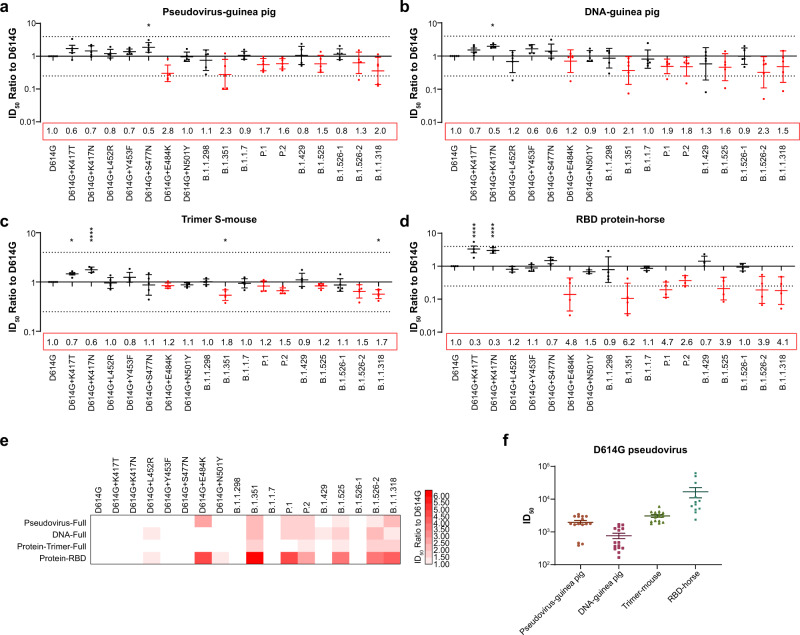
Emerging mutations in SARS-CoV-2 cause several waves of COVID-19 pandemic. Here we investigate the infectivity and antigenicity of ten emerging SARS-CoV-2 variants-B.1.1.298, B.1.1.7(Alpha), B.1.351(Beta), P.1(Gamma), P.2(Zeta), B.1.429(Epsilon), B.1.525(Eta), B.1.526-1(Iota), B.1.526-2(Iota), B.1.1.318-and seven corresponding single amino acid mutations in the receptor-binding domain using SARS-CoV-2 pseudovirus. The results indicate that the pseudovirus of most of the SARS-CoV-2 variants (except B.1.1.298) display slightly increased infectivity in human and monkey cell lines, especially B.1.351, B.1.525 and B.1.526 in Calu-3 cells. The K417N/T, N501Y, or E484K-carrying variants exhibit significantly increased abilities to infect mouse ACE2-overexpressing cells. The activities of furin, TMPRSS2, and cathepsin L are increased against most of the variants. RBD amino acid mutations comprising K417T/N, L452R, Y453F, S477N, E484K, and N501Y cause significant immune escape from 11 of 13 monoclonal antibodies. However, the resistance to neutralization by convalescent serum or vaccines elicited serum is mainly caused by the E484K mutation. The convalescent serum from B.1.1.7- and B.1.351-infected patients neutralized the variants themselves better than other SARS-CoV-2 variants. Our study provides insights regarding therapeutic antibodies and vaccines, and highlights the importance of E484K mutation.
SARS-CoV-2 的新兴突变导致了几波 COVID-19 大流行。在这里,我们研究了十种新兴的 SARS-CoV-2 变体-B.1.1.298、B.1.1.7(Alpha)、B.1.351(Beta)、P.1(Gamma)、P.2(Zeta)、B.1.429(Epsilon)、B.1.525(Eta)、B.1.526-1(Iota)、B.1.526-2(Iota)、B.1.1.318-以及受体结合域中的七个相应的单一氨基酸突变,使用 SARS-CoV-2 假病毒进行研究。结果表明,大多数 SARS-CoV-2 变体(除 B.1.1.298 外)的假病毒在人源和猴源细胞系中的感染性略有增加,尤其是在 Calu-3 细胞中 B.1.351、B.1.525 和 B.1.526。携带 K417N/T、N501Y 或 E484K 的变体表现出显著增强的感染小鼠 ACE2 过表达细胞的能力。大多数变体对furin、TMPRSS2 和组织蛋白酶 L 的活性增加。包含 K417T/N、L452R、Y453F、S477N、E484K 和 N501Y 的 RBD 氨基酸突变导致 13 种单克隆抗体中的 11 种显著逃逸免疫。然而,对恢复期血清或疫苗诱导的血清的中和抗性主要是由 E484K 突变引起的。来自 B.1.1.7-和 B.1.351 感染患者的恢复期血清对这些变体的中和作用优于其他 SARS-CoV-2 变体。我们的研究为治疗性抗体和疫苗提供了新的见解,并强调了 E484K 突变的重要性。