Nazir Tahir, Chit Su Hlaing Myat, Mann Paul, Clancy Niall, Kargar Leila
Internal Medicine, Lancashire Teaching Hospitals NHS Foundation Trust, Royal Preston Hospital, Preston, GBR.
Cardiology, Leighton Hospital, Crewe, GBR.
Cureus. 2021 Aug 31;13(8):e17590. doi: 10.7759/cureus.17590. eCollection 2021 Aug.
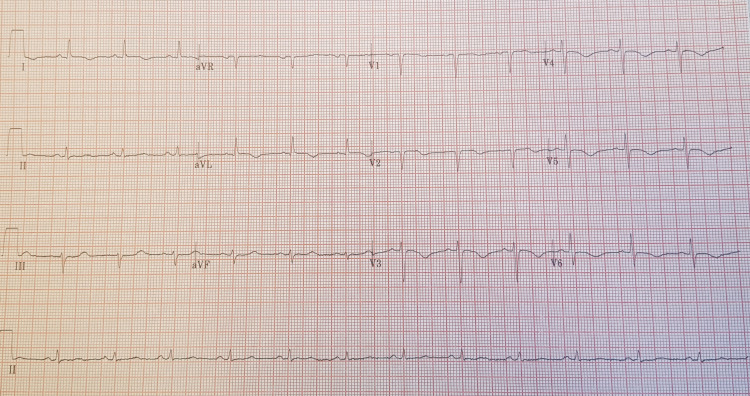
Since the report of the first case from China in late 2019, the coronavirus disease (COVID-19) has spread very rapidly through the countries and regions leaving a trail of devastation in its path, everywhere. Although COVID-19 is primarily a respiratory illness mainly affecting the lungs; involvement of other organs including the cardiovascular system has been widely recognized. Whilst COVID-19 is an acute illness for a majority of cases; some of the debilitating virus-related symptoms can last for weeks and months, and are collectively termed as long COVID syndrome. Several published reports have described an association between acute COVID-19 illness and cardiac complications such as myocarditis and Takotsubo cardiomyopathy. However, little is known about any link between long COVID syndrome and the cardiac disease. We describe the case of a middle-aged woman with long COVID syndrome who presented with central chest pain and breathlessness. Her initial investigations showed an elevated cardiac troponin I and ischemic changes on 12 lead ECG. She was initially treated for non-ST elevation myocardial infarction. A subsequent coronary angiogram showed unobstructed coronary vessels and left ventricle (LV) gram demonstrated apical LV ballooning. She was managed conservatively and was discharged home following her clinical improvement. This case highlights the importance of holistic assessment of patients presenting with chest pain with the background of long COVID syndrome. It also outlines an emergent need to better understand pathophysiological mechanisms that underpin the development of cardiac complications in those with COVID-19 and long COVID syndrome.
自2019年末中国报告首例病例以来,冠状病毒病(COVID-19)已在各个国家和地区迅速传播,所到之处皆留下破坏的痕迹。尽管COVID-19主要是一种主要影响肺部的呼吸道疾病,但包括心血管系统在内的其他器官受累也已得到广泛认可。虽然大多数情况下COVID-19是一种急性疾病,但一些与病毒相关的使人衰弱的症状可能会持续数周甚至数月,这些症状统称为“长COVID综合征”。一些已发表的报告描述了急性COVID-19疾病与心脏并发症(如心肌炎和Takotsubo心肌病)之间的关联。然而,对于长COVID综合征与心脏病之间的任何联系却知之甚少。我们描述了一例患有长COVID综合征的中年女性病例,她出现了胸部中央疼痛和呼吸急促的症状。她的初步检查显示心肌肌钙蛋白I升高,12导联心电图有缺血性改变。她最初被按照非ST段抬高型心肌梗死进行治疗。随后的冠状动脉造影显示冠状动脉血管通畅,左心室造影显示左心室心尖部气球样扩张。她接受了保守治疗,临床症状改善后出院回家。该病例强调了对有长COVID综合征背景的胸痛患者进行全面评估的重要性。它还概述了迫切需要更好地了解在患有COVID-19和长COVID综合征的患者中导致心脏并发症发生的病理生理机制。