Weng Bowen, Yan Chongbing, Chen Yihuan, Gong Xiaohui, Cai Cheng
Department of Neonatology, Shanghai Children's Hospital, Shanghai Jiao Tong University, Shanghai, China.
Front Neurosci. 2021 Sep 28;15:668909. doi: 10.3389/fnins.2021.668909. eCollection 2021.
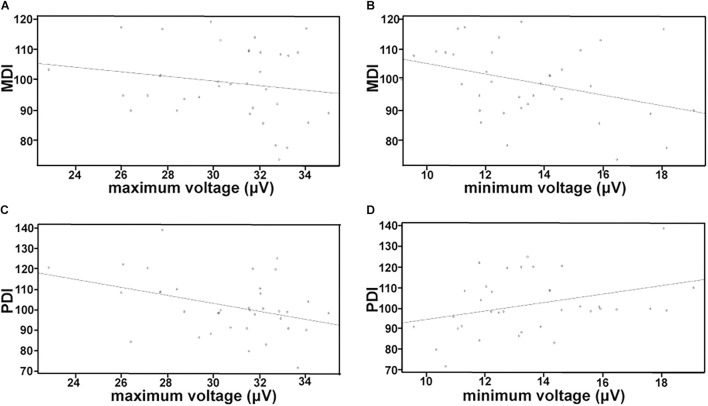
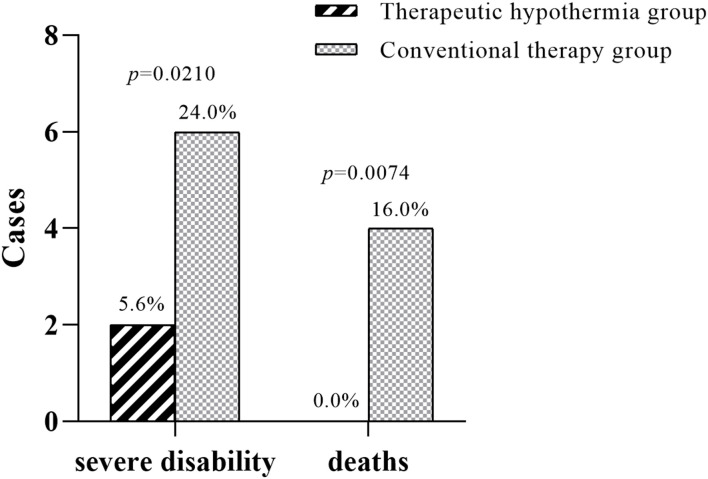
To evaluate the safety and neurological outcomes of therapeutic hypothermia to neonatal hypoxic-ischemic encephalopathy (HIE). Medical records of 61 neonates with moderate to severe HIE were retrospectively enrolled and divided into a therapeutic hypothermia group ( = 36) and conventional therapy group ( = 25). No significant difference in the incidence of severe adverse events was found between the two groups. Minimum and maximum voltages of amplitude-integrated electroencephalography (aEEG) recording results showed statistically significant differences in therapeutic hypothermia group after 72 h. The neonatal behavioral neurological assessment (NBNA) on the 28th day after birth and Bayley Scales of Infant Development, second edition (BSID II) scores at 18 months old were significant higher in the therapeutic hypothermia group than the conventional therapy group. Therapeutic hypothermia for neonates with moderate to severe HIE improved the development of the nervous system in 0-18-month-old infants and showed a predominant role in reducing death and major neuron development-associated disabilities.
评估亚低温治疗对新生儿缺氧缺血性脑病(HIE)的安全性及神经学转归。回顾性纳入61例中重度HIE新生儿的病历资料,分为亚低温治疗组(n = 36)和常规治疗组(n = 25)。两组严重不良事件发生率差异无统计学意义。振幅整合脑电图(aEEG)记录结果的最小和最大电压显示,亚低温治疗组在72小时后有统计学显著差异。出生后第28天的新生儿行为神经评定(NBNA)及18月龄时的贝利婴幼儿发育量表第二版(BSID II)评分,亚低温治疗组显著高于常规治疗组。对中重度HIE新生儿进行亚低温治疗可改善0至18月龄婴儿的神经系统发育,并在降低死亡及与主要神经元发育相关的残疾方面发挥主要作用。