Brown Alyssa D, Davis Leah A, Fogarty Matthew J, Sieck Gary C
Department of Physiology and Biomedical Engineering, Mayo Clinic, Rochester, MN, United States.
Front Physiol. 2021 Sep 28;12:727585. doi: 10.3389/fphys.2021.727585. eCollection 2021.
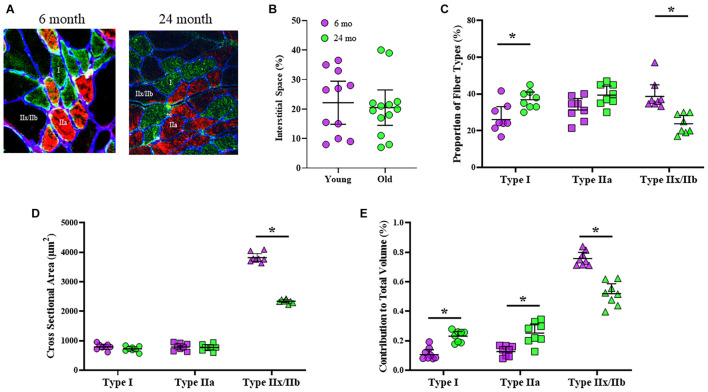
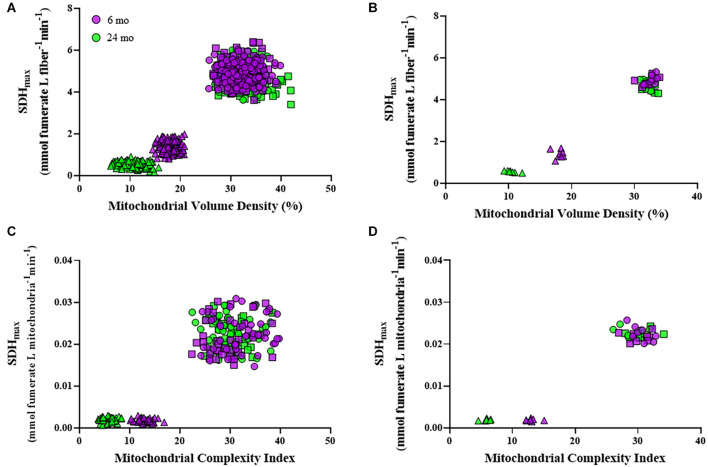
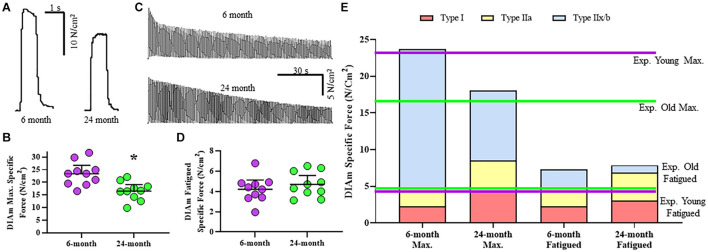
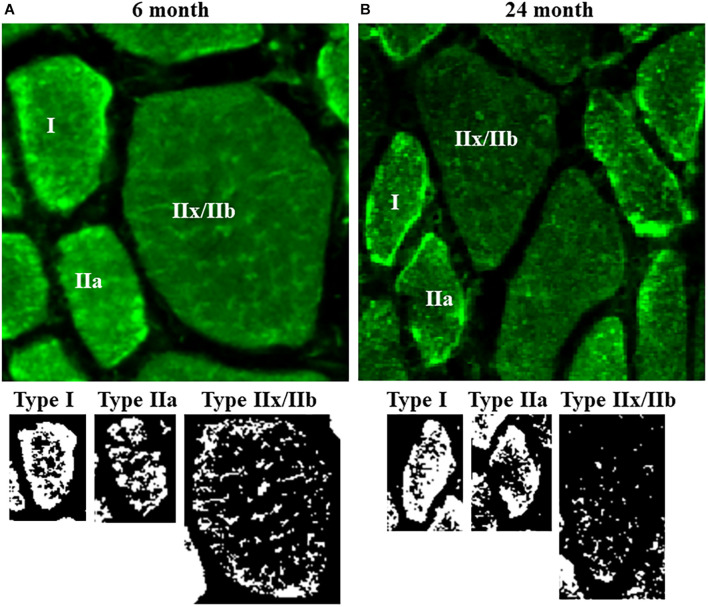
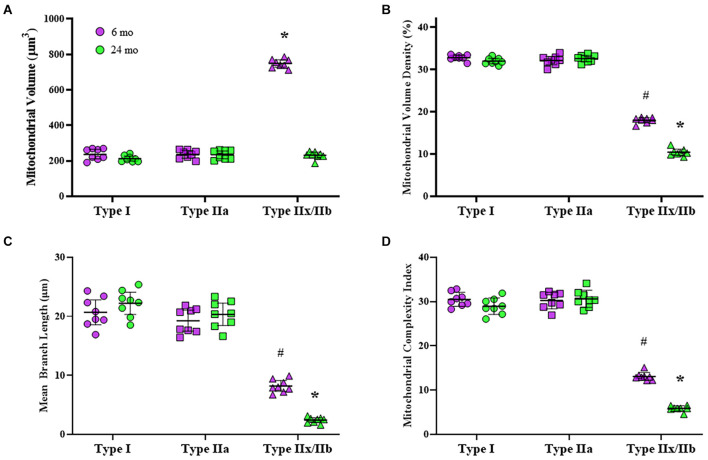
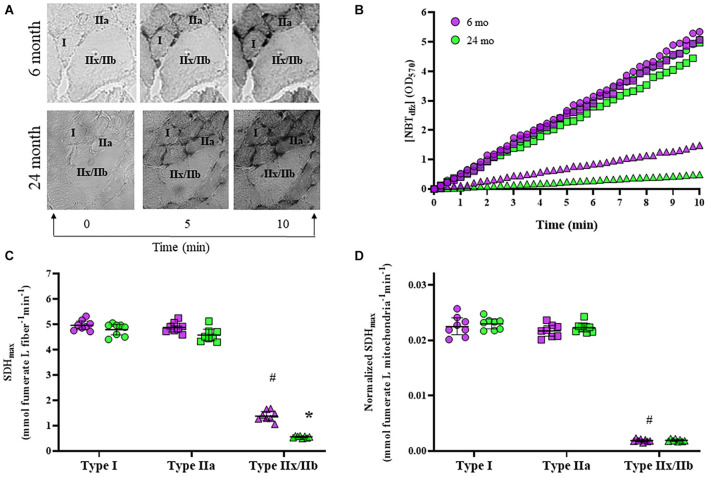
Sarcopenia is characterized by muscle fiber atrophy and weakness, which may be associated with mitochondrial fragmentation and dysfunction. Mitochondrial remodeling and biogenesis in muscle fibers occurs in response to exercise and increased muscle activity. However, the adaptability mitochondria may decrease with age. The diaphragm muscle (DIAm) sustains breathing, recruitment of fatigue-resistant type I and IIa fibers. More fatigable, type IIx/IIb DIAm fibers are infrequently recruited during airway protective and expulsive behaviors. DIAm sarcopenia is restricted to the atrophy of type IIx/IIb fibers, which impairs higher force airway protective and expulsive behaviors. The aerobic capacity to generate ATP within muscle fibers depends on the volume and intrinsic respiratory capacity of mitochondria. In the present study, mitochondria in type-identified DIAm fibers were labeled using MitoTracker Green and imaged in 3-D using confocal microscopy. Mitochondrial volume density was higher in type I and IIa DIAm fibers compared with type IIx/IIb fibers. Mitochondrial volume density did not change with age in type I and IIa fibers but was reduced in type IIx/IIb fibers in 24-month rats. Furthermore, mitochondria were more fragmented in type IIx/IIb compared with type I and IIa fibers, and worsened in 24-month rats. The maximum respiratory capacity of mitochondria in DIAm fibers was determined using a quantitative histochemical technique to measure the maximum velocity of the succinate dehydrogenase reaction (SDH ). SDH per fiber volume was higher in type I and IIa DIAm fibers and did not change with age. In contrast, SDH per fiber volume decreased with age in type IIx/IIb DIAm fibers. There were two distinct clusters for SDH per fiber volume and mitochondrial volume density, one comprising type I and IIa fibers and the second comprising type IIx/IIb fibers. The separation of these clusters increased with aging. There was also a clear relation between SDH per mitochondrial volume and the extent of mitochondrial fragmentation. The results show that DIAm sarcopenia is restricted to type IIx/IIb DIAm fibers and related to reduced mitochondrial volume, mitochondrial fragmentation and reduced SDH per fiber volume.
肌肉减少症的特征是肌纤维萎缩和无力,这可能与线粒体碎片化和功能障碍有关。肌纤维中的线粒体重塑和生物合成是对运动和增加的肌肉活动做出的反应。然而,线粒体的适应性可能会随着年龄的增长而降低。膈肌维持呼吸,募集抗疲劳的I型和IIa型纤维。在气道保护和呼气行为中,较易疲劳的IIx/IIb型膈肌纤维很少被募集。膈肌肌肉减少症仅限于IIx/IIb型纤维的萎缩,这会损害更高强度的气道保护和呼气行为。肌纤维内产生ATP的有氧能力取决于线粒体的体积和内在呼吸能力。在本研究中,使用MitoTracker Green对已鉴定类型的膈肌纤维中的线粒体进行标记,并使用共聚焦显微镜进行三维成像。与IIx/IIb型纤维相比,I型和IIa型膈肌纤维中的线粒体体积密度更高。I型和IIa型纤维中的线粒体体积密度不会随年龄变化,但在24个月大的大鼠的IIx/IIb型纤维中会降低。此外,与I型和IIa型纤维相比,IIx/IIb型纤维中的线粒体碎片化程度更高,并且在24个月大的大鼠中更严重。使用定量组织化学技术测量琥珀酸脱氢酶反应的最大速度(SDH )来确定膈肌纤维中线粒体的最大呼吸能力。I型和IIa型膈肌纤维中每纤维体积的SDH 更高,并且不会随年龄变化。相比之下,IIx/IIb型膈肌纤维中每纤维体积的SDH 会随年龄降低。每纤维体积的SDH 和线粒体体积密度有两个不同的聚类,一个包含I型和IIa型纤维,另一个包含IIx/IIb型纤维。随着衰老,这些聚类之间的分离增加。每线粒体体积的SDH 与线粒体碎片化程度之间也存在明显的关系。结果表明,膈肌肌肉减少症仅限于IIx/IIb型膈肌纤维,并且与线粒体体积减小、线粒体碎片化以及每纤维体积的SDH 降低有关。