Zhan Jie, Xiong Buhui, Zhang Peiming, Wang Yiqiao, Tang Yuyuan, Zhan Lechang, Lu Liming
Postdoctoral Research Station, Guangdong Provincial Hospital of Chinese Medicine, The Second Affiliated Hospital of Guangzhou University of Chinese Medicine, Guangzhou, China.
Department of Rehabilitation, Guangdong Provincial Hospital of Chinese Medicine, Guangzhou, China.
Front Neurol. 2021 Sep 28;12:705771. doi: 10.3389/fneur.2021.705771. eCollection 2021.
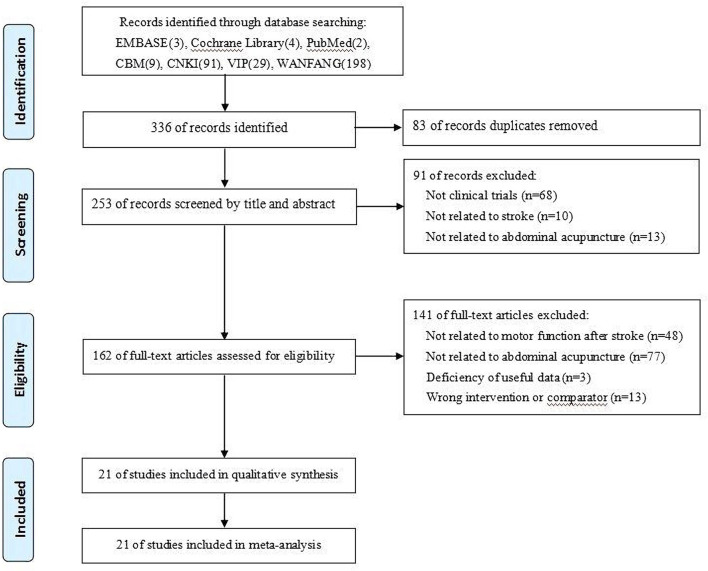
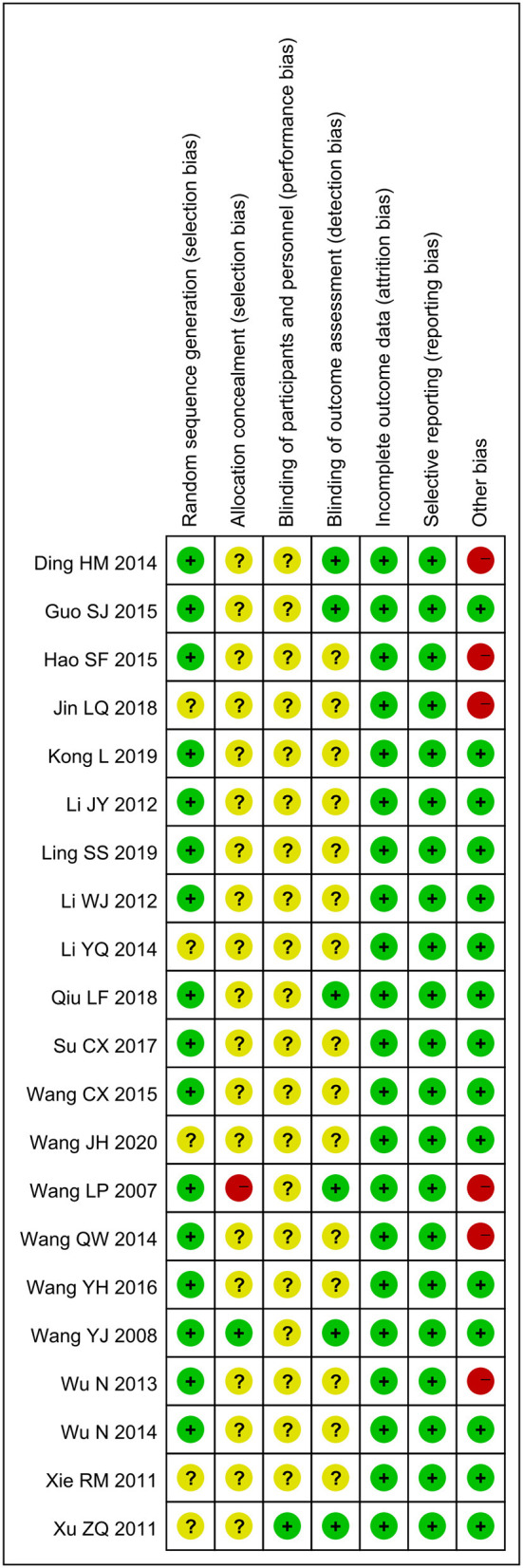
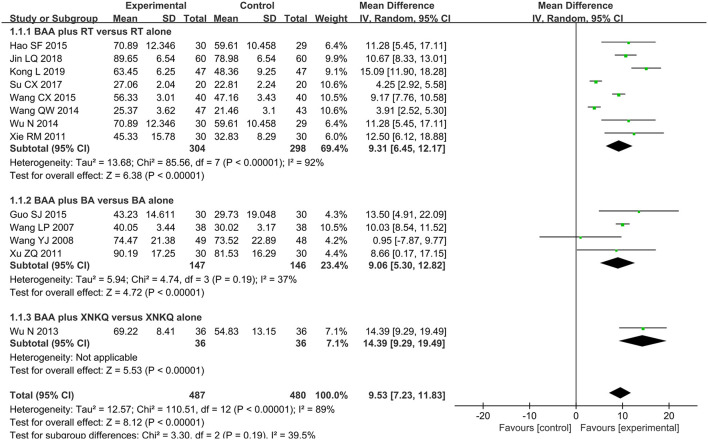
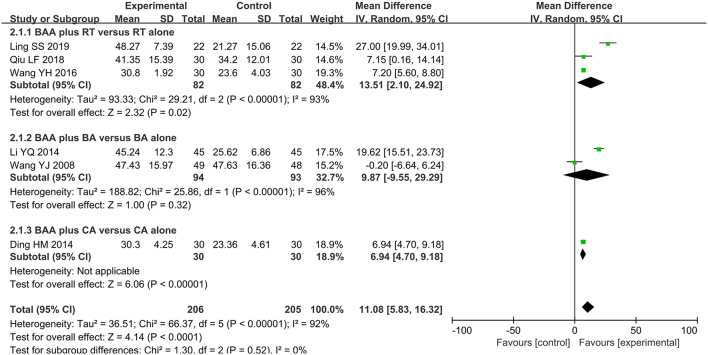
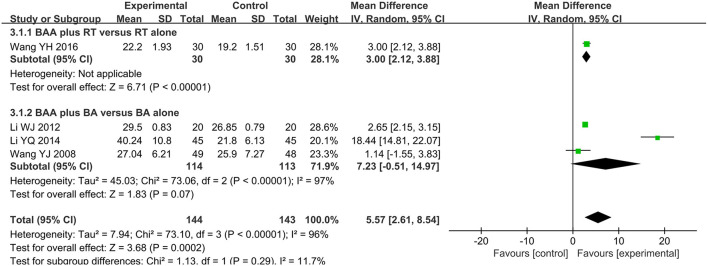
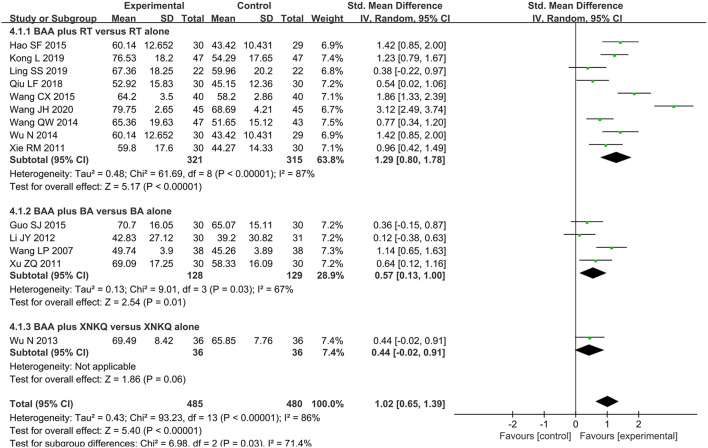
Bo's abdominal acupuncture (BAA) is a novel therapy in alternative and complementary medicine and has been frequently used for stroke recovery in recent decades. However, no systematic evidence has been performed to confirm the effect and safety of BAA as an adjunctive therapy for post-stroke motor dysfunction (PSMD). This review aimed to assess the efficacy and safety of BAA as an adjunctive therapy for improving allover motor function, upper limb motor function, lower limb motor function, and activities of daily living (ADL) in patients with PSMD. Seven databases were searched from inception to December 2020: Embase, PubMed, Cochrane Library, Chinese Biological Medicine Database, Chinese Scientific Journal Database, WAN FANG, and the China National Knowledge Infrastructure. All randomized controlled trials (RCTs) involving BAA plus another therapy vs. the same other therapy alone were identified. The methodological quality of the included trials was assessed according to the Cochrane risk of bias criteria. If more than half of the domains in a study are at low risk of bias, the overall quality of the study is low risk. We conducted a meta-analysis for primary outcomes using a random effects model and performed a narrative summary for the secondary outcome. We also conducted subgroup analysis for primary outcomes based on different add-on treatments to BAA. Random effects and fixed effects models were used to test the robustness of the pooled data. We also tested the robustness of the meta-analysis using specific methodological variables that could affect primary outcome measures. trials with 1,473 patients were included in this systematic review. The overall quality of the 14 included trials (66.7%) was low risk. Meta-analyses indicated that the effect of the BAA group was better than that of the non-EA group on the Fugl-Meyer Assessment Scale (FMA) (weight mean difference (WMD) 9.53, 95% confidence interval (CI) 7.23 to 11.83, < 0.00001), FMA for upper extremities (WMD 11.08, 95% CI 5.83 to 16.32, < 0.0001), FMA for lower extremities (WMD 5.57, 95% CI 2.61 to 8.54, = 0.0002), and modified Barthel Index (standardized mean difference (SMD) 1.02, 95% CI 0.65 to 1.39, < 0.00001). Two trials (9.5%) reported BAA-related adverse events, and the most common adverse event was local subcutaneous ecchymosis. BAA as an adjunctive therapy may have clinical benefits for improving allover motor function, upper limb motor function, lower limb motor function, and ADL in patients with PSMD. BAA-related adverse events were rare, tolerable, and recoverable. However, our review findings should be interpreted with caution because of the methodological weaknesses in the included trials. High-quality trials are needed to assess the adjunctive role of BAA in patients with PSMD.
薄氏腹针疗法是替代医学和补充医学中的一种新型疗法,近几十年来经常用于中风康复治疗。然而,尚无系统证据证实薄氏腹针疗法作为中风后运动功能障碍(PSMD)辅助治疗方法的有效性和安全性。本综述旨在评估薄氏腹针疗法作为辅助治疗手段,对改善PSMD患者全身运动功能、上肢运动功能、下肢运动功能及日常生活活动能力(ADL)的有效性和安全性。检索了从建库至2020年12月的7个数据库:Embase、PubMed、Cochrane图书馆、中国生物医学数据库、中国科学期刊数据库、万方数据库和中国知网。纳入了所有将薄氏腹针疗法联合另一种疗法与单纯使用相同的另一种疗法进行对比的随机对照试验(RCT)。根据Cochrane偏倚风险标准评估纳入试验的方法学质量。如果一项研究中超过一半的领域偏倚风险较低,则该研究的整体质量为低风险。我们采用随机效应模型对主要结局进行荟萃分析,并对次要结局进行叙述性总结。我们还根据薄氏腹针疗法不同的附加治疗方法对主要结局进行亚组分析。采用随机效应和固定效应模型检验汇总数据的稳健性。我们还使用可能影响主要结局指标的特定方法学变量检验荟萃分析的稳健性。本系统综述纳入了涉及1473例患者的试验。14项纳入试验(66.7%)的整体质量为低风险。荟萃分析表明,在Fugl-Meyer评估量表(FMA)上,薄氏腹针疗法组的效果优于非电针组(加权均值差(WMD)9.53,95%置信区间(CI)7.23至11.83,P<0.00001),上肢FMA(WMD 11.08,95%CI 5.83至16.32,P<0.0001),下肢FMA(WMD 5.57,95%CI 2.61至8.54,P = 0.0002),以及改良Barthel指数(标准化均值差(SMD)1.02,95%CI 0.65至1.39,P<0.00001)。两项试验(9.5%)报告了与薄氏腹针疗法相关的不良事件,最常见的不良事件是局部皮下瘀斑。薄氏腹针疗法作为辅助治疗可能对改善PSMD患者的全身运动功能、上肢运动功能、下肢运动功能及ADL具有临床益处。与薄氏腹针疗法相关的不良事件罕见、可耐受且可恢复。然而,由于纳入试验存在方法学缺陷,我们的综述结果应谨慎解读。需要高质量的试验来评估薄氏腹针疗法在PSMD患者中的辅助作用。